
The Las Vegas Sphere, officially known simply as Sphere, has redefined the skyline of Las Vegas and revolutionized the concept of modern entertainment architecture. Rising as a glowing, gargantuan orb amidst the desert landscape of Nevada, this marvel of engineering is as much a landmark as it is a performance venue. To understand when it was built, one must look at the timeline of a project that pushed the boundaries of technology and construction prowess.
Construction on the venue officially commenced in September 2018. Over the course of the next five years, the structure transformed from a massive excavation site into the world’s largest spherical building. While the structural skeleton began taking shape early on, the intricate technological integration—specifically the exterior “exosphere” and the interior LED canvas—required years of painstaking precision. The venue finally opened its doors to the public on September 29, 2023, with a debut concert by the legendary rock band U2.

The Evolution of the Architectural Vision
The conception of the Sphere was not an overnight endeavor. It was the result of a long-term vision by Madison Square Garden Entertainment to create an immersive medium that would surpass traditional concert halls and cinema experiences.
Breaking Ground and Structural Engineering
When the project broke ground in 2018, the scale of the undertaking was unprecedented. Engineers had to account for the immense load-bearing requirements of the steel dome, which contains more steel than many skyscrapers of similar height. The construction process involved the use of the Demag CC-8800, one of the world’s largest crawler cranes, which was shipped to the site in hundreds of containers and required eighteen days to assemble. This crane was essential for lifting the massive steel rings that form the dome.
The Technological Integration
The “when” of the building’s completion is intrinsically tied to the integration of its proprietary technology. Unlike a standard arena, this structure is a sophisticated machine. The interior features a 16K resolution wrap-around LED screen—the highest resolution screen on Earth—that provides a 360-degree immersive field of view. Installing this display surface, which covers 160,000 square feet, required a specialized team to calibrate millions of LED nodes to ensure visual continuity. The project team spent the final year of construction exclusively focused on optimizing this visual interface, ensuring that by the time of the grand opening in 2023, the experience was seamless.
A New Landmark for the Las Vegas Strip
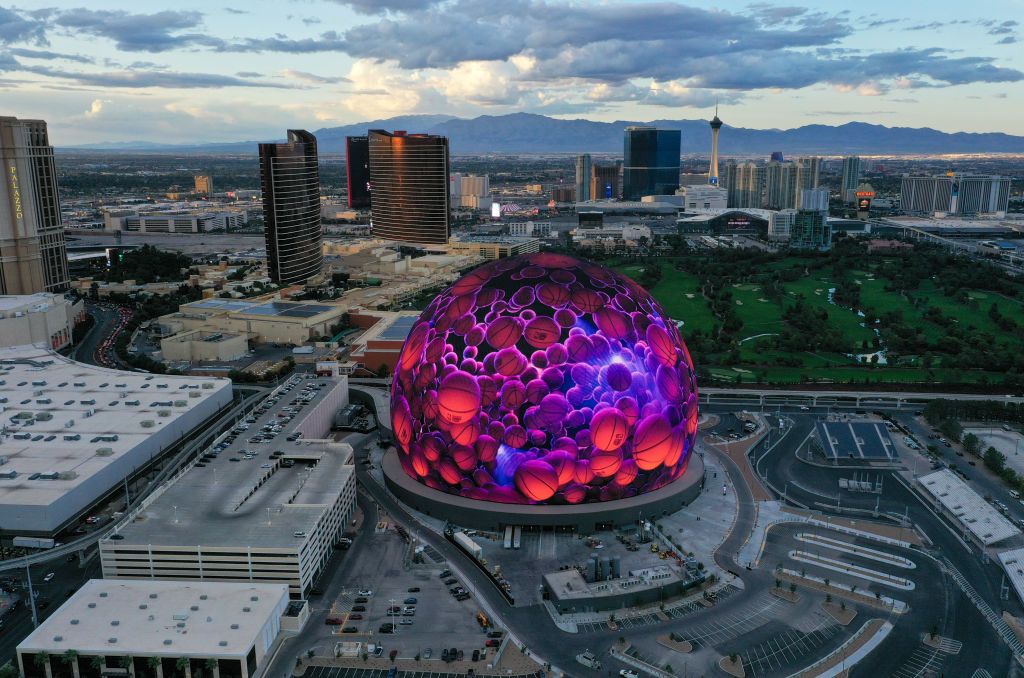
Located just east of the Venetian Las Vegas, the Sphere has quickly established itself as the most recognizable landmark on the Las Vegas Strip. Its presence has altered how visitors perceive the city’s nightlife and architecture.
Redefining Urban Landmarks
Throughout the history of United States tourism, landmarks have typically been static—statues, towers, or historic buildings. The Sphere represents a shift toward “living architecture.” Its exterior, consisting of 580,000 square feet of programmable LED lights, changes its appearance based on the time of day, current events, or artistic expressions. Because it is a dynamic structure, it functions differently than a traditional historic monument like the Gateway Arch in St Louis or the Space Needle in Seattle.
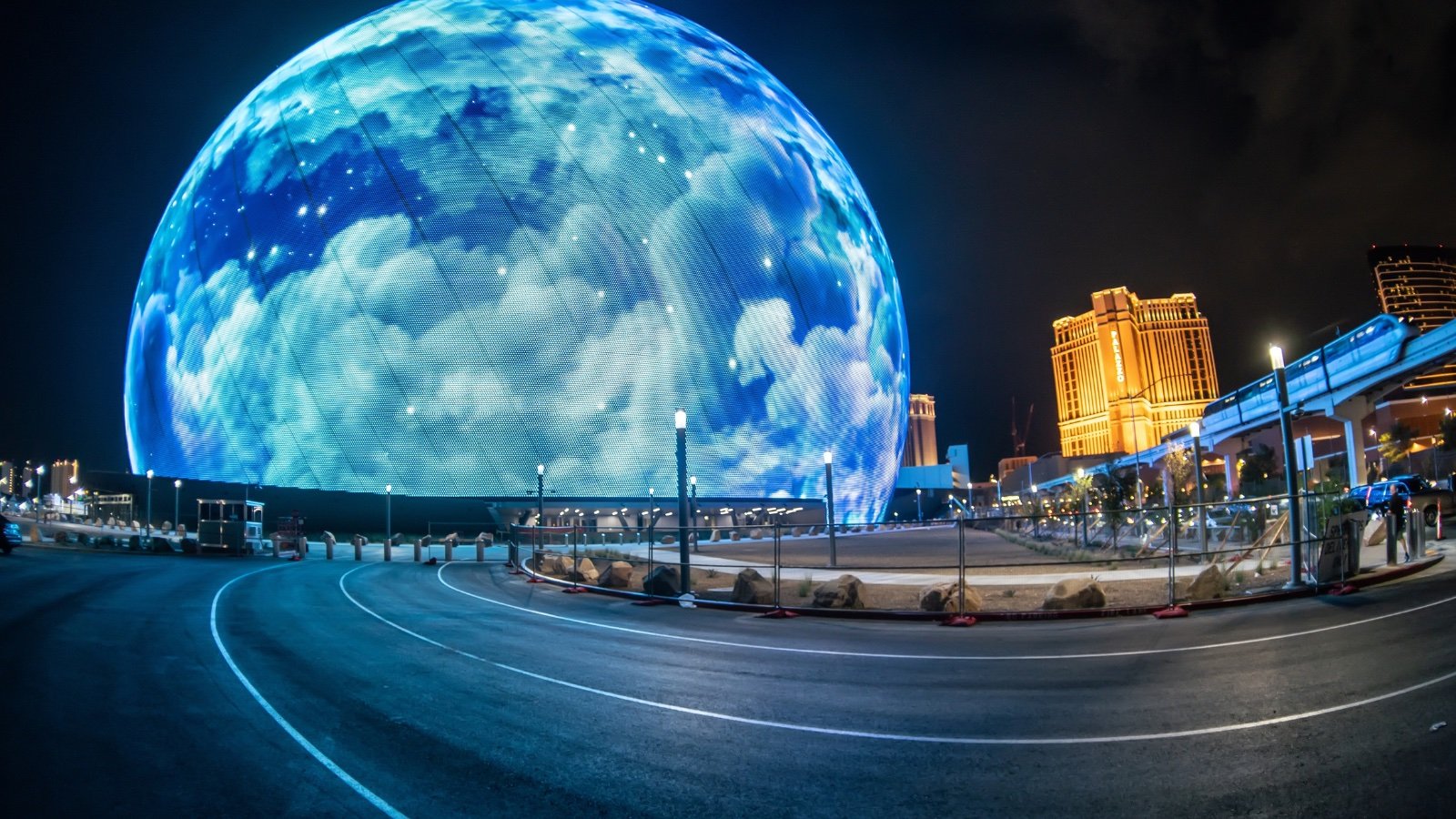
Impact on the Cityscape
The construction of the Sphere was strategically timed to coincide with a major resurgence in high-end entertainment in North America. By occupying a site near the Sands Expo, the developers ensured the venue was accessible to both tourists and business travelers attending large-scale conventions. Its completion in late 2023 marked the beginning of a new era for local architecture, influencing future developments that now look to blend aesthetic brilliance with high-tech functionality.
Challenges and Triumphs During Construction
Building a structure that defied existing architectural standards was not without its hurdles. The timeline from 2018 to 2023 was marked by various global supply chain interruptions and the logistical complexity of managing a construction site that functioned more like a high-tech laboratory than a standard building project.
Logistical Hurdles
Managing the sheer volume of materials required for the Sphere was a Herculean task. The dome alone weighs over 13,000 tons. Integrating the advanced audio system—which includes 167,000 speaker drivers and beamforming technology—meant that acoustics had to be addressed long before the building was finished. Sound engineers had to design the interior acoustic panels to prevent echoes within the spherical geometry, a task that required mathematical modeling far beyond standard arena design.
The Final Push
By the time the COVID-19 pandemic caused significant disruptions in the construction industry, the project was already deep into its specialized phase. Despite these setbacks, the commitment to a 2023 opening remained, and the crews worked in shifts to ensure the internal systems were calibrated. The final months of construction were dedicated to “The Sphere Experience,” a custom-made show designed to highlight the full capabilities of the venue’s technological suite, including its haptic seats and wind and scent machines.
The Cultural Significance of the Venue
The Sphere is more than just a place to watch a show; it is a cultural phenomenon. Its construction timeline mirrors the technological advancement of the early 2020s, acting as a snapshot of what is possible when human creativity is paired with unlimited resources.
Architectural Legacy
Future historians will likely view the construction of the Sphere as the moment when immersive storytelling became a central pillar of architectural design. Just as the Eiffel Tower represented the pinnacle of iron-wrought engineering in France during the late 19th century, the Sphere stands as a testament to the digital-first design philosophy of the 21st century.
Future Perspectives
Now that the building is complete and fully operational, the focus has shifted from construction to long-term sustainability and utility. The venue continues to host residency artists, high-profile sporting events, and unique cinematic screenings. Its integration into the fabric of Las Vegas has been so successful that it is now difficult to imagine the Mojave Desert skyline without its shimmering, spherical presence.
The story of when the Sphere was built—from the early blueprints in 2018 to its spectacular launch in 2023—serves as a reminder that architecture is never truly finished. It evolves with the content it projects, the people who experience it, and the technological advancements that allow it to remain at the cutting edge of global entertainment. Whether one views it from a penthouse suite at the Wynn Las Vegas or while walking along the busy sidewalks of the Strip, the Sphere stands as a monumental achievement of our time.
LifeOutOfTheBox is a participant in the Amazon Services LLC Associates Program, an affiliate advertising program designed to provide a means for sites to earn advertising fees by advertising and linking to Amazon.com. Amazon, the Amazon logo, AmazonSupply, and the AmazonSupply logo are trademarks of Amazon.com, Inc. or its affiliates. As an Amazon Associate we earn affiliate commissions from qualifying purchases.