
A Glimpse into California’s Capital Punishment History
The history of capital punishment in California is a complex tapestry woven through legal, social, and ethical debates that span nearly two centuries. From its earliest days as a state, California embraced the death penalty, initially carrying out executions by hanging. These early methods reflected the prevailing attitudes of the time, often conducted in public view as a stark deterrent. As the state matured, so too did its approach to capital punishment, evolving from public spectacle to more private, “humane” methods, although the fundamental premise of state-sanctioned death remained.
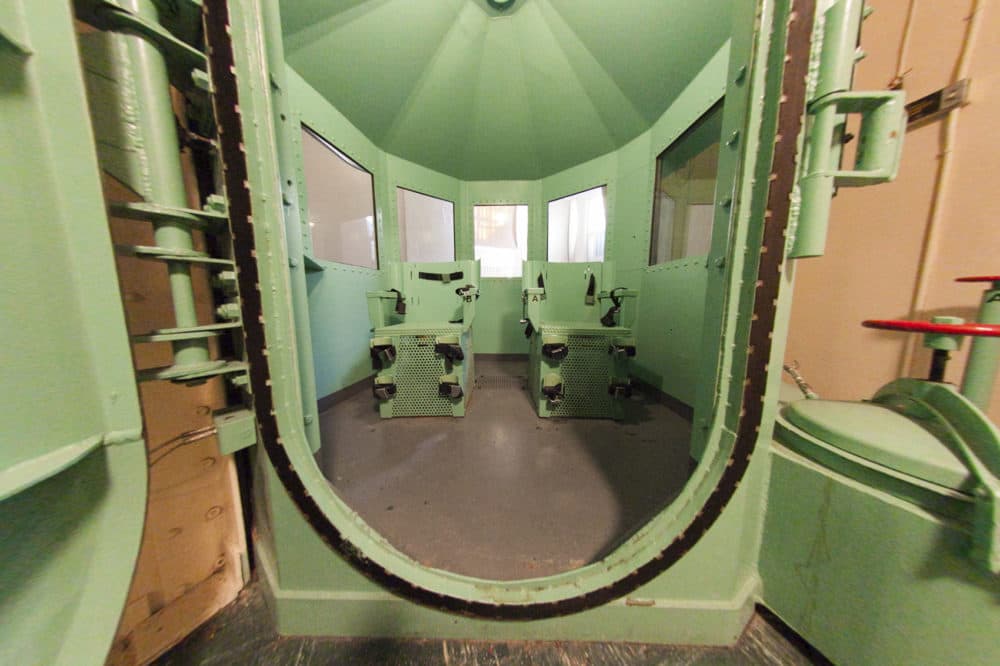
The late 19th and early 20th centuries saw a significant shift in execution protocols. Hanging remained the primary method until 1937, when California adopted the gas chamber. This change was touted as a more civilized and less brutal alternative, moving executions entirely behind the walls of correctional facilities, primarily San Quentin State Prison. Located on the shores of San Francisco Bay, San Quentin State Prison became the sole execution site for men in the state, a place steeped in grim history and legal finality. Women sentenced to death were historically executed at California Institution for Women in Chino, though no women were executed there after the adoption of the gas chamber. For decades, the towering walls of San Quentin State Prison witnessed the ultimate penalty for countless individuals, solidifying its place as a formidable historical landmark in the state’s judicial narrative.
The latter half of the 20th century brought increasing scrutiny and legal challenges to capital punishment across the United States. In 1972, the California Supreme Court, in People v. Anderson, declared the state’s death penalty unconstitutional, leading to a brief hiatus. This ruling commuted the sentences of all 105 death row inmates to life imprisonment. However, public sentiment largely favored retaining capital punishment, prompting a constitutional amendment (Proposition 17) later that year, which explicitly permitted the death penalty. Subsequently, new legislation was passed in 1977 to reinstate it, with further refinements in 1978 following the passage of Proposition 7, which broadened the categories of special circumstances for which the death penalty could be applied. This tumultuous period underscored the deeply divided opinions within California regarding the morality and efficacy of capital punishment, setting the stage for subsequent legal battles and changes in execution methods. By the early 1990s, lethal injection began to replace the gas chamber, once again reflecting a societal effort to make the process appear less violent, though the controversy surrounding its application only intensified.
The Final Execution: Clarence Ray Allen
The last individual executed by the state of California was Clarence Ray Allen on January 17, 2006. His case represented the culmination of a lengthy and complex legal journey that began with heinous crimes committed nearly three decades prior. Clarence Ray Allen was 76 years old at the time of his execution, making him one of the oldest inmates ever executed in California and in the nation. His advanced age and various health issues, including diabetes and deafness, added layers of debate to his already high-profile case.
Allen’s criminal history was extensive and brutal. In 1974, he was convicted of ordering the murder of a witness, Mary Sue Kitts, who was set to testify against him in a burglary case. While serving a life sentence for this crime at Folsom State Prison, Allen orchestrated another series of murders. From behind bars, he conspired with another inmate and his son, Roger Allen, to eliminate witnesses who could implicate him in the Kitts murder and other crimes. This conspiracy led to the murders of three individuals: Byron Schletewitz, who managed a market Allen had previously robbed; Schletewitz’s employee, Josephine Rocha; and a neighbor, Douglas White. These murders occurred on September 5, 1980, and were carried out with extreme brutality, with the victims shot at close range with a shotgun.
The planning and execution of these crimes, while Allen was already incarcerated, deeply shocked the public and legal community. In 1982, he was convicted of three counts of first-degree murder with special circumstances, making him eligible for the death penalty. His sentence was subsequently upheld through numerous appeals in both state and federal courts, culminating in a denial by the U.S. Supreme Court just days before his scheduled execution.
On the night of January 17, 2006, Clarence Ray Allen was executed by lethal injection at San Quentin State Prison. The execution took place in the state’s lethal injection chamber, a facility purpose-built to replace the gas chamber, situated within the historic prison complex. This specific location, within the formidable walls of San Quentin State Prison, has witnessed all of California’s executions since 1937, etching its architectural and functional purpose into the state’s legal history. The finality of Allen’s execution, carried out under a pall of protest and legal debate, marked a significant and, as it turned out, the last chapter in California’s active use of capital punishment.

The Shifting Tides: Moratorium and Legal Challenges
Following Clarence Ray Allen’s execution in 2006, a subtle but decisive shift began to take hold in California’s approach to the death penalty. While executions were not formally abolished, a de facto moratorium emerged, primarily due to relentless legal challenges concerning the method of lethal injection. Opponents argued that the state’s three-drug cocktail protocol constituted cruel and unusual punishment, violating constitutional protections. These legal battles created an intricate web of injunctions and rulings that effectively halted all scheduled executions.
The controversy surrounding lethal injection protocols intensified, leading to several legal hurdles that the state struggled to overcome. Courts demanded greater transparency and scientific rigor in the administration of lethal injections, prompting California corrections officials to spend years developing new protocols. Despite these efforts, legal challenges persisted, preventing any new executions from being carried out. This period, from 2006 onwards, saw California maintain the largest death row population in the Western Hemisphere, housed predominantly at San Quentin State Prison, without actually executing anyone. The stark juxtaposition of a sprawling death row and an inactive execution chamber highlighted the state’s complex and often contradictory stance on capital punishment.
The political landscape also played a crucial role in this evolving narrative. In the years following 2006, several ballot initiatives sought either to abolish the death penalty or to streamline its appeals process. Propositions 34 (2012) and 62 (2016) aimed to repeal capital punishment and replace it with life imprisonment without parole, but both were defeated by voters. Conversely, Proposition 66 (2016), which sought to expedite the appeals process and limit state court reviews, narrowly passed, reflecting the public’s continued ambivalence but also its desire for a more efficient system, even if executions were not actively occurring.
The most significant development came in March 2019, when Governor Gavin Newsom issued an executive order imposing a statewide moratorium on the death penalty. Citing moral objections and concerns about the disproportionate application of capital punishment to people of color, the risk of executing innocent individuals, and the exorbitant costs associated with maintaining the system, Newsom’s order immediately halted all executions for the duration of his governorship. Critically, he also ordered the dismantling of the execution chamber at San Quentin State Prison, signifying a symbolic and practical end to capital punishment in the state for the foreseeable future. This act transformed the infamous chamber from a site of legal finality into a historical relic, marking a profound shift in California’s judicial and historical landscape.
The Enduring Legacy and Future of Capital Punishment in California
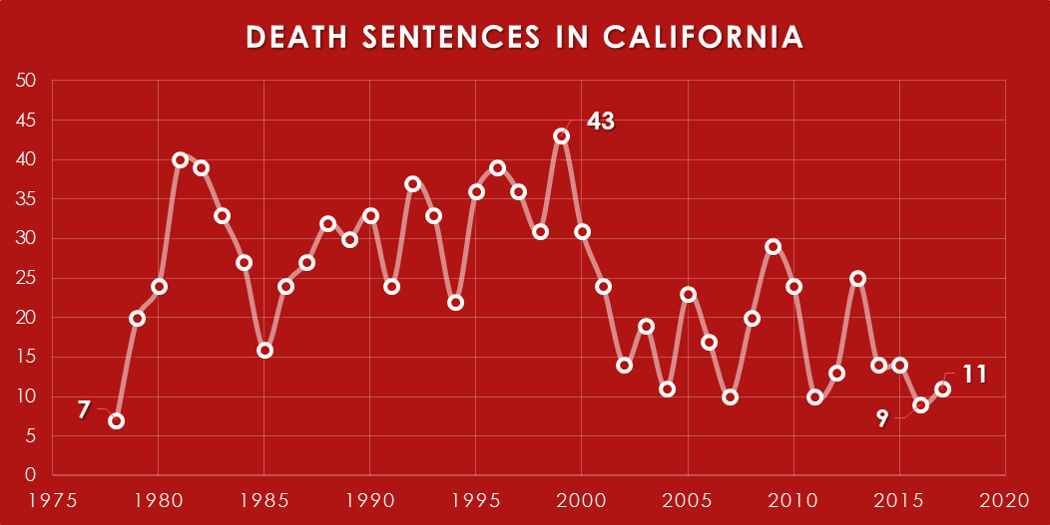
The moratorium on the death penalty in California does not legally abolish capital punishment; it merely suspends it, meaning that while no executions can take place, death sentences can still be sought and handed down. This creates a unique and historically significant situation: California retains the largest death row population in the United States, with over 600 inmates, yet it stands among states that have effectively ceased executions. The historical record of the death penalty in California, culminating in Clarence Ray Allen’s execution and the subsequent moratorium, offers a compelling case study in a state grappling with its foundational principles of justice and human rights.
The legacy of this historical trajectory is multifaceted. On one hand, it speaks to the evolving moral and ethical considerations within a diverse and progressive state. The arguments against capital punishment — revolving around issues of fairness, racial bias, the potential for irreversible error, and its financial burden — gained significant traction over time, culminating in the Governor Gavin Newsom’s bold executive action. On the other hand, the continued existence of capital punishment on the books, alongside the electorate’s past rejections of outright repeal, indicates that public opinion remains divided, reflecting deeply held beliefs about retribution and justice for heinous crimes.
The dismantling of San Quentin State Prison’s execution chamber is more than just a procedural change; it is a symbolic gesture that recontextualizes one of California’s most infamous historical landmarks. No longer an active site of state-sanctioned death, the facility now stands as a monument to a past era, a grim reminder of a practice that is, for now, confined to history books and legal texts rather than current events. This shift compels us to reflect on the historical path that led California to this point, examining the legal frameworks, social movements, and political decisions that shaped its unique stance.
The future of capital punishment in California remains uncertain. A future governor could theoretically reverse the moratorium, or voters could once again decide the fate of death row inmates through a new ballot initiative. However, the current pause allows for a critical re-evaluation of the state’s criminal justice system, inviting a deeper historical analysis of what has been and what could be. The story of the death penalty in California, from its violent origins to its current suspended state, provides invaluable insights into the historical evolution of justice, punishment, and human dignity within one of the most influential states in the nation. It stands as a testament to the dynamic interplay between law, society, and morality, continuously shaping the narrative of a prominent historical landmark and the principles it once upheld.
LifeOutOfTheBox is a participant in the Amazon Services LLC Associates Program, an affiliate advertising program designed to provide a means for sites to earn advertising fees by advertising and linking to Amazon.com. Amazon, the Amazon logo, AmazonSupply, and the AmazonSupply logo are trademarks of Amazon.com, Inc. or its affiliates. As an Amazon Associate we earn affiliate commissions from qualifying purchases.