
Arizona, often synonymous with scorching deserts, saguaro cacti, and year-round sunshine, holds a fascinating secret: it snows, and often quite a lot, in specific regions. While the image of a sun-baked landscape dominates popular perception, the reality is that the state boasts a remarkably diverse climate, spanning from arid deserts to alpine peaks. For those contemplating a winter visit or simply curious about this unexpected meteorological phenomenon, understanding Arizona’s snowy side is essential for planning an unforgettable travel experience. The question “When was the last time it snowed in [Arizona]?” isn’t simple; it depends entirely on where you are, transforming the travel narrative from desert exploration to a winter wonderland adventure.

Unraveling Arizona’s Snowy Surprises: A Climate Overview
The notion that Arizona never sees snow is a common misconception. While cities like Phoenix and Tucson rarely experience significant snowfall, the state’s high country regularly transforms into a pristine, snow-covered paradise during colder months.
Beyond the Desert: Arizona’s Diverse Topography
Arizona’s elevation ranges dramatically, from just over 70 feet near the Colorado River to over 12,600 feet at Humphreys Peak. This vast topographical variance is key to its varied climate zones. The state can be broadly divided into hot deserts in the south and west, a Transition Zone with increasing elevations, and the Colorado Plateau in the north, home to forests, mountains, and high-desert terrain. It is primarily within this Colorado Plateau and parts of the Transition Zone that snowfall is a regular, anticipated occurrence, making these areas prime travel destinations for winter sports enthusiasts and those seeking a scenic cold-weather escape.
The Dynamics of Arizona’s Winter Weather
Winter in Arizona typically runs from December through February, though snowfall can occur as early as October and as late as April in higher elevations. The state experiences a distinct monsoon season in summer, but winter precipitation often comes from Pacific storms. When these systems encounter the cold air and high elevations of northern Arizona, they frequently drop substantial amounts of snow. The Mogollon Rim, a prominent geological feature, enhances precipitation, often leading to heavier snowfall. This dynamic interplay ensures a reliable winter season for Arizona’s snow country.
Flagstaff and Arizona’s High Country: A Winter Wonderland
When discussing snowfall in Arizona, the conversation inevitably turns to Flagstaff. Nestled at nearly 7,000 feet, Flagstaff is consistently one of the snowiest incorporated cities in the United States, averaging over 100 inches of snow annually.
A Haven for Snow Enthusiasts
Flagstaff is the undisputed hub for winter sports in Arizona. Just a short drive north lies Arizona Snowbowl, a premier ski resort on the San Francisco Peaks. Arizona Snowbowl typically opens in late November or early December and operates through April, offering slopes for all skill levels and breathtaking views from Humphreys Peak. Beyond alpine skiing, Flagstaff and its surrounding Coconino National Forest provide extensive opportunities for cross-country skiing, snowshoeing, and snow play. Popular spots include the Flagstaff Nordic Center and trails off Snowbowl Road. The city itself embraces its winter identity, with cozy cafes, local breweries, and unique shops adding to the charm of a snowy getaway.
Recent Snowfall Events and Historical Context
While average snowfall is a good indicator, specific winter seasons vary. The winter of 2022-2023 saw exceptionally heavy snowfall, with Flagstaff receiving well over its average, delighting skiers. Other notable heavy snow years include 2018-2019 and 1972-1973, when Flagstaff accumulated over 200 inches. Conversely, some winters are drier, leading to shorter ski seasons. Travelers should consult long-range forecasts and current conditions before booking, using resources like the National Weather Service and local ski resorts.
Other Notable Snowy Destinations
Beyond Flagstaff, several other Arizona destinations offer delightful winter experiences:
- Grand Canyon National Park: The South Rim of the Grand Canyon typically receives significant snowfall, transforming its iconic vistas into a magical sight. Viewing the canyon dusted in white is an unparalleled experience, often with fewer crowds.
- Prescott: Located in the central mountains (~5,300 feet), Prescott receives 10-20 inches of snow annually. Its historic courthouse square and Victorian architecture are picturesque under snow, offering a charming small-town winter escape.
- White Mountains (e.g., Greer, Show Low, Pinetop-Lakeside): In eastern Arizona, these towns also experience significant snowfall. This area offers a quieter, rustic winter experience, with opportunities for snowmobiling, cross-country skiing, and ice fishing. Sunrise Park Resort is another option for alpine skiing.
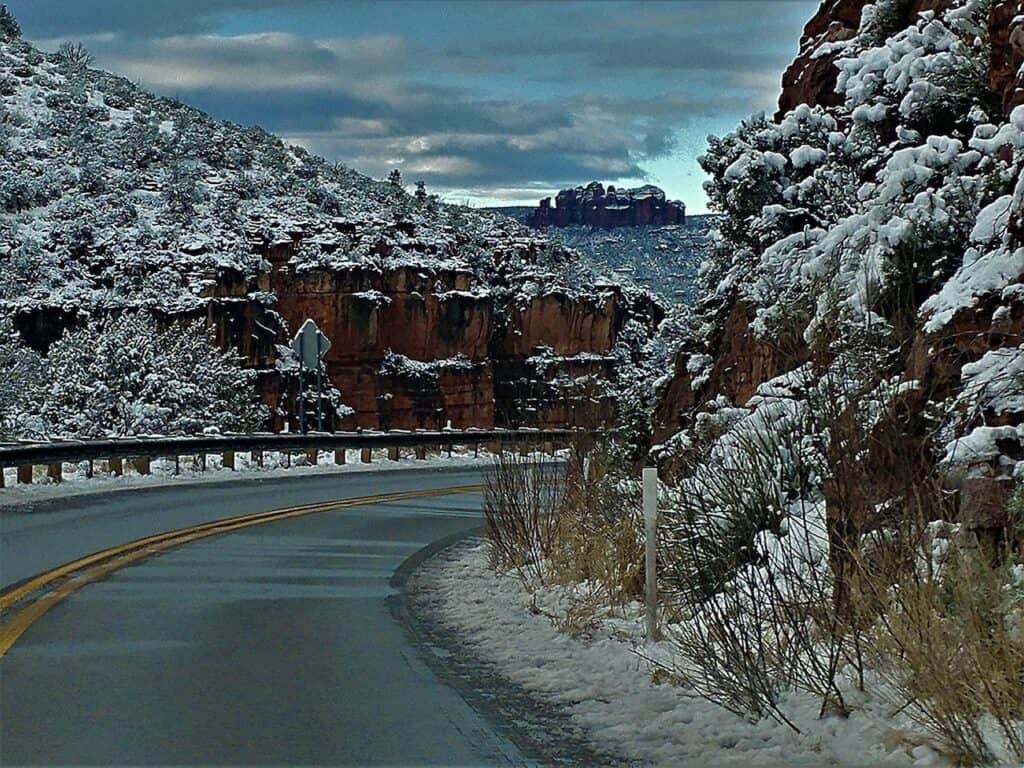
- Sedona: While less frequent, a light dusting of snow on Sedona’s famous red rocks is a sight of unparalleled beauty. This usually occurs only a few times a year and melts quickly, but timing a visit just right can yield stunning photographic opportunities.
Planning Your Arizona Winter Escape
For travelers accustomed to traditional winter destinations, planning a snowy Arizona trip requires specific considerations.
Best Times to Visit for Snow

The prime window for reliable snow in northern Arizona is generally from late December through early March.
- December: Often sees the first significant snowfalls, creating festive holiday atmospheres. Arizona Snowbowl is usually open.
- January & February: Typically the coldest and snowiest months, offering the best conditions for skiing and snowboarding.
- March: Can still deliver good snow, especially early in the month, with milder temperatures for spring skiing.
Travelers should monitor weather forecasts closely.
Essential Gear and Preparation
Visiting Arizona’s high country in winter means preparing for legitimate cold and snow.
- Clothing: Layering is key. Pack waterproof outer layers, warm base layers, insulated jackets, hats, gloves, and waterproof boots.
- Vehicle: If driving, ensure your vehicle is winter-ready: good tires (all-season or winter), checked fluids, and an emergency kit. Four-wheel drive or all-wheel drive vehicles are advisable, and tire chains might be necessary. Always check road conditions via ADOT’s website or 511 system.
- Safety: Be aware of altitude sickness in high-elevation areas. Stay hydrated and acclimate gradually.
Activities Beyond Skiing
While Arizona Snowbowl is a major draw, snowy regions offer other activities:
- Snowshoeing & Cross-Country Skiing: Extensive trail networks in the Coconino National Forest and White Mountains.
- Sledding & Tubing: Family-friendly fun at designated snow play areas near Flagstaff.
- Scenic Drives & Photography: Routes like US-180 to the Grand Canyon National Park offer spectacular winter scenery.
- Wildlife Viewing: Winter can be an excellent time to spot wildlife.
The Unique Charm of Arizona’s Snowy Landscapes
The allure of snow in Arizona lies in the striking contrast it creates with the state’s warm reputation, transforming familiar landscapes into something ethereal.
Contrasting Beauty: Red Rocks Under Snow
One of the most breathtaking sights is Sedona’s vibrant red rock formations dusted with snow. While significant accumulation is rare, even a light covering transforms the iconic landscape into a dramatic palette of deep reds, stark whites, and brilliant blue skies. This ephemeral beauty, usually lasting a day or two, is highly sought after by photographers.
The Desert’s Dusting: A Rare Phenomenon
While regular snowfall is reserved for the high country, the desert regions occasionally experience a dusting, making headlines. Cities like Phoenix and Tucson receive snow very infrequently, typically once every few decades. When it does occur, it’s usually light and short-lived. The last notable snowfall in Phoenix was in February 2019. These events are exceptional, offering a rare glimpse of saguaros wearing frosty caps, reminding us of Arizona’s beautiful extremes.
Beyond the Flakes: Maximizing Your Arizona Winter Experience
Embracing Arizona’s snowy side opens up new travel possibilities.
Combining Snow Adventures with Desert Exploration
One of the greatest advantages is experiencing two vastly different climates within a short drive. Imagine skiing at Arizona Snowbowl in the morning and by afternoon, hiking among saguaros in Phoenix or exploring Scottsdale. A popular itinerary involves flying into Phoenix Sky Harbor International Airport, driving north through Sedona for a red rock stop, then to Flagstaff for snow activities, before looping back south. This unique contrast provides an unparalleled travel experience.
Winter Events and Festivals
Arizona’s snowy towns often host charming winter events. Flagstaff has holiday lighting and winter markets. Prescott is famous for its “Christmas City, USA” decorations. Checking local tourism boards enhances your visit.
Where to Stay: Cozy Cabins and Mountain Resorts
To fully immerse yourself, consider accommodations that complement the winter atmosphere. Flagstaff offers boutique hotels and forest cabins. Near Arizona Snowbowl, vacation rentals are popular. In the White Mountains, rustic lodges provide secluded retreats. Even in Sedona, many resorts offer fireplaces, perfect for cozying up. These choices are integral to crafting the desired travel experience.
In conclusion, the answer to “When was the last time it snowed in [Arizona]?” is “frequently, if you know where to look.” Arizona defies its desert stereotype, offering vibrant winter sports destinations and unique snowy landscapes. For the savvy traveler, Arizona in winter presents an extraordinary opportunity to experience sun-drenched deserts and snow-capped peaks, often within hours of each other, creating a truly unforgettable travel guide.
LifeOutOfTheBox is a participant in the Amazon Services LLC Associates Program, an affiliate advertising program designed to provide a means for sites to earn advertising fees by advertising and linking to Amazon.com. Amazon, the Amazon logo, AmazonSupply, and the AmazonSupply logo are trademarks of Amazon.com, Inc. or its affiliates. As an Amazon Associate we earn affiliate commissions from qualifying purchases.