
The Corn Palace in Mitchell, South Dakota is a truly unique and enduring American attraction. Far from being a mere roadside curiosity, it stands as a testament to human ingenuity, agricultural pride, and artistic expression, all rendered in kernels of corn and other grains. Annually, this distinctive structure undergoes a remarkable transformation, with its exterior walls redecorated in vibrant, intricate murals crafted entirely from an array of naturally colored corn and native grasses. This ever-changing canvas offers a perpetually fresh experience for visitors, making it a must-see destination for anyone traveling through the heartland of the United States.

A Monument to Agriculture and Artistry
The genesis of the Corn Palace dates back to 1892, conceived as a means to promote agriculture and attract settlers to the region. The initial structure was a more modest affair, but its appeal and the creative potential of its corn-based artistry quickly became apparent. Over the decades, the building has been rebuilt and expanded, evolving into the iconic landmark it is today. The current structure, built in the early 1900s, boasts a distinctive Moorish-style design, complete with onion domes, which provides an unexpected and delightful contrast to the rustic materials used in its decoration.
The Annual Corn Mural Project
The most captivating aspect of the Corn Palace is undoubtedly its annual redecoration. Each year, a team of artists, often led by a dedicated designer, undertakes the monumental task of creating new murals. This process involves selecting specific varieties of corn, each possessing a unique natural hue – from deep reds and blues to vibrant yellows and whites. These kernels are then meticulously hand-selected, sorted, and pressed into a special substrate covering the building’s exterior.
The themes of the murals are diverse, ranging from historical tributes and patriotic motifs to depictions of local life, nature, and even abstract designs. The artists work against the clock, often completing the entire transformation in a matter of weeks during the late summer and early autumn. This fleeting nature of the artwork adds to its allure; once the season is over, the corn begins to degrade, and the cycle of creation begins anew. This constant reinvention ensures that repeat visitors will always find something new to marvel at.
Materials and Techniques
The artists utilize over 30 different colors of corn and other grains, such as milo, rye, and wheat, to create their palettes. The kernels are not dyed or painted; their natural colors are the sole medium. This reliance on nature’s bounty is a core tenet of the Corn Palace experience. The process involves:
- Design Conception: Artists develop intricate designs, often with detailed sketches and color plans.
- Kernel Selection: Thousands of bushels of corn are carefully sorted by color.
- Preparation: The corn kernels are treated to help preserve them, though they are still organic and subject to natural degradation.
- Application: Kernels are adhered to the building’s exterior, often using specialized tools and techniques to create detailed images and textures.
- Finishing: The murals are carefully reviewed and touched up to ensure their visual impact.
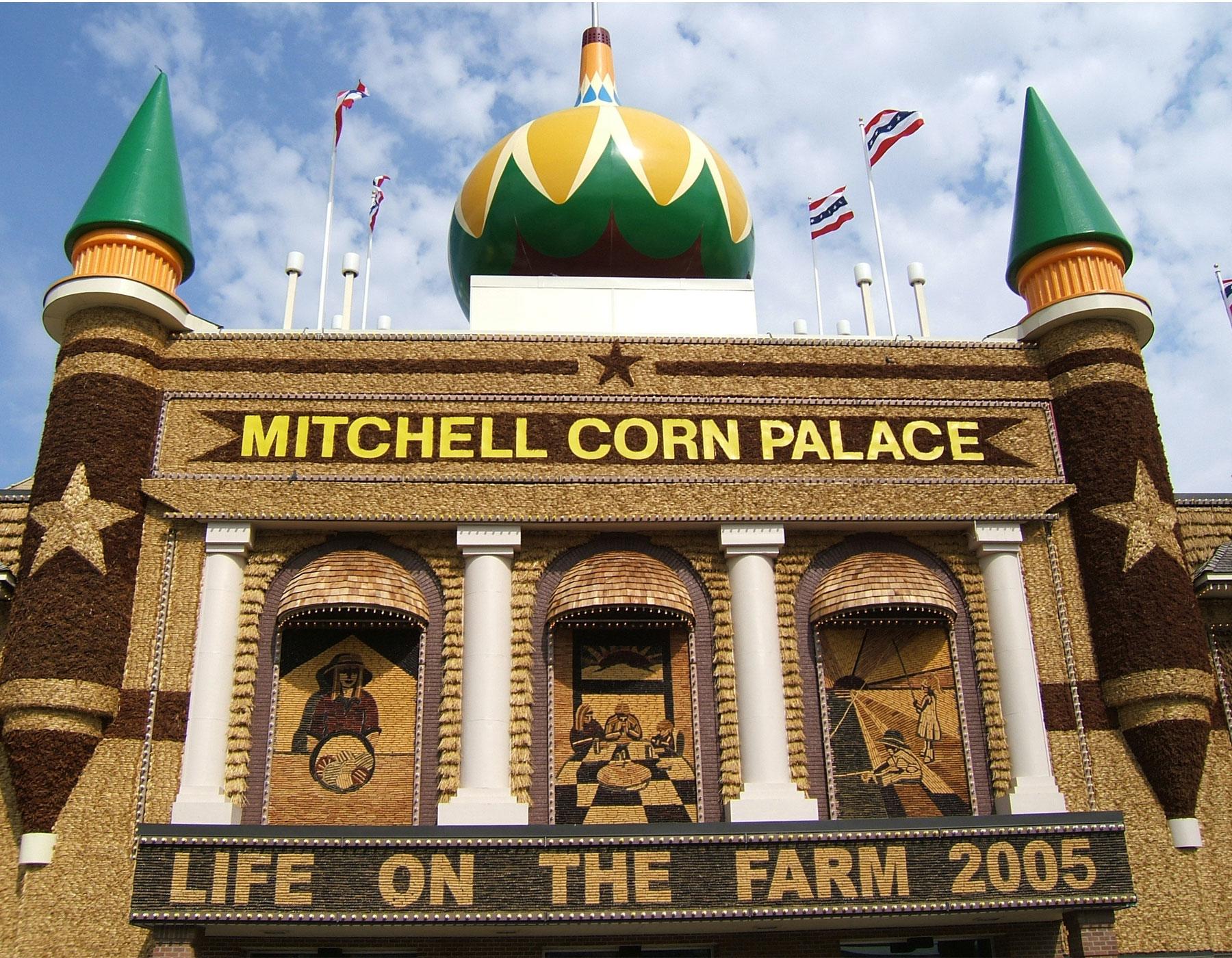
The dedication and skill required for this undertaking are truly impressive, transforming an agricultural product into a celebrated form of public art.
A Hub of Community and Tourism
Beyond its visual spectacle, the Corn Palace serves as a vital center for the Mitchell community and a significant draw for tourists. It hosts a variety of events, from concerts and graduations to community gatherings and agricultural expos. The building itself houses a gift shop, offering souvenirs and local crafts, and a cafeteria that often features corn-themed delicacies.
Experiencing the Corn Palace
Visiting the Corn Palace is more than just seeing a building; it’s an immersion into a unique slice of American culture.
- Seasonal Attendance: While the murals are the main draw, the Corn Palace is open year-round. The best time to visit for the full mural experience is typically from late August through the fall.
- Free Admission: Entry to the Corn Palace itself is free, making it an accessible attraction for all.
- Interactive Exhibits: Inside, visitors can learn about the history of the Corn Palace, the process of creating the murals, and the agricultural significance of corn in South Dakota.
- Surrounding Area: While the Corn Palace is the primary attraction in Mitchell, the city offers charming shops, local eateries, and a friendly atmosphere that complements a visit. Nearby attractions might include the Dakota Discovery Museum, which further explores the region’s heritage.
Economic Impact and Cultural Significance
The Corn Palace plays a crucial role in the local economy, drawing visitors from across the nation and beyond. It has become a symbol of South Dakota, representing the state’s rich agricultural heritage and its capacity for creative innovation. Its enduring popularity over more than a century speaks to its unique appeal and its ability to capture the imagination of people of all ages. It’s a place where the bounty of the land is celebrated with a flair for the artistic, creating an unforgettable experience for every visitor.

Beyond the Kernels: The Enduring Appeal of a Midwestern Icon
The Corn Palace is a testament to how even the most seemingly humble materials can be transformed into something extraordinary. It’s a living, breathing monument to the spirit of innovation and artistic expression found in the American heartland. The dedication of the artists, the community’s pride, and the sheer novelty of a building decorated entirely in corn ensure that this roadside marvel continues to be a compelling destination for travelers seeking the truly unique. It’s an experience that connects visitors to the land, to art, and to the enduring charm of South Dakota.
LifeOutOfTheBox is a participant in the Amazon Services LLC Associates Program, an affiliate advertising program designed to provide a means for sites to earn advertising fees by advertising and linking to Amazon.com. Amazon, the Amazon logo, AmazonSupply, and the AmazonSupply logo are trademarks of Amazon.com, Inc. or its affiliates. As an Amazon Associate we earn affiliate commissions from qualifying purchases.