
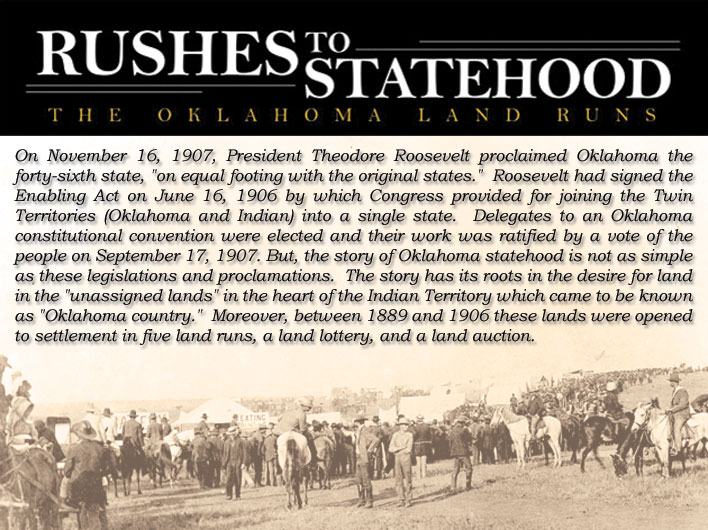
The Oklahoma Land Rush was a pivotal event in American history, a dramatic period of rapid settlement that reshaped the landscape and the lives of countless individuals. While the term “land rush” might conjure images of a single, chaotic event, it actually refers to a series of land openings that occurred primarily in the late 19th century, transforming the unassigned lands of the Indian Territory into burgeoning settlements and agricultural hubs. Understanding when these rushes occurred is key to appreciating the speed and scale of westward expansion and the opportunities and challenges it presented.
The Genesis of the Oklahoma Land Rush
The seeds of the Oklahoma Land Rush were sown through a complex interplay of government policy, westward migration, and the changing status of Native American lands. For decades, the federal government had pursued a policy of Indian Removal, relocating various tribes from their ancestral homelands to designated territories in the West. The Indian Territory, established in the mid-19th century, was intended to be a permanent homeland for these displaced tribes. However, by the latter half of the century, pressure mounted from settlers eager to acquire the fertile lands within this territory.
The Dawes Act and the Unassigned Lands
A significant turning point was the passage of the Dawes Act (also known as the General Allotment Act) in 1887. This legislation aimed to break up tribal lands into individual allotments for Native Americans, with the surplus lands deemed “unassigned” and therefore open for settlement by non-Native Americans. This act fundamentally altered the concept of tribal land ownership and paved the way for the large-scale dispossession of Native American territories. The vast tracts of land that were declared surplus, particularly in the central portion of the Indian Territory, became the focus of intense anticipation and preparation by would-be settlers.
The concept of “unassigned lands” was critical. While the Indian Territory was set aside for Native American tribes, certain areas, through treaties and legal maneuvering, were designated as available for non-Native settlement. These areas, often the most desirable agriculturally, fueled the desire for land ownership among a growing population of settlers from the United States.
The First and Most Famous: The Land Run of 1889
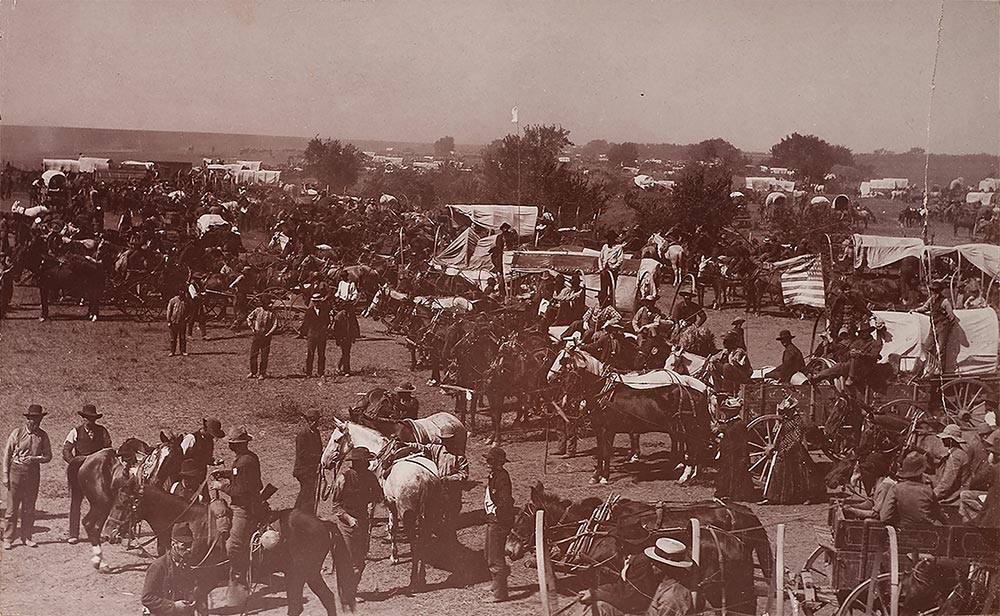
The most iconic and widely recognized of the Oklahoma Land Rushes, often referred to simply as “The Land Run,” took place on April 22, 1889. This event opened approximately 2 million acres of the Unassigned Lands for settlement. On that fateful day, at precisely noon, thousands of eager individuals, riding horses, driving wagons, and even on foot, surged across the border into the designated lands.
The Noon Shot and the Race for Claims
The signal for the land run was a cannon shot, fired precisely at noon. This marked the moment when settlers could legally enter the territory and stake their claims. The competition was fierce, with settlers aiming to reach desirable plots of land and establish their homesteads before others. The speed and determination displayed by the participants were remarkable, leading to a rapid establishment of towns and a dramatic transformation of the landscape.
The lands opened in 1889 included areas that would soon become major cities. Oklahoma City and Guthrie were among the most prominent settlements established as a direct result of this historic run. The speed at which these towns sprang into existence, often from nothing more than tents and temporary structures, is a testament to the fervent desire for land and opportunity that characterized the era. The story of the Oklahoma Land Rush of 1889 has been immortalized in literature, film, and historical accounts, capturing the spirit of adventure and the raw ambition of the American frontier.
Settlers and the Homestead Act
The primary mechanism for acquiring land during the Oklahoma Land Rush was the Homestead Act of 1862. This act allowed any U.S. citizen, or intended citizen, over the age of 21, who had never borne arms against the U.S. government, to claim 160 acres of surveyed government land. The claimant was required to live on the land for five years, cultivate it, and make improvements. Upon fulfilling these requirements, the settler would receive the title to the land for a nominal fee. This act was a powerful incentive for individuals and families seeking to establish their own farms and build a future.
The participants in the land rushes came from diverse backgrounds. Many were farmers and laborers from the surrounding states, seeking economic opportunity and the chance to own land, a dream often unattainable in more established regions. The allure of free or inexpensive land, coupled with the promise of a fresh start, drew hundreds of thousands of people to Oklahoma.
Subsequent Land Openings
While the 1889 run is the most famous, it was not the only land opening in Oklahoma. The federal government continued to open remaining lands in the Indian Territory to settlement through a series of subsequent land runs and lotteries. These later events also played a crucial role in the state’s development.
The Land Run of 1891
Following the success and impact of the 1889 opening, additional lands were made available. The Land Run of 1891 opened nearly 10 million acres of land, including the Cherokee Outlet, also known as the Cherokee Strip. This was a significantly larger opening than that of 1889, and it drew an even greater number of participants. The Cherokee Outlet had been established as part of the reservation for the Cherokee Nation, but through further negotiation and government action, portions were ceded and opened for settlement.
The Land Run of 1891 involved lands previously occupied by the Cherokee, Tonkawa, Pawnee, and Otoe tribes. This opening led to the establishment of numerous new towns and communities across northern Oklahoma. The process was similar to 1889, with designated lands opened at a specific time, allowing settlers to claim homesteads.
The Land Run of 1892 and the Kiowa-Comanche Lands
Another significant opening occurred in 1892, when lands belonging to the Kiowa and Comanche tribes were opened for settlement. These lands, located in southwestern Oklahoma, were also opened through a land run, attracting thousands of settlers eager to claim their share. This opening was a continuation of the federal policy of allotting tribal lands and making surplus acreage available for non-Native settlement.
The Land Run of 1901 and the Cherokee Outlet Lottery
The Land Run of 1901 marked another important phase in the settlement of Oklahoma. This particular opening was unique in that it involved a lottery system for some of the lands, particularly the remaining portions of the Cherokee Outlet. While land runs were still a feature, the lottery system offered a different mechanism for claim distribution, aiming to mitigate some of the chaotic aspects of the earlier runs. This opening finalized the settlement of much of the remaining unassigned lands.
The Opening of the Seminole and Creek Lands
The Seminole and Creek nations’ lands were also opened to settlement, though their openings were often more complex, involving allotment and individual sale rather than a single, large-scale land run. These openings, occurring in the years leading up to Oklahoma‘s statehood, further consolidated the process of transforming the Indian Territory into a state accessible for general settlement.
The Legacy and Impact of the Oklahoma Land Rushes
The Oklahoma Land Rushes were transformative events, shaping not only the demographic and economic landscape of Oklahoma but also contributing to the broader narrative of American westward expansion. They represent a period of intense opportunity for some, while simultaneously highlighting the displacement and dispossession of Native American peoples.
Economic and Social Transformation
The rapid influx of settlers brought about rapid economic development. Agriculture, ranching, and later, oil and gas extraction, became central to the state’s economy. Towns and cities grew at an unprecedented pace, requiring infrastructure, services, and governance. The Oklahoma Land Rushes created a unique blend of boomtown culture and frontier resilience.
The Experience of Native Americans
It is crucial to acknowledge that the Oklahoma Land Rushes came at a significant cost to the Native American tribes who had been promised their lands in perpetuity. The Dawes Act and subsequent openings led to the loss of millions of acres of ancestral territory, undermining tribal sovereignty and culture. The history of these land openings is inextricably linked to the history of Native American dispossession in the United States.

Oklahoma’s Statehood
The culmination of the settlement process, driven by the land rushes, was the admission of Oklahoma as the 46th state into the Union on November 16, 1907. The state’s formation was a direct consequence of the massive migration and settlement that began with the land openings. The legacy of the land rushes continues to be felt in the state’s identity, its cultural heritage, and its ongoing relationship with its Native American past and present. The story of when the Oklahoma Land Rush occurred is a story of ambition, settlement, and the profound reshaping of a vast territory.
LifeOutOfTheBox is a participant in the Amazon Services LLC Associates Program, an affiliate advertising program designed to provide a means for sites to earn advertising fees by advertising and linking to Amazon.com. Amazon, the Amazon logo, AmazonSupply, and the AmazonSupply logo are trademarks of Amazon.com, Inc. or its affiliates. As an Amazon Associate we earn affiliate commissions from qualifying purchases.