
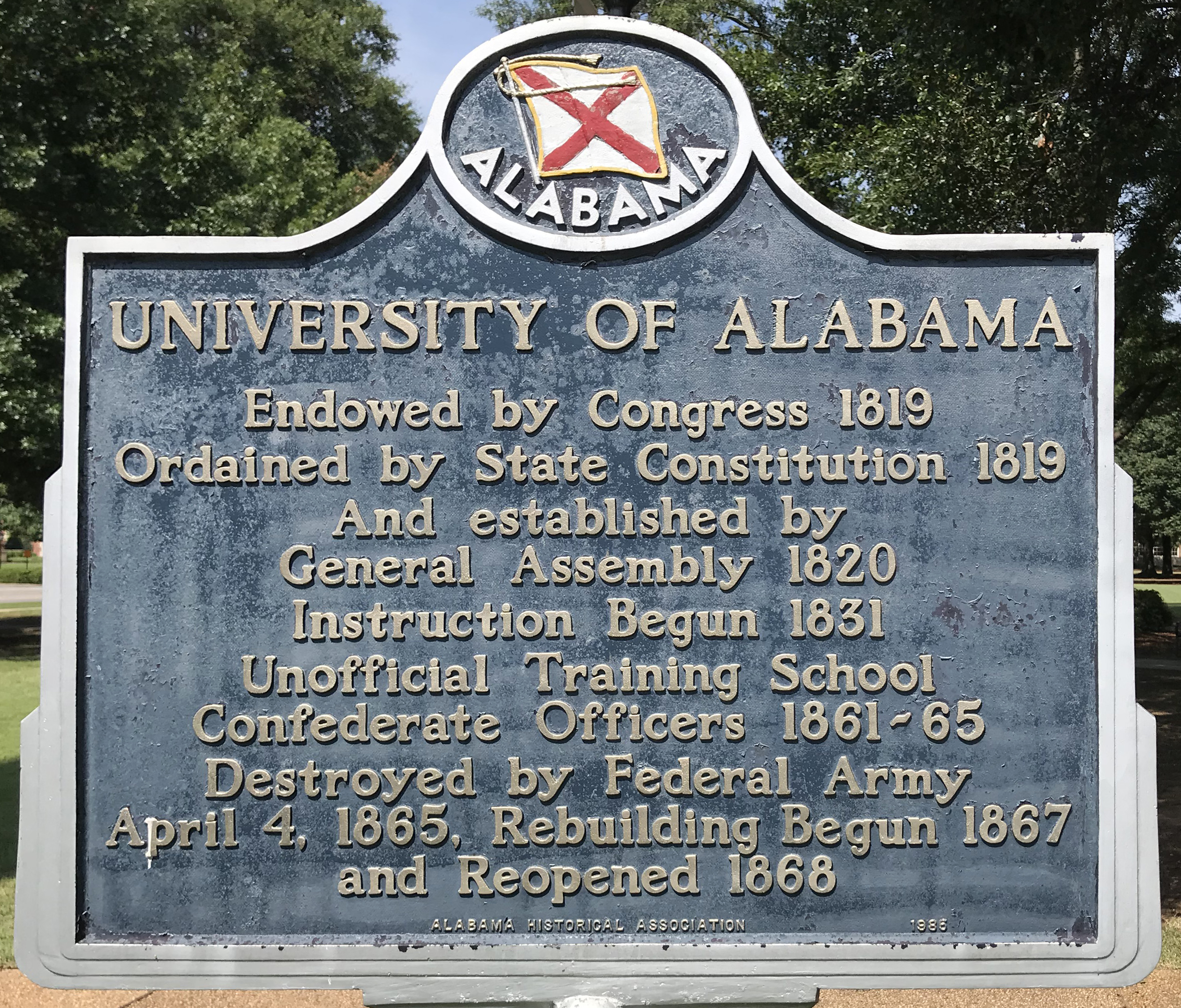
The University of Alabama, a prominent institution in the Southern United States, traces its legislative origins back to December 18, 1820, when the Alabama State Legislature formally established the institution. While the foundational act laid the groundwork, the university did not open its doors to students until April 18, 1831. This nearly eleven-year gap between legislative founding and operational commencement highlights the significant planning and development required to bring such a monumental educational landmark to fruition in the nascent state of Alabama. Today, the University of Alabama stands not only as a beacon of higher education but also as a living historical landmark, its campus a tapestry of antebellum charm, post-war resilience, and modern academic prowess. Understanding its founding involves delving into the early aspirations of a young state and the enduring architectural and historical legacy that defines it.
The Genesis of a Southern Legacy: Establishing a Landmark Institution
The birth of the University of Alabama is inextricably linked to the early history of the state itself. When Alabama achieved statehood in 1819, its leaders immediately recognized the critical importance of public education for its future citizens and the overall progress of the state. The vision was not merely to establish a college but to create a foundational institution that would cultivate intellect, foster innovation, and serve as a cultural touchstone for generations.
A Vision for Higher Education in Early Alabama
In the early 19th century, the concept of public universities was gaining traction across the burgeoning United States. New states, including Alabama, were keen to establish their own educational infrastructure to compete with older, more established institutions in the eastern states. The idea was to create a place where the brightest minds of Alabama could receive an education without having to travel great distances or bear exorbitant costs, thus ensuring a homegrown leadership class and an educated populace critical for the state’s development. This early vision was not just about academic instruction; it was about laying the intellectual groundwork for a society. The founders envisioned a comprehensive institution that would offer a broad curriculum, encompassing the sciences, humanities, and arts, preparing students for diverse roles in the new state. This ambitious plan positioned the future university as a central pillar of Alabama’s identity and growth.
The Legislative Act and Initial Location
On December 18, 1820, this vision took a decisive step towards reality. The Alabama State Legislature formally passed an act establishing “The University of Alabama.” This legislative action marked the official founding date, providing the legal framework and initial allocation of federal lands for its endowment. The selection of a site for such a significant state institution was a matter of considerable debate and political maneuvering. Eventually, after much deliberation, Tuscaloosa was chosen as the location in 1827. At the time, Tuscaloosa was the state capital, a vibrant and growing community that offered a central location and an environment conducive to academic pursuit. This decision was pivotal, not only for the university but also for the future development of Tuscaloosa as a leading educational and cultural center in Alabama. The initial legislative act and site selection were foundational moments that set the stage for the institution’s physical and intellectual development, firmly planting it as a landmark in the making.
The Early Years and Architectural Grandeur (1831-1865)
With the site selected, the real work of constructing the university began. The decade following the legislative act was dedicated to planning, designing, and erecting the necessary buildings to house the fledgling institution. This period saw the campus transform from an undeveloped tract of land into an architecturally significant landmark, embodying the aspirations of its founders.
Opening Doors: The First Classes and Campus Design
On April 18, 1831, the University of Alabama officially opened its doors, welcoming its first class of students. The initial campus design reflected the classical architectural tastes of the era, drawing inspiration from Greek Revival styles that symbolized democracy, intellect, and timelessness. The campus was meticulously planned around a central open space, known today as the Quad, which remains the heart of the university. Early buildings, though many were lost to history, were constructed with grandeur and durability in mind, intended to convey the permanence and importance of the institution. These structures were not just functional spaces; they were statements of purpose, designed to inspire awe and respect, instantly establishing the university as a significant architectural landmark in North America. The early curriculum was robust, focusing on classical studies, mathematics, and natural philosophy, designed to produce well-rounded citizens and leaders.
The Antebellum University: A Thriving Intellectual Hub
Throughout the antebellum period, the University of Alabama flourished, growing in stature and influence. It attracted students from across the Southern United States and beyond, becoming a vibrant intellectual hub. The campus continued to develop, adding more buildings that adhered to the grand architectural vision. The most iconic structure of this era was the Rotunda, designed by architect Stephen Elliott. Modeled after the Pantheon, the Rotunda housed the university library and museum, symbolizing the pursuit of knowledge and culture. This period also saw the construction of the Gorgas House, one of the few antebellum structures still standing today, and the majestic President’s Mansion, completed in 1841. These buildings were not just functional; they were embodiments of a classical ideal, their imposing presence serving as a landmark within the state and a testament to the university’s growing prestige. The university’s rapid development as an educational and architectural landmark, however, would soon face an unforeseen and devastating challenge.

A Phoenix from the Ashes: Reconstruction and Rebirth
The flourishing antebellum period came to an abrupt and catastrophic end with the outbreak of the Civil War. The University of Alabama, like much of the Southern United States, was profoundly impacted, suffering immense loss that would test its very existence.
The Devastation of the Civil War
By 1860, the University of Alabama had evolved into a military college, adapting to the rising tensions preceding the Civil War. Its students and faculty were actively involved in the conflict, and its strategic location and military character made it a target. In April 1865, just days before the war’s end, Union troops under the command of General John T. Croxton marched into Tuscaloosa and systematically destroyed the university campus. The destruction was almost total; the magnificent Rotunda, the libraries, the dormitories, and virtually all other academic buildings were burned to the ground. Only a handful of structures, including the President’s Mansion and the Gorgas House, were spared, reportedly due to pleas from the university’s president and his wife. This act of war was a devastating blow, wiping out decades of architectural development and priceless historical records. The university, once a proud landmark, was reduced to smoldering ruins, a stark symbol of the war’s destructive power.
Rebuilding and Redefining the Landmark
The period immediately following the Civil War and throughout Reconstruction was one of immense challenge and determined rebuilding. Despite the widespread economic devastation in Alabama, there was an unwavering commitment to resurrect the University of Alabama. In 1869, just four years after its destruction, the university officially reopened, albeit on a much smaller scale and with a significantly altered curriculum. The focus shifted from its military past to a more civilian-oriented education, crucial for the reconstruction of the state. The arduous task of rebuilding the campus began, with new structures gradually rising from the ashes. While the original grandeur of the antebellum campus, particularly the iconic Rotunda, could not be fully replicated, the new buildings were designed to be functional and aesthetically pleasing, laying the groundwork for the modern campus. This period of rebuilding was not merely about constructing new buildings; it was about redefining the university’s role and identity, demonstrating an enduring spirit of resilience that would become a hallmark of the institution. The re-emergence of the university from its wartime devastation cemented its status not just as a historical site but as a powerful landmark symbolizing rebirth and the indomitable spirit of education.
The University of Alabama Today: A Modern Landmark of Education and Heritage
Today, the University of Alabama stands as a vibrant, sprawling campus that masterfully blends its rich history with contemporary academic excellence. It is a living landmark, where the echoes of its past resonate through its preserved structures and the stories embedded in its grounds.
Enduring Architectural Gems and Historic Districts
Visitors to the University of Alabama can still experience significant architectural remnants and thoughtfully preserved historic districts that harken back to its storied past. The President’s Mansion, with its stately columns and classical design, remains a magnificent example of antebellum architecture and one of the few buildings to survive the Civil War. Similarly, the Gorgas House, originally a dining hall and later home to the university’s librarian and his family, offers a rare glimpse into the university’s earliest days. Both structures are meticulously maintained and serve as tangible links to the pre-war era, making them essential landmarks for anyone exploring the campus. The expansive Quad, though its surrounding buildings are mostly post-Civil War constructions, preserves the original layout and spirit of the antebellum campus. It remains the iconic central green space, hosting events, student life, and serving as a focal point for the university community. Newer buildings, while modern in function, often incorporate design elements that pay homage to the classical aesthetic of their predecessors, ensuring a cohesive and historically respectful architectural landscape. These enduring architectural gems and carefully curated districts transform the campus into a sprawling historical landmark, offering a unique journey through time.
The University as a Cultural and Historical Site
Beyond its physical structures, the University of Alabama functions as a dynamic cultural and historical site, inviting exploration and learning. Its libraries house extensive archives, including documents, photographs, and artifacts that chronicle the university’s history, the Civil War, and the broader history of Alabama. These collections are invaluable resources for researchers and history enthusiasts alike, preserving the institutional memory and contextualizing its role in regional and national events. Campus museums, such as the Alabama Museum of Natural History (located in Smith Hall, a significant early 20th-century building), further enrich the cultural offerings. The university frequently hosts historical tours, lectures, and exhibitions that highlight its unique heritage, making its history accessible to students, alumni, and the general public. As a living landmark, the University of Alabama serves not just as an educational institution but as a custodian of history, a place where the past is honored, studied, and allowed to inform the present and future.
Conclusion: A Legacy Forged in Time
The question “When Was The University of Alabama Founded?” opens a window into a rich and complex history. Founded legislatively on December 18, 1820, and opening its doors on April 18, 1831, the university’s journey has been one of ambition, devastation, and remarkable resilience. From its classical antebellum splendor to its fiery destruction during the Civil War and subsequent rebirth, the University of Alabama has consistently re-established itself as a vital educational landmark. Its campus, with its blend of preserved historical architecture and modern facilities, stands as a testament to the enduring power of education and the unwavering commitment to intellectual pursuit. As a historical landmark, it not only commemorates the past but also actively shapes the future, embodying the spirit of Alabama and continuing its legacy as a beacon of knowledge and culture.
LifeOutOfTheBox is a participant in the Amazon Services LLC Associates Program, an affiliate advertising program designed to provide a means for sites to earn advertising fees by advertising and linking to Amazon.com. Amazon, the Amazon logo, AmazonSupply, and the AmazonSupply logo are trademarks of Amazon.com, Inc. or its affiliates. As an Amazon Associate we earn affiliate commissions from qualifying purchases.