
The question of when Tucson, Arizona was “founded” is multifaceted, much like the rich tapestry of its history. While a specific date, August 20, 1775, marks the formal establishment of the Spanish presidio, the human story of this Sonoran Desert landmark stretches back millennia. To truly understand Tucson, Arizona’s origins, one must delve into the deep layers of indigenous habitation, Spanish colonial ambition, Mexican independence, and American expansion that shaped its very identity. This historical journey reveals Tucson, Arizona not as a singular event, but as a continuous unfolding of cultures and civilizations on an ancient land.
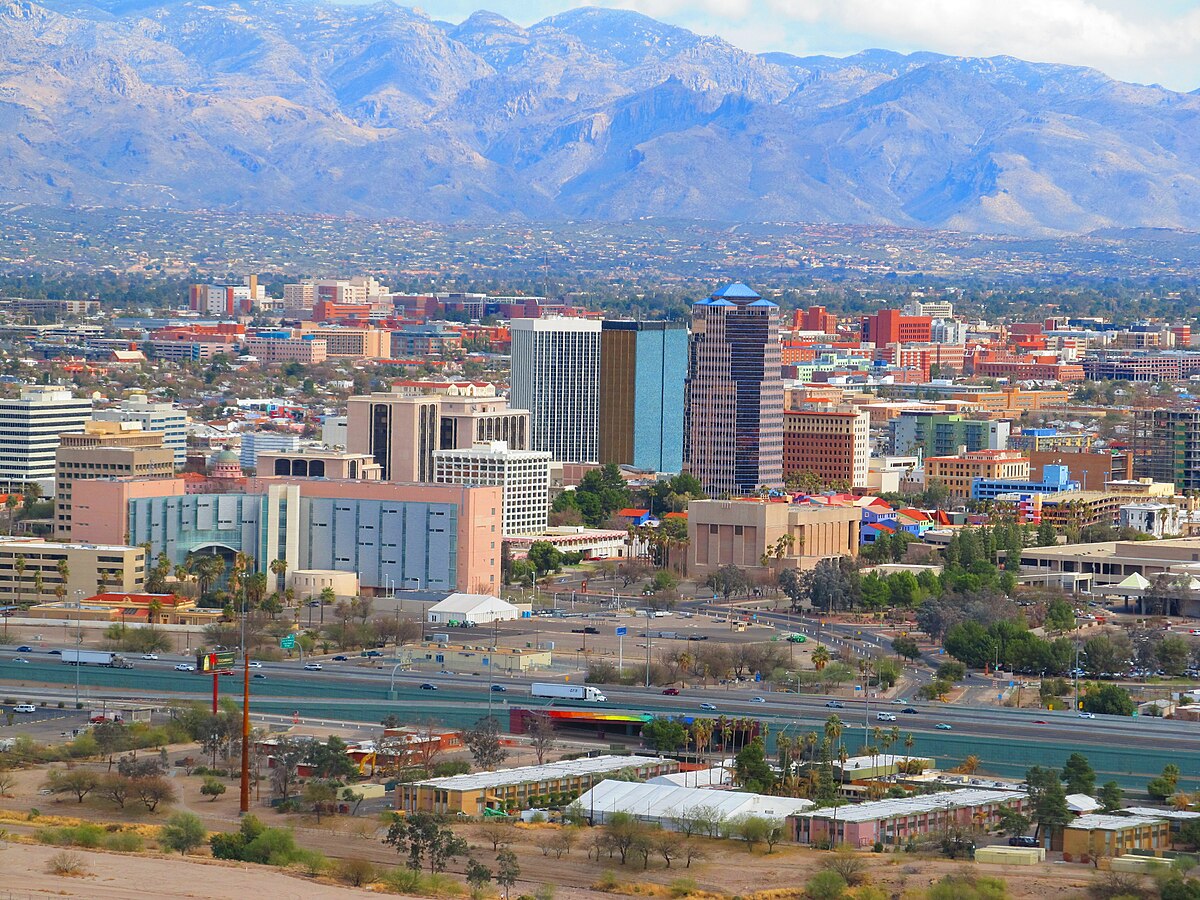
Tracing Tucson’s Ancient Roots
Long before European explorers set foot in the Sonoran Desert, the area that would become Tucson, Arizona was a vibrant center of human activity, sustained by the life-giving waters of the Santa Cruz River. Evidence of continuous human settlement in this valley dates back over 4,000 years, making Tucson, Arizona one of the longest continuously inhabited sites in North America. These early inhabitants developed sophisticated agricultural practices and complex societies, laying the groundwork for the communities that followed.
Early Inhabitants: Hohokam and Pima
Among the most influential early cultures were the Hohokam, who flourished in the region from approximately 300 to 1450 CE. The Hohokam were master irrigators, constructing an extensive network of canals to divert water from the Santa Cruz River to their fields, where they cultivated maize, beans, squash, and cotton. Their settlements, characterized by pithouses and later adobe structures, were strategically located along the riverbanks, taking advantage of the fertile alluvial soil. The remnants of these ancient canal systems are still visible today, testaments to their ingenuity and deep understanding of their environment. The Hohokam also left behind intricate pottery and shell jewelry, showcasing their artistic prowess and trade networks that stretched far beyond the Sonoran Desert.
Following the decline of the Hohokam culture, around the 15th century, various O’odham groups, including the Pima (Akimel O’odham) and Tohono O’odham, established their presence in the region. The Pima, drawing upon the ancestral knowledge of the Hohokam, continued the tradition of irrigated agriculture and established villages near the natural springs and river courses. Their connection to the land and its resources was profound, shaping their spiritual beliefs, social structures, and daily lives. The word “Tucson” itself is believed to derive from the O’odham term Cuk Ṣon, meaning “at the base of the black mountain,” referring to the Sentinel Peak (also known as “A” Mountain) that dominates the city’s western skyline. This linguistic origin underscores the enduring indigenous legacy woven into the very fabric of Tucson, Arizona.
The Arrival of European Influence
The indigenous communities of the Sonoran Desert lived relatively undisturbed by external forces until the late 17th century when the vanguard of the Spanish Empire pushed northward from Mexico. Driven by a desire for new territories, mineral wealth, and the spiritual mission to convert native populations, Spanish explorers and missionaries gradually extended their reach into what they called Pimería Alta, a vast region encompassing parts of present-day Arizona and Sonora, Mexico.
Spanish Expeditions and Missions
The first significant European contact with the Tucson, Arizona area came with Padre Eusebio Francisco Kino, a Jesuit missionary. In 1692, Padre Eusebio Francisco Kino visited the O’odham village near the Sentinel Peak and recognized its agricultural potential and strategic location. Over the next two decades, Padre Eusebio Francisco Kino established a series of missions throughout Pimería Alta, including the famous Mission San Xavier del Bac, located just south of modern Tucson, Arizona. While Padre Eusebio Francisco Kino did not found a permanent mission exactly where Tucson, Arizona stands today, his expeditions and the establishment of nearby missions marked the initial, albeit often tumultuous, integration of the region into the broader Spanish colonial sphere. These missions served as centers for religious conversion, agricultural development, and military outposts, often leading to complex interactions, and sometimes conflicts, with the indigenous populations.
The Presidio San Agustín del Tucson
The formal “founding” of Tucson, Arizona as a Spanish settlement is traditionally attributed to the establishment of the Presidio San Agustín del Tucson. In the mid-18th century, increasing unrest among Native American tribes, particularly the Apache, prompted the Spanish authorities to fortify their northern frontier. In 1775, Hugo O’Conor, an Irish mercenary serving the Spanish Empire and commandant inspector of presidios, ordered the construction of a new military outpost.
On August 20, 1775, Hugo O’Conor selected the site of an existing Pima village known as Stjukshon (the O’odham root for Tucson, Arizona) for the new presidio. The Presidio San Agustín del Tucson was strategically located on a bluff overlooking the Santa Cruz River, offering a commanding view of the surrounding valley. Its purpose was to protect the Spanish missions, mining operations, and ranching communities from Apache raids and to assert Spanish sovereignty over the region. The presidio was a rectangular adobe structure, enclosed by high walls, housing soldiers, their families, and a growing civilian population. This date, August 20, 1775, is widely recognized as the official founding date of Tucson, Arizona as a permanent European settlement, marking its transition from an indigenous village to a frontier outpost of New Spain.

Shifting Sovereignty: From Mexico to the U.S.
The 19th century brought dramatic shifts in political control over the Tucson, Arizona area, reflecting the broader geopolitical changes sweeping across North America. From a Spanish presidio, Tucson, Arizona would transition through Mexican rule before finally becoming part of the United States.
Mexican Independence and Its Impact
In 1821, after a decade-long struggle, Mexico achieved independence from Spain. The former Spanish province of New Spain, including the northern frontier outposts like Tucson, Arizona, became part of the newly formed Republic of Mexico. While the transition brought new administrative structures, life on the frontier remained challenging. The Mexican government, grappling with internal instability and a vast territory, often struggled to provide adequate resources for its distant northern settlements. The military presence at the Presidio San Agustín del Tucson dwindled, making the community more vulnerable to raids and slowing its growth.
Despite these difficulties, Tucson, Arizona continued to function as a vital, albeit isolated, outpost. Its residents, a mix of Native American, mestizo, and Spanish descendants, maintained their distinct cultural traditions and adapted to the new political landscape. Agriculture and trade remained the pillars of the local economy, with goods traveling along ancient routes that connected Tucson, Arizona to other settlements in Sonora, Mexico and beyond. The period of Mexican rule, from 1821 to 1853, solidified Tucson, Arizona’s identity as a border town, a melting pot of cultures, and a testament to resilience in the face of frontier hardship.
The Gadsden Purchase and American Annexation
The mid-19th century saw another monumental shift with the Mexican-American War (1846–1848). Although Tucson, Arizona itself did not see major battles, the war had profound implications for its future. The Treaty of Guadalupe Hidalgo, which ended the war, ceded vast territories from Mexico to the United States, including much of present-day Arizona and New Mexico. However, the boundary line drawn by the treaty initially left Tucson, Arizona on the Mexican side.
The burgeoning interest of the United States in a southern transcontinental railroad route prompted further negotiations. In 1853, the Gadsden Purchase finalized the acquisition of a strip of land, including Tucson, Arizona and the rest of southern Arizona and New Mexico, by the United States for $10 million. This act, signed by President Franklin Pierce, officially brought Tucson, Arizona under American sovereignty. On March 10, 1856, American troops formally took possession of the town. This transition marked the beginning of Tucson, Arizona’s American period, a new chapter that would see rapid growth and transformation, but always with the indelible marks of its Spanish and Mexican heritage. In 1863, when the Arizona Territory was officially created, Tucson, Arizona served as its capital for several periods, underscoring its historical importance and continued significance.
Tucson’s Evolution into a Modern City
From its ancient origins as a riverine settlement to its role as a Spanish presidio and a Mexican frontier town, Tucson, Arizona has continually adapted and reinvented itself. The advent of American rule in the mid-19th century set the stage for an era of unprecedented development, transforming the dusty outpost into a bustling hub of commerce and culture.
The Railroad Era and Population Boom
The true catalyst for Tucson, Arizona’s modern growth was the arrival of the Southern Pacific Railroad on March 20, 1880. This event, celebrated with great fanfare, connected Tucson, Arizona to the rest of the United States, ending its long-standing isolation. The railroad brought new waves of settlers, goods, and ideas, leading to a dramatic increase in population and economic activity. Mining industries flourished as copper and silver could now be efficiently transported to markets. Agriculture expanded beyond subsistence farming to commercial enterprises, leveraging the valley’s fertile soil and sunny climate. The railroad also paved the way for the establishment of institutions that would define Tucson, Arizona’s future, including the University of Arizona, founded in 1885. The city’s downtown core began to take shape, with brick buildings replacing adobe structures, and modern amenities gradually introduced.

Cultivating Culture and Commerce
The early 20th century saw Tucson, Arizona solidify its position as a regional center. Its dry, sunny climate attracted those seeking health benefits, particularly for respiratory ailments, leading to the establishment of sanatoriums and making tourism an early economic driver. The city’s unique blend of Native American, Spanish, Mexican, and Anglo-American cultures fostered a distinct identity, expressed in its architecture, cuisine, and arts. The remnants of the old presidio walls, while largely gone, continue to be commemorated, and historical sites like Mission San Xavier del Bac stand as living testaments to its deep past.
Today, Tucson, Arizona proudly embraces its long and layered history. While August 20, 1775, serves as a pivotal marker for its Spanish colonial establishment, the city’s true founding narrative is a saga spanning millennia. From the ancient canals of the Hohokam to the resilient villages of the Pima, the fortified walls of the Spanish presidio, the vibrant markets of Mexican Tucson, Arizona, and the bustling streets of an American railroad town, each era has left an indelible mark. This continuous human presence and cultural evolution make Tucson, Arizona not merely a city with a founding date, but a living landmark, a testament to enduring human ingenuity and the rich history of the American Southwest.
LifeOutOfTheBox is a participant in the Amazon Services LLC Associates Program, an affiliate advertising program designed to provide a means for sites to earn advertising fees by advertising and linking to Amazon.com. Amazon, the Amazon logo, AmazonSupply, and the AmazonSupply logo are trademarks of Amazon.com, Inc. or its affiliates. As an Amazon Associate we earn affiliate commissions from qualifying purchases.