
Texas, a state synonymous with searing summers and a perpetually sunny disposition, often leaves visitors and residents alike questioning when the sweltering heat will finally relent. The desire for a respite from the high temperatures is a common thread for anyone planning a trip, scheduling outdoor activities, or simply seeking a more comfortable environment. Understanding the typical seasonal shifts in Texas’s climate is crucial for optimizing your travel experiences and ensuring you can fully appreciate the diverse attractions the Lone Star State has to offer. This guide delves into the nuances of Texas weather patterns, providing insights into when a cooling trend can realistically be expected, and how to best plan your visit around these predictable shifts.
Understanding Texas’s Diverse Climate Zones
Texas is not a monolith when it comes to its climate. The sheer size of the state means that different regions experience varying degrees of heat, humidity, and temperature fluctuations throughout the year. Broadly, Texas can be divided into several distinct climate zones, each with its own seasonal characteristics.
Coastal Bend and Southeast Texas
The southeastern portion of Texas, including major cities like Houston and Galveston, is characterized by a humid subtropical climate. This means summers are long, hot, and very humid, with temperatures frequently reaching the upper 90s Fahrenheit and feeling even hotter due to the high humidity. Thunderstorms are common, offering brief periods of relief, but the oppressive humidity often lingers.
The cooling trend in this region typically begins in earnest in late September and continues through October. By November, daytime temperatures often settle into the comfortable 60s and 70s Fahrenheit, making it an ideal time for exploring the coastal attractions and experiencing the vibrant city life without the intense summer heat. The fall months here are generally pleasant, with lower humidity and a gentle breeze often accompanying the cooler temperatures.
Central Texas
Central Texas, encompassing cities like Austin, San Antonio, and Waco, experiences a similar hot summer but with slightly less pervasive humidity than the coast. Daytime highs in July and August commonly exceed 95°F, and heat advisories are frequent. The long summer can extend well into September.
The transition to cooler weather in Central Texas usually starts in late September. October is often a beautiful month, with crisp mornings and mild afternoons. Temperatures begin to consistently dip below the 80s Fahrenheit, and by November, you can expect daytime highs in the 60s and 70s, perfect for enjoying the numerous outdoor activities, live music venues, and the scenic Hill Country. The fall foliage, though not as dramatic as in some other parts of the country, can also add a touch of autumnal beauty to the landscape.
North Texas
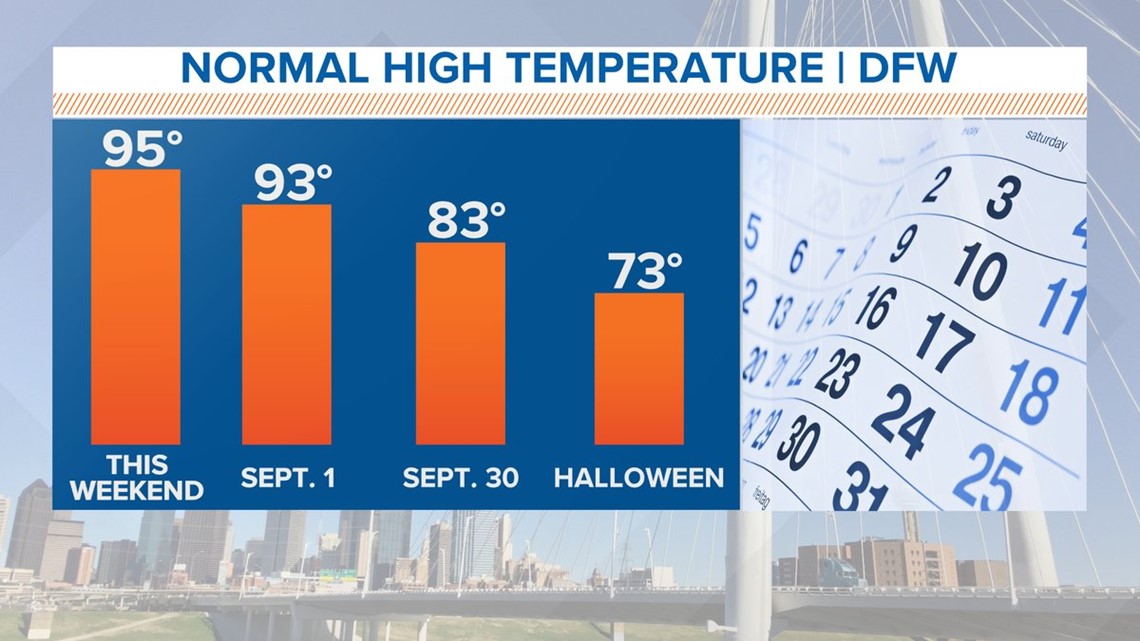
North Texas, including the sprawling Dallas-Fort Worth Metroplex, has a climate that can see significant temperature swings. Summers are hot and often dry, with daytime highs regularly reaching the mid-90s and occasionally pushing 100°F. However, the air tends to be less humid than in the eastern parts of the state.
The cooling process in North Texas is often more pronounced than in the south. While September can still feel quite warm, October usually brings a noticeable drop in temperatures. By late October and into November, crisp fall air becomes the norm, with daytime highs in the 60s and 70s. This period is excellent for exploring attractions like the Dallas Arboretum and Botanical Garden or enjoying the vibrant cultural scene of Dallas and Fort Worth.
West Texas and the Panhandle
West Texas, including areas around El Paso and the Panhandle, offers a different climate experience, with a more arid and semi-arid environment. Summers are hot, but the lack of humidity makes the heat feel more bearable compared to the eastern half of the state. Nighttime temperatures can drop significantly even in the summer months.
The cooling trend in West Texas can begin earlier and be more dramatic. September often sees a noticeable decrease in temperatures from the peak summer heat. By October, daytime highs are frequently in the 70s and 80s, and by November, it’s common to see temperatures in the 50s and 60s. This region is ideal for exploring natural wonders like Big Bend National Park or the unique landscapes of the Palo Duro Canyon State Park when the intense sun of summer has subsided. The dry air also contributes to clearer skies, making it a prime location for stargazing.
Factors Influencing the Cooling Trend
Several meteorological factors contribute to when Texas begins to experience cooler temperatures after the oppressive summer heat. Understanding these can help in anticipating the seasonal shift.
The Retreat of the Summer Monsoon and the Arrival of Fall Air Masses
During the summer months, Texas is heavily influenced by a hot, moist air mass originating from the Gulf of Mexico. This mass, combined with intense solar radiation, drives the high temperatures and humidity. As the summer progresses into fall, the jet stream begins to shift southward, allowing cooler, drier air masses from the north and west to penetrate the state.
The “backdoor cold front,” though more common in spring, can occasionally push cooler air into Texas even in early fall, offering a premature taste of relief. However, the more reliable cooling is associated with the general southward migration of the dominant atmospheric patterns. The intensity and duration of these cooler air masses are key indicators of the approaching fall.
Reduced Solar Insolation
As the Earth’s tilt changes with the progression into autumn in the Northern Hemisphere, the angle of the sun’s rays striking Texas becomes less direct. This reduction in solar insolation means that the amount of energy being absorbed by the land surface decreases, leading to a gradual decrease in ground and air temperatures. While still sunny, the intensity of the sunlight is significantly less than during the peak summer months.
Decreased Humidity Levels
A significant factor in the perceived cooling is the decrease in humidity. High humidity traps heat and makes even moderately warm temperatures feel unbearable. As the influence of the Gulf of Mexico weakens and is replaced by drier continental air masses, the relative humidity drops. This allows for more efficient evaporative cooling from the skin, making the air feel considerably cooler and more comfortable, even if the actual temperature difference isn’t as dramatic.
Planning Your Texas Adventure Around the Cooling Season
Knowing when to expect cooler temperatures can significantly enhance your travel plans in Texas, allowing you to enjoy the state’s many attractions with greater comfort.
Optimal Times for Outdoor Activities
The period from late September through November is widely considered the best time for outdoor activities across much of Texas. This is when the intense heat of summer has broken, and the air is typically pleasant.
- Hiking and Camping: Regions like the Texas Hill Country or the state parks in West Texas, such as Enchanted Rock State Natural Area, become much more accessible and enjoyable during the fall. Exploring the trails of Dinosaur Valley State Park or enjoying the vastness of Guadalupe Mountains National Park is a far more comfortable experience without the risk of heatstroke.
- City Exploration: Cities like San Antonio with its historic missions and the River Walk, or Austin with its vibrant music scene and outdoor parks, are ideal for exploring on foot during the fall. The cooler weather makes it pleasant to stroll through the historic districts, visit farmers’ markets, and enjoy outdoor dining.
- Winery Tours: The Texas wine regions, particularly in the Hill Country, are at their best in the fall. The harvest season often extends into early fall, and the cooler weather makes vineyard tours and wine tastings a delightful experience.
Experiencing Texas Festivals and Events
Many of Texas’s signature festivals and events are timed to coincide with the more pleasant weather of the fall season.
- State Fair of Texas: Held annually in Dallas from late September to mid-October, this iconic event is a prime example of a major attraction that benefits from the cooling temperatures. The fairgrounds become a much more enjoyable place to experience the rides, food, and entertainment when the oppressive summer heat has passed.
- Oktoberfest Celebrations: Numerous towns and cities across Texas, particularly those with German heritage like Fredericksburg, host lively Oktoberfest celebrations in September and October. These events are perfectly suited for the cooler fall air.
- Cultural and Music Festivals: From the Austin City Limits Music Festival to various smaller arts and cultural gatherings, fall is a peak season for experiencing Texas’s rich artistic tapestry.
Packing and Preparation Tips
When planning a trip to Texas during the shoulder seasons (late September and October), it’s wise to pack layers. While daytime temperatures can be warm and pleasant, mornings and evenings can be considerably cooler, especially in North and West Texas. Comfortable walking shoes are essential for exploring any of the state’s diverse attractions. Always check the local weather forecast closer to your travel dates, as Texas weather can be unpredictable, with occasional lingering heat waves or early cold snaps.
In conclusion, while Texas is known for its summer heat, the transition to cooler weather is a distinct and welcome period. For most of the state, expect a noticeable cooling trend to begin in late September, with October and November offering the most pleasant conditions for travel and outdoor pursuits. This period provides an excellent opportunity to experience the diverse landscapes, vibrant cities, and rich culture of Texas without the intensity of the summer sun.
LifeOutOfTheBox is a participant in the Amazon Services LLC Associates Program, an affiliate advertising program designed to provide a means for sites to earn advertising fees by advertising and linking to Amazon.com. Amazon, the Amazon logo, AmazonSupply, and the AmazonSupply logo are trademarks of Amazon.com, Inc. or its affiliates. As an Amazon Associate we earn affiliate commissions from qualifying purchases.