
The awe-inspiring majesty of the Giant Sequoias represents one of nature’s most profound achievements. These titans, the largest trees by volume on Earth, stand as living monuments, dwarfing all who gaze upon them with their sheer scale and ancient wisdom. More than mere trees, they are colossal natural landmarks, embodying centuries of history and the enduring power of the wilderness. For many, the quest to witness these magnificent organisms is a pilgrimage, a journey to connect with something truly primeval and extraordinary. But where exactly do these sylvan behemoths make their home? The answer lies exclusively within a narrow, fragmented band along the western slopes of the Sierra Nevada Mountains in California. This article delves into the specific locales where these monumental trees thrive, offering insight into their unique habitat, the iconic groves where they stand tallest, and the critical efforts to preserve these irreplaceable natural wonders for generations to come.

The Exclusive Realm of the Giant Sequoias
The geographical footprint of the Giant Sequoia is surprisingly limited, making their existence even more precious. Unlike their coastal redwood cousins that thrive in continuous forests, these giants prefer a very specific, high-altitude niche, making their groves isolated islands of grandeur amidst vast mountain wilderness.
A Unique Ecosystem
The survival and astonishing growth of the Giant Sequoia depend on a precise combination of environmental factors found almost nowhere else on Earth. They flourish primarily at elevations ranging from 4,000 to 8,000 feet (1,200 to 2,400 meters) within the central and southern Sierra Nevada range. This elevation band provides the perfect blend of hot, dry summers and cold, snowy winters. Abundant winter snowfall is crucial, providing a slow-release source of moisture well into the warmer months, penetrating the deep, well-drained granitic soils that are characteristic of the Sierra Nevada. The unique microclimates created by these mountainous terrains, combined with millennia of adaptation to fire (which clears competing vegetation and prepares the mineral soil for sequoia seeds), have allowed these specific locations to become the exclusive sanctuaries for these ancient giants.
Grove Distribution
Rather than forming vast, contiguous forests, Giant Sequoias grow in approximately 75 distinct groves, varying in size from a few dozen trees to several thousands. These groves are scattered across a 260-mile (420 km) stretch of the Sierra Nevada, with significant gaps between them. Each grove is a self-contained ecosystem, a testament to the specific conditions that allowed sequoias to take root and flourish there. The rarity of these groves underscores the importance of every individual tree and the need for their vigilant protection. While some groves are easily accessible and frequently visited, others are remote, requiring strenuous hikes to reach, offering a more solitary and profound experience for those willing to venture deeper into their domain.
Premier Destinations to Witness These Giants
For those seeking to stand in the shadow of these living giants, several world-renowned parks and monuments offer unparalleled access and incredible experiences. These locations serve as the primary custodians and showcases for the Giant Sequoia.
Sequoia National Park and Kings Canyon National Park: The Heartlands
Often referred to as the “Land of Giants,” Sequoia National Park and its contiguous northern neighbor, Kings Canyon National Park, are home to the most extensive and impressive concentrations of Giant Sequoias on Earth. These parks collectively protect over 30 groves, including the largest and most famous.
Within Sequoia National Park, the Giant Forest stands as an unparalleled landmark. This grove alone contains more than 8,000 Giant Sequoias, including the iconic General Sherman Tree. The General Sherman Tree is not only the world’s largest living single-stem tree by volume but also one of the oldest, estimated to be between 2,200 and 2,700 years old. Visitors can walk the paved Congress Trail to immerse themselves among the many named giants surrounding General Sherman, such as the President Tree and the Lincoln Tree. Beyond the trees, the park offers panoramic views from landmarks like Moro Rock and unique experiences such as driving through the fallen Tunnel Log, providing a tangible sense of the trees’ immense scale.
North of Giant Forest, in Kings Canyon National Park, lies Grant Grove. This grove is home to the General Grant Tree, which is the world’s second-largest tree by volume and holds the esteemed title of “The Nation’s Christmas Tree.” The grove also features the Fallen Monarch, a hollowed-out log that once served as shelter for Native Americans and early settlers. The Big Stump Trail provides a sobering look at the logging history that once threatened these giants, offering insight into their early preservation efforts.
Yosemite National Park: Northern Giants
While Yosemite National Park is globally celebrated for its dramatic granite cliffs, cascading waterfalls, and deep valleys, it is also a significant sanctuary for Giant Sequoias. Located at the northern end of the sequoia’s natural range, Yosemite hosts three distinct groves.
The most famous and largest is Mariposa Grove, situated near the park’s south entrance. After extensive restoration efforts, the grove now offers an improved visitor experience, allowing for deeper appreciation of its magnificent specimens. Key landmarks here include the ancient Grizzly Giant, estimated to be 2,000 to 2,700 years old, and the California Tunnel Tree, a tree with a tunnel carved through its base in 1895. Further north, the smaller Tuolumne Grove and Merced Grove offer more secluded experiences, accessible via hiking trails, with Tuolumne notable for its “Tunnel Tree” (a fallen giant with a walk-through section) and Merced providing a tranquil encounter with fewer visitors.
Other Notable Groves and Their Significance
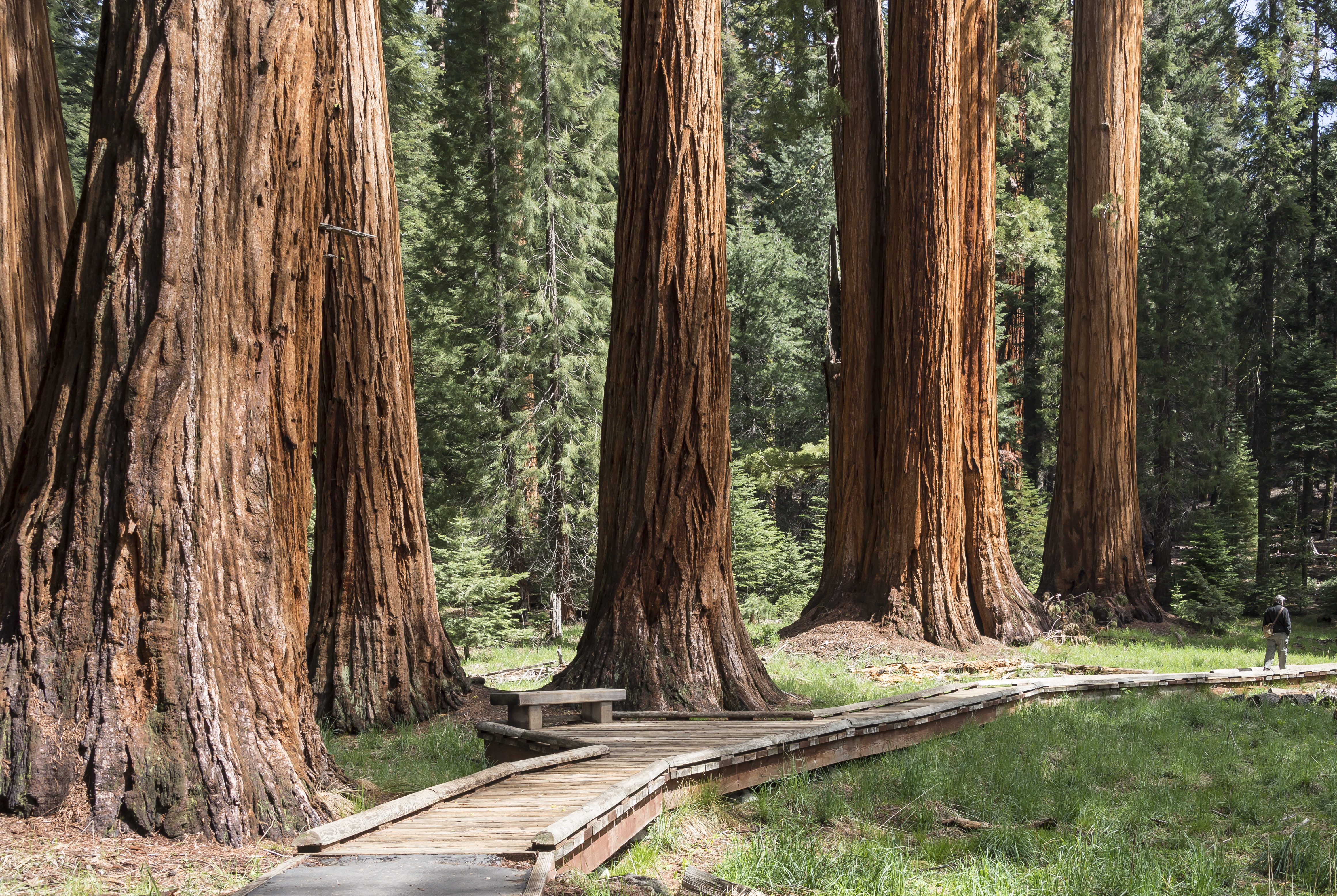
Beyond the prominent national parks, several other locations proudly host Giant Sequoias, each offering a unique perspective on these natural wonders.
The Giant Sequoia National Monument, managed by the U.S. Forest Service, encompasses 33 groves outside the national parks. This monument plays a crucial role in protecting these trees across a wider geographic spread. One of its most accessible and popular groves is the Trail of 100 Giants in Long Meadow Grove. This easy, paved loop trail offers a wonderful opportunity to stroll among numerous massive sequoias, many over 1,500 years old, making it an excellent option for families and those seeking a less strenuous experience.
Further north, Calaveras Big Trees State Park preserves two major groves – the North Grove and the South Grove – and is historically significant as the first tourist attraction in the Sierra Nevada to feature Giant Sequoias. It was here in 1852 that Augustus T. Dowd discovered the “Discovery Tree,” igniting public interest (and later outrage) as it was felled for exhibition. The North Grove is easily accessible, featuring the “Big Stump” of the Discovery Tree and the “Pioneer Cabin Tree” (a former drive-through tree that fell in 2017). The South Grove, more remote, offers a wilderness hiking experience to see even larger specimens. These state parks and national monument areas broaden the conservation landscape, ensuring that more of these iconic trees are preserved and accessible.
Protecting These Natural Monuments
The existence of Giant Sequoias as enduring natural landmarks is a testament not only to their inherent resilience but also to dedicated human efforts in their preservation. However, these majestic trees face unprecedented challenges in the modern era.
Conservation Efforts and Challenges
For centuries, these towering natural landmarks thrived in their mountain sanctuaries, relatively untouched by human impact. However, the 20th and 21st centuries have brought new threats. Climate change, with its accompanying rise in temperatures and prolonged droughts, has significantly altered the fire regimes to which sequoias are uniquely adapted. While periodic, low-intensity fires are essential for sequoia reproduction and grove health, extreme wildfires—fueled by dense undergrowth resulting from a century of fire suppression—now pose an existential threat. These megafires can be so intense that even fire-resistant mature sequoias succumb.
Organizations like the National Park Service, the U.S. Forest Service, and various non-profits are engaged in heroic efforts to protect these trees. Strategies include prescribed burns to reduce fuel loads, mechanical thinning of dense vegetation, and comprehensive research to understand sequoia ecology better in a changing climate. Furthermore, public education plays a vital role in fostering an appreciation for these ancient giants and garnering support for their conservation.
Responsible Visitation
Visiting the Giant Sequoias is an unparalleled experience, but it comes with a responsibility to tread lightly and ensure their continued survival. Adhering to “Leave No Trace” principles is paramount: stay on marked trails to protect delicate root systems and undergrowth, pack out all trash, and respect wildlife. Avoid climbing on or carving into trees, and never remove any natural objects from the groves. By practicing responsible tourism, visitors become active participants in the conservation effort, safeguarding these living landmarks for future generations to marvel at.
Planning Your Journey to the Sequoias
Embarking on a trip to see the Giant Sequoias requires some planning, but the rewards are immeasurable. Understanding the best times to visit and preparing adequately will enhance your experience among these natural monuments.
Best Time to Visit
The ideal time to visit the sequoia groves largely depends on what kind of experience you’re seeking:
- Summer (June to September): This is the most popular time, offering warm weather, full accessibility to all park areas and trails, and a vibrant atmosphere. However, it also means larger crowds and the highest demand for lodging. Wildfire smoke can occasionally be an issue.
- Spring (April to May) & Fall (October to November): These shoulder seasons often provide pleasant temperatures, fewer crowds, and stunning seasonal foliage (especially in the surrounding deciduous trees). Some higher elevation roads or trails might still be closed in early spring or begin to close in late fall due to snow.
- Winter (December to March): For a truly magical and serene experience, visiting in winter is unforgettable. The groves draped in snow are breathtaking. However, accessibility is significantly reduced, with many roads closed, and tire chains are often required. Only a few areas, like the main groves in Sequoia and Kings Canyon, remain open, offering snowshoeing or cross-country skiing opportunities.

Essential Tips for Exploration
Before you set out, always check the official websites of Sequoia and Kings Canyon National Parks, Yosemite National Park, or Calaveras Big Trees State Park for current conditions, road closures, and any fire-related advisories.
- Accommodation: Book lodging well in advance, especially during peak season. Options range from in-park lodges and campgrounds to hotels in nearby gateway towns like Three Rivers, Visalia, Fresno, or Oakhurst.
- Gear: Dress in layers, as mountain weather can change rapidly. Sturdy hiking shoes are a must. Bring plenty of water, snacks, sunscreen, and a map.
- Park Entrances: Be aware that entrances to Sequoia and Kings Canyon are on the western side of the Sierra Nevada, while Yosemite has multiple entrances. Plan your route accordingly.
- Wildlife: Be mindful of wildlife, including bears. Store food properly and maintain a safe distance.
- Altitude: Some areas are at high altitudes, so be aware of potential altitude sickness.
The Giant Sequoias are more than just trees; they are living testaments to enduring life, natural resilience, and the sheer wonder of the natural world. Their exclusive home in the Sierra Nevada Mountains of California makes them a unique and precious landmark, a destination that promises to inspire awe and a profound connection to nature’s grandest creations. To stand beneath their ancient boughs is to witness history, feel the pulse of the Earth, and gain a humbling perspective on our place in the natural order.
LifeOutOfTheBox is a participant in the Amazon Services LLC Associates Program, an affiliate advertising program designed to provide a means for sites to earn advertising fees by advertising and linking to Amazon.com. Amazon, the Amazon logo, AmazonSupply, and the AmazonSupply logo are trademarks of Amazon.com, Inc. or its affiliates. As an Amazon Associate we earn affiliate commissions from qualifying purchases.