
The name California evokes images of golden sunshine, towering redwoods, technological innovation, and a vibrant cultural tapestry. Yet, few realize that the genesis of this iconic state’s name is steeped in a captivating tale of medieval Spanish literature, mythical queens, and the grand ambitions of early European explorers. Far from a straightforward geographical designation, the name “California” itself is a landmark, a linguistic artifact that traces a fascinating journey from the pages of fiction to the maps of the real world, embodying the allure and mystery that have defined this land for centuries.
The Enigma of “California”: A Journey Through History
The origin of California’s name is not rooted in an indigenous language or a descriptive geographical feature, but rather in a sixteenth-century Spanish romance novel. This literary connection elevates the state’s name beyond mere nomenclature, imbuing it with a sense of wonder and epic possibility from its very inception. For centuries, historians and etymologists have delved into archives and ancient texts to pinpoint the exact moment this fantastical name was bestowed upon a land discovered on the fringes of the known world, revealing a story as rich and complex as the state itself. Understanding this origin is crucial to appreciating the historical layers that contribute to California’s enduring identity as a global landmark. It speaks to an era when new lands were not just charted, but also interpreted through the lens of European imagination and existing cultural narratives.
The Mythical Queen Califia and Las Sergas de Esplandián
The primary source for the name “California” is undeniably Las Sergas de Esplandián (The Adventures of Esplandián), a popular chivalric romance novel published in Spain around 1510. This work, a sequel to the more famous Amadís de Gaula, captured the imagination of readers across Europe with its tales of knights, sorcery, and exotic lands. Its widespread popularity meant that its fantastic elements were likely fresh in the minds of explorers venturing into uncharted territories.
Garci Rodríguez de Montalvo’s Vision
Authored by Garci Rodríguez de Montalvo, Las Sergas de Esplandián describes a mythical island located “at the right hand of the Indies…very close to the Terrestrial Paradise.” This island, named California, was a realm of incredible wealth and power, ruled by a formidable black queen known as Queen Califia. Montalvo’s description painted a vivid picture of a land overflowing with riches and untamed beauty, a vision that would strikingly parallel the future reality of the discovered land.
The Island of Amazons and Black Gold
Queen Califia’s island kingdom was depicted as being inhabited solely by black women, fierce warriors described as amazons who rode griffins and engaged in epic battles. Their weapons and armor were said to be made entirely of gold, as “there is no other metal in the whole island.” This detail is particularly significant, as the promise of abundant gold would later become a defining characteristic of the actual California during the California Gold Rush centuries later. The novel presented California as a place of exotic wonders, formidable power, and unparalleled natural resources—a literary foreshadowing of the real-world discoveries that would ignite the imaginations of explorers and settlers alike. The very idea of such a place, even if fictional, fueled the dreams of an age driven by discovery and the pursuit of wealth.
From Fictional Island to Real-World Discovery
The transition of the name “California” from a literary fantasy to a geographical designation occurred within decades of the novel’s publication, coinciding with the intense period of Spanish exploration in the Americas. The explorers, many of whom were educated individuals, would undoubtedly have been familiar with popular literature of their time, including Montalvo’s work.
Hernán Cortés and the Baja California Peninsula
The first documented application of the name to a real-world location is attributed to the Spanish conquistador Hernán Cortés and his expeditions. In 1533, one of his captains, Fortún Ximénez, discovered what is now known as the Baja California Peninsula, a stark, arid land separated from the mainland by the Gulf of California. Ximénez was killed by natives shortly after, but news of the discovery of an “island” (which the peninsula was initially believed to be) eventually reached Cortés.

By 1535, Hernán Cortés himself landed on the peninsula, establishing a small settlement near modern-day La Paz, Mexico. It is during this period that the name “California” first appears in official Spanish documents and maps, applied to this newly discovered land. The decision to name it after Montalvo’s mythical island was likely influenced by several factors: the geographical isolation of the peninsula suggested an island, much like the one described in the novel; the perceived remoteness and exoticism of the land echoed the novel’s fantastical setting; and perhaps, the desire to inspire further exploration by linking it to a legendary place of riches.
The Misnomer and its Enduring Legacy
The initial application of the name “California” to the Baja California Peninsula was, in many ways, a misnomer. The arid landscape was a far cry from the lush, golden island of Queen Califia’s realm. However, the name stuck. Over time, as Spanish explorers, including Juan Rodríguez Cabrillo in 1542, pushed further north along the Pacific coast, they extended the name “California” to encompass the vast and diverse territories that would eventually become the U.S. state of California.
This expansion was not immediate or precise. For decades, and even centuries, “California” referred broadly to a vaguely defined region of the Spanish Empire encompassing both the peninsula and the northern territories. The powerful narrative associated with the name — of a distant, wealthy, and somewhat mysterious land — persisted, shaping the perceptions of those who sought to explore, settle, and eventually claim it. This linguistic legacy fundamentally influenced how this immense landmark was understood and pursued by subsequent generations.
Beyond the Myth: Geographical and Cultural Echoes
The initial naming of California was merely the beginning of its complex journey into global consciousness. The name, born of myth, continued to evolve in meaning and scope as the true geography of the region became clearer and different powers sought to exert their influence.
The “Island” Misconception Persists
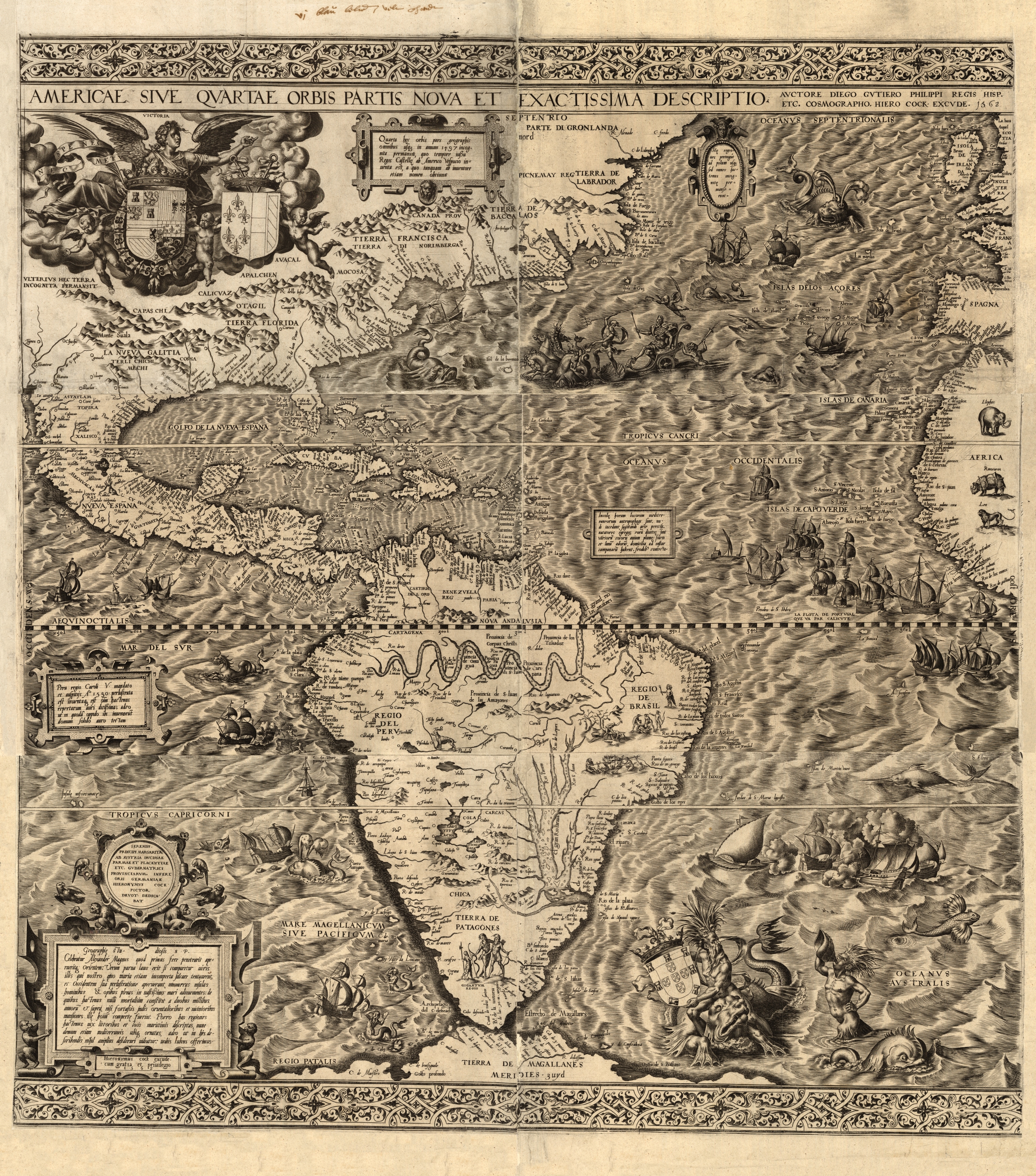
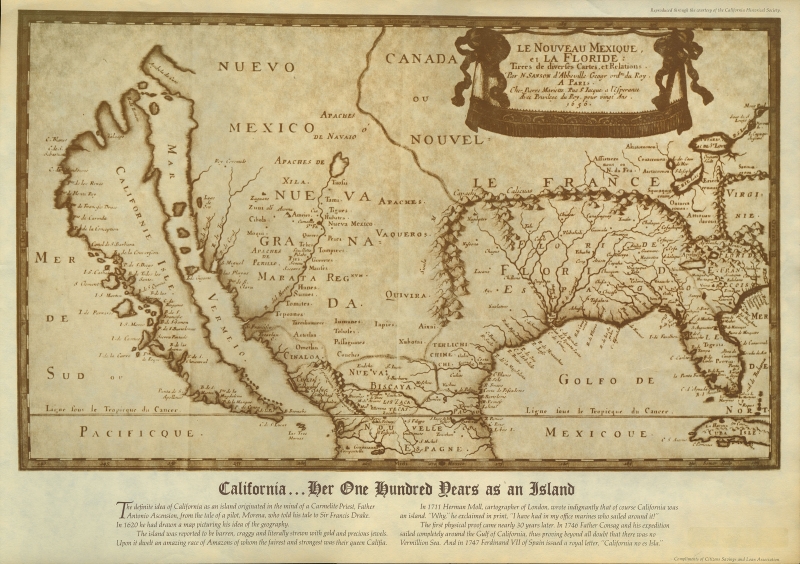
For nearly two centuries after its discovery, maps of the Americas frequently depicted California not as a peninsula, but as a large island separated from the North American mainland by the Strait of Anian or an arm of the ocean. This persistent cartographical error, famously known as the “Island of California” myth, directly echoed Garci Rodríguez de Montalvo’s original literary description. It wasn’t until the mid-18th century, with expeditions like that of Father Eusebio Kino, that the peninsular nature of Baja California was definitively established.
Despite the correction, the notion of California as a distinct, almost insular entity—a world unto itself—persisted culturally. This historical error, rooted in the foundational myth, arguably contributed to the perception of California as unique, isolated, and brimming with its own distinct identity and potential, separate from the rest of the continent. This perception would play a significant role in its development as a self-contained and highly influential landmark.
Manifest Destiny and American Expansion
By the 19th century, with the decline of the Spanish Empire and the rise of the United States, the name “California” took on new connotations. American expansionists, fueled by the doctrine of Manifest Destiny, looked westward with covetous eyes. The vast, fertile lands of Alta California (Upper California), then a remote province of Mexico, represented the ultimate prize.
The California Gold Rush of 1848, which occurred almost immediately after California was ceded to the United States following the Mexican-American War, transformed the region overnight. The discovery of gold uncannily mirrored the fictional wealth of Queen Califia’s island, giving a surprising, real-world resonance to the name’s mythical origins. The name “California,” originally a whisper of fantasy, became a shout of opportunity, drawing hundreds of thousands of fortune-seekers from across the globe. This dramatic event cemented California’s status as a place of immense promise and unique character, forever linking its name to dreams of prosperity and boundless possibility. The very name became synonymous with a new kind of frontier, one rich in both natural resources and the potential for reinvention.
California Today: A Landmark Defined by Its Legendary Name
Today, California stands as one of the most recognizable and influential landmarks on Earth. Its name, born from a fantastical romance novel, now symbolizes far more than a mythical island or a distant gold rush. It represents a global hub of innovation (Silicon Valley), entertainment (Hollywood), agriculture, and natural beauty, from the rugged coastline of Big Sur to the majestic peaks of the Sierra Nevada.
The longevity and evolution of the name “California” offer profound insight into how places acquire their identities and how those identities are shaped by both accident and design. From Garci Rodríguez de Montalvo’s imaginative creation to the strategic naming by Spanish conquistadors, and finally to its embrace by a burgeoning American nation, the name has been a constant thread. It has consistently evoked a sense of grandeur, otherworldliness, and immense potential, aligning perfectly with the narrative of a land that has continually reinvented itself and captured the world’s attention. The name itself is a testament to the enduring power of storytelling and human imagination, forever intertwined with the physical and cultural landscape it now defines. Thus, “California” remains not just a geographical label, but a historical and cultural landmark in its own right, a name that embodies dreams, discovery, and destiny.
LifeOutOfTheBox is a participant in the Amazon Services LLC Associates Program, an affiliate advertising program designed to provide a means for sites to earn advertising fees by advertising and linking to Amazon.com. Amazon, the Amazon logo, AmazonSupply, and the AmazonSupply logo are trademarks of Amazon.com, Inc. or its affiliates. As an Amazon Associate we earn affiliate commissions from qualifying purchases.