
The quality of education within a state is a foundational pillar that underpins its residents’ lifestyle, economic opportunities, and overall community well-being. For individuals and families considering relocation, career paths, or raising children, understanding a state’s educational landscape is paramount. This article delves into where Mississippi stands in the national educational rankings, exploring the metrics used for evaluation, its current performance, and the profound implications these rankings have on the lifestyle choices available to its citizens.
Understanding the Metrics: How Education is Evaluated
Assessing a state’s educational prowess is a complex endeavor, relying on a multitude of metrics that collectively paint a comprehensive picture. These indicators span from early childhood education through K-12 and into higher education, offering insights into both academic achievement and the systemic support available to students.

K-12 Performance Indicators
In the K-12 sphere, several key performance indicators are typically scrutinized to determine a state’s ranking. These include:
- Student Achievement Scores: Standardized test scores, such as those from the National Assessment of Educational Progress (NAEP), are crucial for benchmarking academic proficiency in subjects like reading and math across different grade levels. These scores often highlight how well students are mastering core subjects compared to their peers nationwide.
- Graduation Rates: The percentage of high school students who graduate within four years is a critical measure of school system effectiveness. High graduation rates suggest successful retention and completion of secondary education, preparing students for further studies or the workforce.
- College and Career Readiness: This metric assesses how well high school graduates are prepared for post-secondary education or entry into skilled trades. It often includes factors like SAT/ACT scores, participation in advanced placement (AP) courses, and enrollment in vocational programs.
- Teacher Quality and Resources: Beyond student outcomes, evaluations also consider the quality of teaching staff, including teacher-to-student ratios, teacher experience, and access to professional development. Additionally, the availability of resources like technology, libraries, and counseling services plays a significant role in fostering a conducive learning environment.
Higher Education Landscape
The strength of a state’s higher education system is equally vital, impacting workforce development and intellectual capital. Key metrics include:
- College Affordability and Accessibility: This examines the cost of tuition, availability of financial aid, and the ease with which residents can access higher education institutions, including community colleges and four-year universities.
- Attainment Rates: The percentage of adults holding associate’s, bachelor’s, or postgraduate degrees is a direct measure of a state’s educated populace and its capacity for innovation and economic growth.
- Quality of Institutions: Rankings often consider the reputation and academic standing of a state’s colleges and universities, including research output, faculty expertise, and student outcomes post-graduation.
- Workforce Alignment: The extent to which higher education programs align with the needs of the state’s economy, producing graduates with in-demand skills, is a crucial factor for sustainable economic development.
Funding and Resource Allocation
Underpinning all educational performance is the level and distribution of funding. How states invest in their education systems, from per-pupil spending in K-12 to research grants in universities, directly influences the quality of facilities, teacher salaries, curriculum development, and student support services. Equity in funding across different districts is also a significant consideration, as disparities can exacerbate achievement gaps.
Mississippi’s Current Educational Standing
Mississippi’s educational journey is one marked by both historical challenges and significant, recent progress. While the state has traditionally faced lower rankings in national assessments, concerted efforts and strategic investments have begun to yield positive changes, particularly in the K-12 sector.
Recent Progress and Challenges in K-12
Historically, Mississippi has often been positioned near the bottom of national K-12 rankings. However, recent years have witnessed a remarkable turnaround, largely attributed to dedicated reforms and increased focus on foundational skills.
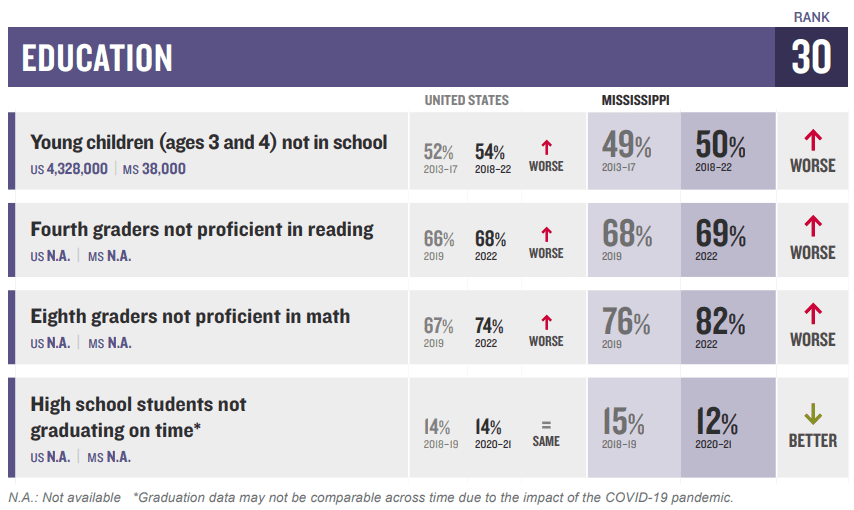
- NAEP Score Gains: Mississippi has consistently been highlighted for its impressive gains on the NAEP, often referred to as the “Nation’s Report Card.” In several recent cycles, Mississippi students have shown some of the strongest growth in reading and math scores nationally, particularly for fourth-grade students. This progress indicates that the state’s educational strategies, including literacy-based initiatives and rigorous standards, are starting to pay dividends.
- Literacy-Based Promotion Act: The implementation of policies like the Literacy-Based Promotion Act, which focuses on ensuring students are reading at grade level by the end of third grade, has been instrumental. This early intervention strategy aims to prevent academic struggles from compounding in later grades.
- Challenges Remaining: Despite these commendable advancements, challenges persist. Overall, Mississippi’s average scores still lag behind the national average in some areas, indicating a need for continued focus and investment. Issues such as teacher recruitment and retention in rural areas, adequate funding for all districts, and addressing socio-economic disparities that impact student performance remain critical areas for improvement. Ensuring that the gains made at the elementary level translate into sustained success through middle and high school, leading to higher graduation rates and college readiness, is an ongoing endeavor.
Strengths and Areas for Improvement in Post-Secondary
Mississippi’s higher education system, while offering valuable institutions, also presents a mixed picture regarding national standing and its impact on lifestyle choices.
- Accessible Institutions: The state boasts a range of public universities and community colleges that provide accessible and often affordable pathways to higher education for residents. Institutions like the University of Mississippi, Mississippi State University, and Jackson State University offer diverse academic programs and contribute significantly to the state’s research and development efforts.
- Workforce Development Focus: Many community colleges and universities in Mississippi have strong ties to local industries, offering programs designed to meet the specific workforce needs of the state, particularly in manufacturing, healthcare, and agriculture. This focus helps create direct pipelines for graduates into employment.
- Areas for Improvement: Despite these strengths, Mississippi often faces challenges in terms of overall degree attainment rates compared to national averages. This impacts the state’s pool of highly skilled workers and its attractiveness to high-tech industries. Furthermore, attracting and retaining top-tier talent, both faculty and students, can be a competitive challenge. Efforts are ongoing to enhance research capabilities, expand graduate programs, and increase the number of residents pursuing and completing higher education.
The Lifestyle Implications of Educational Rankings
The ranking of a state’s education system extends far beyond academic statistics; it profoundly shapes the lifestyle opportunities and quality of life for its residents. For individuals, families, and businesses, educational standing is a critical factor in decision-making.
Economic Opportunities and Workforce Development
A strong educational system is directly correlated with a robust economy and abundant career opportunities. When a state’s K-12 and higher education systems produce well-educated and skilled graduates, it creates a dynamic workforce that attracts businesses and fosters economic growth.
- Attracting and Retaining Businesses: Companies looking to expand or relocate prioritize states with a strong talent pipeline. A highly educated workforce signals lower training costs, higher productivity, and a greater capacity for innovation. Conversely, states with lower educational attainment may struggle to attract industries that require specialized skills, limiting high-wage job opportunities for residents.
- Individual Career Trajectories: For individuals, the quality of local education directly impacts their potential earnings and career advancement. Graduates from strong K-12 systems are better prepared for college or vocational training, leading to higher earning potential and greater job security. Access to quality higher education within the state reduces the need for residents to seek opportunities elsewhere, fostering local talent retention.
Community Well-being and Quality of Life
Education is not just about jobs; it’s about building vibrant, healthy communities. The educational landscape influences various aspects of community well-being and, by extension, the overall quality of life.
- Civic Engagement and Health Outcomes: Educated populations tend to exhibit higher rates of civic engagement, including voting and volunteering, contributing to a more active and responsive democracy. Furthermore, research consistently links higher educational attainment to better health outcomes, lower crime rates, and greater social cohesion.
- Property Values and Community Development: Strong school districts are a significant draw for families, often leading to higher property values and more stable communities. Conversely, areas with struggling schools may see a decline in property values and slower community development. Investment in education is, therefore, an investment in the long-term health and attractiveness of a community.
Attracting and Retaining Talent
For Mississippi and any state, the ability to attract new talent and retain its own bright minds is crucial for future prosperity. Education plays a central role in this dynamic.
- Drawing New Residents: Families often prioritize educational quality when deciding where to live. A state making strides in education, like Mississippi has been, becomes more appealing to those seeking good schools for their children. This influx of new residents can bring diverse perspectives, skills, and economic activity.
- Preventing Brain Drain: Conversely, if a state’s educational offerings are perceived as inadequate, it risks a “brain drain,” where its most promising young people leave for better educational and career opportunities elsewhere. Retaining these educated individuals is vital for the state’s intellectual capital and future leadership. Mississippi’s’s efforts to improve education are therefore critical for fostering a lifestyle where its graduates can thrive within its borders.
Driving Progress: Initiatives and Future Outlook
Mississippi’s journey to improve its educational standing is ongoing, propelled by a combination of state-led initiatives, community involvement, and a forward-looking vision. The progress observed, especially in K-12, suggests a dedicated commitment to enhancing educational outcomes.
State-Led Reforms and Partnerships
The state government and educational agencies have been proactive in implementing reforms aimed at boosting academic performance and overall educational quality.
- Targeted Funding and Program Development: Initiatives focus on directing resources to areas of greatest need, such as early childhood education programs that provide a strong foundation for learning. Investments in professional development for teachers and administrators ensure that educators are equipped with the latest pedagogical strategies.
- Standards-Based Education: The adoption of rigorous academic standards across subjects provides clear expectations for students and educators, ensuring consistency and quality across districts. This is coupled with accountability measures that help identify areas requiring further support and intervention.
- Business and Industry Partnerships: Recognizing the link between education and economic development, Mississippi fosters partnerships between educational institutions and local businesses. These collaborations help tailor curricula to meet workforce demands, create internship opportunities, and ensure graduates are job-ready, directly enhancing lifestyle prospects.
The Role of Local Communities and Parents
While state-level initiatives are crucial, the active involvement of local communities and parents is indispensable for sustained educational improvement.
- Community Support for Schools: Engaged communities often provide additional resources, volunteer support, and advocacy for their local schools. Parent-teacher organizations, local foundations, and civic groups play a vital role in supplementing school funding and enriching educational experiences.
- Parental Involvement: Parents are a child’s first and most influential teachers. Their engagement in their children’s education, from reading with them at home to actively participating in school events and decision-making, significantly impacts student success and reinforces the value of learning within the family lifestyle.
Making Informed Lifestyle Choices in Mississippi
For those considering calling Mississippi home, understanding its educational landscape is a key component of making informed lifestyle decisions. While national rankings provide a broad overview, a nuanced perspective reveals both challenges and unique advantages.
Education as a Factor in Relocation and Family Planning
The quality of local schools is often a top priority for families planning to move or start a family. Mississippi’s recent educational gains, particularly in elementary education, offer a compelling narrative of improvement that can appeal to parents. However, prospective residents will also weigh factors such as higher education options for older children and the overall job market, which is influenced by the educational attainment of the population. Individuals might need to research specific school districts or specialized programs within the state to find the best fit for their family’s needs, as educational quality can vary significantly even within a state.

Balancing Challenges with Unique Lifestyle Advantages
Despite the historical educational challenges Mississippi has faced, the state offers a distinct lifestyle characterized by a rich cultural heritage, a lower cost of living, strong community ties, and a slower pace of life for many. These advantages can significantly enhance the overall quality of life, potentially outweighing some educational concerns for certain individuals or families. The ongoing educational improvements are working to bridge the gap, making the state an increasingly attractive option for those seeking a balance of affordable living and improving opportunities.
In conclusion, while Mississippi continues its journey to climb national education rankings, especially in K-12, its progress is undeniable. The state is actively working to enhance its educational infrastructure, which directly impacts the economic vitality and overall lifestyle choices for its residents. For those considering Mississippi, an informed decision involves appreciating the state’s dedication to improving educational outcomes alongside its unique cultural richness and community appeal.
LifeOutOfTheBox is a participant in the Amazon Services LLC Associates Program, an affiliate advertising program designed to provide a means for sites to earn advertising fees by advertising and linking to Amazon.com. Amazon, the Amazon logo, AmazonSupply, and the AmazonSupply logo are trademarks of Amazon.com, Inc. or its affiliates. As an Amazon Associate we earn affiliate commissions from qualifying purchases.