
The question of “Where does Northern California start?” is far more nuanced than simply drawing a line on a map. While California is undeniably a single state, its vast geographical expanse, diverse ecosystems, and distinct cultural identities have fostered a widely accepted, albeit unofficial, division into “North” and “South.” For travelers seeking to explore this iconic region, understanding its nebulous boundaries is key to appreciating its unique charm and planning an unforgettable journey. It’s a journey not just across miles, but through shifting landscapes, climates, and ways of life that coalesce to form the multifaceted identity of Northern California.

The Geographic Divide: Official vs. Perceived Boundaries
Defining the precise starting point of Northern California is a perennial debate, often influenced by both official administrative lines and informal cultural perceptions. There’s no single, universally agreed-upon demarcation that neatly separates the northern half from its southern counterpart. Instead, travelers will find a gradual transition marked by subtle shifts in topography, climate, and even local character.
Official State Demarcations
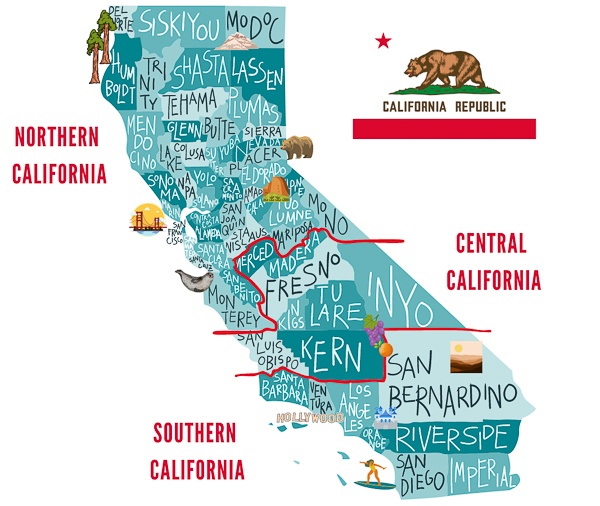
From an administrative perspective, the state of California does not officially delineate a “Northern” and “Southern” region. However, a common, informal understanding places the boundary somewhere around the 35th or 36th parallel north, which roughly aligns with the northern edges of San Luis Obispo County and Kern County. Many Californians will point to the Tehachapi Mountains as a primary psychological, if not geographical, dividing line. These mountains act as a significant natural barrier, creating a noticeable shift in climate and landscape as one travels north or south along the Interstate 5 corridor.
Further north, counties like Monterey County, San Benito County, Merced County, and Mariposa County are widely considered part of Northern California, primarily due to their proximity to the San Francisco Bay Area and the Sierra Nevada mountain range. The vast agricultural expanse of the Central Valley serves as a significant transitional zone, blurring the lines between the two halves of the state, even as it primarily aligns more with northern characteristics in its upper reaches.
The Cultural and Climatic Shift
Beyond official lines, the most palpable “start” to Northern California is often felt through a tangible shift in climate and natural environment. As travelers journey northward from the semi-arid landscapes of Southern California, they encounter increasingly lush, green vistas, particularly outside the rain shadow of the coastal ranges. The Mediterranean climate prevalent in the central coast transitions into cooler, foggier conditions along the Northern California coast, giving way to redwood forests and more temperate rainforest-like conditions further north.
This climatic shift influences everything from vegetation to agricultural practices, and subtly, even the pace of life. The golden, sun-baked hillsides often associated with California give way to towering evergreen forests and a more pronounced four-season cycle, especially inland towards the mountains. This ecological transition is arguably the most defining “start” for many travelers experiencing the region for the first time, signaling a departure from the familiar southern landscape and an immersion into the distinct natural beauty of the North.
Beyond the Map: A Cultural and Economic Lens
While geography provides a foundational understanding, the true essence of where Northern California begins is deeply intertwined with its cultural and economic heartbeats. The region is characterized by influential urban centers and distinct rural identities that collectively shape its character and draw travelers from around the globe.
The Bay Area’s Influence
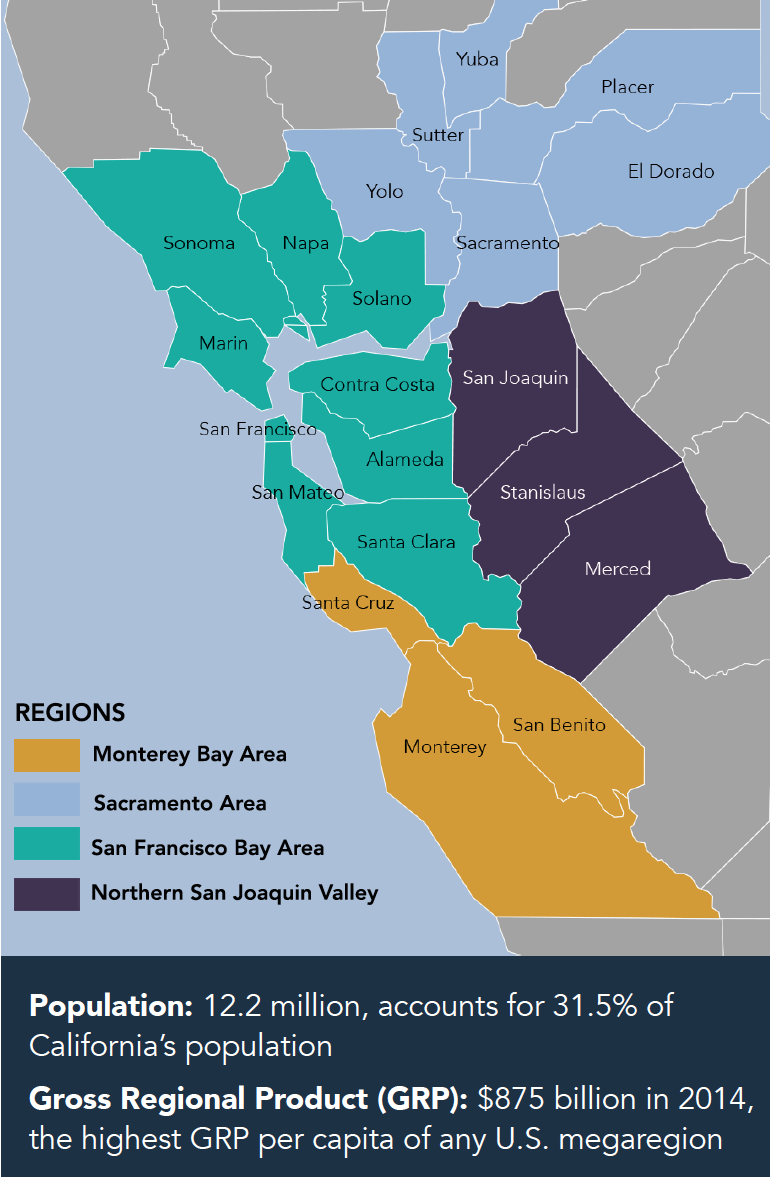
Undeniably, the San Francisco Bay Area stands as the undisputed cultural and economic epicenter of Northern California. Anchored by the iconic city of San Francisco, alongside major metropolitan hubs like Oakland, San Jose, and Berkeley, this region is a global powerhouse. Silicon Valley, a synonym for technological innovation, resides here, driving much of the state’s economic engine and attracting a diverse, international population.
For many, the Bay Area is Northern California, representing its progressive spirit, culinary excellence, and vibrant arts scene. Its influence extends far beyond its immediate boundaries, shaping perceptions and drawing travelers eager to experience its world-class attractions, from the Golden Gate Bridge to the historic neighborhoods of San Francisco and the intellectual vigor of Berkeley. Any discussion of where Northern California begins must acknowledge the magnetic pull and defining character of the Bay Area.
Distinct Regional Identities
Beyond the Bay Area, Northern California fragments into several other culturally rich and geographically distinct regions, each contributing to the mosaic of its identity:
- Wine Country: Just north of the Bay Area, the world-renowned Napa Valley and Sonoma County represent the pinnacle of American winemaking. This region is not just about viticulture; it’s a destination for gourmet food, luxury resorts, and stunning pastoral landscapes.
- Sacramento and the Central Valley: Sacramento, the state capital, anchors the northern portion of the Central Valley. This fertile agricultural breadbasket is crucial to California’s economy and offers a distinct experience focused on farm-to-fork dining, historical sites related to the Gold Rush, and a more laid-back pace of life compared to the coastal cities.
- The Sierra Nevada and Gold Country: To the east, the majestic Sierra Nevada range is home to natural wonders like Yosemite National Park and the popular resort destination of Lake Tahoe. This region offers unparalleled opportunities for outdoor adventures, from hiking and skiing to exploring charming historic towns remnants of the California Gold Rush.
- The Redwood Coast: Stretching from north of Fort Bragg up to the Oregon border, the Redwood Coast is defined by its colossal redwood trees, particularly within Redwood National and State Parks. This rugged, dramatic coastline offers a stark contrast to the sunny beaches further south, inviting travelers into ancient forests and misty seascapes.
Each of these regions contributes a vital thread to the tapestry of Northern California, making its “start” a confluence of many diverse and compelling destinations rather than a single point.
The Northern California Traveler’s Experience
For the discerning traveler, understanding “where Northern California starts” is less about a precise coordinate and more about identifying the entry points into a diverse array of experiences. This vast region promises everything from urban sophistication to unparalleled wilderness adventures, catering to every travel inclination.
Diverse Landscapes and Activities
The sheer breadth of Northern California’s offerings is perhaps its most compelling feature. A single trip can encompass:
- Urban Exploration: Wander the vibrant streets of San Francisco, exploring iconic neighborhoods like Fisherman’s Wharf, Chinatown, and Haight-Ashbury, or delve into the rich cultural scene of Oakland.
- Nature Immersion: Hike among the giant redwoods along the Lost Coast or marvel at the granite cliffs and waterfalls of Yosemite National Park. Winter sports enthusiasts flock to the slopes around Lake Tahoe, while summer brings opportunities for water activities on its pristine waters.
- Culinary and Wine Journeys: Indulge in world-class wine tasting experiences in Napa and Sonoma, or explore the farm-to-fork movement that thrives across the region, particularly in Sacramento.
- Coastal Drives and Quaint Towns: Navigate scenic coastal highways like Highway 1, discovering charming towns such as Carmel-by-the-Sea and Mendocino, offering stunning ocean views and artistic communities.
This incredible diversity ensures that no two trips to Northern California are ever quite the same, always offering new avenues for discovery and adventure.
Gateway Cities and Transportation
Accessing Northern California is straightforward, primarily via its well-connected airports and extensive road networks. For most international and domestic travelers, the major gateways are:
- San Francisco International Airport (SFO): The largest and most prominent airport, offering extensive global connections and convenient access to the Bay Area and beyond.
- Oakland International Airport (OAK): A popular choice for domestic flights, especially for those heading to Oakland, Berkeley, or the East Bay.
- San Jose Mineta International Airport (SJC): Ideal for travelers focused on Silicon Valley and the southern Bay Area.
- Sacramento International Airport (SMF): Serves the state capital and provides convenient access to the Central Valley, Gold Country, and the western Sierra Nevada.
Once within the region, a car is often essential for exploring the vast and varied landscapes. Road trips are not just a means of transportation but an integral part of the Northern California experience, allowing for spontaneous stops and deeper immersion into the local environment.
Is There a Definitive Answer? The Fluidity of “North”
Ultimately, the search for a definitive starting point for Northern California reveals its inherent fluidity. It’s less a fixed coordinate and more a perceptual and experiential shift, changing depending on the context and the individual’s perspective.
The I-5 Corridor and Transition Zones
Travelers driving the length of California along Interstate 5 experience this gradual transition most acutely. While some might jokingly declare Bakersfield as the gateway to “Northern California” when driving north from Los Angeles, geographically, Bakersfield is still firmly in the southern Central Valley. The real shift isn’t a sudden line but a slow evolution of scenery, climate, and even billboard advertising. The “start” becomes a series of subtle cues: the decreasing prevalence of palm trees, the increasing density of evergreen forests, and a shift in regional accents or local news focus. These transition zones, rather than rigid borders, are what truly define the journey into Northern California.
Personal Perception and Local Context
Perhaps the most accurate answer is that “where Northern California starts” is often a matter of personal perception and local context. For someone living in Redding in the far north, “Northern California” might refer to everything south of them, excluding only Southern California. Conversely, a resident of Monterey might consider themselves squarely in Northern California, yet someone from San Francisco might perceive Monterey as a distinct, perhaps more “central” coastal region. These local nuances highlight that the term is as much a cultural construct as a geographical one, shaped by proximity to major hubs and shared regional identity.
In conclusion, Northern California doesn’t commence at a single, undisputed point. It is a dynamic region defined by its varied geography, vibrant culture, and distinct experiences that gradually unfold as one travels north within the state. For the traveler, its “start” is an invitation to explore a realm of majestic natural beauty, innovative urban centers, and a relaxed, yet sophisticated, way of life that stands apart, yet remains inextricably linked, to the larger identity of California. It’s less about finding a line and more about embracing the journey into its unique character.
LifeOutOfTheBox is a participant in the Amazon Services LLC Associates Program, an affiliate advertising program designed to provide a means for sites to earn advertising fees by advertising and linking to Amazon.com. Amazon, the Amazon logo, AmazonSupply, and the AmazonSupply logo are trademarks of Amazon.com, Inc. or its affiliates. As an Amazon Associate we earn affiliate commissions from qualifying purchases.