
For many visitors and even some residents, the notion that a portion of Alabama might operate on a different time zone comes as a surprise. While the vast majority of the Heart of Dixie lies firmly within the Central Time Zone, there’s a unique and historically significant exception that can impact travel plans and local experiences. Understanding this geographical nuance is crucial for seamless navigation and a richer appreciation of the state’s intricate character, particularly for those venturing near its eastern border. This article delves into the specifics of Alabama’s time zone landscape, exploring the reasons behind this anomaly and providing practical insights for tourists.
Alabama’s Unique Time Zone Landscape: More Than Meets the Eye
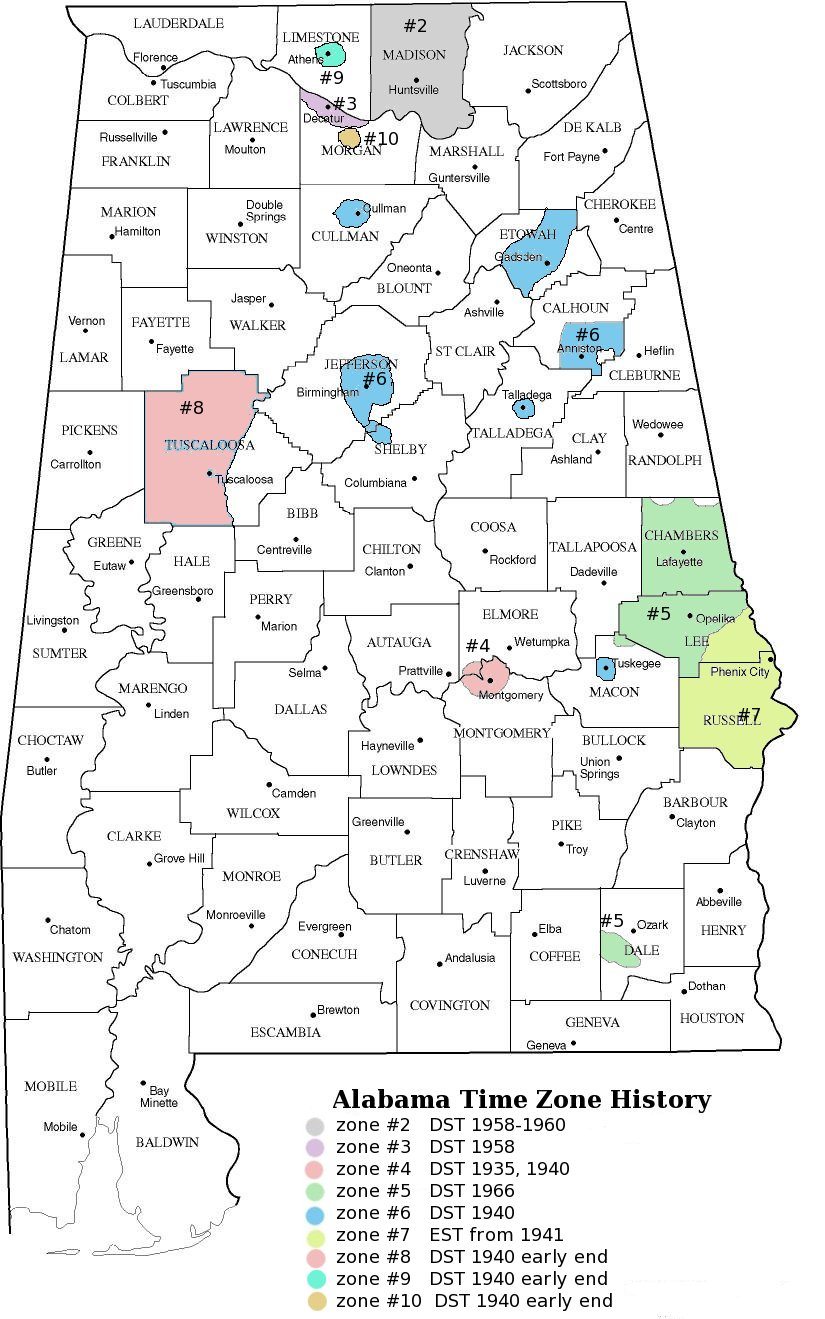
When considering a trip to Alabama, most travelers correctly assume they will be operating on Central Time. Indeed, from the bustling streets of Birmingham to the historic landmarks of Montgomery and the beautiful beaches of Gulf Shores, the entire state officially observes Central Time. However, a fascinating exception exists along its eastern edge, primarily affecting the city of Phenix City and parts of Russell County. Here, despite being geographically within the Central Time Zone, many local businesses and daily routines unofficially align with the Eastern Time Zone, creating a unique temporal shift for visitors and residents alike.
This peculiar situation arises from the region’s intimate connection with its neighbor across the Chattahoochee River, Columbus, Georgia. Since Georgia observes Eastern Time, Phenix City, often referred to as “Alabama’s Front Porch,” has historically chosen to synchronize its clocks with its larger, economically dominant sister city. This unofficial adoption of Eastern Time means that while federal law places Phenix City in the Central Time Zone, practically speaking, many aspects of life operate an hour ahead, in sync with Columbus. For tourists, this presents a critical detail to be aware of, ensuring that appointments, reservations, and planned activities are correctly timed.
Understanding Central Time vs. Eastern Time
The fundamental difference between Central Time and Eastern Time is precisely one hour. Eastern Time is always one hour ahead of Central Time. For example, when it’s 9:00 AM Central Time, it’s 10:00 AM Eastern Time. This differential remains constant throughout the year, even with the observance of Daylight Saving Time. Both zones spring forward and fall back on the same dates, maintaining the one-hour gap. Therefore, whether it’s summer or winter, the principle remains: if you’re traveling from most of Alabama into the Phenix City area, be prepared to adjust your clock forward by one hour to match the local operational time, if you want to be in sync with the flow of businesses and events.
Historical Roots of the Time Divide
The establishment of standard time zones across the United States in the late 19th century was primarily driven by the needs of the burgeoning railway industry. Prior to this, towns and cities often kept their own local “solar time,” leading to chaotic scheduling for trains. In 1883, the major railroads implemented four standard time zones, a system later formalized by the federal government. Alabama was largely placed in the Central Time Zone.
However, the case of Phenix City and its environs presents a classic example of economic and social ties overriding official demarcations. Located directly across the Chattahoochee River from Columbus, Georgia, Phenix City’s history is inextricably linked to its Georgia counterpart. For generations, residents have commuted between the two cities for work, education, shopping, and entertainment. Businesses on both sides of the river have shared customers, suppliers, and media markets. This deep interdependency made a unified time a practical necessity.
To avoid constant confusion and ensure smooth daily operations, the community in Phenix City largely adopted Eastern Time. This informal agreement means that schools, many local businesses, banks, and even community events tend to follow Columbus’s clock, despite what the official time zone map might indicate. While technically still in the Central Time Zone, the “practical” time for most daily activities is Eastern Time. This historical and practical anomaly is a testament to the strong cross-border relationships that define this unique region.
The Socio-Economic Drivers
The decision for Phenix City to largely operate on Eastern Time is rooted in powerful socio-economic factors. The close proximity and historical development of Phenix City and Columbus, Georgia, created a bi-state metropolitan area long before such concepts were formally recognized. Thousands of Phenix City residents work in Columbus, and vice versa. Children from one side of the river might attend school on the other. Essential services, healthcare providers, and major retail centers are often shared.
If Phenix City were to strictly adhere to Central Time, it would create a logistical nightmare. Imagine schools starting at 7:00 AM Central Time, but the children’s parents working in Columbus don’t start until 9:00 AM Eastern Time (which would be 8:00 AM Central). Banking hours, doctor’s appointments, TV schedules, and event timings would be out of sync, causing immense friction in daily life. Therefore, the unofficial shift to Eastern Time is a pragmatic solution that allows this interconnected community to function cohesively. For tourists, recognizing these deep-seated connections helps to understand why the time change is more than just a minor inconvenience – it’s a vital part of the local identity and daily rhythm.
Navigating the Time Change as a Tourist
For tourists planning to explore Alabama, particularly those with an itinerary that includes the eastern part of the state near the Georgia border, understanding this time zone anomaly is essential for a smooth and enjoyable trip. Misinterpreting the local time can lead to missed appointments, closed attractions, or even early departures.
When planning your itinerary, be acutely aware of the time zone shift if you intend to visit Phenix City or use it as a gateway to other attractions in Russell County. For example, if you’re traveling from Birmingham or Montgomery, which are firmly on Central Time, a drive to Phenix City effectively means “losing” an hour upon arrival if you want to align with local schedules.

This is particularly critical when booking accommodations, making restaurant reservations, or scheduling tours and activities. A restaurant in Phenix City might list its closing time as 9:00 PM (Eastern Time), which would be 8:00 PM if you’re still mentally on Central Time. Similarly, check-in times for hotels or start times for local events, such as a concert at the Phenix City Amphitheater, will almost certainly be given in Eastern Time.
Even transportation considerations come into play. While most modern navigation systems and smartphones automatically adjust time zones, it’s always wise to cross-reference, especially for specific bus or train schedules that might list departure/arrival times in the official Central Time Zone, even for stops in the border region. A proactive approach to time zone awareness will prevent unnecessary stress and ensure you maximize your visit.
Practical Tips for Time-Sensitive Activities
To ensure you don’t miss out on any experiences, here are some practical tips:
- Double-Check Everything: For critical appointments—hotel check-ins, restaurant reservations, tour bookings—always confirm the time zone with the establishment directly. A quick phone call or email asking, “Is that Central Time or Eastern Time?” can save significant hassle.
- Observe Local Clocks: Upon arrival in Phenix City, observe public clocks, bank hours, and the general pace of the community. This will quickly give you a feel for whether Eastern Time is being observed.
- Trust (but Verify) Smart Devices: While smartphones are usually reliable, consider manually setting your phone to a specific time zone or having a traditional watch as a backup, especially if you’re frequently crossing back and forth between the perceived time zones.
- Communicate Clearly: When speaking with locals or businesses, explicitly state “Eastern Time” or “Central Time” to avoid any ambiguity. This clarity benefits everyone.
- Plan Buffer Time: If your itinerary involves activities on both sides of the Chattahoochee River or a drive from the interior of Alabama to Phenix City, build in extra buffer time. This accounts for potential time zone confusion and allows for a more relaxed pace.
Impact on Local Life and Tourism Experience
The unique time zone situation in the Phenix City area deeply influences the daily rhythms of local life, and by extension, the tourist experience. For residents, this means an everyday negotiation of official vs. practical time. School buses from Phenix City might transport students to schools that operate on Eastern Time, setting morning routines an hour earlier than most of Alabama. Workdays for many align with the Columbus, Georgia schedule, impacting traffic patterns and peak hours for local services.
For tourists, this translates into practical considerations for almost any activity. A visitor arriving in Phenix City from Montgomery who hasn’t adjusted their clock might find that local shops are already open for an hour when they think it’s still early morning, or that restaurants close an hour earlier than anticipated. Cultural events, festivals, and public gatherings, like those organized by the Historic Chattahoochee Commission, will invariably follow the local operational time, which is Eastern. Imagine planning to attend a twilight concert only to discover you’ve missed the first hour because you were operating on Central Time!
Furthermore, attractions on the Georgia side of the river, such as the National Civil War Naval Museum in Columbus, will explicitly adhere to Eastern Time. For tourists wanting to explore the unified Columbus-Phenix City experience, consistent time awareness is key to seamlessly hopping between cities and enjoying all the regional offerings without temporal mishaps. This unique temporal characteristic becomes part of the region’s charm, a local quirk that adds an interesting layer to the travel narrative.
Ensuring a Smooth Tourist Experience
To ensure your visit is smooth and enjoyable, embrace this unique aspect of Alabama’s eastern frontier. View it not as a hindrance, but as an interesting local detail that speaks to the deep connections between bordering communities. Preparing for this time shift allows you to fully engage with the local culture, participate in scheduled events, and make the most of your time. Don’t hesitate to ask locals for clarification – they are accustomed to guiding visitors through this minor temporal puzzle and are often happy to help. A little bit of awareness goes a long way in turning a potential point of confusion into a memorable part of your Alabama adventure.

Tips for Seamless Travel Across Alabama’s Time Zones
Navigating the unofficial time zone change in Alabama doesn’t have to be a source of stress. With a few proactive measures, you can ensure a smooth and enjoyable visit to every corner of the state, including its temporally distinct eastern edge.
Firstly, prioritize research for any specific destination. Before you even hit the road, have a clear understanding of the time zone your destination operates within, especially if you’re heading towards Phenix City or other areas bordering Georgia. A quick search for “What time is it in Phenix City right now?” can provide immediate clarity.
Secondly, while relying on automatic device updates is generally sound, always have a manual confirmation. Most modern smartphones, GPS devices, and smartwatches will automatically adjust their time zones based on your location. However, it’s wise to double-check this functionality and perhaps manually confirm the time, especially when moving between official and unofficial time zones. A quick glance at a local clock in a public place can offer peace of mind.
Thirdly, confirm all appointments and reservations with the specific time zone in mind. Whether it’s a dinner reservation at a riverside restaurant, a scheduled tour of historical sites, or a check-in at a local hotel, explicitly ask: “Is that time in Central or Eastern?” This eliminates any potential miscommunication and ensures you arrive at the correct moment. This applies whether you are visiting the Historic Chattahoochee Commission sites or planning to see an exhibition.
Fourthly, embrace the anomaly as part of the unique experience of traveling through Alabama. This localized time shift is a historical quirk, a testament to the strong cultural and economic ties between communities. It’s a part of what makes the Alabama-Georgia border region distinct and offers a talking point for your travel stories.
Finally, don’t hesitate to leverage local resources. Hotel staff, tourism office personnel, and even friendly locals are invaluable sources of real-time information. A simple question can clear up any confusion and provide reassurance. They are the experts on their local customs and can guide you effortlessly. While this unique time zone situation requires a touch more attention, it’s a minor detail in the grand scheme of experiencing the vibrant culture, rich history, and stunning natural beauty that Alabama has to offer. Enjoy your journey through the Heart of Dixie, one precisely timed moment at a time.
LifeOutOfTheBox is a participant in the Amazon Services LLC Associates Program, an affiliate advertising program designed to provide a means for sites to earn advertising fees by advertising and linking to Amazon.com. Amazon, the Amazon logo, AmazonSupply, and the AmazonSupply logo are trademarks of Amazon.com, Inc. or its affiliates. As an Amazon Associate we earn affiliate commissions from qualifying purchases.