
Navigating the nuances of time zones can be a perplexing aspect of travel, especially in regions where boundaries are less clear-cut or influenced by local custom. For travelers exploring the diverse landscapes of Alabama, understanding where the time changes is crucial for seamless planning and enjoyable experiences. While the vast majority of the state observes the Central Time Zone (CT), there is a unique and often surprising exception that every visitor should be aware of, a fascinating anomaly rooted in practicality and proximity rather than official decree. This peculiarity primarily centers around a single vibrant city, creating an intriguing logistical puzzle for those passing through.
The Peculiar Case of Phenix City: An Unofficial Eastern Time Outpost
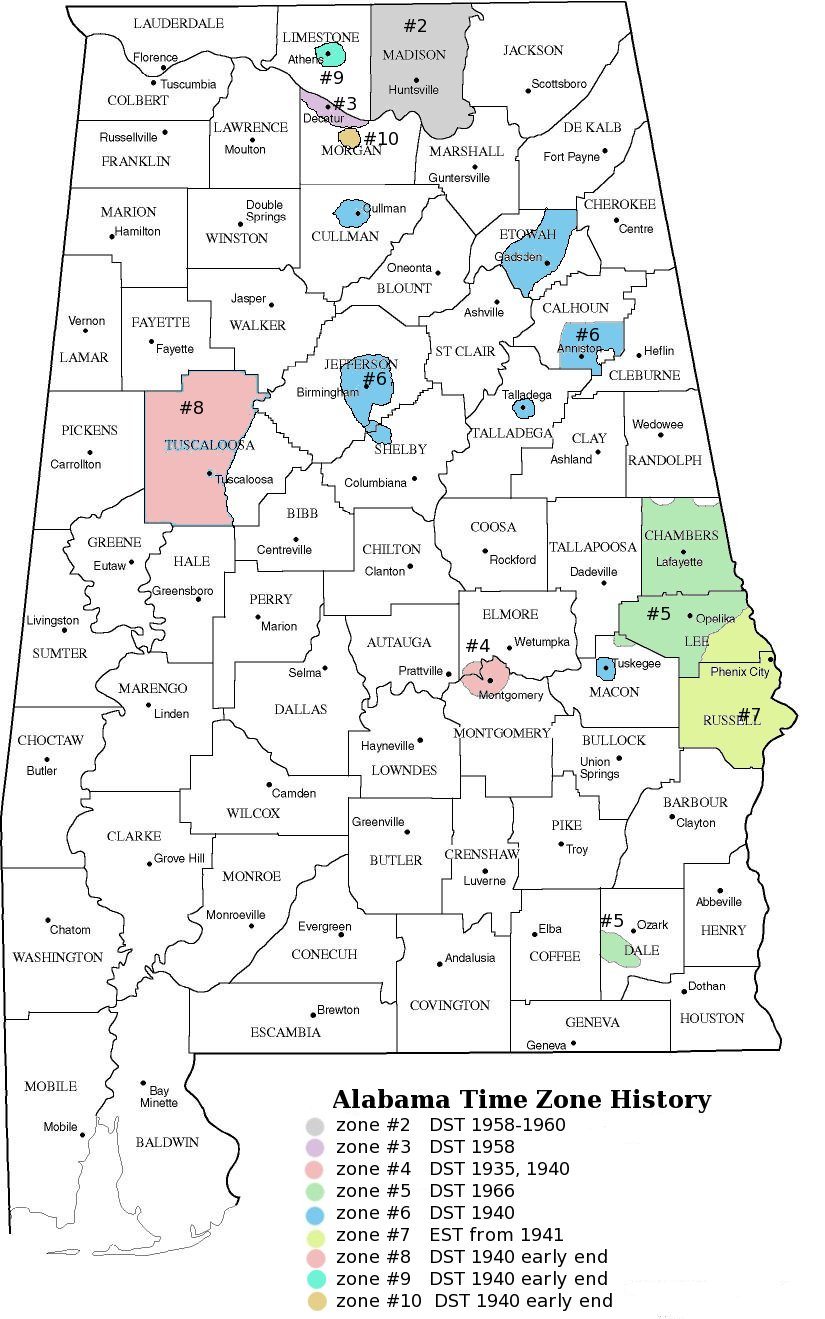
The heart of Alabama’s time zone quirk lies in Phenix City, a dynamic community nestled on the eastern border of the state, directly across the Chattahoochee River from Columbus, Georgia. Geographically, [Phenix City] is situated within the Central Time Zone (CT), just like the rest of [Alabama]. However, for all practical purposes, [Phenix City] unofficially observes Eastern Time (ET). This unique local tradition is not a federally mandated time zone change, but rather a community-wide agreement to align with its larger neighbor, [Columbus, Georgia], which is firmly in the Eastern Time Zone.
This unofficial observance dates back decades, driven by the strong economic and social ties between [Phenix City] and [Columbus]. Many residents of [Phenix City] commute to [Columbus] for work, and countless businesses on both sides of the river engage in daily commerce. To avoid constant confusion, missed appointments, and the general logistical headache of operating on different times for a community so intrinsically linked, [Phenix City] has simply adopted the time zone of its Georgian counterpart. For travelers, this means that while their mobile phones might automatically switch to [Central Time] upon entering [Alabama], the clocks on local businesses, schools, and public services in [Phenix City] will likely reflect [Eastern Time]. This creates a fascinating micro-travel experience where a mere bridge crossing can effectively jump you an hour forward in time, challenging assumptions and requiring a conscious awareness of local custom. Understanding this unique arrangement is paramount for anyone planning to visit or conduct business in this particular corner of [Alabama].
Navigating Alabama’s True Time Zone Landscape
While [Phenix City] stands out as the exception, it is crucial to reiterate that the vast majority of [Alabama] operates strictly within the Central Time Zone (CT). From the bustling streets of Birmingham to the historic shores of Mobile and the mountainous trails of Huntsville, all these major destinations and the rural expanses in between adhere to [Central Time]. This means that for most itineraries traversing the Heart of Dixie, travelers will not encounter any official time zone shifts within the state’s borders.
The geographical boundaries of the [Central Time Zone] encompass the entire state of [Alabama], making the [Phenix City] situation even more distinct. Neighboring states offer further context: Mississippi to the west is also entirely within the [Central Time Zone], simplifying travel across that border. To the east, Georgia is fully in the Eastern Time Zone, which explains the strong influence on [Phenix City]. To the south, Florida is split, with its panhandle mostly in [Central Time] and the peninsula in [Eastern Time]. This regional overview highlights that [Alabama] is generally straightforward, with the sole significant “time change” phenomenon being the unofficial observance in [Phenix City]. Therefore, unless your travel plans specifically include this eastern border city, you can confidently set your watches and plans to [Central Time] throughout your [Alabama] adventure, ensuring you’re always on schedule for everything from museum visits to dinner reservations.
Practical Tips for Time-Savvy Travelers in Alabama

For those venturing into [Alabama], particularly near its eastern frontier, a few practical tips can help eliminate any time-related confusion and ensure a smooth journey. Awareness is your best tool when dealing with time zone shifts, official or otherwise.
Verifying Local Time
Always confirm the local time, especially when near the [Alabama]-[Georgia] border in the vicinity of [Phenix City]. While your smartphone or GPS device will typically adjust automatically based on its geographical location, it’s wise to double-check against local sources like public clocks, business hours signage, or simply by asking a local. In [Phenix City], despite your device showing [Central Time], assume [Eastern Time] for all local interactions and scheduled activities. This proactive approach will prevent late arrivals or missed opportunities.
Scheduling Appointments and Reservations
When making reservations for dining, tours, or accommodations in [Phenix City], it’s prudent to explicitly confirm the time zone with the establishment. A simple question like, “Is that time in [Eastern Time]?” can clarify any ambiguity. For travel between [Phenix City] and [Columbus, Georgia], factor in the one-hour difference if coordinating meetings or events. Being an hour off can derail tightly packed itineraries, particularly for business travelers or those with scheduled engagements.
Device Management
While most modern devices are adept at automatically updating to the correct time zone, reliance can sometimes lead to unexpected discrepancies. For critical appointments, consider manually setting your device’s clock to the local customary time in [Phenix City] if you plan to spend significant time there. Alternatively, a traditional wristwatch set to the local time can serve as a reliable backup, ensuring you’re always synchronized with local rhythms. This small effort can save significant stress and help maintain your schedule efficiently.

Exploring Destinations Near the Time Zone Anomaly
The unique time zone situation in [Phenix City] doesn’t just create a logistical challenge; it also adds an intriguing layer to the travel experience in this vibrant area. Being a gateway between [Alabama] and [Georgia], [Phenix City] offers a rich tapestry of experiences, often intertwined with its larger twin city, [Columbus]. Travelers embracing the time zone anomaly will find themselves perfectly positioned to explore a diverse range of attractions.
Start your exploration with the Phenix City RiverWalk, which seamlessly connects to the more extensive Columbus RiverWalk. This allows visitors to stroll, bike, or jog along the [Chattahoochee River], experiencing both sides of the state line and, effectively, both time zones within a single activity. The stunning views, public art, and proximity to downtown amenities make this a prime attraction.
History buffs will appreciate the area’s rich past, particularly at the National Civil War Naval Museum in [Columbus], just a stone’s throw from [Phenix City]. This museum houses the remains of two Confederate ironclads, offering a deep dive into naval warfare during the Civil War. For nature enthusiasts, the Oxbow Meadows Environmental Learning Center provides an opportunity to observe local wildlife and learn about the region’s ecosystems through interactive exhibits and nature trails.
Beyond specific attractions, the dual-city dynamic means travelers can enjoy a broader range of culinary experiences, from authentic [Alabama] barbecue joints in Russell County to upscale dining in [Columbus]. The cultural scene, including theaters, galleries, and live music venues, also benefits from the combined offerings of two cities effectively operating as one metropolitan area. Embracing the unique time zone difference as part of the local charm enhances the travel narrative, transforming what might be a source of confusion into a memorable highlight of an [Alabama] adventure.
LifeOutOfTheBox is a participant in the Amazon Services LLC Associates Program, an affiliate advertising program designed to provide a means for sites to earn advertising fees by advertising and linking to Amazon.com. Amazon, the Amazon logo, AmazonSupply, and the AmazonSupply logo are trademarks of Amazon.com, Inc. or its affiliates. As an Amazon Associate we earn affiliate commissions from qualifying purchases.