
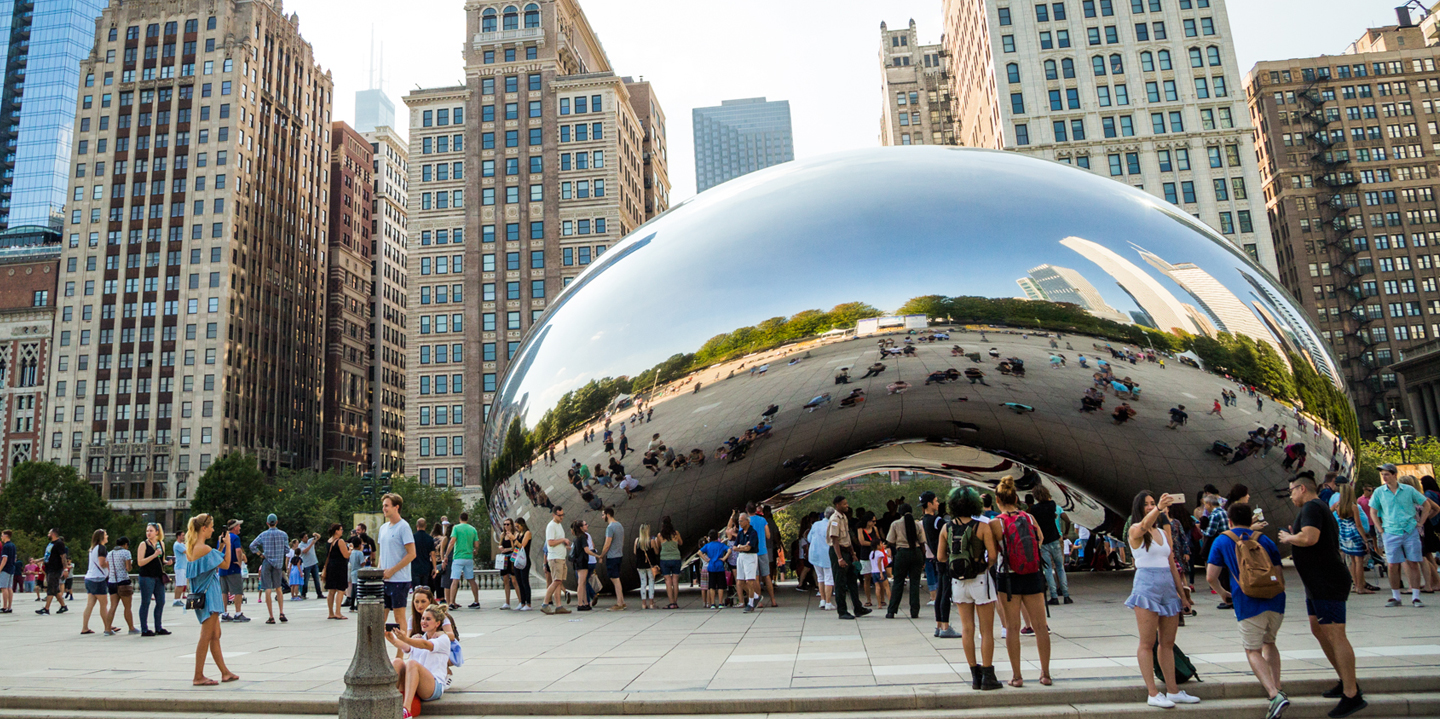
The shimmering, reflective sculpture that has become an iconic symbol of Chicago, known affectionately by locals and visitors alike as “The Bean,” officially bears the name Cloud Gate. Situated in the heart of Millennium Park, this mesmerizing artwork by Sir Anish Kapoor draws crowds from around the globe, eager to capture its unique reflections and experience its artistic presence. Its placement is not arbitrary; Cloud Gate is strategically located to enhance the visitor experience within Millennium Park, offering a focal point that draws together the various elements of this urban oasis.
The Artistry of Cloud Gate: A Reflective Masterpiece
Cloud Gate, a monumental sculpture, stands as a testament to modern public art’s power to transform urban spaces and inspire wonder. Its unconventional form and highly polished surface invite interaction and contemplation, making it far more than just a static object.
Anish Kapoor’s Vision and Design
The genesis of Cloud Gate lies in the artistic vision of Sir Anish Kapoor, a world-renowned sculptor celebrated for his monumental and often psychologically resonant works. Commissioned as part of Millennium Park‘s development, Kapoor’s design aimed to create a piece that would engage with its environment in a dynamic and ever-changing way. The sculpture’s elliptical shape, inspired by liquid mercury, was intended to reflect the sky, the surrounding architecture, and the people interacting with it. This concept of a “liquid mirror” was groundbreaking for a permanent public installation of this scale.
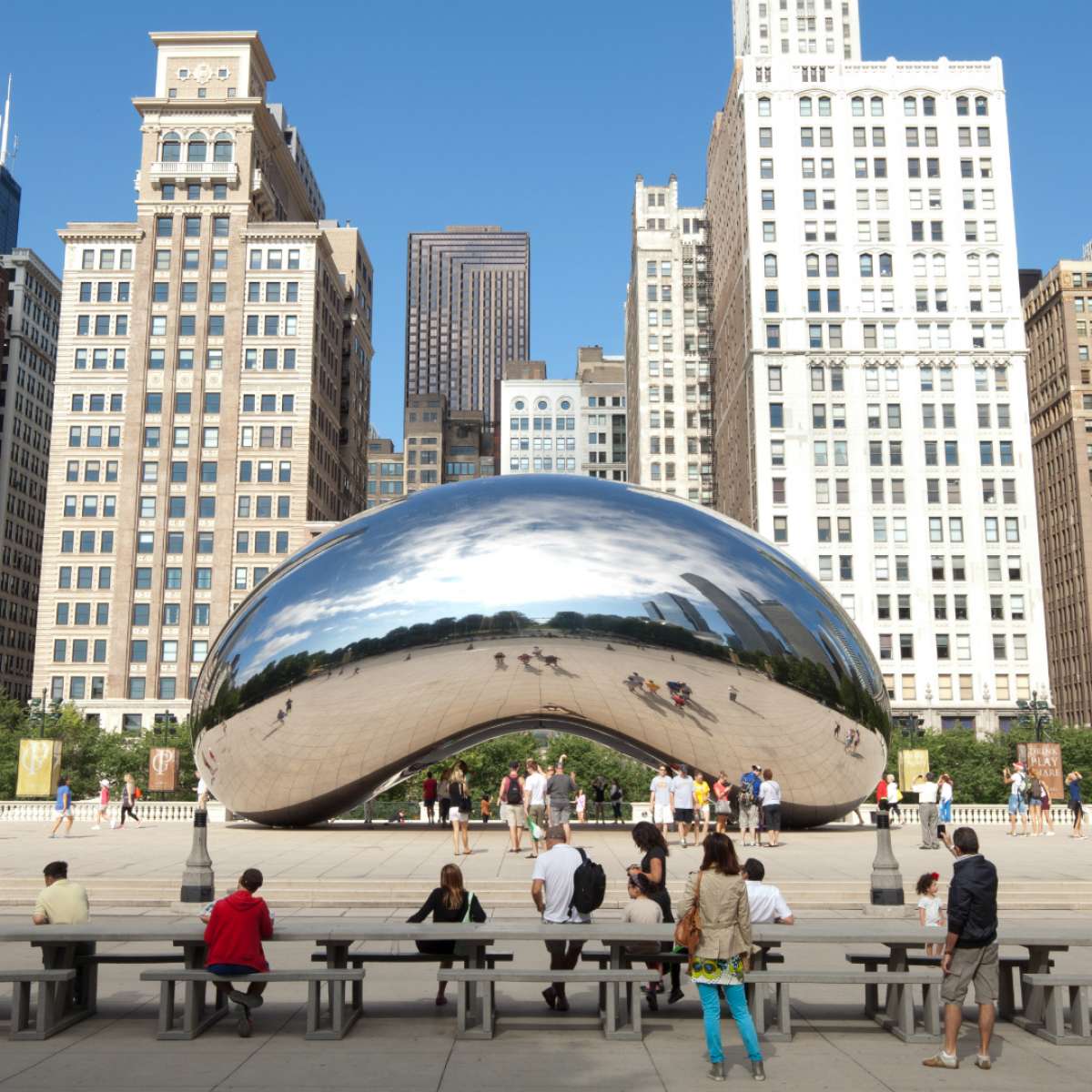
The fabrication process was as ambitious as the design. Composed of 168 highly polished, mirror-finished stainless steel plates, meticulously welded together, the exterior of Cloud Gate is seamless. The complex curvature presented significant engineering challenges, requiring advanced techniques in metalwork and finishing to achieve the flawless, uniform reflectivity that defines the artwork. Each plate had to be precisely shaped and polished to ensure that the reflections were clear and undistorted, capturing the essence of Kapoor’s liquid mercury inspiration. The underside of the sculpture features a dramatic arch, creating a “temple-like” passage that allows visitors to walk beneath it, experiencing a distorted, yet captivating, reflection of themselves and the sky above.
The Reflective Phenomenon
The most striking characteristic of Cloud Gate is its unparalleled reflectivity. The mirror-like surface acts as a giant, distorted mirror, capturing and reinterpreting the urban landscape. Visitors are immediately drawn to its surface, seeing their own images warped and stretched, intertwined with the iconic skyline of Chicago, the lush greenery of Millennium Park, and the ever-changing patterns of the sky. This interactive quality is central to the sculpture’s appeal, offering a personalized and constantly novel experience.
The reflections are not static; they shift and evolve with the time of day, the weather, and the movement of people. On a clear day, the blue sky and white clouds are vividly rendered, while at sunset, the sculpture glows with the warm hues of the setting sun. During inclement weather, the rain-slicked surface can create a more dramatic and moody reflection. This dynamic interplay between the artwork and its environment makes each visit to Cloud Gate a unique experience. The sculpture serves as a constant reminder of the ephemeral nature of light and reflection, and the beauty that can be found in the most unexpected of places.
Cloud Gate’s Location: The Heart of Millennium Park
The precise placement of Cloud Gate within Millennium Park is a crucial element of its success. It is not merely an object placed in the park, but rather an integral part of its design and experience, contributing significantly to the park’s overall appeal as a premier tourist destination.
Navigating Millennium Park to Reach Cloud Gate
Millennium Park, a jewel of Chicago‘s downtown, is a sprawling public space that offers a multitude of attractions. Cloud Gate is strategically positioned within the park’s main plaza, making it easily accessible to visitors. Located at the intersection of Michigan Avenue and Randolph Street, the park itself is a vibrant hub, home to other notable features such as the Jay Pritzker Pavilion, the Crown Fountain, and the Lurie Garden.
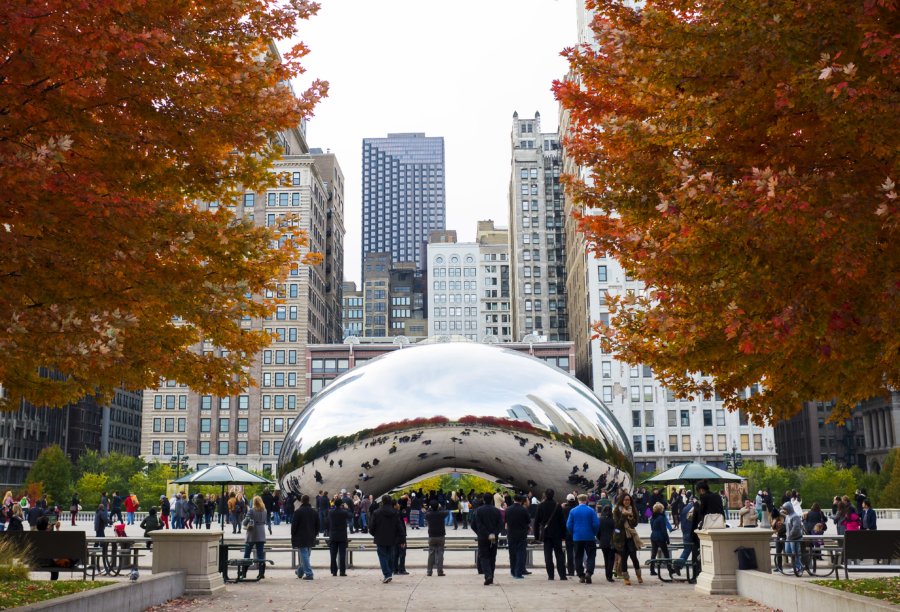
To find Cloud Gate, visitors typically head towards the park’s south end, near the Pritzker Pavilion. The sculpture is a dominant visual landmark once you are within the central area of the park, its distinctive shape visible from various vantage points. Clear signage within Millennium Park usually guides visitors directly to its location. For those using navigation apps, searching for “Cloud Gate Chicago” or “The Bean Chicago” will pinpoint its exact spot. The accessibility from major streets and public transportation makes it a convenient destination for all visitors.
The Surrounding Landscape and Architecture
The setting of Cloud Gate is as important as the sculpture itself. Millennium Park was designed to be an urban sanctuary, and Cloud Gate acts as a central magnetic point within this designed landscape. The sculpture’s reflective surface mirrors the surrounding architectural marvels of Chicago, including the iconic skyscrapers that define its skyline. This juxtaposition of organic form and urban geometry creates a captivating dialogue between art, nature, and the built environment.
The Lurie Garden, a beautifully landscaped area adjacent to Cloud Gate, provides a verdant contrast to the sculpture’s metallic sheen. The changing seasons bring new colors and textures to the garden, which are then captured and reflected in the polished steel of Cloud Gate. The proximity to the Jay Pritzker Pavilion, with its striking deconstructivist design by Frank Gehry, further enhances the artistic and architectural richness of the area. The Crown Fountain, with its interactive video sculptures, is also nearby, adding another layer of dynamic engagement to the visitor experience. Together, these elements create a cohesive and multi-faceted public space that draws millions of visitors annually.
Experiencing Cloud Gate: More Than Just a Photo Opportunity
While taking a photograph with Cloud Gate is a quintessential Chicago experience, the sculpture offers a depth of engagement that extends far beyond a simple snapshot. Its interactive nature and artistic significance invite visitors to explore and appreciate it from multiple perspectives.
The Interactive Nature of the Sculpture
Cloud Gate is designed for interaction. Visitors are encouraged to walk around it, touch its surface (though this is now discouraged due to preservation efforts, the intent was always to be touched), and marvel at the distorted reflections. The underside of the sculpture, with its deep arch, provides a unique vantage point. Standing beneath Cloud Gate, one can experience a surreal sense of being inside the artwork, with the sky and the cityscape swirling above and around in a mesmerizing, inverted panorama.
Children, in particular, are often captivated by the playful distortions of their reflections, finding joy in the funhouse-mirror effect. Adults, too, find themselves captivated by the artistic interplay of light, form, and environment. The sculpture acts as a social hub, with people from all walks of life congregating to share in the experience, often striking poses that play with the distorted reflections. This communal aspect of experiencing Cloud Gate further enhances its value as a public artwork.
The Artistic and Cultural Significance
Beyond its aesthetic appeal and interactive qualities, Cloud Gate holds significant artistic and cultural importance. It represents a bold statement in public art, demonstrating how contemporary sculpture can transform a public space into a destination. Sir Anish Kapoor‘s work here is celebrated for its ability to engage a broad audience, transcending traditional artistic barriers.
The sculpture has become an indelible part of Chicago‘s identity, frequently appearing in promotional materials, films, and television shows that feature the city. It has elevated Millennium Park from a mere green space to a world-class cultural attraction. Its enduring popularity speaks to its success in creating a memorable and meaningful experience for visitors, making Cloud Gate a true landmark and a cherished symbol of Chicago. The sculpture’s ability to inspire awe, spark conversation, and provide a moment of shared wonder solidifies its place as one of the most significant public artworks of the 21st century.
Tips for Visiting Cloud Gate
To make the most of your visit to Cloud Gate, consider these helpful tips. Visiting during off-peak hours, such as early morning or late evening on weekdays, can offer a less crowded experience, allowing for more intimate engagement with the sculpture. Be mindful of the weather; while sunny days offer bright reflections, overcast or rainy days can provide a more dramatic and moody aesthetic.
When taking photographs, experiment with different angles and perspectives to capture the unique distortions and reflections. Try walking underneath the arch to experience the inverted view of the sky. Remember that Millennium Park is a popular destination, so be prepared for crowds, especially during weekends and holidays. Wear comfortable shoes, as you’ll likely be doing a lot of walking to explore the park and its various attractions. Finally, take a moment to simply stand back and observe the interplay of light, reflection, and people – it is here that the true magic of Cloud Gate lies.
LifeOutOfTheBox is a participant in the Amazon Services LLC Associates Program, an affiliate advertising program designed to provide a means for sites to earn advertising fees by advertising and linking to Amazon.com. Amazon, the Amazon logo, AmazonSupply, and the AmazonSupply logo are trademarks of Amazon.com, Inc. or its affiliates. As an Amazon Associate we earn affiliate commissions from qualifying purchases.