
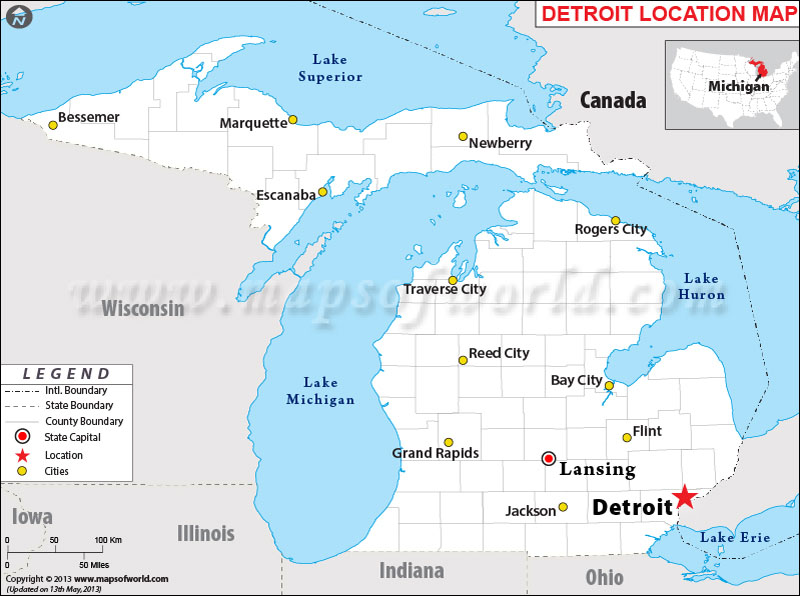
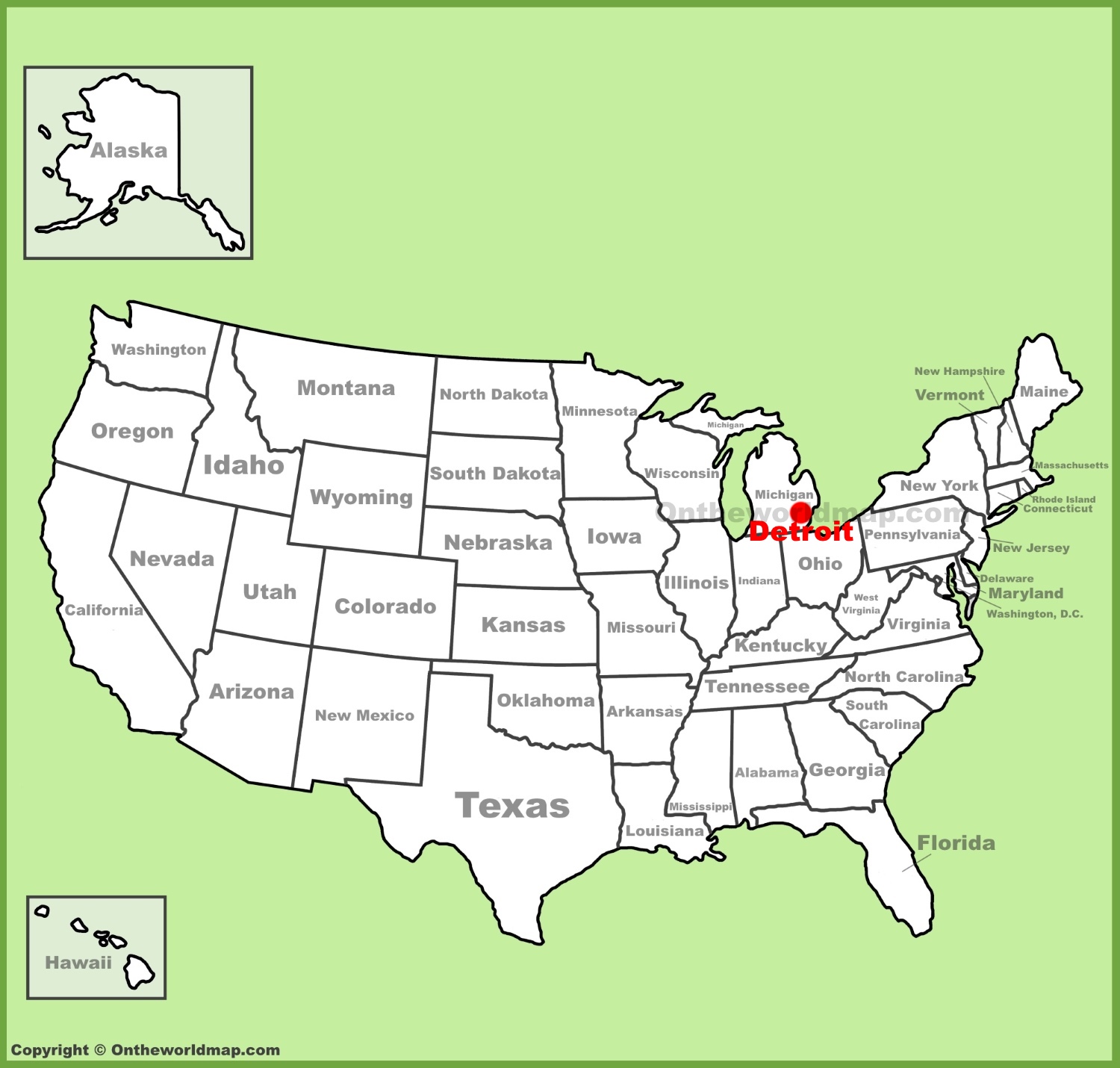
Detroit, a city often associated with its rich industrial heritage and vibrant musical legacy, holds a significant place on the American map. Situated in the southeastern corner of Michigan, it’s a major urban center within the Midwest, straddling the international border with Canada. Understanding Detroit’s geographical context is crucial for appreciating its historical development, its economic trajectory, and its current renaissance as a dynamic destination.
Geographical Positioning and Its Impact
Detroit’s location is defined by its proximity to the Detroit River, a vital waterway that connects Lake Erie to the lower stretches of the Great Lakes system. This strategic placement has been instrumental in its history, shaping its role as a critical port and a hub for commerce and transportation. The river forms a natural boundary between the United States and Canada, with the city of Windsor, Ontario directly across from Detroit, linked by the Ambassador Bridge and the Detroit–Windsor Tunnel.

The Great Lakes Connection
The influence of the Great Lakes cannot be overstated when discussing Detroit’s geography. The city is part of the Great Lakes Megalopolis, a vast urban corridor that stretches across the northeastern United States and southeastern Canada. This region is characterized by its high population density and significant economic activity, with Detroit playing a key role as a manufacturing and cultural center. The accessibility provided by the Great Lakes facilitated the shipment of raw materials and finished goods, underpinning Detroit’s rise as the “Motor City.”
Waterways and Infrastructure
The Detroit River is not merely a geographical feature but a fundamental component of the city’s infrastructure. It serves as a major shipping route, supporting the flow of goods through the St. Lawrence Seaway system. The development of the city’s port facilities and the associated transportation networks—railroads and highways—were heavily influenced by this watery nexus. Today, these established transport links continue to support Detroit’s economic diversity, even as its industrial base has evolved.
Inland Positioning
While its connection to the Great Lakes is paramount, Detroit is also an inland city, nestled within the broader landscape of Michigan. It is the county seat of Wayne County, the most populous county in Michigan. The city itself is a sprawling metropolis, with distinct neighborhoods and surrounding suburbs that form a larger metropolitan area. Its position in the American Midwest connects it to other major cities like Chicago, Cleveland, and Toronto, facilitating regional travel and economic exchange.
Historical Significance of Detroit’s Location
Detroit’s geographical placement has profoundly influenced its historical trajectory, from its founding to its zenith as an industrial powerhouse and its subsequent challenges and rebirth.
French Colonial Roots
Founded in 1701 by Antoine de la Mothe Cadillac as Fort Pontchartrain du Détroit, the settlement’s location was chosen for its strategic advantages. Situated on the narrowest part of the Detroit River, it offered a defensible position and control over water traffic between Lake Huron and Lake Erie. This strategic military and trading post laid the groundwork for the city’s future importance.
The Automotive Boom
The 20th century saw Detroit become synonymous with the automobile industry. The abundance of natural resources, a readily available workforce, and proximity to suppliers, all facilitated by its geographical position, made it the ideal incubator for mass production. Pioneers like Henry Ford, Ransom E. Olds, and the Dodge Brothers established their factories, transforming Detroit into the epicenter of automotive innovation and manufacturing. The city’s layout and infrastructure were reshaped to support this burgeoning industry, with factories, workers’ housing, and transportation networks expanding rapidly.
Post-Industrial Evolution
The decline of heavy manufacturing in the latter half of the 20th century presented significant challenges for Detroit. However, its established infrastructure, resilient spirit, and unique cultural assets began to foster a new era of development. The city’s location continues to offer advantages, including its proximity to a skilled workforce, its transportation links, and its potential for urban revitalization. Understanding its geographical context is key to appreciating the ongoing transformation of Detroit.
Detroit as a Tourism and Cultural Hub
Beyond its industrial past, Detroit’s location makes it a compelling destination for travelers seeking a rich tapestry of culture, history, and urban exploration. Its accessibility and unique character draw visitors from across the globe.
Cultural Attractions
Detroit’s cultural landscape is deeply intertwined with its geographical setting. The city’s proximity to Canada and its history as a hub for various immigrant communities have fostered a diverse cultural environment. From the blues and Motown music that originated here to its burgeoning arts scene and distinct culinary traditions, Detroit offers a wealth of experiences.
- Music Heritage: The iconic Motown Museum (Hitsville U.S.A.) is a testament to Detroit’s pivotal role in shaping popular music. Its location in the heart of the city allows visitors to step back in time and experience the birthplace of global music phenomena.
- Arts and Architecture: The Detroit Institute of Arts houses an impressive collection, reflecting the city’s artistic heritage. Its architecture itself is a landmark, standing as a proud symbol of Detroit’s cultural aspirations. Exploring neighborhoods like Midtown and Downtown reveals a fascinating array of architectural styles, from Art Deco to Brutalist.
- Culinary Scene: Detroit’s food scene is a reflection of its diverse population. Iconic dishes like the Detroit-style pizza, inspired by its industrial roots, and the vibrant immigrant communities offering authentic flavors from around the world, provide a delicious journey. Exploring areas like Eastern Market, one of the oldest and largest public markets in the United States, offers a sensory feast.
Outdoor Recreation and Natural Beauty
While often associated with urban landscapes, Detroit and its surrounding areas offer access to natural beauty and outdoor activities, leveraging its connection to the Great Lakes.
- Waterfront Access: The Detroit RiverWalk provides stunning views of the river and the Canadian skyline. It’s a popular spot for walking, cycling, and enjoying the cityscape. Belle Isle Park, a large island park in the middle of the Detroit River, offers green spaces, a conservatory, an aquarium, and breathtaking views, further enhancing Detroit’s connection to its watery environment.
- Parks and Green Spaces: Beyond Belle Isle, Detroit boasts numerous city parks and greenways, offering residents and visitors spaces for recreation and relaxation. These areas contribute to the quality of life and the city’s appeal as a place to live and visit.
Gateway to the Region
Detroit’s position makes it a convenient gateway to other attractions in Michigan and the wider Great Lakes region. Visitors can easily explore the scenic beauty of Michigan’s Upper Peninsula, the charming towns along the Great Lakes shorelines, or even venture further into Canada. Its robust transportation infrastructure, including Detroit Metropolitan Wayne County Airport, ensures accessibility for national and international travelers.
Navigating Detroit: A Traveler’s Perspective
Understanding Detroit’s map is not just about its coordinates but about grasping its urban fabric and how to best navigate its offerings. The city is structured around a grid system in many areas, but its historical development has also created unique street patterns and neighborhoods with distinct characters.
Downtown and its Surroundings
Downtown Detroit is the city’s central business district and a hub for many attractions, including sports arenas like Ford Field and Little Caesars Arena, corporate headquarters, and a growing residential population. Nearby areas like Campus Martius Park offer public spaces and event venues.
- Greektown: Known for its vibrant nightlife, casinos, and Greek restaurants, Greektown is a popular entertainment district accessible from downtown.
- Midtown: North of downtown, Midtown is a cultural and educational hub, home to the Detroit Institute of Arts, the Henry Ford Museum of American Innovation (though technically in Dearborn), and Wayne State University.
- New Center: Further north, the New Center area is historically significant for its Art Deco architecture and former automotive headquarters, now seeing a resurgence.
Historic Neighborhoods and Emerging Areas
Detroit is a city of distinct neighborhoods, each with its own identity, history, and architectural charm. Exploring these areas provides a deeper understanding of the city’s evolution and its present-day dynamism.
- Corktown: One of the oldest neighborhoods, Corktown boasts historic pubs, Irish heritage, and a burgeoning culinary scene.
- Eastern Market: This historic market district is not only a vibrant place to shop for fresh produce but also a growing hub for art, food, and community events.
- West Village and Indian Village: These historic residential districts showcase stunning architecture and offer a glimpse into Detroit’s affluent past, now experiencing renewed interest and preservation efforts.
Transportation and Accessibility
Detroit’s location at the nexus of major transportation routes is a significant advantage for visitors. The city is served by an extensive network of highways, including I-94, I-75, and I-96, connecting it to regional and national destinations.
- Public Transit: While the private automobile has historically dominated Detroit’s transport culture, the city is working to improve its public transit options. The Detroit Department of Transportation (DDOT) operates bus routes throughout the city, and the QLine, a streetcar system, serves a 3.3-mile route along Woodward Avenue, connecting downtown to Midtown and New Center.
- Ride-Sharing and Taxis: Ride-sharing services like Uber and Lyft are readily available throughout the metropolitan area, offering convenient options for getting around.
- Air Travel: Detroit Metropolitan Wayne County Airport (DTW) is a major international airport, providing direct flights to numerous domestic and international destinations, making Detroit easily accessible for travelers worldwide.
In essence, understanding where Detroit is on the map is the first step to unlocking its multifaceted appeal. It’s a city defined by its critical position on the Great Lakes, its vital international border, and its resilient spirit that continues to shape its narrative as a significant and evolving American metropolis.
LifeOutOfTheBox is a participant in the Amazon Services LLC Associates Program, an affiliate advertising program designed to provide a means for sites to earn advertising fees by advertising and linking to Amazon.com. Amazon, the Amazon logo, AmazonSupply, and the AmazonSupply logo are trademarks of Amazon.com, Inc. or its affiliates. As an Amazon Associate we earn affiliate commissions from qualifying purchases.