
The silhouette of Diamond Head is arguably the most defining feature of the Honolulu skyline, serving as a silent sentinel over the Pacific Ocean. Located on the southeastern coastline of the island of Oahu, this massive volcanic tuff cone is more than just a scenic backdrop for the high-rises of Waikiki; it is a geological marvel and a profound historical landmark. To understand where Diamond Head is located is to understand its relationship with the State of Hawaii and its role in the tectonic and cultural evolution of the Hawaiian Islands.
Geographic Location and Geological Origins
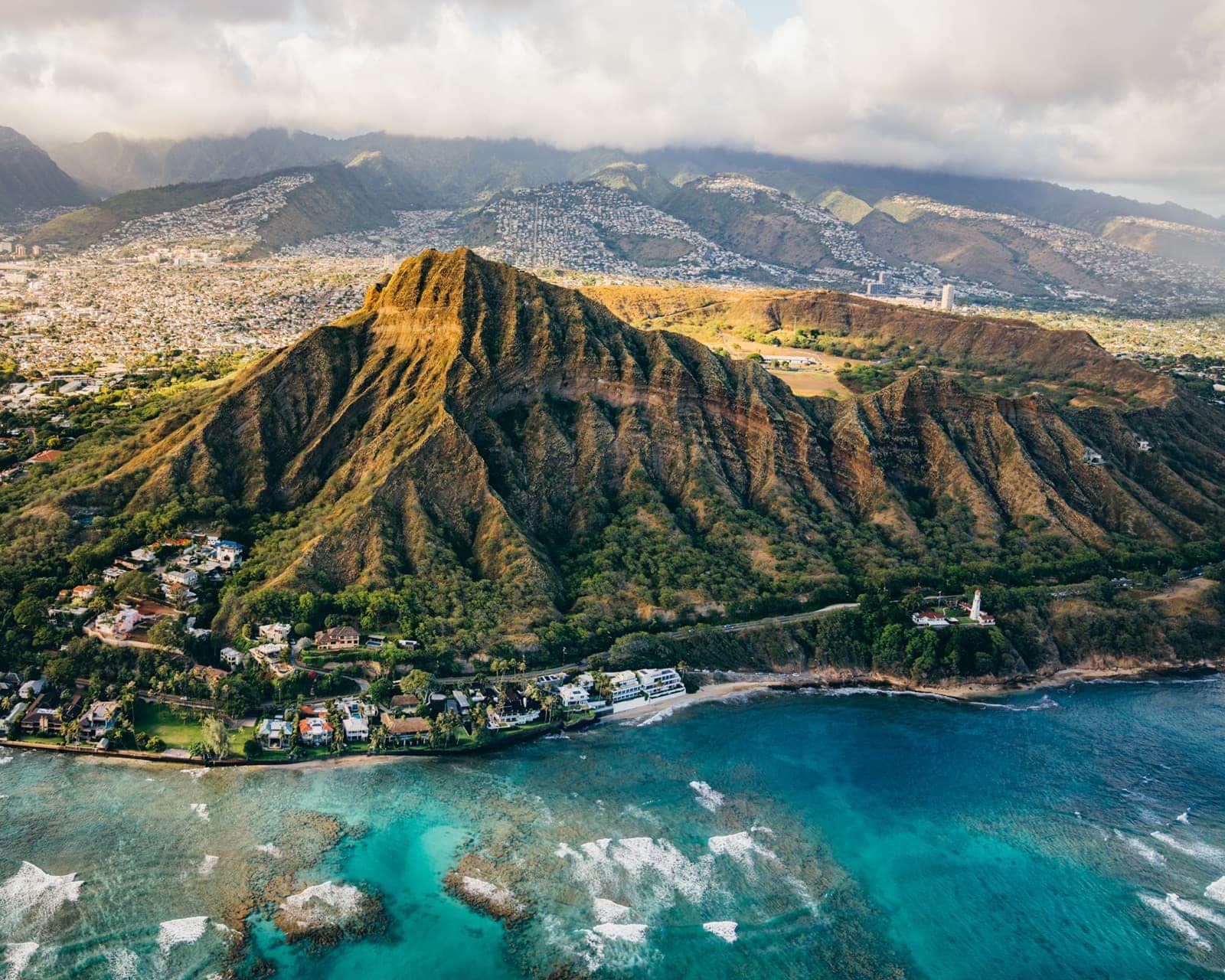
Geographically, Diamond Head is situated at the eastern end of the Waikiki coastline, within the city of Honolulu in the United States. It stands as part of the larger Honolulu Volcanic Series, a sequence of eruptions that occurred long after the primary shield volcano of Oahu had gone dormant. The crater is bordered by the affluent neighborhood of Kahala to the east and Kapiolani Park to the west. Its physical prominence is such that it serves as a navigational landmark for mariners and aviators approaching the Islands from the east.
The Formation of the Tuff Cone
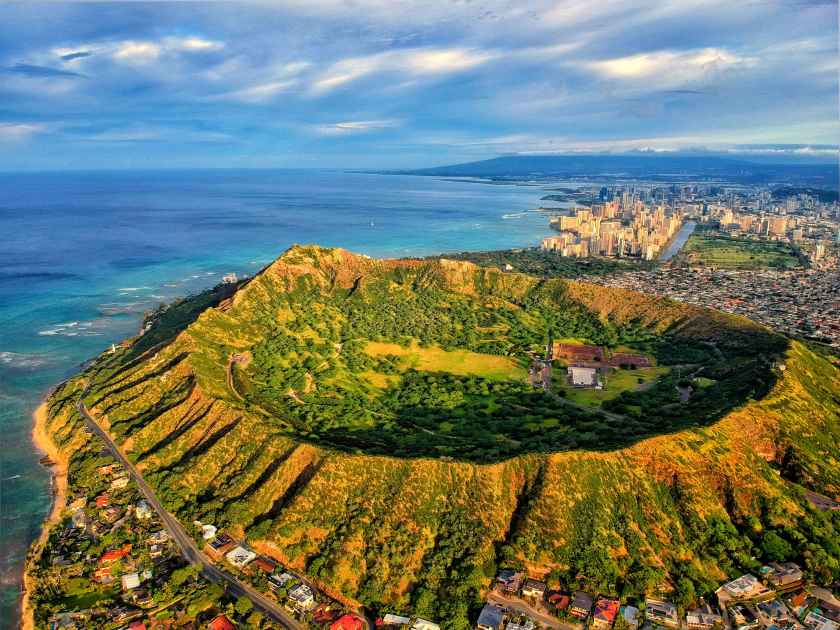
The landmark was created approximately 300,000 years ago during a single, brief, and violent volcanic eruption. Unlike the slow-moving lava flows associated with the Big Island and volcanoes like Mauna Loa, the eruption that formed Diamond Head was phreatomagmatic. This occurs when magma comes into contact with groundwater or seawater, resulting in explosive steam that shatters the rock into fine ash and particles. These materials were propelled into the air and settled to form the saucer-shaped crater seen today. The trade winds blowing from the northeast during the eruption caused the ash to accumulate more heavily on the southwestern side, resulting in the characteristic asymmetric profile where the highest peak reaches 761 feet.
Part of the Koʻolau Range Ecosystem
While Diamond Head is an independent volcanic vent, its presence is intrinsically linked to the older Koʻolau Range. The volcanic activity that produced this landmark is considered “rejuvenated stage” volcanism. The sheer scale of the crater—spanning over 350 acres—demonstrates the power of the geological forces at work in the middle of the Pacific Plate. Over millennia, the abrasive action of the ocean and the elements has weathered the tuff, giving the exterior its jagged, ridged appearance while the interior remains a relatively sheltered basin.
The Cultural and Historical Significance
Beyond its physical location and geological composition, Diamond Head occupies a central place in the history of Polynesia and the United States. Its location made it a natural choice for early Native Hawaiians and later for military strategists who recognized the defensive advantages of its high vantage points.
Leahi: The Traditional Hawaiian Connection
Long before the arrival of European explorers, the landmark was known to the Native Hawaiians as Leahi. The name is frequently translated as “brow of the tuna,” referring to the profile of the crater as seen from the Waikiki side, which resembles the dorsal fin of an Ahi (yellowfin tuna). The summit was a sacred site, and it is believed that a Heiau (temple) dedicated to the god of wind was once located on the crater rim. This temple was used to offer sacrifices to ensure favorable winds for travelers and to ward off storms that might threaten the island of Oahu.
The Origin of the Name “Diamond Head”
The transition from Leahi to Diamond Head occurred in the 19th century due to a misunderstanding by British sailors. Upon exploring the slopes of the crater, these sailors discovered clear calcite crystals embedded in the volcanic rock. Mistaking these glittering stones for actual diamonds, they spread the word of their discovery, and the name stuck. Although the “diamonds” were scientifically proven to be worthless crystals, the moniker replaced the traditional name in the global lexicon, eventually becoming the official title used by the Geographic Names Information System.

Military Architecture and Structural Landmarks
The strategic location of Diamond Head at the entrance to Honolulu Harbor led to its transformation into a military fortress in the early 20th century. This era saw the construction of significant architectural features that remain part of the landmark today, blending human engineering with the natural volcanic terrain.
Fort Ruger and the Coastal Defense System
In 1904, the United States Government purchased the land for military use, establishing Fort Ruger. This was the first military reservation on Oahu. The goal was to integrate the natural height of the crater into a comprehensive coastal defense system. Within the crater and along its ridges, engineers constructed several batteries, including Battery Birkhimer, which served as the headquarters for the Coastal Artillery. Other structures, like Battery Harlow and Battery Dodge, were designed to house massive mortars and rifles capable of striking enemy ships miles out at sea.
The Fire Control Station and Tunnels
One of the most impressive architectural feats within the Diamond Head State Monument is the complex system of tunnels and the multi-level Fire Control Station built at the summit. Constructed between 1908 and 1911 by the U.S. Army Corps of Engineers, these facilities were designed to coordinate the firing of the batteries located around the base of the mountain. The architecture includes a 225-foot tunnel through the crater wall and a series of steep, concrete staircases—one of which features 99 steps—leading to the observation posts. These structures were built with reinforced concrete and were camouflaged to blend into the natural rock, making them virtually invisible from the ocean.
The Diamond Head Lighthouse
On the seaward slopes of the crater sits the Diamond Head Lighthouse. Originally built as a wooden structure in 1899 and later replaced by the current masonry tower in 1917, this lighthouse is a crucial landmark for maritime safety. Its location marks the southern tip of the island and warns vessels of the treacherous reefs that lie just offshore. The lighthouse is listed on the National Register of Historic Places and continues to be an active aid to navigation maintained by the United States Coast Guard.
Natural Features and Conservation
As a National Natural Landmark, Diamond Head is a sanctuary for unique flora and fauna, despite the semi-arid conditions of the Leeward side of Oahu. Its location creates a rain shadow effect, leading to a landscape that is starkly different from the lush, tropical rainforests found on the Windward side of the island.
The Ecosystem of the Tuff Cone
The interior of the crater is dominated by dry-land vegetation. Visitors and researchers can find species such as the Kiawe tree and various types of Koa Haole. While many of the plants currently found on the slopes are introduced species, there is a concerted effort by the Hawaii Department of Land and Natural Resources to protect the remaining native dry-forest habitat. The area is also home to various bird species, including the Common Myna and the Red-Vented Bulbul, which thrive in the scrubland environment.
Preservation as a State Monument
The designation of Diamond Head as a State Monument in 1962 ensured that the landmark would be protected from the rapid urban development taking place in Honolulu. The preservation efforts focus on maintaining the integrity of the volcanic structures and the historical military artifacts. Unlike other areas of Waikiki that have been heavily modified for tourism, the interior of Diamond Head remains largely as it was a century ago, providing a rare glimpse into the island’s raw geological and military past.
The significance of Diamond Head extends beyond its physical presence. It is a symbol of Hawaii that is recognized worldwide, appearing on everything from postage stamps to cinematic backdrops. Its location at the crossroads of the Pacific has made it a witness to the changing tides of history—from the spiritual ceremonies of the ancient Hawaiians to the defensive preparations of World War II. Today, it stands as a testament to the enduring power of nature and the layers of human history that define the Hawaiian Islands. Whether viewed from the deck of a ship in the Pacific Ocean or from the streets of Honolulu, the landmark remains an immovable icon of the Pacific.
LifeOutOfTheBox is a participant in the Amazon Services LLC Associates Program, an affiliate advertising program designed to provide a means for sites to earn advertising fees by advertising and linking to Amazon.com. Amazon, the Amazon logo, AmazonSupply, and the AmazonSupply logo are trademarks of Amazon.com, Inc. or its affiliates. As an Amazon Associate we earn affiliate commissions from qualifying purchases.