
For many visitors to New York City, the term “Downtown” is often used interchangeably with “the city center.” However, in the geography of the Big Apple, “Downtown” is not a singular point on a map but a sprawling, historical, and cultural concept that refers to everything south of 14th Street in the borough of Manhattan. Unlike many other major global cities where the downtown core is defined by concentrated skyscrapers and central business districts, New York’s downtown is a living, breathing tapestry of distinct neighborhoods, each with its own rhythm and personality.
Defining the Boundaries of Downtown
Understanding the geography of New York requires a shift in perspective. To the uninitiated, the term “downtown” might imply a central business hub, but here, it is a directional orientation.

North of 14th Street vs. South
In the local vernacular, you are either “uptown” or “downtown” relative to the grid. The dividing line is generally accepted as 14th Street. Everything north of this line, stretching up toward Central Park, is considered Midtown or Uptown. Everything south of 14th Street—encompassing iconic areas such as Greenwich Village, SoHo, and the Financial District—falls under the umbrella of Downtown.
The Historical Core
Downtown is effectively the birthplace of the city. While Midtown is home to the high-rise steel monoliths that characterize the modern 20th-century view of the city, Downtown is where the original colonial settlements took hold. Walking through these streets feels different; the grid becomes irregular, reflecting the old-world colonial planning that predates the rigid North-South avenues found further north.
The Cultural Tapestry of Downtown Neighborhoods
Downtown is not a monolith. It is a collection of villages and districts that have influenced global culture for over a century. From the counter-cultural movements of the 1960s to the modern epicenter of global finance, this area holds the city’s soul.
Greenwich Village and the West Village
Perhaps the most famous segment of Downtown, Greenwich Village served as the hub for the American bohemian movement. The narrow, tree-lined streets near Washington Square Park were once the stomping grounds for beat poets, folk musicians, and artists who defined the 20th-century American avant-garde. Today, it remains one of the most picturesque areas in New York, known for its brownstones, jazz clubs, and an intimate atmosphere that contrasts sharply with the bustling intensity of Midtown.

SoHo, Tribeca, and Little Italy
Moving eastward and slightly south, you encounter the architectural marvels of SoHo (South of Houston Street). Famous for its cast-iron architecture, this neighborhood transitioned from an industrial manufacturing hub to a high-end fashion and art district. Nearby, Tribeca offers a more subdued, residential elegance, famous for its massive loft spaces and its association with the Tribeca Film Festival. Little Italy, while smaller than it once was, provides a sensory experience of the city’s immigrant history, with its narrow streets still smelling of roasted espresso and garlic.
The Financial District and Battery Park
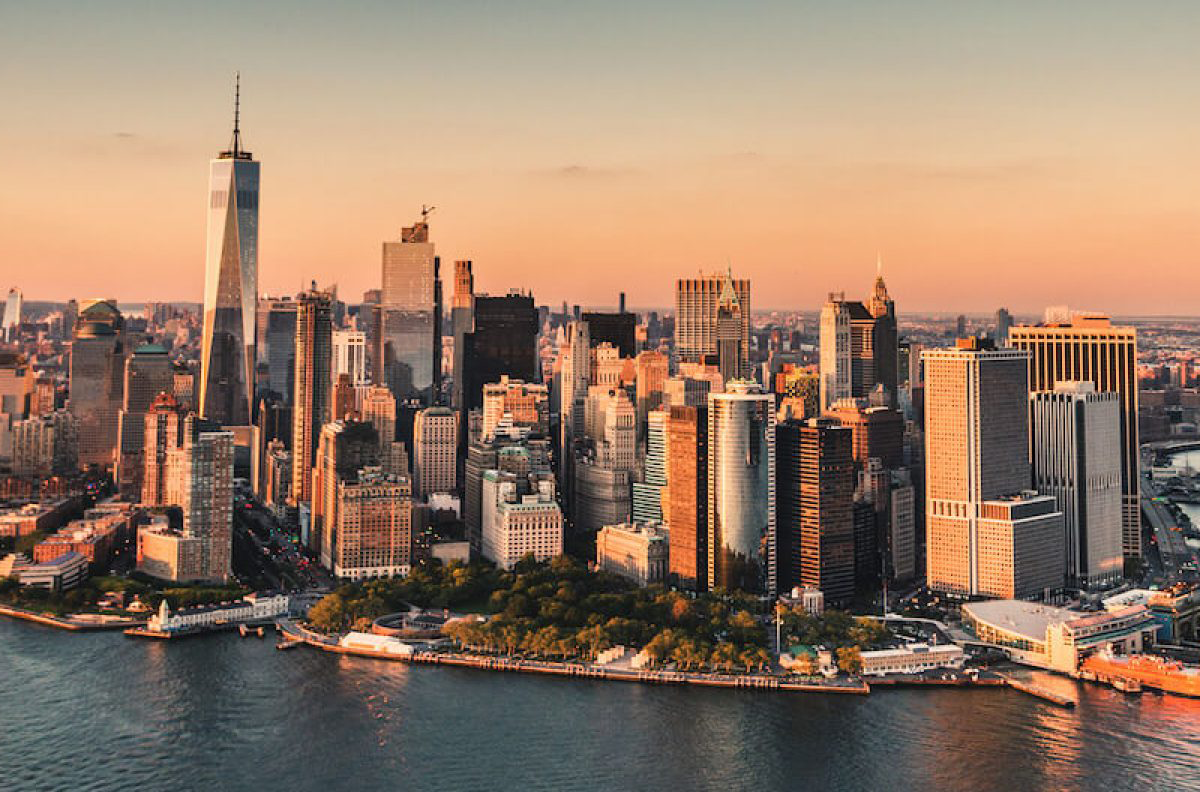
At the very southern tip of the island lies the Financial District, the true “Downtown” in the traditional sense of a central business hub. This is the home of Wall Street, the New York Stock Exchange, and the iconic World Trade Center site. Bordered by the water, Battery Park offers sweeping views of the Statue of Liberty and Ellis Island, serving as a grounding reminder of the city’s role as a gateway to the United States.
Navigating the Downtown Experience
For the traveler, exploring Downtown requires a different strategy than visiting Midtown. Because the streets do not follow a simple numerical grid, it is easy to get lost—which, as any local will tell you, is actually the best way to experience it.
Transportation Tips
The subway system is the heartbeat of the city. To reach the heart of Downtown, take the 1, 2, or 3 trains down the Seventh Avenue line or the A, C, or E trains along the Eighth Avenue corridor. These lines provide seamless access to the various enclaves, allowing you to emerge from an underground station in the East Village and walk to the Lower East Side within minutes.
The Pedestrian Advantage
Unlike the sprawling blocks of Midtown, the neighborhoods south of 14th Street are highly pedestrian-friendly. The scale is smaller, the shopfronts are more diverse, and there is a human element to the urban design that is lost in the skyscraper canyons of the north. Whether you are strolling through Chinatown to sample authentic dumplings or walking across the Brooklyn Bridge to look back at the jagged skyline of the tip of Manhattan, the experience is best had on foot.
Why Downtown Remains the Heart of the City
There is a magnetic quality to Downtown that keeps both locals and tourists returning. It is where the city feels most “real.” While Midtown offers the spectacle—the bright lights of Times Square, the massive cathedrals of commerce, and the iconic Empire State Building—Downtown offers the narrative.
A Legacy of Reinvention
Downtown has survived fires, economic downturns, and the shifting tides of the global economy. It has consistently reinvented itself, turning old factories into luxury lofts and former tenement houses into trendy boutiques and restaurants. This resilience is a core part of the New York spirit. When you visit Downtown, you are walking through layers of history, from the Dutch colonial ruins beneath the pavement of the Financial District to the modern graffiti art of Bushwick (just across the river) that draws inspiration from the streets of the Lower East Side.
Finding Your Own Downtown
Ultimately, “Downtown” is a subjective experience. For some, it is the quiet coffee shops of Chelsea; for others, it is the late-night energy of a dive bar in the East Village. It is an area defined not by a single coordinate, but by the diversity of the people who call it home and the infinite variety of experiences it offers to those passing through. As you travel through the neighborhoods south of 14th Street, you aren’t just visiting a section of New York City; you are engaging with the very foundation of its past, present, and future. Whether you are looking for architectural history, world-class culinary experiences, or simply a place to get lost in the urban aesthetic, Downtown remains the undisputed center of the city’s identity.
LifeOutOfTheBox is a participant in the Amazon Services LLC Associates Program, an affiliate advertising program designed to provide a means for sites to earn advertising fees by advertising and linking to Amazon.com. Amazon, the Amazon logo, AmazonSupply, and the AmazonSupply logo are trademarks of Amazon.com, Inc. or its affiliates. As an Amazon Associate we earn affiliate commissions from qualifying purchases.