
The allure of Hawaii is undeniable, a vibrant tapestry of pristine beaches, lush rainforests, and rich cultural heritage. Yet, for many, its precise location on the vast canvas of the globe remains a charming mystery. Pinpointing Hawaii on the world map is not merely an exercise in geography; it’s the first step towards understanding what makes this archipelago one of the planet’s most unique and coveted travel destinations. Situated thousands of miles from any major landmass, Hawaii stands as a testament to the powerful forces of nature and the resilience of human exploration, offering an unparalleled experience shaped directly by its remote and volcanic origins.

Understanding Hawaii’s geographical context reveals why it boasts such distinctive ecosystems, a profound indigenous culture, and a singular place in global geopolitics. Far from being just another cluster of tropical islands, its location dictates everything from its weather patterns and biodiversity to its strategic importance and the very nature of its tourism industry. This article delves into the exact placement of Hawaii on the world map, explores the historical and cultural ramifications of its isolation, details the layout of its main islands, and elucidates how its unique geography profoundly enhances its appeal as a premier travel destination. By the end, you will not only know “where” Hawaii is, but also grasp the intricate story embedded in its position.
Pinpointing Paradise: Hawaii’s Global Address
To truly appreciate Hawaii, one must first grasp its remarkable isolation. Far from any continent, the Hawaiian Islands float majestically in the central Pacific Ocean, an archipelago born of fire and ocean currents. This deep-oceanic setting is crucial to understanding the islands’ distinctive character and their evolutionary journey.
The Isolated Gem of the Pacific
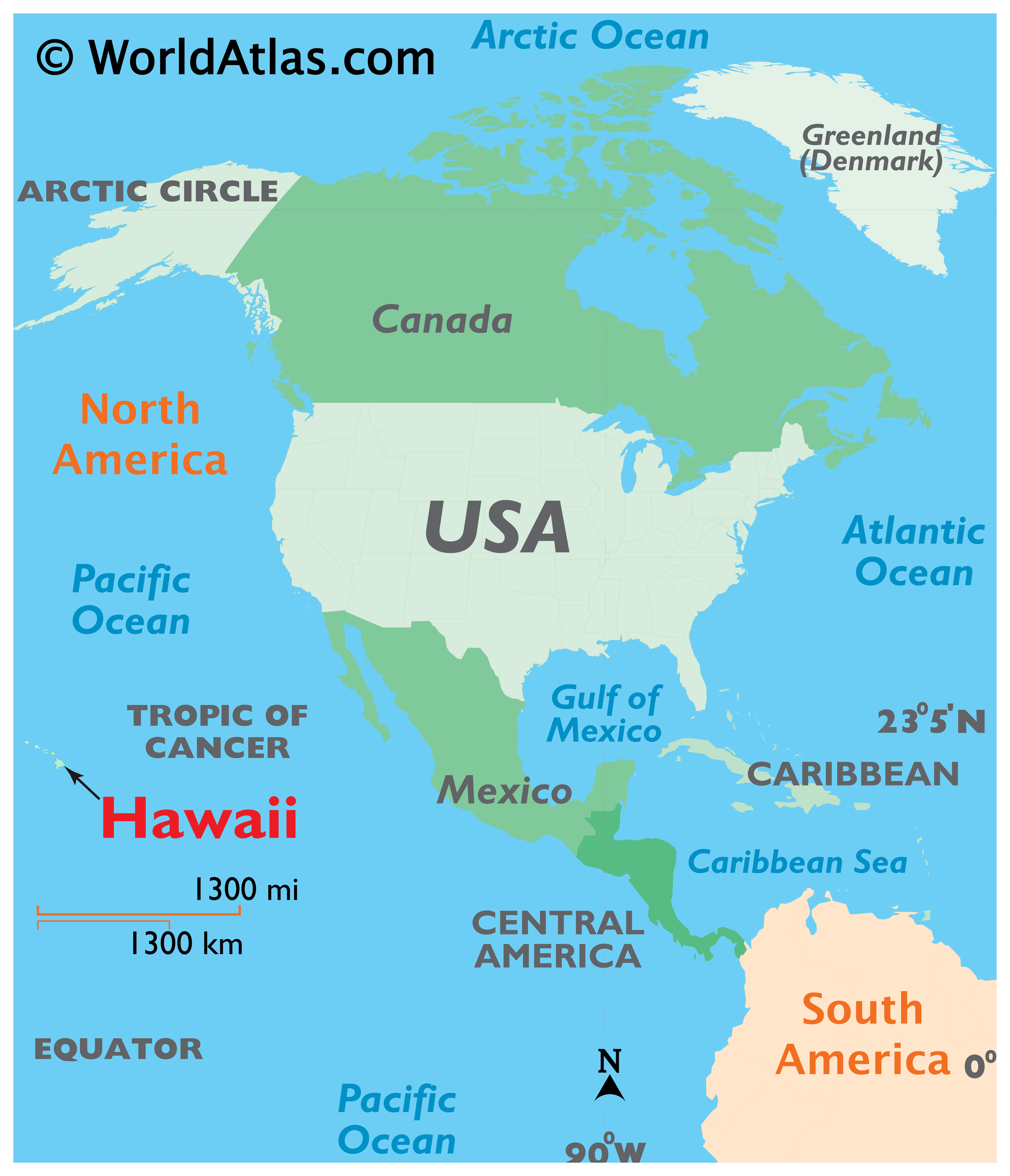
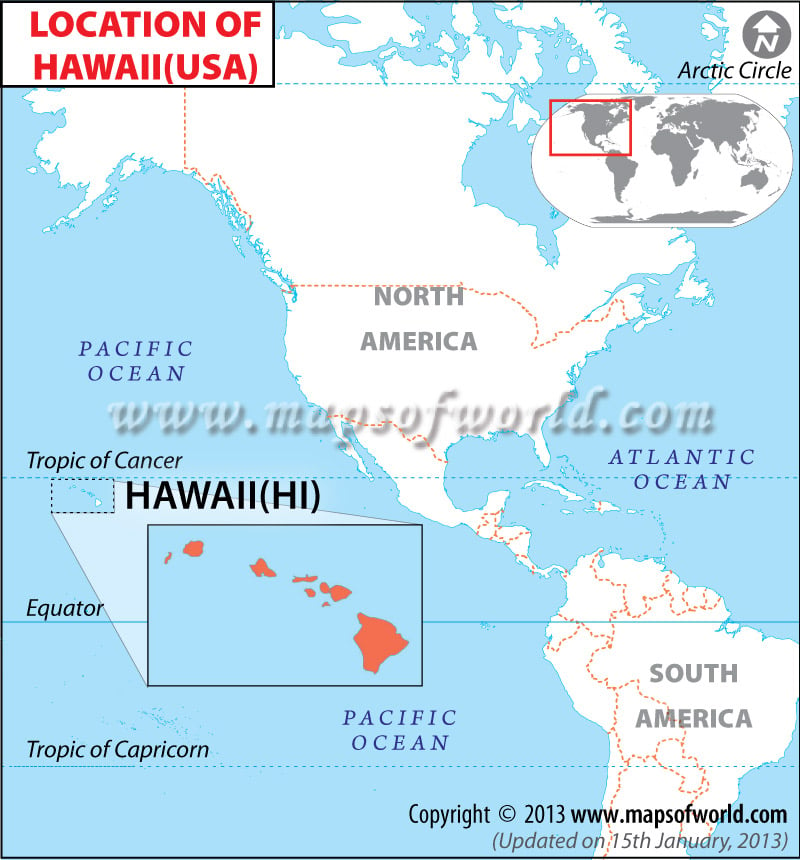
Geographically, Hawaii is located in the northern Pacific Ocean, roughly positioned at 21° North latitude and 157° West longitude. It lies approximately 2,400 miles (3,860 kilometers) southwest of California, making it the most isolated major population center on Earth. To put this into perspective, it’s about 3,850 miles (6,200 kilometers) southeast of Japan and nearly 5,000 miles (8,000 kilometers) northeast of Australia. This profound remoteness has been a defining factor in its natural and cultural development, fostering unique biodiversity that could evolve largely undisturbed for millennia.
This isolation means that reaching Hawaii typically involves a significant journey, primarily by air. The vastness of the Pacific Ocean surrounding the islands creates a distinct sense of arrival, as travelers transition from the expansive blue to the verdant, volcanic landscapes that define the archipelago. This journey itself becomes part of the travel experience, emphasizing the sense of escaping to a truly far-flung paradise.
A Volcanic Origin Story
The very existence of the Hawaiian Islands is a tale of powerful geological forces. Unlike continental islands formed by landmass separation, Hawaii is a textbook example of a volcanic archipelago created by a “hotspot” deep within the Earth’s mantle. This hotspot remains stationary while the Pacific Plate slowly drifts northwestward over it. As the plate moves, new volcanoes erupt over the hotspot, forming new islands, while older islands are carried away, gradually eroding and subsiding over millions of years.
This process has created a chain of islands stretching for over 1,500 miles, with the southeasternmost islands (like the Big Island of Hawaii) being the youngest and still volcanically active, and the northwestern islands (such as Kure Atoll) being much older, smaller, and often submerged. The ongoing volcanic activity on the Big Island, particularly from Kilauea volcano, continues to shape the landscape, adding new land and creating unique geological formations that are a major draw for visitors. This dynamic origin story ensures that Hawaii is not just a destination, but a living, breathing testament to the Earth’s continuous geological evolution.
Geopolitical and Cultural Significance of Its Location
Hawaii’s singular location has imbued it with a geopolitical importance and a cultural identity that is both distinctly American and profoundly Polynesian. Its remote position has shaped its history, its role in global affairs, and the vibrant multicultural society that thrives there today.
The Farthest U.S. State
Despite its extreme distance from the North American mainland, Hawaii proudly holds the distinction of being the 50th state of the United States. Admitted to the Union in 1959, its integration into the United States was a pivotal moment, transforming its strategic value and influencing its social and economic development. Its capital city, Honolulu, on the island of Oahu, serves as a major port and a hub for trade, tourism, and military operations in the Pacific Ocean.
Historically, Hawaii’s location made it a crucial strategic outpost. The attack on Pearl Harbor in 1941, near Honolulu, famously drew the United States into World War II. Today, its military bases continue to play a vital role in national security and international relations in the Pacific Rim. This dual identity—a remote island paradise and a cornerstone of American power in the Pacific Ocean—adds a fascinating layer to its global address, making it a unique nexus of East and West, military might and natural beauty.
Bridging Polynesia and America
Long before Western contact, Hawaii was settled by intrepid Polynesian voyagers, navigating thousands of miles across the open ocean using sophisticated knowledge of stars, currents, and swells. These ancient mariners, originating from other parts of Polynesia like the Marquesas Islands and Tahiti, brought with them their culture, language, traditions, and plants, establishing the foundations of the Hawaiian society.
Hawaii’s remote location allowed this vibrant Polynesian culture to flourish and evolve distinctly. Even today, the legacy of these voyagers is deeply ingrained in the islands’ identity, from the aloha spirit and hula dance to the ancient heiau (temples) and complex kapu (taboo) system. As a result, Hawaii offers a rare cultural tapestry where ancient Polynesian traditions blend with influences from North America and Asia, creating a uniquely Hawaiian experience that is both welcoming and profoundly rooted in its past. This cultural richness, born from isolation and subsequent global interaction, is a key attraction for travelers seeking more than just sun and sand.
Navigating the Archipelago: Key Islands and Their Locations
While often referred to singularly as “Hawaii”, the destination is in fact an archipelago comprised of eight main islands, along with numerous smaller islets and atolls. Each of these main islands possesses its own distinct character, geography, and attractions, making island hopping a popular way to experience the full spectrum of what Hawaii offers.
The Big Island: Hawaii’s Largest Landmass
Formally known as Hawaii Island, the Big Island is the youngest and easternmost island in the chain, still actively growing due to ongoing volcanic activity. Its sheer size is impressive, larger than all the other Hawaiian Islands combined. Home to Mauna Kea, the world’s tallest sea mountain (when measured from its base on the ocean floor), and Kilauea, one of the world’s most active volcanoes, the Big Island offers incredibly diverse landscapes. From snow-capped mountains to black sand beaches, and lush rainforests to stark lava fields, its geography is a microcosm of the entire state. Its location at the southeastern end of the chain is a direct result of its continuous formation over the volcanic hotspot.
Oahu: The Gathering Place
Located northwest of the Big Island and to the east of Kauai, Oahu is the third-largest island but hosts the vast majority of Hawaii’s population, including the state capital, Honolulu. This island is the bustling heart of Hawaii, famous for iconic landmarks such as Waikiki Beach, Diamond Head crater, and the historic sites of Pearl Harbor. Its central location within the inhabited islands, combined with its large natural harbors, made it an ideal hub for commerce and military operations, contributing to its development as the most urbanized Hawaiian island.
Maui: The Valley Isle
Positioned between Oahu and the Big Island, Maui is renowned for its stunning natural beauty, world-class beaches, and the majestic volcanic crater of Haleakala. Its nickname, “The Valley Isle,” comes from the fertile central valley nestled between two massive volcanoes. Maui’s diverse terrain, from the arid slopes of Lahaina to the lush, wet landscapes along the Road to Hana, makes it a favorite for outdoor enthusiasts and luxury travelers alike. Its location provides excellent conditions for windsurfing and kiteboarding, particularly along its northern shores.
Kauai: The Garden Isle
The oldest of the main Hawaiian Islands, Kauai lies northwest of Oahu. Its older age means it has experienced more erosion, resulting in dramatic landscapes characterized by towering cliffs, deep canyons, and abundant waterfalls. The iconic Na Pali Coast, Waimea Canyon (the “Grand Canyon of the Pacific”), and its perpetually green interior justify its moniker, “The Garden Isle.” Kauai’s position as one of the northwesternmost islands means it often receives more rainfall, contributing to its verdant appearance and making it a haven for hikers and nature lovers seeking untamed beauty.
Other significant islands include Molokai (The Friendly Isle) and Lanai (The Pineapple Isle), both smaller and offering more secluded experiences, located west of Maui. To the west of Kauai lie the privately owned island of Niihau and the uninhabited island of Kahoolawe to the southwest of Maui, completing the main Hawaiian chain.
The Impact of Geography on Hawaii’s Travel Appeal
Hawaii’s unique geographical placement is not just a point of interest for cartographers; it is the very foundation of its appeal as a world-class travel destination. Its isolation, volcanic origins, and position in the tropics combine to create a destination rich in natural wonders, cultural depth, and unparalleled recreational opportunities.
Unique Ecosystems and Biodiversity
The remote oceanic location of Hawaii has fostered the evolution of an astonishing array of endemic species—plants and animals found nowhere else on Earth. Over millions of years, a handful of pioneering species managed to reach the islands and, in the absence of major predators and competition, diversified into thousands of unique forms. From the vibrant Hawaiian honeycreepers to the silverwords of Haleakala, the islands are a living laboratory of evolution. For travelers, this means encountering ecosystems that are profoundly different from continental environments, offering unique opportunities for birdwatching, botanical exploration, and understanding ecological conservation efforts. This natural distinctiveness, directly linked to its isolation, is a powerful draw for eco-tourists and nature enthusiasts.
A Haven for Ocean Activities
Positioned in the heart of the Pacific Ocean, Hawaii is synonymous with ocean-based activities. The surrounding waters are rich with marine life, including humpback whales (seasonal visitors), green sea turtles, and colorful reef fish, making it a prime destination for snorkeling, scuba diving, and whale watching. The islands’ volcanic coastlines create a myriad of beaches—from white sands to black, green, and even red—each offering a different experience.
Furthermore, Hawaii’s location in the path of consistent Pacific Ocean swells, particularly on its northern shores during winter, makes it a global mecca for surfing. Legendary breaks like Pipeline and Waimea Bay on Oahu’s North Shore attract professional surfers and spectators from around the world. For the average traveler, the warm, clear waters and diverse coastal environments provide endless opportunities for swimming, paddleboarding, kayaking, and simply relaxing by the sea, all facilitated by the island’s ideal geographical setting.
Accessibility for Travelers
Despite its remote location, Hawaii is remarkably accessible for travelers, particularly from the United States and the Pacific Rim. Honolulu International Airport (HNL) on Oahu serves as the primary gateway, with direct flights from numerous major cities across North America, Asia, and the South Pacific. Smaller international airports on Maui (Kahului Airport – OGG), the Big Island (Kona International Airport – KOA and Hilo International Airport – ITO), and Kauai (Lihue Airport – LIH) also offer direct connections, making it convenient to begin an island adventure directly upon arrival.
The robust air travel infrastructure, combined with inter-island flights, makes navigating the archipelago straightforward for tourists. This blend of profound natural isolation with modern travel convenience means visitors can immerse themselves in a truly unique environment without sacrificing comfort or accessibility, reinforcing Hawaii’s status as a top-tier travel destination.
In conclusion, understanding “Where Is Hawaii On The World Map?” is to unlock a deeper appreciation for this extraordinary place. Its central Pacific Ocean location, born from volcanic activity and shaped by millennia of isolation, is the very essence of its charm. It defines its unparalleled biodiversity, its strategic global role, its rich Polynesian heritage, and the diverse experiences offered by its individual islands. Hawaii is more than just coordinates on a map; it is a destination whose geographical story is as captivating as its landscapes and culture, inviting travelers to explore a truly unique corner of the world.
LifeOutOfTheBox is a participant in the Amazon Services LLC Associates Program, an affiliate advertising program designed to provide a means for sites to earn advertising fees by advertising and linking to Amazon.com. Amazon, the Amazon logo, AmazonSupply, and the AmazonSupply logo are trademarks of Amazon.com, Inc. or its affiliates. As an Amazon Associate we earn affiliate commissions from qualifying purchases.