
Locating the Legend: The Geography of Heartbreak Hill
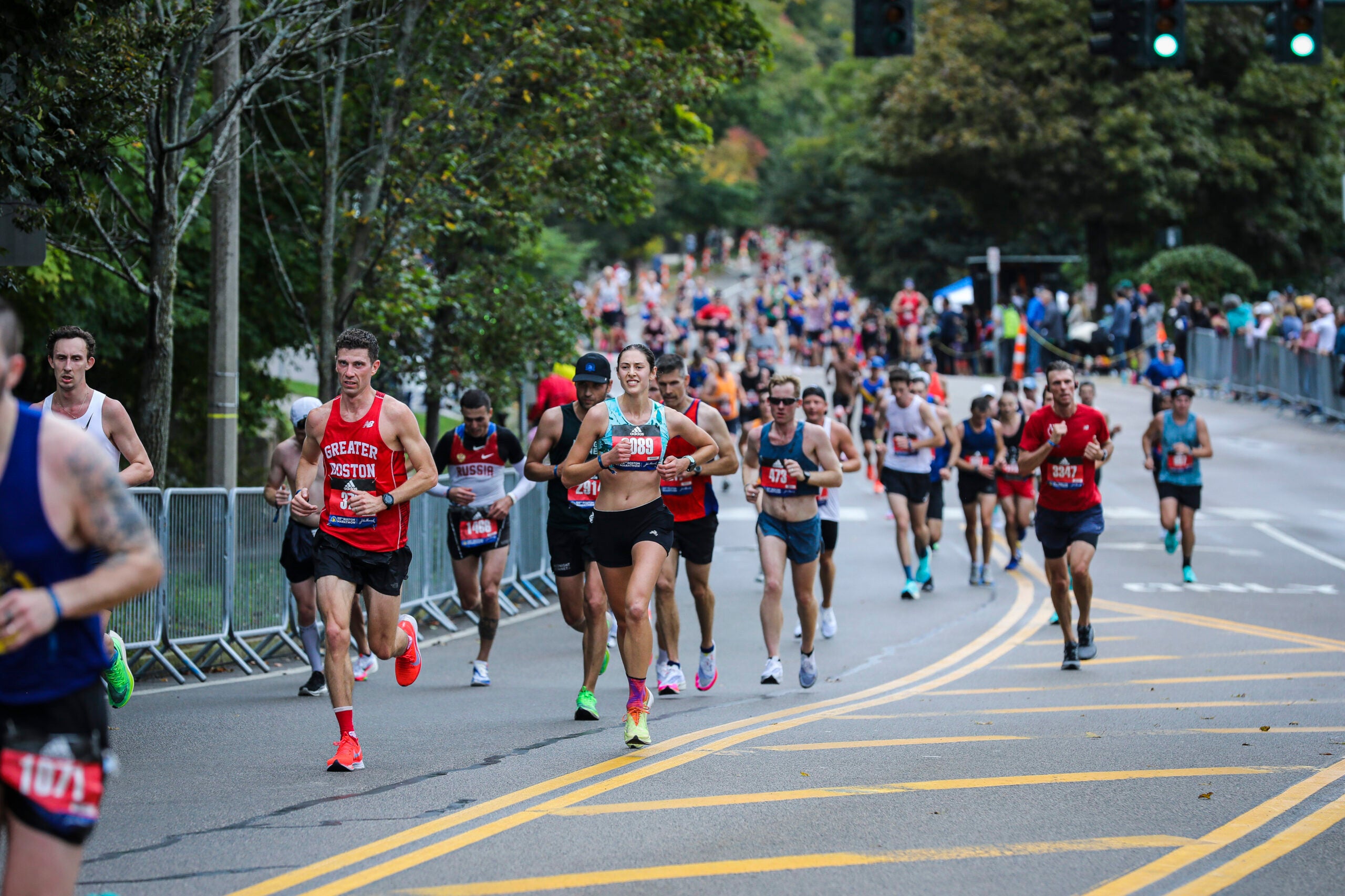
Heartbreak Hill is more than just a gradient on a road; it is a legendary landmark etched into the annals of distance running. For athletes and enthusiasts seeking to pinpoint this iconic ascent, it is found in Newton, Massachusetts, approximately between the 20-mile (32 km) and 21-mile (34 km) marks of the Boston Marathon course. It is the fourth and final of the notorious Newton Hills, a series of challenging climbs that define the latter stages of the race.
Pinpointing the Exact Location
Specifically, Heartbreak Hill stretches along Commonwealth Avenue, rising from the intersection with Grant Avenue and continuing past Boston College’s main campus. The ascent officially begins after runners navigate the intersection of Commonwealth Avenue and Chestnut Hill Avenue, which is just after the approximately 20-mile marker. While the entire series of Newton Hills can feel like a singular, relentless climb, Heartbreak Hill is the final, most psychologically impactful segment. Its summit, near the 21-mile mark, provides a brief respite before the final downhill stretch towards Boston city center and the finish line on Boylston Street. For those wishing to visit outside of race day, it’s easily accessible by car or public transportation, with the Boston College T-stop providing direct access to the area.
The Course Context: Newton and Beyond
The Boston Marathon course begins in Hopkinton, Massachusetts, and rolls through several towns before reaching the city of Newton. This section of the race, particularly from mile 16 to mile 21, is infamous for its demanding topography. The first three Newton Hills — approximately at miles 16, 17, and 19 — soften the legs before runners even arrive at the foot of Heartbreak Hill. The cumulative fatigue from the preceding miles, combined with the rolling ascents, amplifies the challenge presented by this final, steepest incline. After conquering Heartbreak Hill, runners descend towards Cleveland Circle, through Brookline, and finally into Boston, where the energy of the spectators often carries them to the finish. The strategic placement of this landmark ensures it plays a pivotal role in determining the outcome of the race for both elite athletes and everyday runners.
The Enduring Significance: A Landmark of Endurance
Heartbreak Hill’s status as a landmark transcends its physical location; it embodies a profound psychological and historical significance within the realm of endurance sports. It is a symbol of perseverance, the ultimate test of will at a point in the marathon when physical reserves are depleted and mental fortitude is paramount. Its enduring legend contributes significantly to the Boston Marathon’s global reputation as one of the world’s most challenging and prestigious races.
Historical Roots and Nomenclature
The name “Heartbreak Hill” was coined in 1936, following a dramatic turn of events in that year’s Boston Marathon. Johnny A. Kelley, a local favorite, took the lead on the hill and briefly patted the shoulder of then-defending champion and rival Ellison “Tarzan” Brown as he passed him. Brown, however, surged back, reclaimed the lead, and went on to win the race. Kelley subsequently slowed dramatically, a moment of profound disappointment that led a sportswriter to dub the spot “Heartbreak Hill.” The name stuck, forever linking the physical climb with the emotional toll it exacts. This narrative cemented its status not just as a geographical feature, but as a place where dreams are forged or shattered, making it an iconic landmark of human struggle and triumph.
The Psychological Barrier
Beyond its historical anecdote, Heartbreak Hill represents a formidable psychological barrier. Appearing after 20 miles, runners have already invested significant physical and mental energy. The cumulative effect of the previous Newton Hills, combined with the natural fatigue of a marathon, makes this final climb particularly grueling. It’s a point where many runners “hit the wall,” experiencing extreme exhaustion and often questioning their ability to continue. The mere mention of Heartbreak Hill can evoke anxiety in participants and respect from spectators. Successfully ascending it is often seen as a significant mental victory, providing a much-needed boost for the final miles. This psychological aspect is what elevates it from a mere slope to a truly legendary landmark in the runner’s journey.
A Crucible for Champions and Amateurs

For elite athletes, Heartbreak Hill is often where strategic moves are made, and races are won or lost. A runner with strong reserves might use the hill to break away from competitors, while others might falter. The ability to maintain pace or even accelerate on Heartbreak Hill is a hallmark of a true Boston Marathon champion. For amateur runners, simply making it over the hill without walking is a badge of honor, a testament to months of training and unwavering determination. It is a unifying experience, connecting every runner, from the fastest professional to the last finisher, to a shared moment of profound challenge and potential achievement. This shared experience across the spectrum of athletic ability reinforces its status as a vital landmark in the collective memory of the running community.
Experiencing the Icon: Visiting Heartbreak Hill
Visiting Heartbreak Hill offers a unique opportunity to connect with a piece of sports history and experience the palpable energy of the Boston Marathon course. While race day is undoubtedly the most vibrant time, the landmark remains significant year-round, drawing visitors who want to run its legendary incline or simply absorb its storied atmosphere.
Best Vantage Points for Spectators
On race day, Heartbreak Hill transforms into one of the most electric spectator zones along the entire Boston Marathon course. Thousands line [Commonwealth Avenue](https://lifeoutofthebox.com/ commonwealth-avenue) to cheer on the runners, their shouts of encouragement often the only thing propelling exhausted athletes upwards. Prime viewing spots can be found along the sidewalks near the intersection of Commonwealth Avenue and Chestnut Hill Avenue, offering a direct view of the climb’s beginning. Further up, near Boston College, the atmosphere is equally intense, with college students typically creating a high-energy environment. For those seeking a slightly less crowded experience but still within the landmark’s vicinity, the areas just before the hill, near Newton Centre, provide a chance to see runners before they face the steepest challenge. Public transport via the MBTA’s Green Line is highly recommended on race day, with the Boston College stop providing convenient access to the heart of the action on the hill itself.
Running the Heartbreak Hill Stretch (Outside Race Day)
For runners who wish to experience the landmark firsthand without the pressure of race day, Heartbreak Hill and the surrounding Boston Marathon course are open to the public year-round. Many local running clubs and individuals regularly train on the Newton Hills to build strength and mental toughness. Starting a run in Newton and tackling the hills, including Heartbreak Hill, offers invaluable insight into the challenge faced by marathoners. The experience allows runners to appreciate the gradient, the length, and the cumulative fatigue it induces without the throngs of spectators. It’s an ideal way for aspiring marathoners or curious enthusiasts to physically connect with the history and challenge of this renowned landmark. Parking can be found in nearby residential streets or small commercial lots, making it accessible for a training run.
Nearby Landmarks and Community Engagement
Heartbreak Hill’s location also places it near other notable points of interest within the Greater Boston area. Boston College, a prominent institution, sits atop the hill, its Gothic architecture providing a picturesque backdrop to the grueling climb. The charming suburban neighborhoods of Newton and Brookline offer a glimpse into local Massachusetts life, with local shops, cafes, and parks. During the marathon, these communities fully embrace the event, with residents setting up water stations, playing music, and offering encouragement to runners, making the entire stretch around Heartbreak Hill a vibrant community landmark. This strong local engagement further solidifies the hill’s place not just in sports, but in the heart of the community that hosts one of the world’s most famous road races.
The Legacy of a Challenge: Heartbreak Hill’s Place in Sports History
Heartbreak Hill has transcended its physical attributes to become a universal symbol of extreme challenge and the human capacity for resilience. Its legend is not confined to the annual race but reverberates through the broader narrative of endurance sports, inspiring countless athletes and shaping the stories of champions.
Iconic Moments and Notable Victories
Throughout its history, Heartbreak Hill has been the stage for countless unforgettable moments that have cemented its legendary status. Beyond Johnny A. Kelley’s initial heartbreak, the hill has witnessed strategic surges, dramatic collapses, and inspiring comebacks. In 1982, Alberto Salazar and Dick Beardsley engaged in an epic duel, with Salazar ultimately pulling away on the hill to win by mere seconds in what is still considered one of the greatest races in history. More recently, in 2011, Geoffrey Mutai unleashed a blistering surge on the hill, shattering the course record. These moments highlight how Heartbreak Hill isn’t just a part of the course; it’s an active participant, a silent judge, often deciding the fate of the race. Each year, new narratives are added to its legacy, reinforcing its role as a pivotal landmark where athletic prowess and mental toughness are truly tested.

Beyond the Boston Marathon: A Global Symbol
While intrinsically linked to the Boston Marathon, the concept of “Heartbreak Hill” has become a metaphorical term used to describe any challenging late-race ascent in marathons worldwide. Its name is synonymous with the point in a race where the body is pushed to its limits and the spirit must carry on. This global recognition elevates the Newton landmark from a local feature to an international archetype for overcoming adversity in endurance sports. It is frequently referenced in discussions about marathon strategy, mental preparation, and the very philosophy of pushing human limits. The enduring power of its name and the shared human experience it represents ensure that Heartbreak Hill will forever remain one of the most iconic and significant landmarks in the world of running.
LifeOutOfTheBox is a participant in the Amazon Services LLC Associates Program, an affiliate advertising program designed to provide a means for sites to earn advertising fees by advertising and linking to Amazon.com. Amazon, the Amazon logo, AmazonSupply, and the AmazonSupply logo are trademarks of Amazon.com, Inc. or its affiliates. As an Amazon Associate we earn affiliate commissions from qualifying purchases.