
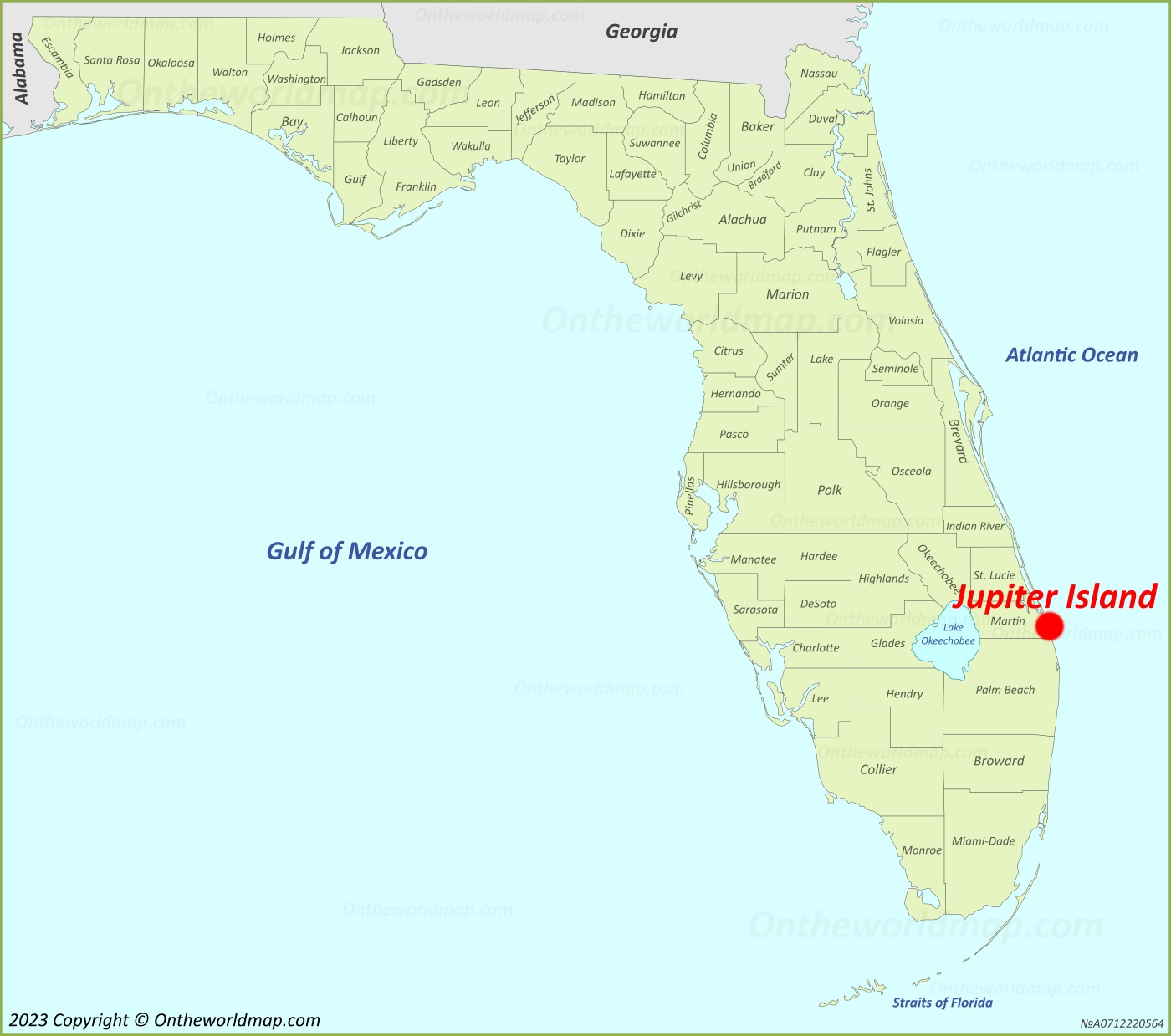
Jupiter, Florida is situated at the northernmost point of Palm Beach County along the southeastern coast of the United States. This coastal town occupies a unique geographical position where the Loxahatchee River meets the Intracoastal Waterway and the Atlantic Ocean. Positioned approximately 87 miles north of Miami and 150 miles southeast of Orlando, it serves as a transitional point between the bustling metropolitan areas of South Florida and the more relaxed atmosphere of the Treasure Coast.
Defining the Geographic Coordinates of Jupiter, Florida
The exact location of Jupiter, Florida is defined by its diverse water boundaries. To the east lies the vast expanse of the Atlantic Ocean, while the northern boundary is shared with the town of Tequesta and the southern border touches Juno Beach. The town’s geography is heavily influenced by the Jupiter Inlet, a natural opening that has dictated the area’s maritime history and development for centuries.

The Intersection of the Loxahatchee River and the Coast
One of the most defining landmarks of the area’s location is the Loxahatchee River. This river is one of only two in the state of Florida to receive the federal designation of a “National Wild and Scenic River.” The river winds through the town, creating a complex network of mangroves, estuaries, and freshwater creeks before emptying into the Jupiter Inlet. This confluence creates a distinctive environmental landmark that supports a wide array of biodiversity, from manatees to tropical fish.
Proximity to Regional Hubs and Infrastructure
Geographically, Jupiter, Florida is located within easy reach of several major transportation landmarks. It is situated just north of West Palm Beach, the seat of Palm Beach County. The town is bisected by several major transit routes, including Florida’s Turnpike and Interstate 95, which provide the physical infrastructure connecting this coastal enclave to the rest of the Florida peninsula. Despite this connectivity, the town has maintained its landmark status as a “green” coastal area, prioritizing the preservation of its natural boundaries over urban sprawl.
The Jupiter Inlet Lighthouse: An Architectural and Historic Landmark
Perhaps the most recognizable landmark in Jupiter, Florida is the Jupiter Inlet Lighthouse. Perched on a high coastal dune known as the Jupiter Inlet Outstanding Natural Area, this iconic red tower has stood as a sentinel over the coast since it was first illuminated in 1860. The structure is not merely a navigational aid but a significant architectural achievement of the mid-19th century.
Design and Engineering of the Red Beacon
Designed by George Meade, who would later go on to lead the Union Army at the Battle of Gettysburg, the lighthouse was built to withstand the hurricane-force winds common to the Atlantic Ocean. The tower is constructed of brick, with a double-wall system designed to provide stability and ventilation. Standing 108 feet tall on a 46-foot hill, it reaches a total focal plane of 153 feet above sea level. Its distinctive red color was added in 1910 to make it more visible against the bright Florida sky during daylight hours.
The Lighthouse Museum and Keeper’s Grounds
The area surrounding the lighthouse is equally significant as a historic landmark. The Jupiter Inlet Lighthouse & Museum occupies the site of a former U.S. Coast Guard station. The grounds contain prehistoric shell mounds left by the Hobe and Jeaga tribes, who inhabited the area long before European arrival. This site represents a layered history, where Native American archaeology meets 19th-century maritime engineering and 20th-century military surveillance. During World War II, the location served as “Station J,” a secret U.S. Navy radio intercept station designed to track German U-boats off the coast.
Natural Landmarks and Protected Ecosystems
Beyond the built environment, Jupiter, Florida is defined by its sprawling natural landmarks. The town has a long-standing commitment to land conservation, resulting in a landscape dotted with preserves and state parks that protect the region’s unique flora and fauna.
Jonathan Dickinson State Park
Located just north of the town center in Hobe Sound, Jonathan Dickinson State Park is one of the largest and most ecologically diverse parks in Southeast Florida. The park serves as a massive natural landmark, encompassing coastal sand pines, flatwoods, mangroves, and river swamps. A major feature within the park is the Trapper Nelson Zoo Historic District, the former home of a local legendary figure known as the “Wildman of the Loxahatchee.” This historic site remains a preserved architectural example of 1930s-era wilderness living.
Riverbend Park and Prehistoric Landscapes
Located on the western side of the town, Riverbend Park is a landmark of both natural beauty and military history. The park sits on the site of the Loxahatchee Battlefield, where two significant conflicts of the Second Seminole War took place in 1838. Today, the park serves as a preserved ecosystem where the Loxahatchee River begins its journey. The ancient cypress swamps and oak hummocks provide a visual representation of what the Florida landscape looked like thousands of years ago.
Blowing Rocks Preserve
A short distance from the Jupiter Inlet on Jupiter Island, the Blowing Rocks Preserve is a geological landmark managed by The Nature Conservancy. This site features the largest outcropping of Anastasia Limestone on the Atlantic coast. During high tide or heavy storms, the ocean water is forced through the fissures in the rock, creating dramatic plumes of spray that can reach heights of 50 feet. It is a rare structural landmark formed by nature rather than human hands.
Cultural and Structural Landmarks of the Modern Era
As Jupiter, Florida transitioned from a remote fishing village to a sophisticated coastal town, several modern landmarks emerged that define the community’s cultural and athletic identity.
The DuBois Home and DuBois Park
Within DuBois Park, located at the mouth of the Jupiter Inlet, sits the DuBois Home. Built in 1898, this “house on a hill” is one of the last remaining examples of historic pioneer architecture in Palm Beach County. The house is built on top of a Jeaga Indian shell midden, elevating it above the coastal floodwaters. The site is a registered historic landmark that provides a glimpse into the lifestyle of the early settlers who navigated the rugged environment of the Jupiter Inlet before the advent of modern infrastructure.
Roger Dean Chevrolet Stadium
In the western community of Abacoa, Roger Dean Chevrolet Stadium stands as a prominent sports landmark. It is unique in the United States as it serves as the Spring Training home for two Major League Baseball teams: the St. Louis Cardinals and the Miami Marlins. This architectural complex is a hub of activity and a major landmark for sports fans across the country, particularly during the months of February and March.
Maltz Jupiter Theatre
The Maltz Jupiter Theatre is a regional landmark for the performing arts. Originally founded by actor Burt Reynolds as the Burt Reynolds Dinner Theatre in 1979, the building has undergone significant architectural renovations to become one of the most successful regional theaters in the United States. It stands as a testament to the town’s investment in cultural landmarks that serve the local community and the broader region of South Florida.

The Environmental Significance of the Jupiter Inlet
The Jupiter Inlet itself is a natural landmark of immense importance. It serves as a vital gateway between the inland waterways and the ocean. Because of its location, the inlet is subject to constant change through tides and currents, requiring the Jupiter Inlet District to manage its navigation and environmental health.
The surrounding waters are part of the Jupiter Ridge Natural Area, a 271-acre preserve that protects the scrub habitat, one of the most endangered ecosystems in Florida. Landmarks like Carlin Park and Jupiter Beach Park offer public access to the coastline while serving as protected areas for sea turtle nesting. The town is located within a critical corridor for Loggerhead, Green, and Leatherback sea turtles, making its beaches significant biological landmarks on a global scale.
Through a combination of historic lighthouses, prehistoric mounds, and vast state parks, the location of Jupiter, Florida is defined by its commitment to its landmarks. Whether it is the red brick of the Jupiter Inlet Lighthouse or the winding blackwaters of the Loxahatchee River, the town’s identity is permanently anchored in these physical and historic markers. This geographical positioning at the northern edge of the Gold Coast ensures that it remains a distinct landmark in the Florida landscape.
LifeOutOfTheBox is a participant in the Amazon Services LLC Associates Program, an affiliate advertising program designed to provide a means for sites to earn advertising fees by advertising and linking to Amazon.com. Amazon, the Amazon logo, AmazonSupply, and the AmazonSupply logo are trademarks of Amazon.com, Inc. or its affiliates. As an Amazon Associate we earn affiliate commissions from qualifying purchases.