
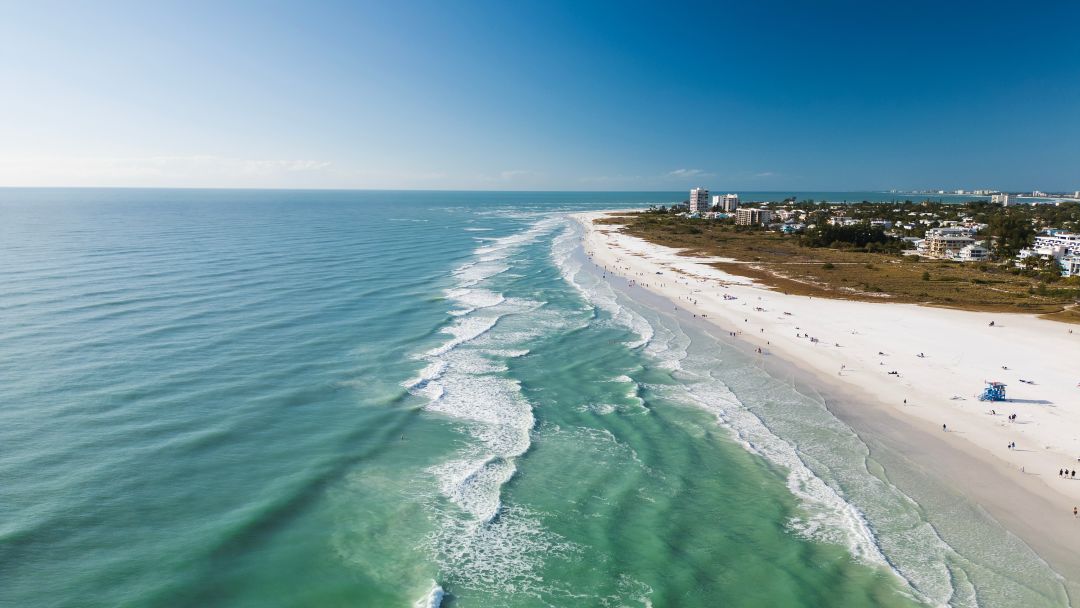
Siesta Beach is a world-renowned natural landmark located on the central west coast of Florida. Nestled on the barrier island of Siesta Key, this iconic destination sits within the jurisdiction of Sarasota County. Geographically, the beach faces the turquoise waters of the Gulf of Mexico, offering a unique vantage point for some of the most spectacular sunsets in the United States.
The Geographical Profile of Siesta Beach
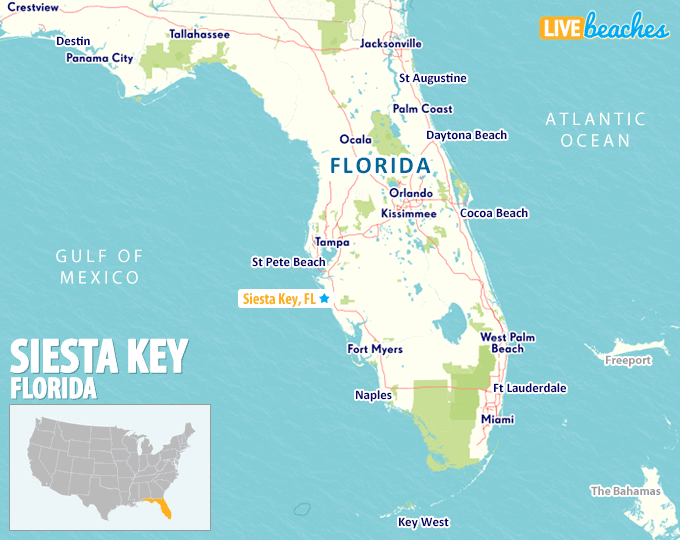
To pinpoint exactly where Siesta Beach lies, one must look at the 8-mile-long barrier island of Siesta Key. The beach itself occupies a significant portion of the island’s Gulf-side coastline. It is situated just south of the city of Sarasota and north of Casey Key. The island is connected to the mainland of Florida by two bridges: the North Bridge (Siesta Drive) and the South Bridge (Stickney Point Road).
Coordinates and Regional Context
The precise coordinates for Siesta Beach are approximately 27.2670° N latitude and 82.5460° W longitude. This positioning places it in a subtropical climate zone, which contributes to the lush vegetation and warm water temperatures that characterize the region. The island is bordered by the Gulf of Mexico to the west and Roberts Bay and Little Sarasota Bay to the east. This configuration creates a diverse aquatic environment, where the high-energy waves of the Gulf meet the tranquil, nutrient-rich waters of the intercoastal estuaries.
Accessibility from Major Florida Hubs
The landmark’s location makes it a central point of interest for those traveling through the Sunshine State. It is located roughly 70 miles south of Tampa, making it a common day-trip destination for residents of the Tampa Bay area. From Orlando, the beach is about a two-and-a-half-hour drive southwest, while those coming from Miami would travel roughly three and a half hours across the Everglades via Alligator Alley and then north along the Gulf Coast. Its proximity to Interstate 75 ensures that Siesta Beach remains one of the most accessible natural landmarks in the region.
The Geological Marvel: Why the Sand is a Landmark
What truly defines the location of Siesta Beach and elevates it to the status of a global landmark is not just its coordinates, but its composition. Unlike most beaches in Florida that are composed of pulverized coral and shells, the sand at Siesta Beach is 99% pure quartz. This geological anomaly has made the beach a subject of scientific study and a point of pride for the local community.
The Appalachian Connection
The presence of this pure white, flour-like sand is the result of millions of years of geological processes. The quartz grains originated in the Appalachian Mountains. Over eons, rivers like the Myakka River and others along the Southeastern United States carried these weathered minerals downstream into the Gulf of Mexico. Ocean currents eventually deposited these crystals along the shores of Siesta Key. Because quartz is a very hard mineral, the grains remain intact and round, resulting in a texture that is remarkably soft and reflective.
The Thermodynamics of Quartz Sand
A defining physical characteristic of this landmark is that the sand remains cool to the touch, even under the intense Florida sun. Because the quartz is nearly pure and lacks the darker organic materials or shell fragments found on other beaches, it reflects solar radiation rather than absorbing it. This thermodynamic property is a rare phenomenon and is one of the primary reasons Siesta Beach consistently ranks as one of the best beaches in the world. Visitors often remark that walking on the shore feels like treading on powdered sugar or snow, but without the cold.
The Historical and Cultural Evolution of the Key
The history of Siesta Beach as a landmark is intertwined with the development of Sarasota. Long before it was a global destination, the area was inhabited by the Native Americans of the Tocobaga and Calusa tribes, who utilized the abundant marine resources of the Gulf of Mexico. In the early 20th century, the island was known as Sarasota Key and was largely inaccessible except by boat.
From Fishing Village to Global Landmark

The transformation of the area began in earnest when John Ringling, the circus magnate, and other early developers recognized the potential of the Sarasota islands. In 1917, the first bridge was built, connecting the mainland to the key. By the mid-1900s, Siesta Key had evolved into a retreat for artists, writers, and those seeking the quiet beauty of the Gulf Coast. The establishment of the Siesta Beach public park area ensured that this natural landmark would remain preserved for public use rather than being entirely consumed by private development.
The Impact of National Rankings
The landmark status of Siesta Beach was cemented in the late 20th and early 21st centuries by national recognition. Dr. Stephen P. Leatherman, also known as Dr. Beach, a professor at Florida International University, has repeatedly named Siesta Beach the “#1 Beach in America.” These rankings are based on fifty criteria, including water quality, safety, and sand softness. Additionally, platforms like TripAdvisor and publications like National Geographic have consistently highlighted the beach, drawing millions of global visitors to this specific stretch of Florida coastline.
Ecological Landmarks and Environmental Protection
Beyond its aesthetic and geological appeal, Siesta Beach serves as a critical ecological landmark. The shoreline and surrounding waters are part of a delicate ecosystem that supports a wide variety of flora and fauna. The conservation of this environment is a primary focus for Sarasota County and various environmental organizations.
Marine Life and the Gulf Ecosystem
The waters off the coast are home to a diverse array of marine life. Manatees and dolphins are frequently sighted near the shore, navigating the warm waters of the Gulf of Mexico. The beach also serves as a nesting ground for sea turtles, particularly Loggerhead Sea Turtles. During nesting season, which runs from May through October, local volunteers and scientists from Mote Marine Laboratory monitor the beach to protect the nests and ensure that hatchlings can safely reach the water.
Avian Habitats and Shorebird Conservation
The dunes of Siesta Beach are a vital habitat for many species of shorebirds. Birds such as the Snowy Plover, Least Tern, and Black Skimmer use the beach for nesting and foraging. Because these birds are sensitive to human disturbance, designated areas of the beach are often cordoned off to protect their nesting sites. This commitment to biodiversity makes Siesta Beach not just a landmark for human recreation, but a sanctuary for Florida wildlife.
Key Landmark Features Near the Shoreline
When visiting the area, several specific landmarks within and around Siesta Beach are of particular interest. These features contribute to the overall character and historical value of the location.
Point of Rocks and the Limestone Formations
Located at the southern end of Crescent Beach, just a short distance from the main Siesta Beach area, is Point of Rocks. This is a series of limestone outcroppings that extend into the Gulf of Mexico. These formations are rare on the Gulf Coast and create a unique underwater environment for snorkeling and diving. The rocks provide a habitat for colorful fish, crabs, and other marine organisms, serving as a natural breakwater and a fascinating geological landmark.
The Siesta Beach Pavilion and Modernist Architecture
The architecture associated with the beach is also noteworthy. The Siesta Beach Pavilion, designed by architect Edward J. Seibert, is a prime example of the Sarasota School of Architecture. This movement, which flourished in the mid-20th century, is characterized by its adaptation to the tropical climate, using large overhangs, natural ventilation, and a seamless integration between indoor and outdoor spaces. The pavilion was renovated and expanded recently, maintaining its historical aesthetic while providing modern amenities to the thousands of people who visit the landmark daily.
Surrounding Landmarks of Sarasota County
The location of Siesta Beach places it in the center of a rich cultural landscape. Just across the bay lies the Marie Selby Botanical Gardens, a world-class center for the study of epiphytes. To the north is the Ringling Museum of Art, the official state art museum of Florida, which houses an extensive collection of European masterpieces and circus memorabilia. The proximity to other keys, such as Lido Key and Longboat Key, further establishes Siesta Beach as the centerpiece of a larger coastal landmark system.
In conclusion, Siesta Beach is much more than a simple stretch of sand in Florida. Its location on Siesta Key in Sarasota County places it at the heart of a region defined by geological rarity, historical depth, and ecological significance. From the quartz crystals of the Appalachian Mountains to the modernist structures of the Sarasota School of Architecture, every element of this landmark tells a story of the natural and cultural history of the Gulf Coast.
LifeOutOfTheBox is a participant in the Amazon Services LLC Associates Program, an affiliate advertising program designed to provide a means for sites to earn advertising fees by advertising and linking to Amazon.com. Amazon, the Amazon logo, AmazonSupply, and the AmazonSupply logo are trademarks of Amazon.com, Inc. or its affiliates. As an Amazon Associate we earn affiliate commissions from qualifying purchases.