
Sunset Boulevard is perhaps the most famous thoroughfare in the United States, representing the ultimate synthesis of urban grit, cinematic glamour, and natural beauty. For decades, this winding artery has served as the heartbeat of Los Angeles, stretching across diverse neighborhoods and reflecting the evolution of California culture. Understanding where Sunset Boulevard is requires more than just a pin on a map; it requires an exploration of its 22-mile journey from the historic core of the city to the crashing waves of the Pacific Ocean.

As a landmark, Sunset Boulevard is a masterclass in architectural diversity and historical layering. It is not merely a road but a narrative arc that tells the story of the American dream, the rise of the film industry, and the transformation of a Mediterranean-style landscape into a global metropolis.
The Geographical Spine of Los Angeles: From the City Center to the Sea
The physical path of Sunset Boulevard is one of the most unique geographical features of the Southern California landscape. Unlike the rigid grid systems found in many other parts of Los Angeles, Sunset Boulevard follows a sinuous path that mimics the contours of the foothills and the ancient trails of the region.
From Downtown Los Angeles to the Hollywood Hills
The boulevard begins its journey at Figueroa Street in Downtown Los Angeles, near the historic Union Station. In its early stages, the road passes through Echo Park and Silver Lake, areas known for their hilly terrain and artistic heritage. Here, the architecture is a mix of early 20th-century Craftsman homes and modern experimental structures. As the road moves westward, it enters the flatlands of Hollywood, where it becomes a dense urban corridor lined with recording studios, post-production houses, and historic sites like Hollywood High School.
Navigating the 22-Mile Route
As the road progresses, it crosses through several distinct municipalities and unincorporated areas. It acts as the northern boundary of the West Hollywood district before snaking through the ultra-wealthy enclaves of Beverly Hills and Bel Air. The final leg of the journey takes it through Brentwood and Pacific Palisades, where the urban density gives way to lush greenery and coastal breezes. The boulevard terminates at the Pacific Coast Highway, offering a dramatic view of the Pacific Ocean and the distant cliffs of Malibu.
Historical Evolution of a Cultural Landmark
Sunset Boulevard was not always the neon-lit icon it is today. Its origins date back to the late 19th century, following parts of an old cattle trail that connected the early Los Angeles pueblo to the sea. Over time, it evolved into a stage where the drama of modern history was played out.
The Silent Film Era and the Birth of Hollywood
In the 1920s, the stretch of Sunset Boulevard that passes through Hollywood became the epicenter of the emerging film industry. Major studios like Paramount Pictures were established nearby, and the boulevard itself became a playground for the stars of the silent era. The landmark status of the street was cemented in 1950 by the Billy Wilder film Sunset Boulevard, which immortalized the road as a symbol of both the grandeur and the tragic transience of fame.
The Sunset Strip: A Legacy of Music and Rebellion
Perhaps the most famous segment of the entire road is the Sunset Strip, a 1.5-mile stretch located in West Hollywood. Historically, this area fell outside the jurisdiction of the Los Angeles Police Department, making it a haven for nightlife, gambling, and speakeasies during Prohibition. In the 1960s and 70s, the Sunset Strip transformed into the heart of the world’s rock and roll scene. Iconic venues like the Whisky a Go Go and the Roxy Theatre hosted legends like The Doors and Led Zeppelin, making this specific portion of the boulevard a global landmark for musical history.
Architectural Marvels and Iconic Sites Along the Boulevard
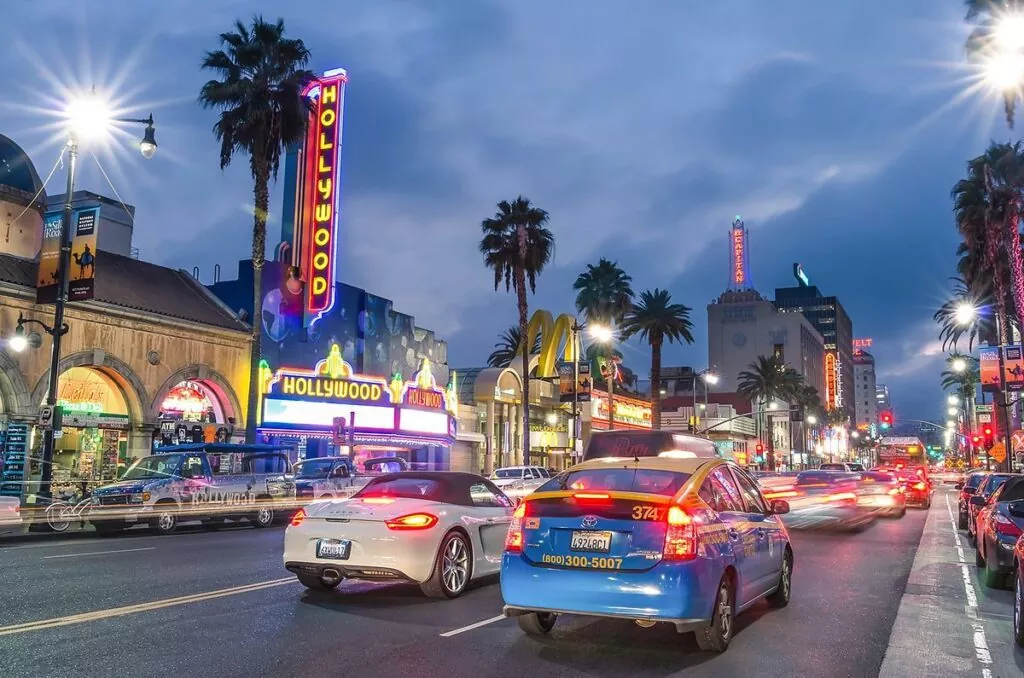
The architecture of Sunset Boulevard serves as a visual timeline of Los Angeles development. From French Chateau-inspired hotels to the sleek glass towers of the modern era, the landmarks along this route are as varied as the landscape itself.
The Chateau Marmont and Old Hollywood Glamour
Perched above the Sunset Strip, the Chateau Marmont is one of the boulevard’s most enduring landmarks. Modelled after a royal retreat in the Loire Valley of France, this hotel has been a sanctuary for actors and writers since it opened in 1929. Its gothic arches and secretive bungalows stand in stark contrast to the modern billboards that dominate the strip, serving as a reminder of the street’s long-standing connection to the elite of Hollywood.
Mid-Century Modernism and Commercial Landmarks
Further west, the boulevard showcases the influence of Mid-Century Modern design. The Beverly Hills Hotel, often called the “Pink Palace,” is a landmark of luxury nestled in a forest of tropical palms. Meanwhile, commercial history is preserved in sites like the former Tower Records building, which remains a pilgrimage site for music fans despite the changing retail landscape. The Sunset Tower Hotel, an Art Deco masterpiece, remains a sentinel of the skyline, representing the height of 1930s sophistication.
The Natural Landscape and Scenic Beauty
While Sunset Boulevard is often associated with the urban environment, its western reaches are defined by their integration with the natural world. This section of the landmark highlights the intersection of civil engineering and the rugged beauty of the California coast.
The Curves of the Santa Monica Mountains
As the boulevard winds through Bel Air and Brentwood, it follows the southern edge of the Santa Monica Mountains. Here, the road narrows and the canopy of trees thickens. The landmark takes on a pastoral quality, with hidden estates and canyons that feel worlds away from the neon lights of West Hollywood. This geography provides some of the most scenic driving in North America, offering glimpses of the city’s vast basin and the mountain peaks above.
Sunset Cliffs and the Edge of the Continent
The journey ends at Will Rogers State Beach in Pacific Palisades. The transition from a bustling city street to a coastal lookout is one of the most powerful experiences the boulevard offers. At this terminus, the landmark connects with the Pacific Ocean, symbolizing the end of the westward expansion that shaped the United States. The cliffs here offer a panoramic view of the coastline, making it a natural landmark of immense significance.
Cultural Significance and Modern Legacy
Sunset Boulevard is more than a geographical location; it is a permanent fixture in the global imagination. Its status as a landmark is reinforced by its constant appearance in media, literature, and art, where it serves as a metaphor for the complexities of Los Angeles.
Sunset Boulevard in Film and Literature
Beyond the eponymous film, the boulevard has been featured in countless works. Writers like Raymond Chandler and Joan Didion have used the street to explore themes of isolation and the dream-like quality of Southern California. The landmark’s ability to shift between a gritty urban environment and an oasis of luxury makes it a versatile setting for storytelling, further embedding it into the cultural fabric of the nation.

Preserving the Heritage of Los Angeles
In recent years, there has been a significant effort to preserve the historic landmarks along Sunset Boulevard. From the restoration of the Cinerama Dome to the protection of historic music venues like The Viper Room, the city recognizes that this street is a living museum. As Los Angeles continues to grow, the boulevard remains a touchstone for its identity, a place where the past, present, and future of California coexist.
In summary, the question of where Sunset Boulevard is located in Los Angeles is answered by its sprawling 22-mile reach across the city’s most vital zones. It is a landmark that defines the geography of Hollywood, the luxury of Beverly Hills, and the natural majesty of the Santa Monica Mountains. Whether viewed through the lens of history, architecture, or geography, it remains the ultimate symbol of the American West.
LifeOutOfTheBox is a participant in the Amazon Services LLC Associates Program, an affiliate advertising program designed to provide a means for sites to earn advertising fees by advertising and linking to Amazon.com. Amazon, the Amazon logo, AmazonSupply, and the AmazonSupply logo are trademarks of Amazon.com, Inc. or its affiliates. As an Amazon Associate we earn affiliate commissions from qualifying purchases.