
The Louisiana Purchase stands as one of the most consequential real estate transactions in human history, fundamentally altering the trajectory of the United States and the geopolitical landscape of North America. While the territory itself encompassed a vast wilderness of the Great Plains and the Rocky Mountains, the actual stroke of the pen that sealed the deal occurred thousands of miles away. To understand where the Louisiana Purchase was signed is to embark on a journey through the architectural and diplomatic landmarks of Paris, France, and the ceremonial squares of New Orleans.
This landmark event was not a single moment but a series of diplomatic maneuvers that took place within the gilded halls of Europe and the rustic administrative buildings of the New World. For history enthusiasts and travelers alike, identifying the specific landmarks associated with this event provides a tangible link to the year 1803, when the size of a fledgling nation was doubled for the price of $15 million.

The Diplomatic Heart of Paris: The Site of the Signing
The formal treaty was negotiated and signed in Paris, which was then the epicenter of global power under the rule of Napoleon Bonaparte. While many documents were exchanged across various ministries, the primary location for the signing of the treaty remains a point of high historical interest.
The Hôtel de Bourbon-Vieuville
The actual signing of the Louisiana Purchase treaty on April 30, 1803, is most closely associated with the Hôtel de Bourbon-Vieuville. Located on the Rue des Petits-Champs, this landmark served as the French Ministry of Finance during the early 19th century. It was within these walls that Robert Livingston, James Monroe, and the French representative François Barbé-Marbois finalized the terms.
Today, much of the original structure has been integrated into the Bibliothèque Nationale de France. Travelers visiting Paris can walk the halls of this cultural landmark, reflecting on the fact that the destiny of the American West was determined in a Parisian office. The Hôtel Tubeuf, part of the same complex, also stands as a testament to the era’s grand architecture, featuring the classic French limestone and intricate masonry that defined the neighborhood.
The French Ministry of the Treasury
While the financial negotiations took place at the Hôtel de Bourbon-Vieuville, other aspects of the diplomatic mission were handled at the French Ministry of the Treasury. France was in desperate need of funds to finance its impending war with Great Britain, making these treasury landmarks vital to the story. The Hôtel de la Marine, overlooking the Place de la Concorde, is another stunning landmark from this era that echoes the administrative grandeur of Napoleonic France.
Landmarks of the Negotiation Process
Before the ink could dry on the treaty, months of tense negotiations took place. These discussions happened in several iconic Parisian landmarks, many of which remain popular tourist destinations today.
The Tuileries Palace and Garden
Negotiations were heavily influenced by the presence of Napoleon Bonaparte. While the Tuileries Palace was destroyed in 1871, the Tuileries Garden remains one of the most famous landmarks in France. It was here, and in the nearby Louvre, that the French leadership weighed the benefits of selling their claims in the Americas. The proximity of these landmarks to the Seine River makes them a focal point for any historical walking tour of Paris.
The American Legation in France
During his time in Paris, James Monroe stayed at various locations that served as temporary hubs for American diplomacy. Earlier, Thomas Jefferson had established a diplomatic presence at the Hôtel de Langeac. Although that building no longer stands, its former site near the Champs-Élysées is marked by plaques that commemorate the American-French connection. These sites serve as invisible landmarks, reminding visitors of the deep historical ties between the two nations.
The Transfer Ceremonies: Landmarks in the New World
While the treaty was signed in Europe, the physical transfer of the territory involved two distinct ceremonies in New Orleans. These events took place at landmarks that are still preserved today as part of the cultural fabric of Louisiana.
The Cabildo in New Orleans
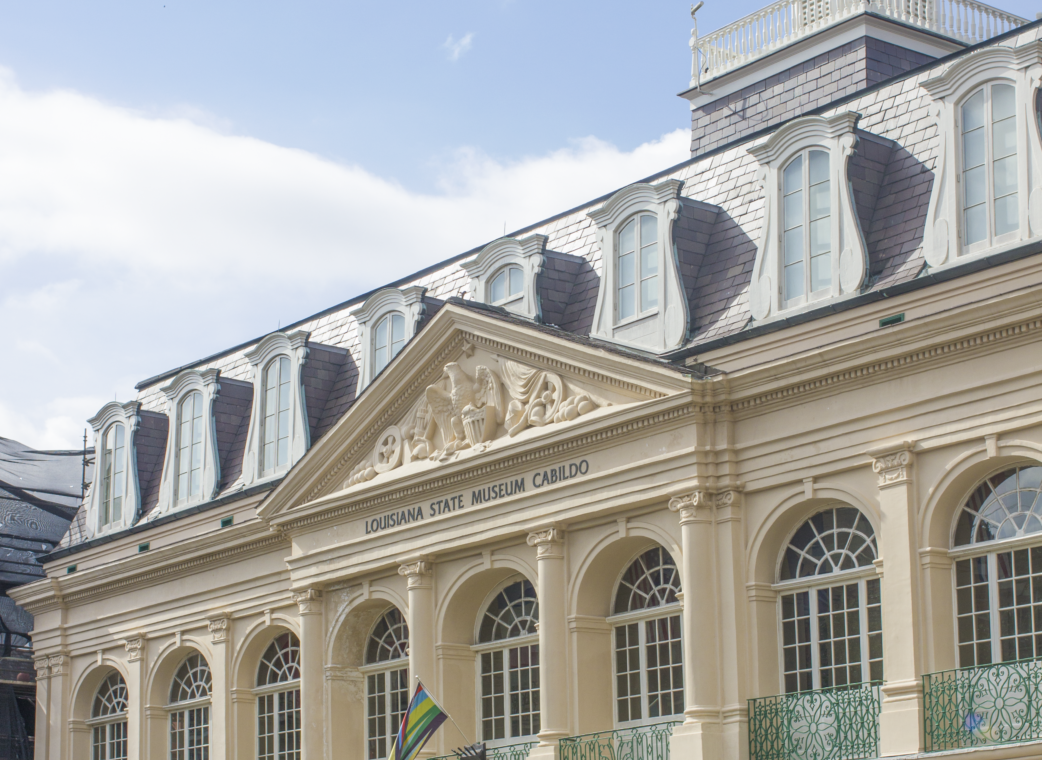
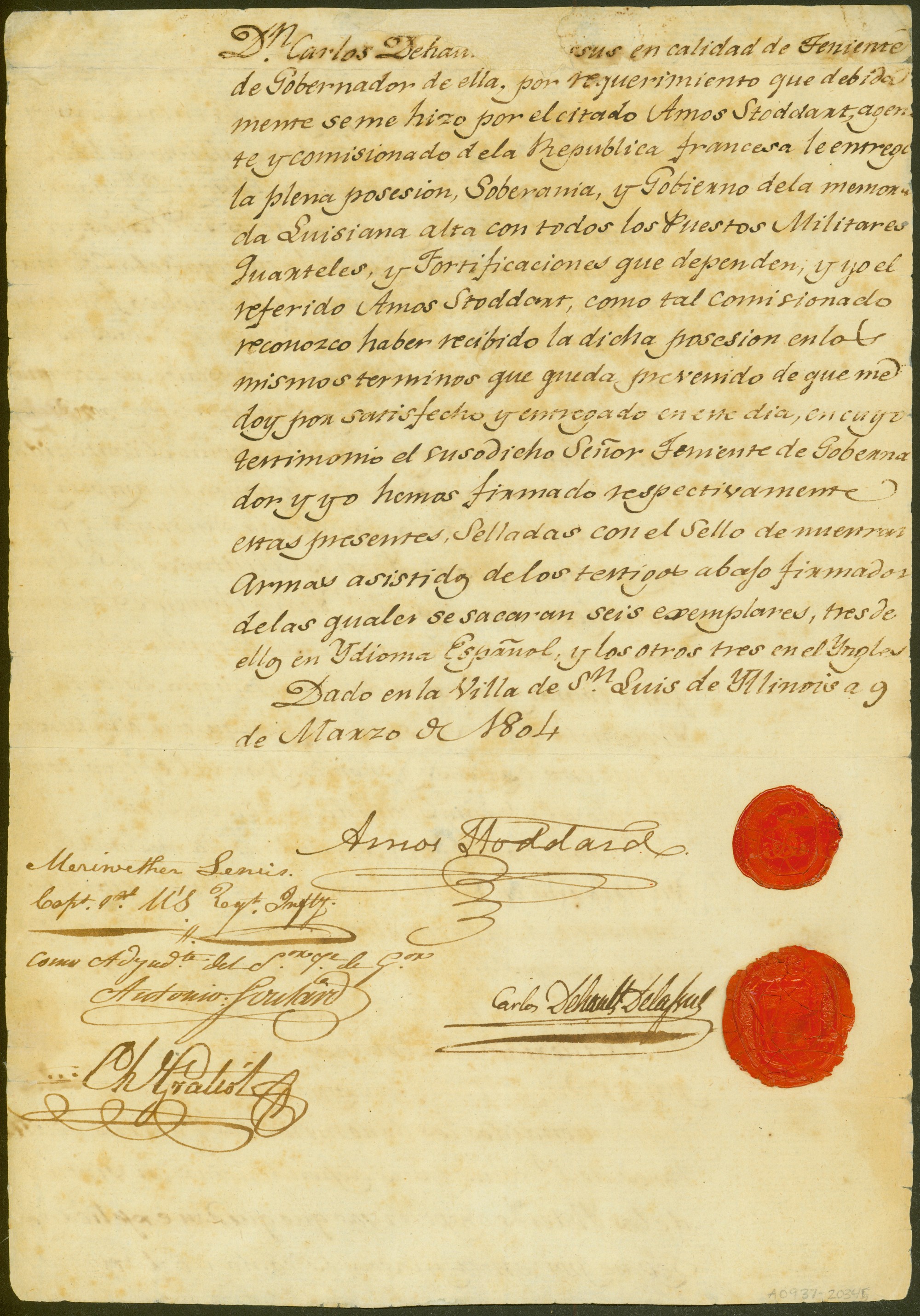
The most significant landmark associated with the Louisiana Purchase in the United States is The Cabildo. Located in the heart of the French Quarter, The Cabildo served as the seat of the Spanish municipal government. On December 20, 1803, the official transfer of the territory from France to the United States took place in the Sala Capitular, the building’s grand council chamber.
Today, The Cabildo is a part of the Louisiana State Museum system. It houses an impressive collection of artifacts, including the original documents and maps related to the purchase. The building’s Spanish colonial architecture, characterized by its elegant arches and prominent cupola, makes it one of the most photographed landmarks in New Orleans.
Jackson Square and the Place d’Armes
Immediately outside The Cabildo lies Jackson Square, which was known as the Place d’Armes at the time of the transfer. This historic plaza witnessed the lowering of the French flag and the raising of the American Stars and Stripes. The square is anchored by the St Louis Cathedral, the oldest continuously active Roman Catholic cathedral in the United States. Together, these landmarks create a historic tableau that transports visitors back to the moment the Mississippi River officially became an American waterway.
Modern Pilgrimages: Visiting the Sites Today
For those looking to trace the footsteps of the diplomats and explorers involved in the Louisiana Purchase, several modern landmarks and institutions offer a deep dive into this history.
The National Archives in Washington DC
While the signing happened in Paris and the transfer in New Orleans, the physical treaty itself is one of the most precious landmarks of American democracy. It is held within the National Archives in Washington DC. This neoclassical landmark is a “must-visit” for anyone interested in the foundational documents of the United States. Seeing the actual signatures of Livingston and Monroe provides a powerful sense of the scale of their achievement.
Monticello and the Jefferson Legacy
To understand the vision behind the purchase, one must visit Monticello, the estate of Thomas Jefferson in Virginia. As a landmark of Enlightenment architecture and the home of the president who authorized the purchase, Monticello offers insight into why the acquisition of the Missouri River and the port of New Orleans was so vital to his vision of an “Empire of Liberty.” The museum at Monticello features extensive exhibits on the Lewis and Clark Expedition, which was commissioned to explore the newly acquired lands.
Gateway Arch National Park
In St Louis, Missouri, the Gateway Arch stands as a monumental landmark dedicated to the westward expansion made possible by the Louisiana Purchase. While not a site of the signing itself, it is arguably the most iconic modern landmark representing the spirit of the deal. The museum beneath the Gateway Arch details the journey of the pioneers and the diverse cultures of the Great Plains that were forever changed by the events of 1803.
The Louisiana Purchase was a masterpiece of diplomacy that spanned continents. From the limestone offices of Paris to the humid plazas of Louisiana, the landmarks associated with this event serve as permanent reminders of a time when the world was being reshaped. Whether you are exploring the French Quarter or strolling through the Tuileries Garden, these famous places offer a window into a historic moment that defined the modern United States. For the traveler, these sites are more than just architecture; they are the physical stages where history was written, signed, and delivered.
LifeOutOfTheBox is a participant in the Amazon Services LLC Associates Program, an affiliate advertising program designed to provide a means for sites to earn advertising fees by advertising and linking to Amazon.com. Amazon, the Amazon logo, AmazonSupply, and the AmazonSupply logo are trademarks of Amazon.com, Inc. or its affiliates. As an Amazon Associate we earn affiliate commissions from qualifying purchases.