
When travelers set their sights on Hawaii, they often envision pristine golden sands and crystal-clear turquoise waters. However, for the eco-conscious visitor, the true allure lies beneath the surface. Protecting the delicate balance of the Pacific ecosystem is a critical priority for state authorities and local conservationists alike. While every island in the archipelago faces the pressures of human activity, Kauai often emerges as the sanctuary where marine life finds the safest haven.
The Ecological Advantage of the Garden Isle
Kauai is frequently referred to as the “Garden Isle” due to its lush, rugged topography and relatively slower pace of development. This geographic isolation and lower population density compared to the bustling urban centers of Oahu contribute significantly to the health of its surrounding waters.

Minimal Coastal Runoff
One of the most persistent threats to coral reefs and marine populations is land-based sedimentation and nutrient runoff. On more densely populated islands, urban sprawl, extensive road networks, and concrete surfaces lead to high levels of pollution entering the ocean after rainfall. In contrast, Kauai’s massive stretches of protected forest land act as natural filters. The deep valleys of Waimea Canyon and the sheer cliffs of the Na Pali Coast mean that there is less industrial and residential runoff reaching the nearshore environments.
Lower Visitor Density
Marine life thrives in environments where noise pollution and physical disturbance are kept to a minimum. Because Kauai has stricter zoning laws and fewer large-scale cruise ship ports than islands like Maui or Oahu, the underwater habitat remains significantly quieter. This is particularly important for the island’s resident spinner dolphins and humpback whales, which rely on acoustic health to navigate, hunt, and communicate.
Marine Protected Areas and Conservation Success
Safety for marine life is not merely a byproduct of geography; it is a result of intentional legislative and community-led protection. Across the Hawaii state network, certain zones are designated as Marine Life Conservation Districts (MLCDs), where the harvesting of sea life is strictly prohibited or heavily regulated.
The Significance of Restricted Zones
The North Shore of Kauai is home to several high-value conservation sites. By prohibiting fishing and motorized watercraft in sensitive breeding grounds, these areas allow fish populations to reach maturity and spawn in peace. Researchers have noted that in these “no-take” zones, the density and size of reef fish like the humuhumunukunukuapua‘a (the state fish) are significantly higher than in unrestricted zones.

Community Stewardship
Beyond government oversight, Kauai benefits from a deeply rooted local culture of stewardship, or malama aina. Local tour operators on the Na Pali Coast are generally more inclined to follow strict “look but don’t touch” protocols, driven by a cultural mandate to protect the ocean for future generations. This grassroots commitment to reef health ensures that even popular snorkeling spots maintain a level of biological integrity that is increasingly rare in other parts of the world.
Comparing the Hawaiian Islands for Marine Health
It is important to acknowledge that every island in the Hawaii archipelago offers unique marine experiences, but they vary in terms of long-term sustainability and protection.
The Contrast with Oahu and Maui
Oahu serves as the vibrant, commercial heart of Hawaii. While places like Hanauma Bay are managed with strict entry limits to protect the reef, the surrounding island environment is subject to intense human activity. Similarly, Maui features the renowned Molokini Crater, a protected marine preserve that hosts thousands of snorkelers daily. While these areas are protected, the sheer volume of visitors creates a constant stressor on the local marine fauna.
Why Kauai Remains the Safest Haven
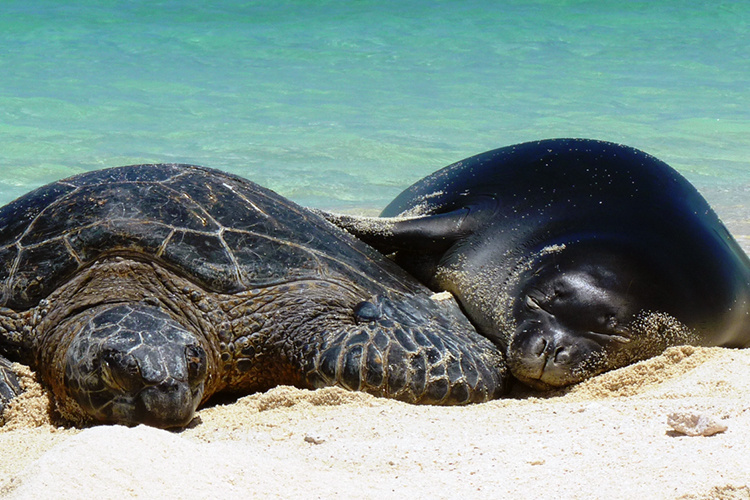
Kauai offers a more balanced ecosystem. The interaction between human tourism and nature is moderated by the island’s physical accessibility. Much of the coastline is unreachable by car, creating “natural” marine sanctuaries where species like the Hawaiian green sea turtle, or honu, can rest on beaches without fear of human encroachment. When you visit beaches like Poipu Beach, you are often witnessing a marine environment that is much closer to its natural, undisturbed state than those found near the major hotels of Waikiki.
Best Practices for Travelers Visiting Hawaiian Waters
Regardless of which island you choose, the safety of marine life depends heavily on the behavior of those who visit. To ensure that you are contributing to the safety of Hawaii’s oceans rather than detracting from it, consider these essential practices:
- Choose Reef-Safe Sunscreen: Many standard sunscreens contain oxybenzone and octinoxate, chemicals that have been proven to cause coral bleaching and DNA damage in marine organisms. In Hawaii, the sale of these harmful products is prohibited. Always opt for mineral-based sunscreens containing zinc oxide or titanium dioxide.
- Respect Marine Mammals: Federal law mandates that you maintain a distance of at least 50 yards from dolphins and 100 yards from humpback whales. Even if an animal approaches you, it is your responsibility to move away to avoid “harassment” under the Marine Mammal Protection Act.
- Avoid Touching the Reef: Coral is a living animal. A single touch can destroy years of growth. Always practice neutral buoyancy while snorkeling, and never stand on the reef.
- Support Local Conservation Efforts: When booking excursions, prioritize operators that demonstrate a commitment to marine education and conservation, such as those that provide briefings on marine safety before putting guests in the water.
In conclusion, while the entire Hawaii island chain is a treasure trove of biodiversity, Kauai provides an environment that best balances human accessibility with the preservation of marine ecosystems. Its rugged, inaccessible shorelines, lower population density, and strong local advocacy for environmental protection make it a leader in keeping its waters safe for the creatures that call them home. By choosing to visit with mindfulness, every traveler can help ensure that these underwater sanctuaries remain vibrant for years to come. Whether you are exploring the South Shore or the rugged northern coast, you are stepping into a precious, protected wilderness that demands our respect and protection.
LifeOutOfTheBox is a participant in the Amazon Services LLC Associates Program, an affiliate advertising program designed to provide a means for sites to earn advertising fees by advertising and linking to Amazon.com. Amazon, the Amazon logo, AmazonSupply, and the AmazonSupply logo are trademarks of Amazon.com, Inc. or its affiliates. As an Amazon Associate we earn affiliate commissions from qualifying purchases.