
The annexation of Texas stands as a pivotal moment in the expansionist narrative of the United States, a complex process driven by political ambition, manifest destiny, and simmering international tensions. While the seeds of annexation were sown long before his presidency, it was under the leadership of President James K. Polk that Texas officially became the 28th state of the Union in 1845. This momentous event, however, was far from a simple, uncontested acquisition. It involved intricate negotiations, fierce debate, and ultimately, a war that reshaped the geopolitical landscape of North America.
To truly understand which president annexed Texas, we must delve into the preceding years, the motivations behind this territorial expansion, and the significant figures who played crucial roles in bringing this vast territory into the fold. The story of Texas annexation is interwoven with the very fabric of American history, influencing westward expansion, the debate over slavery, and the eventual outbreak of the Mexican-American War.

The Road to Annexation: A Republic’s Ambitions
Before its annexation by the United States, Texas existed as an independent republic. Following its successful revolution against Mexico in 1836, the Republic of Texas began to explore the possibility of joining its powerful neighbor to the north. This desire stemmed from a variety of factors, including economic instability, ongoing threats from Mexico, and a shared cultural affinity with the United States.
Sam Houston and the Early Years of the Republic
Sam Houston, a central figure in Texas independence and its first elected president, was a staunch advocate for annexation. He recognized the Republic’s vulnerability and believed that union with the United States offered the best path to security and prosperity. However, the path to annexation was not straightforward. The issue of slavery loomed large, as the admission of Texas, a slaveholding state, would upset the delicate balance of power between free and slave states in the U.S. Senate.
The Presidency of John Tyler and Initial Efforts
Even before James K. Polk took office, President John Tyler had made annexation a priority. He actively pursued a treaty of annexation with Texas, driven by his own expansionist vision. This effort, however, was met with significant opposition in the U.S. Senate, primarily due to the slavery question. The treaty ultimately failed to gain ratification, highlighting the deep divisions within the United States regarding the expansion of slave territory.
Despite the setback, Tyler’s administration laid crucial groundwork, signaling the United States’ serious consideration of Texas as a potential state. The ongoing diplomatic efforts and public discourse surrounding the issue kept the idea of annexation alive and prominent in the political agenda.
James K. Polk: The Annexationist President
James K. Polk, elected in 1844, campaigned on a platform that explicitly included the annexation of Texas. His victory was widely interpreted as a mandate from the American people to pursue this territorial expansion. Polk was a determined and focused president, often referred to as “Young Hickory” for his association with Andrew Jackson, and he set out to achieve his goals with remarkable efficiency during his single term.
The Final Push for Annexation
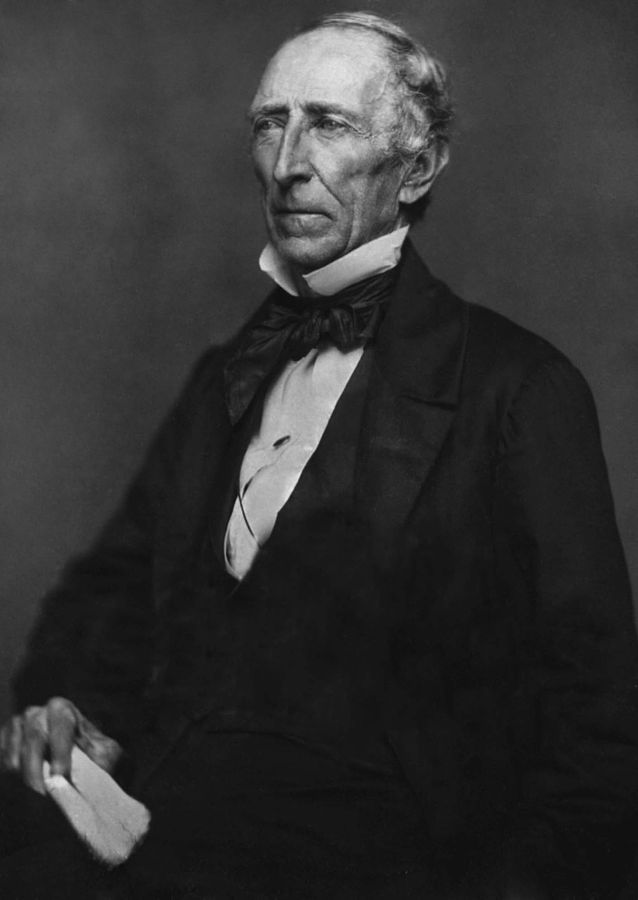
Upon taking office, Polk wasted no time in reviving the annexation efforts. He understood the complexities and the need for a different approach than Tyler’s failed treaty. Instead of seeking a treaty, which required a two-thirds majority in the Senate, Polk and his allies opted for a joint resolution of Congress. This method required only a simple majority in both the House of Representatives and the Senate, a more achievable threshold given the political climate.
The debate in Congress was intense. Proponents argued for the strategic importance of Texas, its economic potential, and the fulfillment of Manifest Destiny, the belief that the United States was divinely ordained to expand its dominion and spread democracy across the North American continent. Opponents, primarily from the North, voiced concerns about the expansion of slavery, the potential for war with Mexico, and the disproportionate power that a greatly enlarged United States might wield.
The Joint Resolution and Texas’s Acceptance
After considerable debate and political maneuvering, the joint resolution for annexation was passed by Congress in early 1845. The resolution stipulated that Texas would be admitted as a state upon its acceptance of the terms of annexation. President Polk signed the resolution on March 1, 1845, officially extending the offer to the Republic of Texas.
The Republic of Texas formally accepted the annexation proposal on July 4, 1845, a symbolic date. The process was not entirely smooth, as there were differing opinions within Texas itself, but the overwhelming sentiment favored joining the United States. Finally, on December 29, 1845, Texas was officially admitted as the 28th state, a monumental achievement for President Polk and a significant step in the territorial growth of the United States.
The Aftermath: War and Expansion
The annexation of Texas had profound and immediate consequences, most notably the outbreak of the Mexican-American War. Mexico never formally recognized the independence of Texas and viewed its annexation by the United States as an act of aggression. The disputed border between Texas and Mexico, particularly along the Rio Grande, became a flashpoint.
The Mexican-American War and its Territorial Gains
President Polk, already harboring ambitions for further territorial expansion, used border skirmishes as a pretext to declare war on Mexico in April 1846. The war proved to be a decisive victory for the United States, resulting in the Treaty of Guadalupe Hidalgo in 1848. This treaty ceded vast territories to the United States, including present-day California, Nevada, Utah, Arizona, and parts of New Mexico, Colorado, and Wyoming. This immense territorial gain was a direct consequence of the decision to annex Texas.
Texas’s Role in the Expanding Nation
The incorporation of Texas into the United States significantly altered the nation’s demographic, economic, and political landscape. The vast expanses of Texas offered immense opportunities for settlement, agriculture, and ranching. The discovery of oil in the 20th century would further solidify its economic importance. However, the legacy of slavery, deeply entrenched in Texas, continued to be a source of national division, ultimately contributing to the American Civil War.

Considering Texas Today: Travel and Landmarks
For travelers interested in the history and grandeur of Texas, the state offers a wealth of experiences. From the historic missions in San Antonio, such as the Alamo and Mission Concepcion, to the bustling metropolises of Houston and Dallas, Texas provides a diverse range of attractions. Visitors can explore the vast ranches that evoke the spirit of the frontier, delve into the rich cultural heritage of its diverse communities, and marvel at the architectural achievements of its modern cities.
The story of Texas annexation is a complex tapestry woven with threads of ambition, conflict, and nation-building. It highlights the significant role of presidential leadership, particularly that of James K. Polk, in shaping the territorial boundaries and historical trajectory of the United States. The decision to annex Texas was not merely a geographical acquisition but a catalyst for events that would forever alter the course of both American and Mexican history. Understanding this pivotal moment provides crucial insight into the development of the United States and its expansionist policies that continue to resonate today.
LifeOutOfTheBox is a participant in the Amazon Services LLC Associates Program, an affiliate advertising program designed to provide a means for sites to earn advertising fees by advertising and linking to Amazon.com. Amazon, the Amazon logo, AmazonSupply, and the AmazonSupply logo are trademarks of Amazon.com, Inc. or its affiliates. As an Amazon Associate we earn affiliate commissions from qualifying purchases.