
The question of who discovered California is a fascinating one, weaving together tales of intrepid explorers, ambitious empires, and the indigenous peoples who called this magnificent land home for millennia before any European set foot on its shores. While history books often credit European navigators with the “discovery,” it’s crucial to acknowledge the deep and rich history that existed long before their arrival. This article delves into the complex narrative of California‘s discovery, exploring the pivotal moments in its exploration and the enduring legacy of its first inhabitants.
Early European Encounters and the Dawn of Exploration
The story of California‘s European discovery is primarily one of maritime exploration. Driven by the allure of trade routes, vast riches, and the desire to expand their empires, European powers sent expeditions across uncharted waters. The vast expanse of the Pacific Ocean presented both immense challenges and tantalizing opportunities.

The First European Sighting: Juan Rodríguez Cabrillo
The individual most widely credited with the first European sighting of California is the Portuguese explorer Juan Rodríguez Cabrillo, sailing under the Spanish flag. In 1542, Cabrillo embarked on a crucial expedition commissioned by New Spain (modern-day Mexico) to explore the west coast of North America. His primary objective was to find a passage to Asia, a mythical strait that would offer a shorter, more direct trade route.
Cabrillo’s fleet, consisting of two ships, the San Salvador and the La Victoria, sailed north along the coast of what is now Mexico. On September 28, 1542, his expedition made landfall at the site of present-day San Diego Bay. This moment is considered the first documented European encounter with the California coast. Cabrillo claimed the territory for the Spanish Crown, naming it “La Nueva Albión” in honor of King Charles I of Spain. However, this name did not stick, and the region eventually came to be known by variations of “California,” a name believed to have originated from a mythical island in a popular Spanish romance novel, “Las Sergas de Esplandián,” which described a paradise populated by black women and ruled by Queen Calafia.
Cabrillo’s journey continued northward, charting much of the California coastline. He bravely navigated treacherous waters, encountering various indigenous tribes and documenting their existence. Tragically, Cabrillo died in 1543 from an injury sustained during a fall, but his second-in-command, Bartolomé Ferrelo, continued the expedition, pushing further north towards present-day Oregon. Ferrelo’s meticulous charting of the coastline provided invaluable geographical knowledge for future European endeavors.
Sir Francis Drake’s “New Albion”
Decades after Cabrillo’s voyage, another significant European explorer would set foot on California soil: the English privateer Sir Francis Drake. In 1579, during his circumnavigation of the globe, Drake sailed into a bay near present-day San Francisco. He claimed the land for England, naming it “Nova Albion” (New England). Drake’s arrival was less about discovery and more about seizing opportunities for plunder and asserting English influence. He spent several weeks in the area, repairing his ship, the Golden Hind, and engaging with the local indigenous population, the Coast Miwok.
Drake’s claim of “Nova Albion” was a significant geopolitical statement, as England and Spain were often at odds. While Drake’s presence was fleeting, his account and the subsequent mapping of his voyage contributed to the growing European awareness of California‘s existence and potential. The naming of “Nova Albion” by Drake further complicated the historical narrative, adding another layer to the question of who “discovered” California.

The Forgotten Inhabitants: Indigenous Peoples of California
It is imperative to reiterate that the concept of “discovery” by Europeans is a Eurocentric viewpoint. For thousands of years before the arrival of any European explorer, the land known today as California was home to a diverse array of vibrant and sophisticated indigenous peoples. These peoples had their own distinct languages, cultures, social structures, and deep spiritual connections to the land.
The California region was remarkably diverse, supporting a multitude of tribes with unique adaptations to its varied environments, from the coastal plains to the mountains and deserts. Among the prominent indigenous groups were the Chumash, who lived along the southern coast and developed advanced maritime skills; the Pomo, known for their intricate basketry; the Yurok, whose culture was deeply intertwined with the Klamath River; and the Tongva, who inhabited the Los Angeles Basin. These and countless other tribes had established complex societies, developed sustainable resource management practices, and passed down rich oral traditions for generations.
The arrival of Europeans marked a catastrophic turning point for these indigenous populations. Diseases to which they had no immunity decimated their communities. Subsequent colonization brought displacement, forced labor, and the suppression of their cultural practices. Understanding the history of California‘s “discovery” necessitates acknowledging the profound and often tragic impact on its original inhabitants, whose presence and stewardship predated European arrival by millennia. Their enduring legacy is woven into the very fabric of California, from its place names to its ecological landscapes.
Spanish Colonization and the Establishment of Missions
Following the initial explorations by Cabrillo and Drake, the Spanish Crown recognized the strategic importance of California. However, actual colonization did not begin until much later. It was the perceived threat of other European powers, particularly Russia, expanding their influence down the west coast, that spurred Spain into action.
The Mission System: A Tool of Colonization
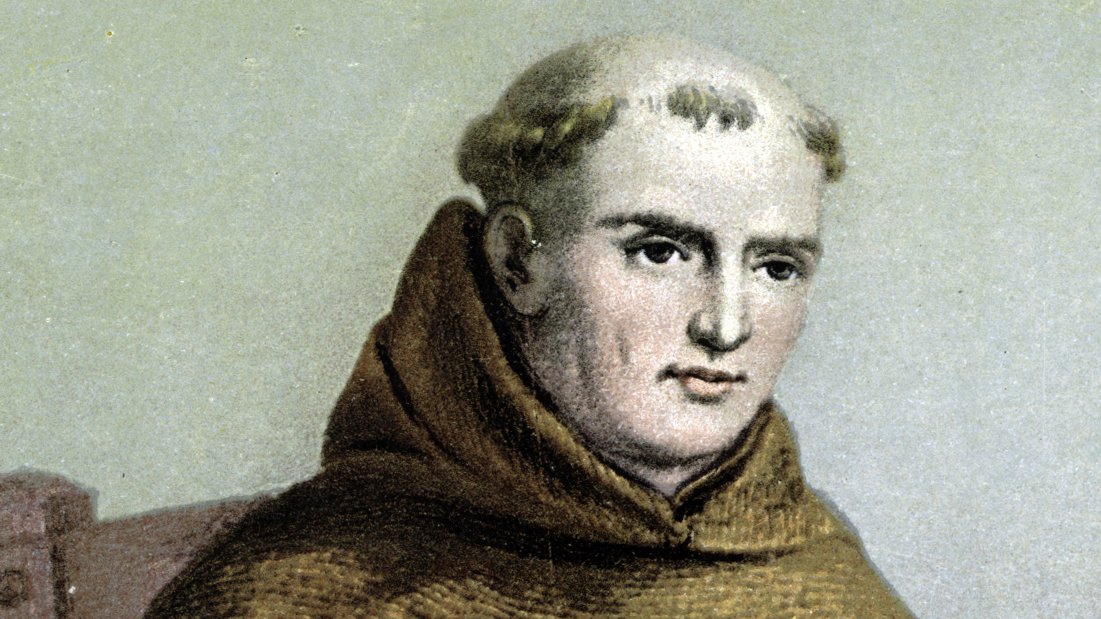
In the late 18th century, Spain launched a concerted effort to colonize California, primarily through the establishment of a chain of missions. Led by figures like Father Junípero Serra, Franciscan friars were tasked with converting the indigenous population to Christianity and asserting Spanish authority. Between 1769 and 1823, twenty-one missions were founded along the El Camino Real, a royal road that stretched from San Diego to Sonoma.
These missions, such as Mission San Diego de Alcalá, Mission San Juan Capistrano, and Mission San Francisco de Asís (also known as Mission Dolores), were not just religious outposts; they were centers of agriculture, industry, and social control. The friars introduced European crops, livestock, and construction techniques. While some argue that the missions brought advancements to the region, their impact on the indigenous peoples was devastating. They disrupted traditional ways of life, subjected native populations to forced labor, and contributed to a significant decline in their numbers.
Presidios and Pueblos: Military and Civilian Settlements
Alongside the missions, the Spanish also established presidios (military forts) and pueblos (civilian towns) to consolidate their control. Presidio of San Francisco and Pueblo de Los Ángeles (modern-day Los Angeles) are prime examples of these settlements, which provided defense and supported the growing colonial presence. These settlements laid the groundwork for the future development of major California cities.
The Spanish colonial period, though relatively short-lived, left an indelible mark on California. The mission architecture, Spanish place names, and elements of the legal and social systems are enduring legacies of this era. However, it is crucial to remember that this colonization occurred on land already inhabited by indigenous peoples, whose own history and sovereignty were profoundly altered by the arrival of Europeans. The “discovery” of California was, in reality, the beginning of a new and often brutal chapter in the long history of this land and its original inhabitants.
LifeOutOfTheBox is a participant in the Amazon Services LLC Associates Program, an affiliate advertising program designed to provide a means for sites to earn advertising fees by advertising and linking to Amazon.com. Amazon, the Amazon logo, AmazonSupply, and the AmazonSupply logo are trademarks of Amazon.com, Inc. or its affiliates. As an Amazon Associate we earn affiliate commissions from qualifying purchases.