
When you think of iconic landmarks, images of the Eiffel Tower in Paris or the Statue of Liberty in New York City might spring to mind. However, for those who have explored the vibrant cityscape of Chicago, a different, more reflective monument holds a special place: “Cloud Gate,” affectionately known to locals and tourists alike as “The Chicago Bean.” This colossal, polished stainless steel sculpture, nestled in the heart of Millennium Park, has become an undeniable symbol of the city, drawing millions of visitors each year for selfies, awe-inspiring reflections, and a moment of connection with a truly unique piece of public art. But the question often arises, as fascinating as the sculpture itself: Who actually made this magnificent artwork? The answer lies with a celebrated British artist whose vision and meticulous craftsmanship brought “The Bean” to life.
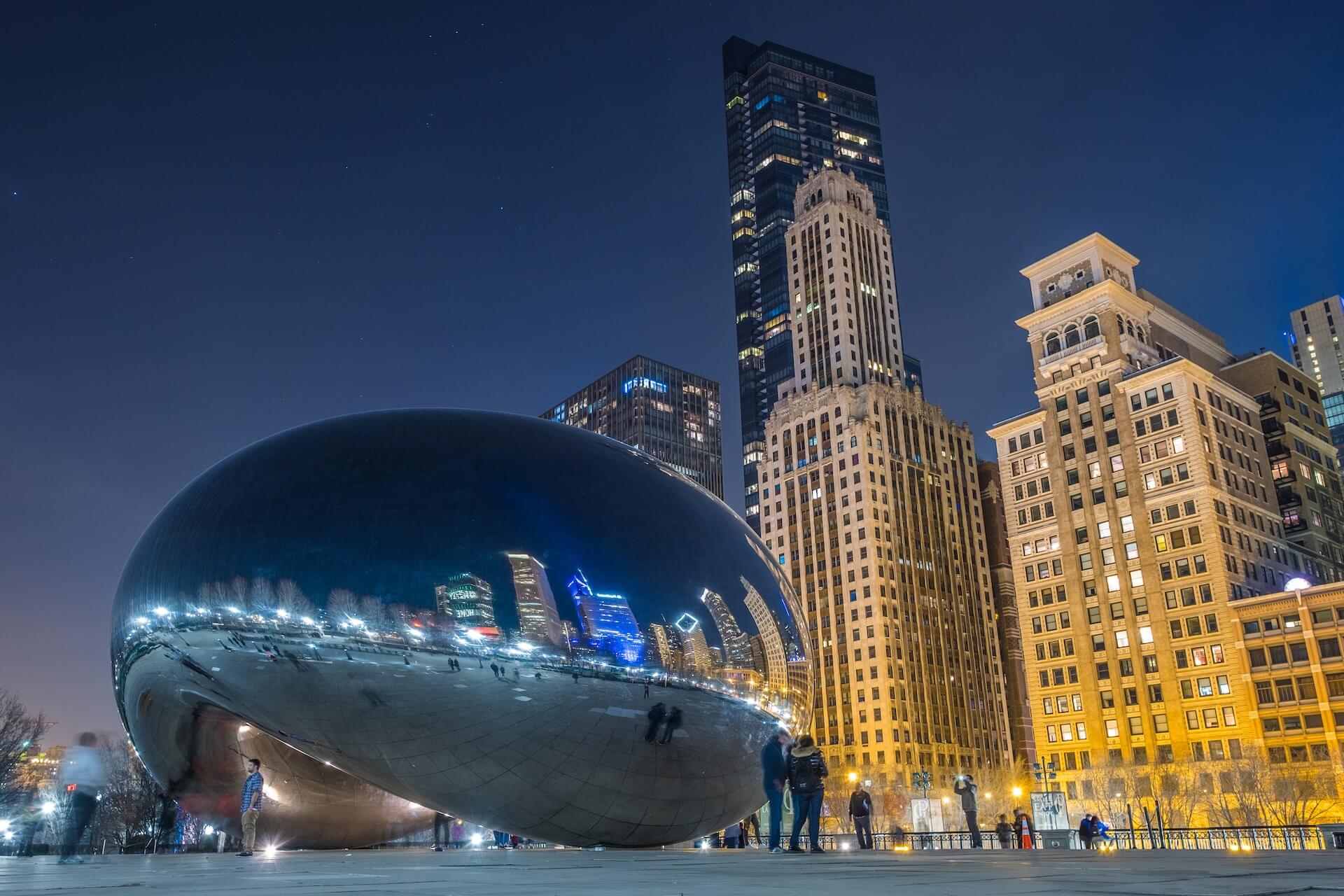
The creation of “The Chicago Bean” is a testament to the power of public art to transform urban spaces and captivate the global imagination. This monumental sculpture is more than just a tourist attraction; it’s a focal point for Chicago’s cultural landscape, a place where art, architecture, and human interaction converge. Its reflective surface acts as a mirror to the city, capturing the dynamic skyline, the ever-changing Illinois sky, and the diverse faces of those who gather around it. The journey from concept to completion was a significant undertaking, involving innovative design, complex engineering, and a deep understanding of material science. Understanding the artist behind “The Bean” provides crucial insight into the artistic intent and the technical prowess that define this beloved landmark.
The Visionary Artist Behind “Cloud Gate”
The artist credited with designing and creating the magnificent “Cloud Gate” sculpture is Anish Kapoor. Born in Mumbai, India in 1954, Kapoor is a world-renowned contemporary artist whose work is characterized by its exploration of form, space, and the viewer’s perception. He gained international acclaim for his innovative use of materials, his engagement with monumental scale, and his ability to evoke profound emotional and philosophical responses through his art.
Kapoor’s artistic journey led him to study art in London in the late 1970s, where he developed his distinctive style. His early works often featured vivid pigments and geometric forms, but he soon began to experiment with larger-scale installations and reflective surfaces, which would ultimately pave the way for his most famous creation. His fascination with the interplay of light, reflection, and the viewer’s physical presence in relation to the artwork is a recurring theme throughout his career.
When commissioned to create a centerpiece for Millennium Park, Kapoor proposed a concept that was both ambitious and deeply resonant with the urban environment of Chicago. His vision was to create a sculpture that would engage with the city’s architecture and its inhabitants in a dynamic and interactive way. The idea of a highly polished, bean-shaped form emerged as a way to capture and distort the surrounding urban panorama, offering a playful yet profound commentary on perception and reality.
The Genesis of the Bean: From Concept to Public Art
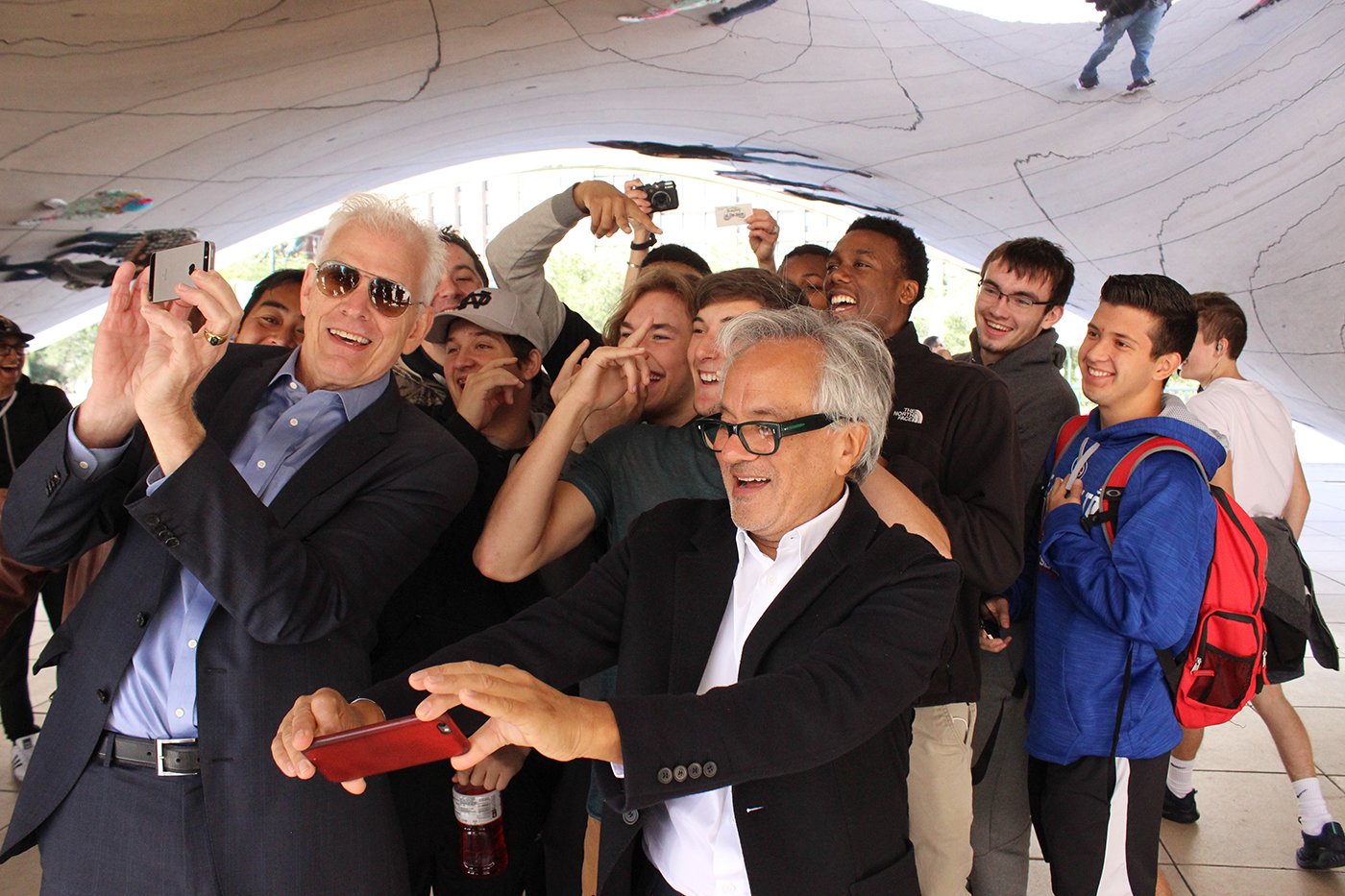
The story of “The Chicago Bean” begins with the vision for Millennium Park. In the late 1990s, the city of Chicago sought to transform a vast railyard into a world-class public park, a cultural hub that would showcase art, architecture, and landscaping. A competition was held to solicit proposals for a major sculptural installation, and Anish Kapoor’s design for “Cloud Gate” stood out for its originality and ambition.
The initial concept, presented to the Chicago Department of Cultural Affairs and Millennium Park Foundation, was for a large, reflective sculpture that would draw inspiration from liquid mercury and the vastness of the sky. Kapoor envisioned a form that would be both monumental and approachable, inviting visitors to interact with it and see themselves and their surroundings in a new light. The bean-like shape, with its smooth, seamless surface, was chosen for its organic yet intriguing quality, its ability to reflect the sky in its concave underside, and its overall pleasing aesthetic.
The design process was complex, involving extensive research and development. Kapoor worked closely with engineers and fabricators to translate his artistic vision into a tangible reality. The sheer scale of the project – the sculpture stands 33 feet long, 66 feet wide, and 42 feet high – presented significant engineering challenges. The chosen material, highly polished stainless steel, was crucial to achieving the desired reflective qualities and the seamless, almost liquid appearance. This required meticulous attention to detail in the fabrication and finishing process, ensuring that the surface was smooth and free of any visible seams or imperfections.
The Technical Marvel of “Cloud Gate”
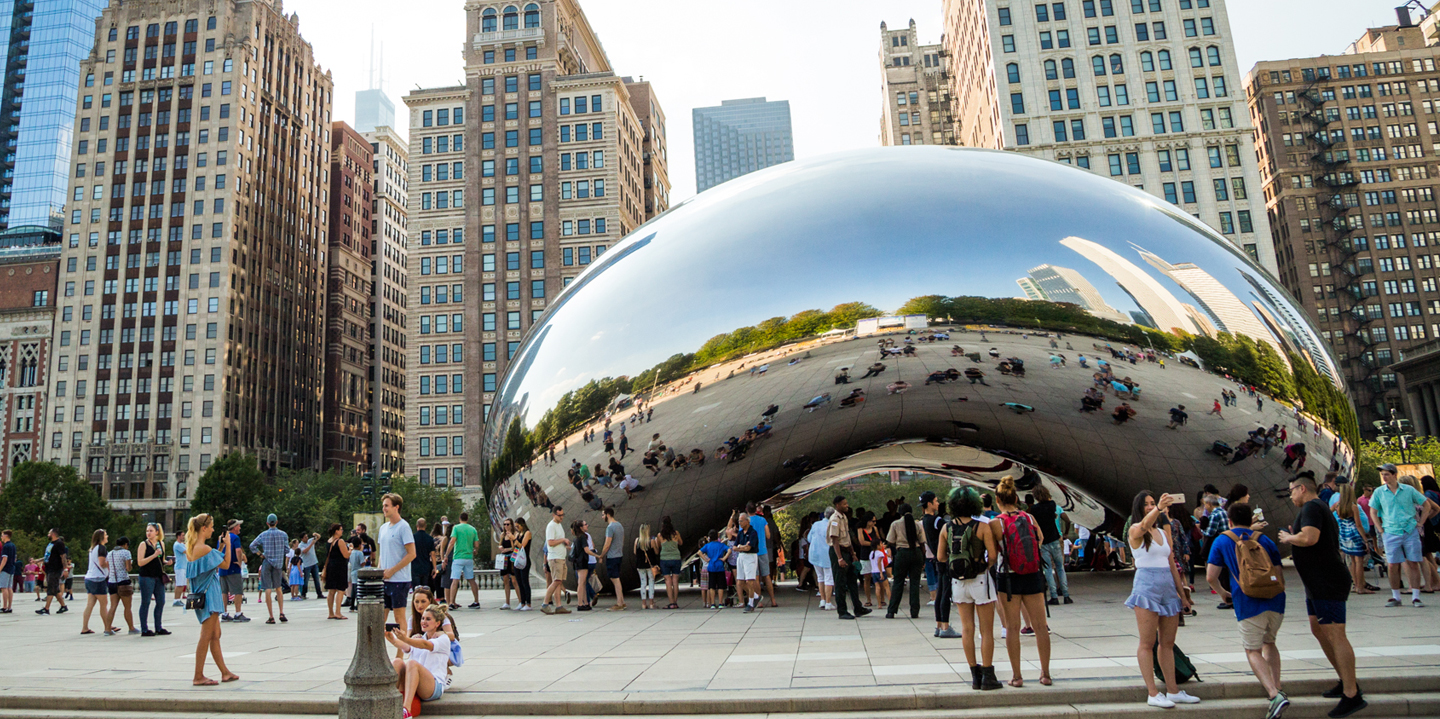
The construction of “The Chicago Bean” was a feat of engineering and craftsmanship. The sculpture is composed of 169 individual stainless steel plates, meticulously welded together and then ground and polished to an almost mirror-like finish. The process of achieving this seamless, reflective surface was incredibly labor-intensive and required specialized techniques to ensure the integrity and aesthetic appeal of the artwork.
The unique shape of “Cloud Gate” is not merely aesthetic; it’s integral to its interaction with the environment. The concave underside of the sculpture, with its arching entrance, creates a “gate” that draws visitors underneath. This space acts as a sort of funnel, distorting and reflecting the surrounding architecture and the sky in a mesmerizing way. As people walk beneath it, their reflections are warped and stretched, creating a playful and often humorous experience. The top surface, meanwhile, mirrors the expansive Chicago skyline and the ever-changing cloud formations, earning it the official title “Cloud Gate.”
The choice of stainless steel was deliberate. Not only does it offer a durable and weather-resistant surface, but its highly reflective quality is essential to the artwork’s concept. The polished surface captures the light and the environment, making the sculpture a living, breathing entity that changes with the time of day, the weather, and the season. This constant transformation is a key element of Kapoor’s artistic intent, inviting viewers to return and experience the sculpture anew. The weight of the sculpture, estimated at over 100 tons, also necessitated a robust foundation to support its massive presence in Millennium Park.
The creation of “The Chicago Bean” was a collaborative effort, but the artistic vision and the driving force behind the project were undeniably Anish Kapoor. His innovative concept, combined with the exceptional skills of the fabricators and engineers, resulted in a landmark that has become a beloved icon of Chicago and a must-see destination for travelers from around the world. Whether you’re admiring its reflections, taking a memorable photograph, or simply contemplating its artistic significance, “The Chicago Bean” offers a unique and unforgettable experience.
LifeOutOfTheBox is a participant in the Amazon Services LLC Associates Program, an affiliate advertising program designed to provide a means for sites to earn advertising fees by advertising and linking to Amazon.com. Amazon, the Amazon logo, AmazonSupply, and the AmazonSupply logo are trademarks of Amazon.com, Inc. or its affiliates. As an Amazon Associate we earn affiliate commissions from qualifying purchases.