
California, a land of golden sunshine, iconic landmarks, and a rich tapestry of human history, beckons travelers from across the globe. While its modern identity is intrinsically linked to the United States, understanding the layers of ownership and influence that preceded its incorporation into the American nation offers a deeper appreciation for its profound heritage. Before the Stars and Stripes flew over the Golden State, its destiny was shaped by a succession of powerful empires and indigenous peoples, each leaving an indelible mark on the landscape and its enduring cultural narrative.
The First Californians: Indigenous Stewardship
Long before any European or American flag was planted on its soil, the vast expanse of what is now California was the ancestral home to a diverse array of indigenous peoples. These First Nations, numbering in the hundreds of thousands and speaking a multitude of distinct languages, lived in harmony with the varied ecosystems for millennia. Their stewardship of the land was not one of ownership in the European sense, but rather a profound spiritual and practical relationship built on deep ecological knowledge and respect.
Diverse Cultures and Societies
The indigenous peoples of California were not a monolithic group. They comprised numerous distinct cultural and linguistic families, each with unique traditions, social structures, and ways of life.
- The Chumash: Inhabiting the southern coast and islands, the Chumash were renowned mariners, constructing sophisticated plank canoes that facilitated trade and travel along the coast. Their villages, often located near fertile river valleys and abundant marine resources, were centers of vibrant culture and complex societal organization. Their intricate beadwork and rock art offer glimpses into their spiritual beliefs and artistic expressions.
- The Miwok: Occupying the Sierra Nevada foothills and the San Francisco Bay Area, the Miwok were skilled hunters and gatherers, adept at utilizing the diverse plant and animal life of their territories. They developed sophisticated acorn processing techniques, a staple food source, and maintained intricate social networks that extended across vast distances.
- The Pomo: North of the San Francisco Bay, the Pomo were celebrated for their exquisite basketry, considered some of the finest in the world. Their detailed knowledge of local flora and fauna, coupled with their artistic prowess, allowed them to thrive in a region rich with natural resources.
- The Yurok: Dwelling along the northern coast, the Yurok were deeply connected to the Klamath River, relying on salmon for sustenance and their economy. Their culture was rich in ceremony and tradition, emphasizing balance and respect for the natural world.
These are but a few examples of the many nations that flourished in California. Their lands, rich in resources like acorns, deer, fish, and shellfish, supported complex societies with sophisticated governance, trade networks, and spiritual practices. Their enduring legacy is woven into the very fabric of California, visible in place names, archaeological sites, and the continued cultural presence of their descendants.
The Spanish Era: Missions and Colonial Ambitions
The arrival of Europeans marked a profound and often devastating turning point for the indigenous populations. In the late 16th century, Spanish explorers began charting the coast, but it was not until the latter half of the 18th century that Spain established a significant colonial presence. The Spanish colonial project in California was driven by a desire to secure the territory against rival European powers, convert indigenous peoples to Christianity, and establish a profitable economic base.
The Mission System
The cornerstone of Spanish colonization was the establishment of a chain of twenty-one missions stretching from San Diego to Sonoma. Founded between 1769 and 1823, these missions, such as Mission San Francisco de Asís (Mission Dolores) in San Francisco and Mission San Juan Capistrano in southern California, were intended to be self-sufficient religious and economic outposts.
Under the direction of Franciscan friars, including prominent figures like Junípero Serra, the missions aimed to acculturate indigenous peoples into Spanish society. This involved teaching them agriculture, crafts, and the Catholic faith. While some indigenous individuals may have benefited from certain aspects of mission life, the system ultimately led to the disruption of traditional lifeways, forced labor, disease, and a drastic decline in indigenous populations. The missions themselves became significant architectural landmarks, many of which are preserved today as historical sites, offering a glimpse into this complex period.
Presidios and Pueblos
Alongside the missions, the Spanish established military outposts known as presidios and civilian settlements called pueblos. The presidios, such as the Presidio of San Francisco, served as military garrisons to protect the missions and the coastline. The pueblos, like Los Angeles and San Jose, were intended to foster civilian settlement and agricultural development. These early settlements laid the groundwork for the major urban centers that California is known for today.

Mexican Rule: Ranchos and a Shifting Landscape
In 1821, following Mexico’s independence from Spain, California became a territory of the newly formed Mexican Republic. This transition brought about significant changes in land ownership and governance. The Mexican government secularized the missions, distributing their vast landholdings to a class of wealthy landowners known as Californios.
The Era of the Californios and Ranchos
Under Mexican rule, large cattle ranches, or ranchos, became the dominant economic and social institutions. These expansive estates, often encompassing thousands of acres, were granted by the Mexican government to loyal citizens. The ranchos were primarily focused on raising cattle for their hides and tallow, which were valuable commodities for export. Life on the ranches was characterized by a semi-feudal system, with large numbers of vaqueros (cowboys) tending to the herds.
The Californios, the Spanish-Mexican inhabitants of California, developed a distinct culture that blended Spanish traditions with the realities of life on the frontier. Their hospitality, horsemanship, and unique dialect became defining characteristics of this era. Many of the place names in California today, such as Santa Barbara, Palo Alto, and San Diego, are legacies of this Mexican period.
Challenges and Transition
Despite the romanticized image of life on the ranchos, the Mexican period in California was marked by political instability and economic challenges. The vast territory was sparsely populated, and communication and trade with central Mexico were often difficult. This relative isolation, combined with increasing American interest in the region, set the stage for the next dramatic shift in California’s ownership.
The United States Acquisition: Manifest Destiny and Statehood
As American westward expansion, fueled by the ideology of Manifest Destiny, gained momentum, the United States began to eye California with growing interest. The Mexican-American War (1846-1848) proved to be the catalyst for California’s incorporation into the United States.
The Mexican-American War and the Bear Flag Revolt
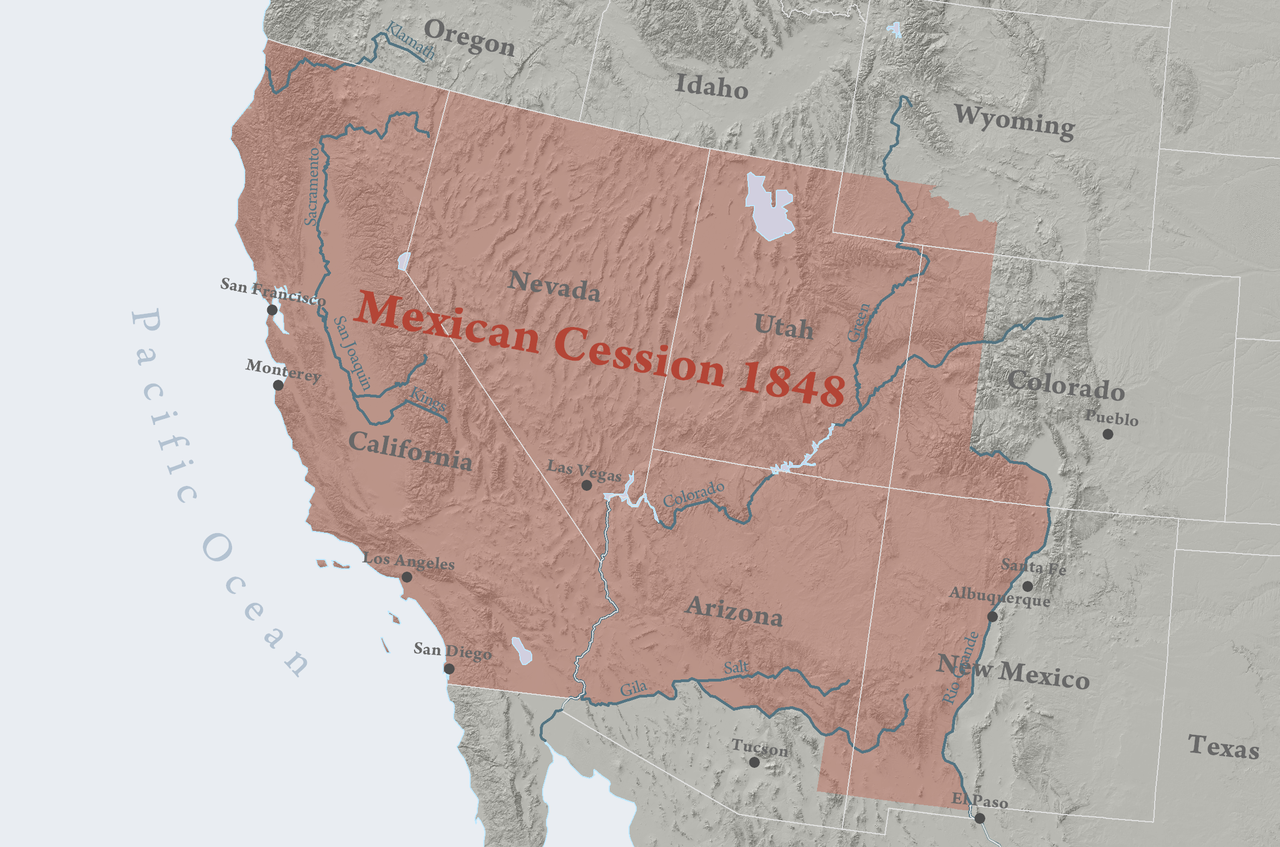
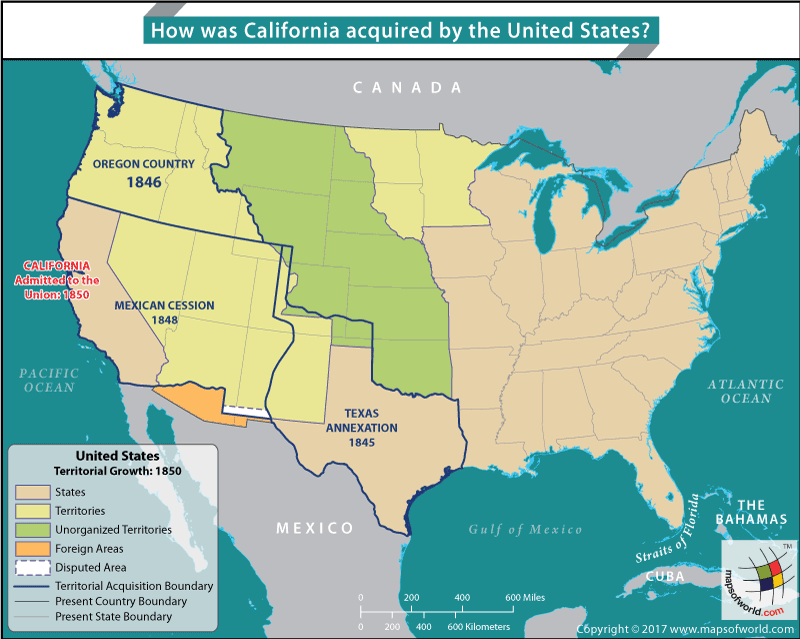
While the war officially began in Mexico, a contingent of American settlers in northern California staged the Bear Flag Revolt in June 1846, briefly declaring an independent California Republic. U.S. naval forces soon arrived and took control of key coastal towns. The Treaty of Guadalupe Hidalgo, signed in 1848, formally ceded California and a vast territory to the United States in exchange for Mexico’s relinquishing of its claims.
The Gold Rush and Rapid Transformation
The discovery of gold at Sutter’s Mill near Coloma in January 1848, just days before the signing of the treaty, triggered a massive influx of people from around the world. The California Gold Rush transformed the territory overnight. Prospectors, merchants, and adventurers flocked to the region, leading to rapid population growth, the establishment of new towns like San Francisco, and the exploitation of both mineral and human resources. This period also saw the devastating impact of the Gold Rush on indigenous populations, who were further displaced and subjected to violence.
Statehood
The dramatic population increase resulting from the Gold Rush accelerated California’s path to statehood. Admitted as the 31st state on September 9, 1850, California officially joined the United States, marking the end of its era as a territory under foreign rule and the beginning of its complex, dynamic, and internationally renowned chapter as an American state. The echoes of its past – the indigenous stewards, the Spanish missions, the Mexican ranchos, and the gold-seekers – continue to resonate through its vibrant landscapes and its welcoming spirit for visitors today.
LifeOutOfTheBox is a participant in the Amazon Services LLC Associates Program, an affiliate advertising program designed to provide a means for sites to earn advertising fees by advertising and linking to Amazon.com. Amazon, the Amazon logo, AmazonSupply, and the AmazonSupply logo are trademarks of Amazon.com, Inc. or its affiliates. As an Amazon Associate we earn affiliate commissions from qualifying purchases.