
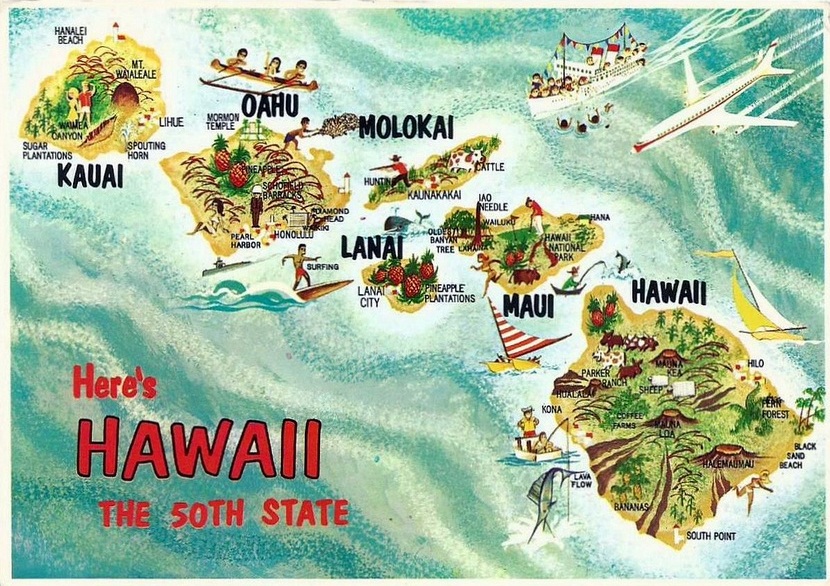
The history of Hawaii is a rich tapestry woven with the threads of indigenous sovereignty, complex geopolitical shifts, and ultimately, annexation. Before Hawaii became a territory, and subsequently a state, of the United States, it was an independent nation, a kingdom that navigated the currents of international relations and internal development. Understanding this past is crucial for appreciating the unique culture and identity of the Hawaiian Islands and for understanding the historical context that informs many of its current attractions and its vibrant tourism sector.
The narrative of Hawaii‘s pre-American ownership is not a simple tale of one entity succeeding another. Instead, it’s a story of an established Polynesian society evolving over centuries, encountering external influences, and asserting its independence on the world stage. The islands were first settled by Polynesians who voyaged across the vast expanse of the Pacific Ocean, likely from the Marquesas Islands or the Society Islands, arriving perhaps as early as 300 CE, though later estimates suggest around 1000-1200 CE. These early settlers, skilled navigators and resourceful farmers, established a complex society with distinct social hierarchies, land management systems, and a rich spiritual and cultural heritage.
The Rise of the Hawaiian Kingdom
For centuries, Hawaii existed as an archipelago of independent chiefdoms, each governed by its own ali’i (chiefs). These chiefdoms were often in a state of flux, with alliances forming and dissolving, and occasional conflicts arising. However, a pivotal moment in Hawaii‘s history arrived in the late 18th century with the unification of the islands under Kamehameha I.
Kamehameha the Great and the Unification of the Islands
Born around 1758, Kamehameha I was a visionary leader and a formidable warrior. Through a series of strategic alliances and military campaigns, he gradually conquered and unified all the major islands of the Hawaiian archipelago by 1810. This unification marked the birth of the Kingdom of Hawaii, a sovereign nation with a centralized government and a distinct national identity. Kamehameha I‘s reign ushered in an era of relative peace and stability, allowing for the development of a more cohesive society and fostering trade relations with passing foreign ships, primarily from Europe and the United States.
The Kingdom of Hawaii was recognized by several foreign powers, including the United States, Great Britain, and France, who acknowledged its independence and sovereignty. This recognition was vital for Hawaii‘s ability to engage in international trade and diplomacy, and to protect itself from potential encroachment. The kingdom developed its own constitution, established a legal system, and actively participated in global affairs, albeit on a smaller scale than larger nations. The Monarchy, with its successive rulers, became the primary embodiment of Hawaiian ownership and governance.
External Influences and Internal Challenges
While the Kingdom of Hawaii was a sovereign entity, it was not isolated from the burgeoning global powers of the 19th century. The islands’ strategic location in the Pacific Ocean made them an attractive stopover point for whaling ships and trading vessels. This influx of foreigners brought new technologies, goods, and ideas, but also introduced diseases that decimated the native population and created new social and economic pressures.
The Arrival of Missionaries and the Rise of Foreign Influence
In 1820, the first group of American Protestant missionaries arrived in Hawaii, marking the beginning of significant cultural and religious influence. They established schools, translated the Hawaiian language into a written script, and played a crucial role in shaping the moral and educational landscape of the islands. While their intentions were often benevolent, their presence also contributed to the erosion of traditional Hawaiian customs and beliefs.
Simultaneously, American and European businessmen began to establish lucrative sugar plantations. The demand for sugar in the United States and Europe fueled the growth of this industry, which increasingly came to be dominated by foreign capital and labor. This economic shift led to a concentration of wealth and power in the hands of a few, many of whom were not Hawaiian. The increasing economic clout of these foreign business interests began to exert considerable political pressure on the Hawaiian Monarchy.
The Bayonet Constitution and the Undermining of Sovereignty
By the late 19th century, the political landscape of Hawaii was becoming increasingly precarious. Powerful business interests, primarily American, sought greater control over the islands’ affairs. In 1887, a group of armed Americans and Europeans, known as the Honolulu Rifles, forced King Kalakaua to sign a new constitution, often referred to as the “Bayonet Constitution.” This document significantly curtailed the power of the Monarchy, disenfranchised many native Hawaiians, and granted substantial political power to foreign residents, particularly those involved in the sugar industry.
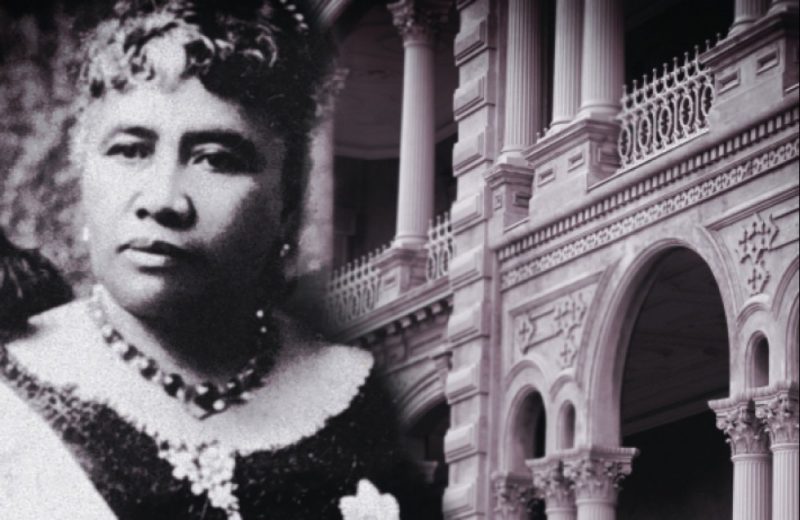
This event marked a turning point, weakening the sovereignty of the Kingdom of Hawaii and paving the way for further foreign intervention. The Hawaiian people were deeply resentful of this forced imposition, which they saw as a direct assault on their self-determination. Despite the constitutional changes, the Monarchy continued to exist, with Queen Liliuokalani ascending to the throne in 1891. She was a staunch advocate for Hawaiian rights and sought to restore power to the Monarchy and the Hawaiian people.
The Overthrow of the Monarchy and Annexation
Queen Liliuokalani‘s efforts to enact a new constitution that would restore Hawaiian autonomy proved to be the catalyst for the kingdom’s downfall. Her actions were met with strong opposition from the powerful Committee of Safety, a group of American and European businessmen and residents who feared losing their economic and political influence.
The 1893 Overthrow
On January 17, 1893, this Committee of Safety, with the support of the United States minister to Hawaii, John L. Stevens, and the landing of United States naval troops from the USS Boston, orchestrated the overthrow of Queen Liliuokalani‘s government. The troops were ostensibly deployed to protect American lives and property, but their presence provided a clear show of force that enabled the overthrow. Queen Liliuokalani, in an effort to avoid bloodshed, yielded her authority under protest, stating that she yielded “to the superior force of the United States of America.”
Following the overthrow, a provisional government was established, led by Sanford B. Dole, a prominent American businessman and lawyer. This provisional government immediately sought annexation by the United States. However, the move was controversial, and the administration of President Grover Cleveland initially opposed annexation, viewing the overthrow as an illegal act.

The Path to Annexation
Despite President Cleveland‘s opposition, political winds shifted. The rise of American expansionist sentiment, particularly in the lead-up to the Spanish-American War, created a more favorable climate for annexation. In 1898, under the presidency of William McKinley, the Newlands Resolution was passed by the United States Congress, formally annexing the Republic of Hawaii (the government that replaced the provisional government) to the United States.
The annexation was deeply unpopular with the vast majority of native Hawaiians, who continued to petition for their sovereignty. The Hawaiian people had their own independent kingdom for over a century, with a rich cultural heritage and a well-established system of governance. The overthrow and subsequent annexation were seen as a profound injustice, a violation of their right to self-determination.
The history of who owned Hawaii before the United States is, therefore, a story of the Hawaiian Monarchy and the Hawaiian people, who held sovereign title to their islands for centuries. Their story is one of resilience, cultural richness, and a determined struggle for self-governance in the face of overwhelming external pressures. Today, the legacy of this period continues to shape Hawaii‘s identity, influencing its cultural landscape, its relationship with the United States, and its unique appeal as a travel destination. Visitors to Hawaii can still witness this rich history in its landmarks, engage with its enduring local culture, and appreciate the complex journey that led to the Aloha State we know today.
LifeOutOfTheBox is a participant in the Amazon Services LLC Associates Program, an affiliate advertising program designed to provide a means for sites to earn advertising fees by advertising and linking to Amazon.com. Amazon, the Amazon logo, AmazonSupply, and the AmazonSupply logo are trademarks of Amazon.com, Inc. or its affiliates. As an Amazon Associate we earn affiliate commissions from qualifying purchases.