
Montana, often hailed as “Big Sky Country,” is synonymous with vast, untamed landscapes, rugged mountain ranges, and expansive ranchlands. Its sheer size and relative sparsity of population contribute to an enduring image of open frontier. This perception, however, raises an intriguing question for those planning a visit or considering the state as a destination: who truly holds dominion over these immense territories? Understanding the land ownership patterns in Montana offers a unique lens through which to view the state’s history, economy, and future, particularly for tourists and travelers seeking to appreciate its natural and cultural heritage.

The Mosaic of Montana’s Land Ownership
Montana’s land ownership is a complex tapestry woven from public and private threads, each playing a significant role in shaping the state’s character and accessibility for visitors. While private individuals and corporations own substantial tracts, a significant portion is held in trust or managed by federal and state entities. This division influences everything from where travelers can hike and camp to the opportunities for experiencing the state’s renowned natural beauty.
Federal Lands: The Guardians of Wild Montana
The United States federal government is by far the largest landowner in Montana. These vast holdings are primarily managed by agencies dedicated to conservation, recreation, and resource management, making them cornerstones of Montana’s appeal to tourists.
National Forests: A Playground for Exploration
The U.S. Forest Service oversees millions of acres of National Forests across Montana. These include iconic landscapes such as the Gallatin National Forest, the Beaverhead-Deerlodge National Forest, and the Flathead National Forest. These areas are integral to the state’s tourism industry, offering unparalleled opportunities for activities like hiking, camping, fishing, hunting, and wildlife viewing. The extensive trail systems, scenic drives, and designated wilderness areas within these forests draw millions of visitors annually, seeking to immerse themselves in the raw beauty of the American West.
National Parks and Monuments: Iconic Destinations
Montana is home to some of the nation’s most cherished natural wonders, managed by the National Park Service. Glacier National Park stands as a crown jewel, renowned for its dramatic peaks, pristine lakes, and the iconic Going-to-the-Sun Road. This park alone attracts over three million visitors each year, making it a critical driver of tourism for the region. Beyond Glacier, other federal lands like the Little Bighorn Battlefield National Monument offer significant historical and cultural experiences, drawing those interested in the rich tapestry of American history.
Bureau of Land Management (BLM) Lands: Undeveloped Vistas
The Bureau of Land Management also manages considerable acreage in Montana. These lands, often more rugged and less developed than National Forests, offer opportunities for dispersed camping, backcountry exploration, and experiencing solitude in remote settings. While less developed for mass tourism, BLM lands are crucial for those seeking off-the-beaten-path adventures and a genuine sense of wilderness.
Wildlife Refuges: Sanctuaries for Nature Lovers
The U.S. Fish and Wildlife Service manages numerous National Wildlife Refuges across Montana. These sanctuaries are vital for preserving biodiversity and provide exceptional bird-watching and wildlife photography opportunities. Areas like the National Bison Range are crucial for conservation efforts and offer visitors a chance to see iconic Montana wildlife in protected habitats.
State Lands: Montana’s Own Natural Assets
In addition to federal holdings, the state of Montana actively manages its own significant land portfolio, often through the Montana Department of Natural Resources and Conservation (DNRC). These lands serve multiple purposes, including revenue generation for state programs and providing recreational access.
State Parks and Forests: Accessible Beauty
Montana’s State Parks and State Forests offer a more accessible, though often smaller, taste of the state’s natural splendor compared to federal counterparts. Parks like Flathead Lake State Park provide stunning lakeside recreation, while state forests offer opportunities for hiking and camping. These areas are vital for local recreation and offer travelers convenient access to Montana’s beauty without venturing into the more remote federal wilderness.

School Trust Lands: A Unique Management Model
A unique aspect of Montana’s state land ownership involves lands designated as School Trust Lands. These lands were granted to Montana at statehood to generate revenue for public schools through activities like timber sales and grazing leases. While their primary purpose is educational funding, many of these lands are managed to allow for public recreational access, striking a balance between resource utilization and public enjoyment.
Private Ownership: The Heart of Montana’s Ranching Culture
While public lands dominate Montana’s landscape, private ownership is the bedrock of the state’s iconic ranching heritage and agricultural economy. These privately held lands, often vast ranches, are central to the image of Montana that captivates travelers.
Ranching and Agriculture: The Iconic Landscapes
The majority of private land in Montana is dedicated to agriculture, primarily cattle ranching and crop production. These working landscapes are what many visitors envision when they think of Montana. Vast ranches, stretching for miles under the wide-open sky, define much of the rural scenery. While often not directly accessible to the public for recreation, these private lands contribute significantly to the aesthetic appeal and cultural identity of the state, forming the backdrop for scenic drives and experiences.
Private Landowners and Conservation Efforts
It’s important to note that many private landowners in Montana are deeply committed to conservation. They often practice responsible land management to protect wildlife habitats and natural resources on their properties. Some landowners participate in voluntary conservation programs or offer limited access for hunting and fishing through leases or special permits, providing a different avenue for experiencing Montana’s outdoors.
Corporate and Investment Ownership: A Growing Trend
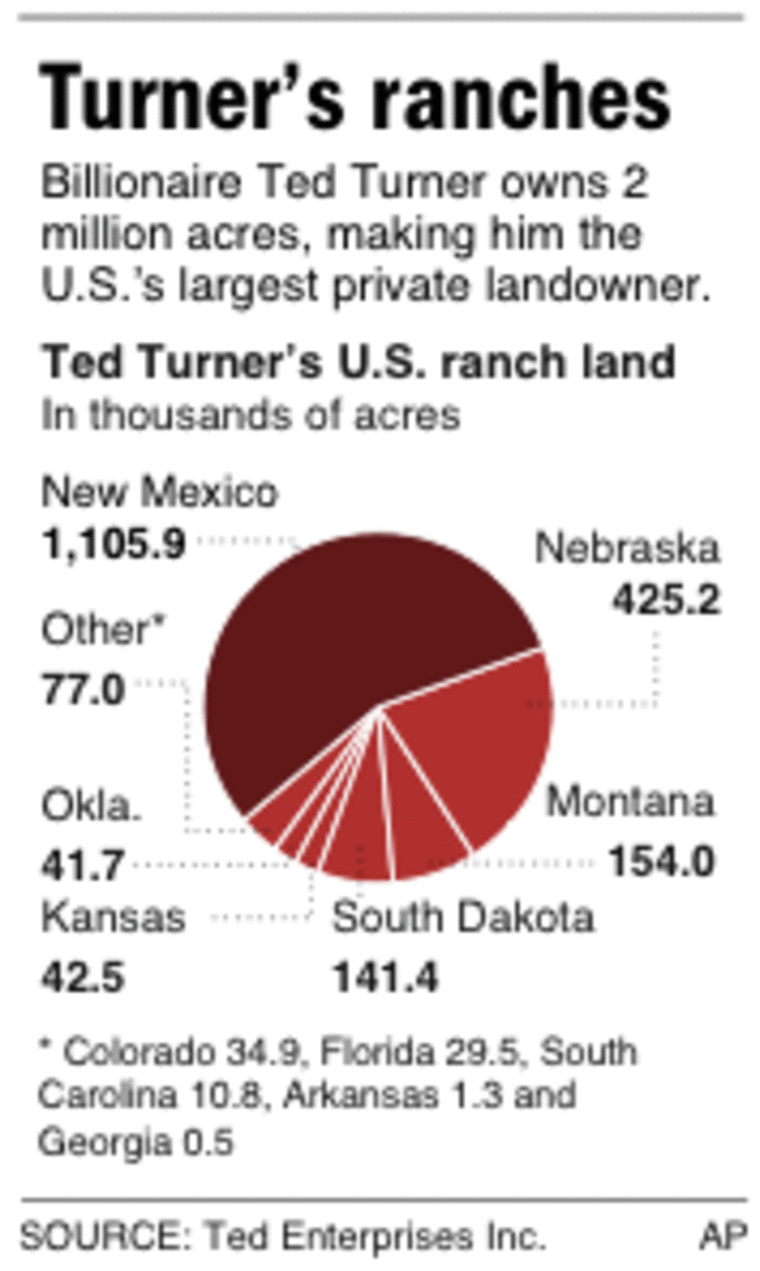
In recent years, there has been a noticeable trend of large corporations and investment groups acquiring significant tracts of land in Montana. These acquisitions can range from timber companies managing forest resources to investment firms purchasing ranches for various purposes. While these entities are private landowners, their scale can sometimes raise questions about land use, conservation, and accessibility, particularly for tourism and outdoor recreation. Understanding the motivations behind these acquisitions can provide insight into the evolving economic landscape of the state.
Implications for Travelers and Tourists
The intricate web of land ownership in Montana has direct implications for how visitors experience the state. Understanding these dynamics can enhance a trip, ensuring travelers are aware of access regulations, opportunities, and the conservation efforts that preserve its grandeur.
Navigating Public Access: Parks, Forests, and Trails
For most tourists, the vast federal and state public lands offer the most significant opportunities for exploration. A visit to Glacier National Park, for instance, requires understanding park regulations, potential entrance fees, and the best times to visit to avoid crowds. Similarly, exploring National Forests involves being aware of designated campgrounds, dispersed camping rules, and fire restrictions. Planning ahead, consulting official agency websites, and respecting posted signs are crucial for a seamless and responsible experience.
Experiencing Montana’s Working Landscapes
While private ranchlands are not typically open for public access, their presence is fundamental to the Montana experience. Scenic drives through the Montana countryside offer glimpses of these iconic landscapes. Some ranches may offer specialized tourism experiences, such as dude ranches or guest ranches, where visitors can participate in ranch activities and gain a firsthand appreciation for the working landscape and the lifestyle it entails.
Conservation and Responsible Tourism
The future of Montana’s vast wilderness and rural character depends heavily on ongoing conservation efforts, involving both public agencies and private landowners. Travelers play a vital role in this. Practicing Leave No Trace principles, respecting wildlife, adhering to local regulations, and supporting businesses that prioritize sustainability all contribute to preserving Montana for future generations. Understanding who owns the land provides context for these actions and underscores the shared responsibility of enjoying and protecting these magnificent spaces.
The question of “who owns the most land in Montana?” reveals not just a matter of property titles, but a fundamental characteristic of the state’s identity. It is a landscape shaped by federal stewardship, state management, and the enduring legacy of private ownership, all of which contribute to the unique allure of “Big Sky Country” for every traveler who ventures within its borders.
LifeOutOfTheBox is a participant in the Amazon Services LLC Associates Program, an affiliate advertising program designed to provide a means for sites to earn advertising fees by advertising and linking to Amazon.com. Amazon, the Amazon logo, AmazonSupply, and the AmazonSupply logo are trademarks of Amazon.com, Inc. or its affiliates. As an Amazon Associate we earn affiliate commissions from qualifying purchases.