
The question of water ownership in California delves into a fascinating and complex tapestry of history, law, and environmental stewardship, shaping the very natural and engineered landmarks of the Golden State. Far from a simple answer, the concept of “owning” water rights is a nuanced system that has evolved over centuries, influencing everything from the vast agricultural landscapes to the sprawling urban centers. Understanding these rights is paramount to appreciating California’s unique development and the enduring challenges it faces in managing its most precious resource.
The Historical Tapestry of California’s Water
The story of water rights in California is intrinsically linked to its dramatic past, particularly the transformative events of the mid-19th century. These historical shifts laid the groundwork for the dual legal systems that govern water today, making the state’s hydrological management itself a living historical landmark.

Gold Rush and the Birth of Appropriative Rights
Before the 1848 Gold Rush, water law in California largely mirrored English common law, emphasizing “riparian rights.” This doctrine granted landowners adjacent to a natural watercourse the right to use the water flowing past their property, provided it was reasonable and did not substantially diminish the quantity or quality for downstream users. However, the frenzied pace and unique demands of the mining boom quickly rendered this system impractical. Miners often needed to divert water across non-riparian lands, sometimes many miles from its source, to power their sluices and hydraulic mining operations.
From this necessity, a new legal custom emerged: “appropriative rights.” Miners who first diverted and put water to “beneficial use,” such as mining or milling, were recognized as having a superior right to that water, regardless of whether their land bordered the stream. This principle of “first in time, first in right” became the bedrock of California water law, later codified by the state legislature. This pioneering legal innovation, born out of necessity in the rugged mining camps, represents a significant historical landmark in resource management, fundamentally altering how water would be allocated across the burgeoning state.
Shaping the Agricultural Heartlands
The dominance of appropriative rights was further cemented with the explosive growth of agriculture in California during the late 19th and early 20th centuries. Vast, arid regions, particularly the immense San Joaquin Valley, held immense potential for farming but lacked sufficient local water. The only way to transform these fertile but dry lands into productive agricultural powerhouses was through massive irrigation projects, requiring water to be transported over great distances from northern rivers and mountain snowmelt.
This ambitious endeavor led to the construction of an intricate network of dams, reservoirs, and canals, which collectively stand as some of the state’s most impactful engineered landmarks. These systems, designed to capture and convey water to non-riparian agricultural users, solidified the supremacy of appropriative rights. The prosperity of California’s agricultural sector, a defining feature of its central landscape and a cornerstone of its economy, remains inextricably linked to the historical allocation and transportation of water, making the physical infrastructure of water delivery a sprawling, functional monument to human ingenuity and the evolving legal framework.
The Dual Pillars of California Water Law
Today, California’s surface water rights are primarily governed by a unique hybrid system combining both riparian and appropriative doctrines. This dual approach creates a complex hierarchy of claims, each with its own history and implications for the state’s natural resources.
Riparian Rights: Landowner’s Privilege
Riparian rights are a property right tied directly to land ownership. If your property is contiguous to a natural watercourse, you generally possess a right to use a reasonable amount of that water on your riparian land within the watershed. These rights are not acquired by use, are not lost if unused, and do not typically require a permit from the state. Crucially, riparian rights are senior to most appropriative rights established after 1914, representing an older layer of water governance that still holds sway, particularly in the naturally wetter northern regions of California. Understanding these intrinsic land-based rights is key to grasping the intricate legal landscape that overlays California’s diverse network of rivers and streams, which are natural landmarks in themselves.
Appropriative Rights: First in Time, First in Right
In stark contrast, appropriative rights are acquired by diverting water from a watercourse and putting it to a beneficial use, such as irrigation, municipal supply, or industrial purposes. These rights are not dependent on owning land adjacent to the water body. Most post-1914 appropriative rights in California are administered and permitted by the State Water Resources Control Board (SWRCB). The core principle, “first in time, first in right,” means that during periods of water scarcity, senior appropriators (those who established their rights earliest) have priority over junior appropriators. This seniority system profoundly impacts how water is distributed across the state, from meeting the vast demands of urban centers like Los Angeles to sustaining the productive fields of the San Joaquin Valley. The immense infrastructure built to support these rights, like the California Aqueduct, stands as a monumental testament to this legal framework and the scale of human intervention in natural water cycles.
Pueblo Rights and Prescriptive Rights
Beyond these two primary categories, two other types of water rights, born from unique historical circumstances, also exist. “Pueblo rights” are a rare but extremely powerful class of water rights held by certain California cities that were originally Spanish or Mexican pueblos (e.g., Los Angeles, San Diego). These rights grant the city a paramount and perpetual claim to use water from the streams and rivers originating within the old pueblo boundaries for the benefit of its inhabitants. These historic rights are often senior to all other claims, a fascinating relic influencing modern urban water supply strategies. “Prescriptive rights” are akin to adverse possession for water; they can be acquired by openly, notoriously, hostilely, continuously, and adversely diverting water for a statutory period (typically five years) against the true owner’s rights. While less common, they illustrate the dynamic and sometimes contentious nature of water claims.
Major Players and Infrastructure Landmarks

The complex web of water rights is managed and utilized by an array of powerful entities, operating some of the most impressive infrastructure landmarks in the world. These systems represent both human ingenuity and the profound historical influence of water on California’s landscape.
The State Water Resources Control Board
The primary state regulatory authority overseeing water rights in California is the State Water Resources Control Board (SWRCB). Established in 1967, the SWRCB is tasked with both allocating surface water rights and protecting water quality. Its decisions directly impact agricultural users, urban municipalities, and crucial environmental flows, making it a central player in navigating the intricate balance of water ownership and stewardship across the state. The SWRCB’s role reflects the state’s ongoing effort to manage its natural water resources sustainably.
Federal Water Projects: Central Valley Project
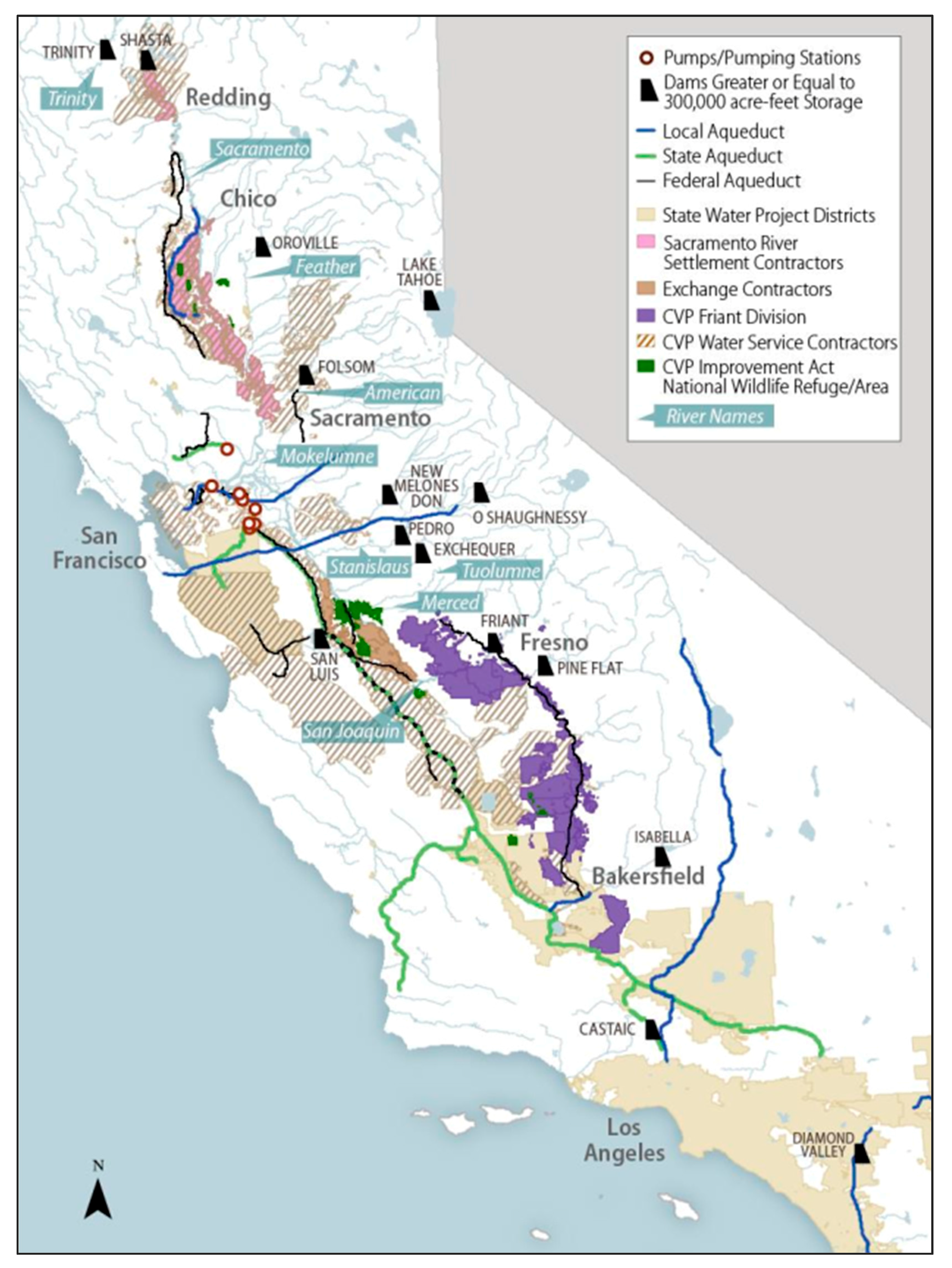
The Central Valley Project (CVP), operated by the U.S. Bureau of Reclamation, is one of the world’s most extensive water management systems. Spanning over 400 miles through California’s fertile Central Valley, this monumental federal undertaking comprises a complex network of 20 dams and reservoirs, 11 powerplants, and 500 miles of major canals and aqueducts. Initiated in the 1930s, the CVP primarily delivers water to agricultural users, transforming the landscape, but also provides flood control, power generation, and urban water supplies. Its numerous dams, like Shasta Dam and Folsom Dam, are not just feats of engineering but vital components of California’s historical and natural landscape, illustrating humanity’s profound impact on river systems.
State Water Project: The California Aqueduct
Complementing the CVP, the State Water Project (SWP), managed by the California Department of Water Resources, is an even more ambitious system. Its most iconic feature, the California Aqueduct, stretches over 400 miles, transporting water from Northern California’s wetter regions, particularly the Sacramento-San Joaquin Delta, southward to the thirsty agricultural lands of the San Joaquin Valley and the dense urban centers of Southern California, including Los Angeles and the San Francisco Bay Area. This gargantuan engineered waterway, with its pumping stations, power plants, and reservoirs, is a definitive modern landmark, a visible testament to the state’s enduring quest for water security and a constant reminder of the delicate balance between natural supply and human demand.
The Evolving Landscape of Water Ownership
The concept of water ownership in California is not static; it continues to evolve in response to environmental pressures, population growth, and a deepening understanding of ecological needs. These shifts are creating new chapters in the state’s relationship with its water resources.
Groundwater: The Wild West No More
For much of California’s history, groundwater was largely unregulated, often referred to as the “Wild West” of water law. Landowners could pump as much groundwater as they could reasonably use on their overlying land, leading to unchecked extraction. Decades of overdrafting, particularly exacerbated during recurrent drought periods, led to severe consequences such as widespread land subsidence, crumbling infrastructure, and drastic depletion of vital aquifers.
The landmark Sustainable Groundwater Management Act (SGMA) of 2014 represented a monumental shift. SGMA mandates that local agencies develop and implement groundwater sustainability plans to achieve sustainable groundwater management by 2040. This pivotal legislation has brought a previously invisible, yet critical, natural resource under a regulatory framework, fundamentally altering the “ownership” and management of vast, underground natural landmarks that sustain much of the state.
Environmental Flows and Public Trust
Increasingly, the concept of the “public trust doctrine” has gained significant prominence in California water law. This doctrine asserts that the state holds certain natural resources, including navigable waters and the fish and wildlife dependent on them, in trust for the benefit of all its citizens. Landmark legal cases, such as the seminal Mono Lake decision, have affirmed the state’s authority to reconsider and modify even senior appropriative water rights to protect environmental values.
This doctrine introduces a powerful counterweight to traditional ownership claims, recognizing that the health of rivers, lakes, and estuaries—essential natural landmarks—is a collective interest that transcends individual property rights. It forces a re-evaluation of how water resources, and the natural ecosystems they sustain, are “owned” and managed, ensuring that future generations can also experience the natural beauty and ecological integrity of California’s waterways. This represents an ongoing, vital historical process of balancing development with preservation.
The Future of Water Rights in a Changing Climate
As California grapples with increasingly severe droughts, extreme weather events, and the overarching impacts of climate change, the ownership and allocation of water rights are under constant and intense scrutiny. Debates over water transfers, efficiency measures, infrastructure resilience, and the delicate balancing of urban, agricultural, and environmental needs intensify with each dry year. The historical framework of “first in time, first in right” faces immense pressure to adapt to modern realities, challenging the very foundations of water ownership established in the Gold Rush era. The ongoing efforts to secure reliable water supplies while protecting the state’s iconic natural landscapes represent a continuous struggle to reconcile historical entitlements with ecological imperatives, shaping the future “landmarks” of water management and conservation in the United States.
Conclusion: A Living Legacy of Water Management
The question of “who owns the water rights in California” reveals a layered and dynamic system, intricately woven into the very fabric of the state’s history and its majestic natural environment. It is not a simple answer but a complex interplay of historical legal doctrines, massive engineered infrastructure, evolving environmental ethics, and ongoing regulatory oversight. From the dusty mining camps of the Gold Rush to the sophisticated climate models informing the State Water Resources Control Board, the story of water rights is, in many ways, the enduring story of California itself. It underscores how the management of a fundamental natural resource can shape entire regions, create new “landmarks” of human endeavor and ecological preservation, and continuously redefine the relationship between people and their environment. Understanding this intricate system is not just about legal ownership; it’s about appreciating the historical and natural forces that have defined and continue to define one of the most remarkable states in the world.
LifeOutOfTheBox is a participant in the Amazon Services LLC Associates Program, an affiliate advertising program designed to provide a means for sites to earn advertising fees by advertising and linking to Amazon.com. Amazon, the Amazon logo, AmazonSupply, and the AmazonSupply logo are trademarks of Amazon.com, Inc. or its affiliates. As an Amazon Associate we earn affiliate commissions from qualifying purchases.