
The destruction of the USS Maine in Havana Harbor on February 15, 1898, remains one of the most consequential maritime mysteries in history. As an American battleship anchored off the coast of Cuba, its sudden explosion not only claimed the lives of 266 crew members but also served as the primary catalyst for the Spanish-American War. Decades later, historians and naval experts continue to debate the cause of the blast, weighing theories of external sabotage against the possibility of internal structural failure.
The Night the Harbor Exploded
On the evening of February 15, the USS Maine rested peacefully in Havana, a city then under the colonial rule of Spain. The atmosphere in the region was tense. Cuba was in the midst of a violent struggle for independence, and the presence of the American battleship was intended to protect United States interests and citizens.
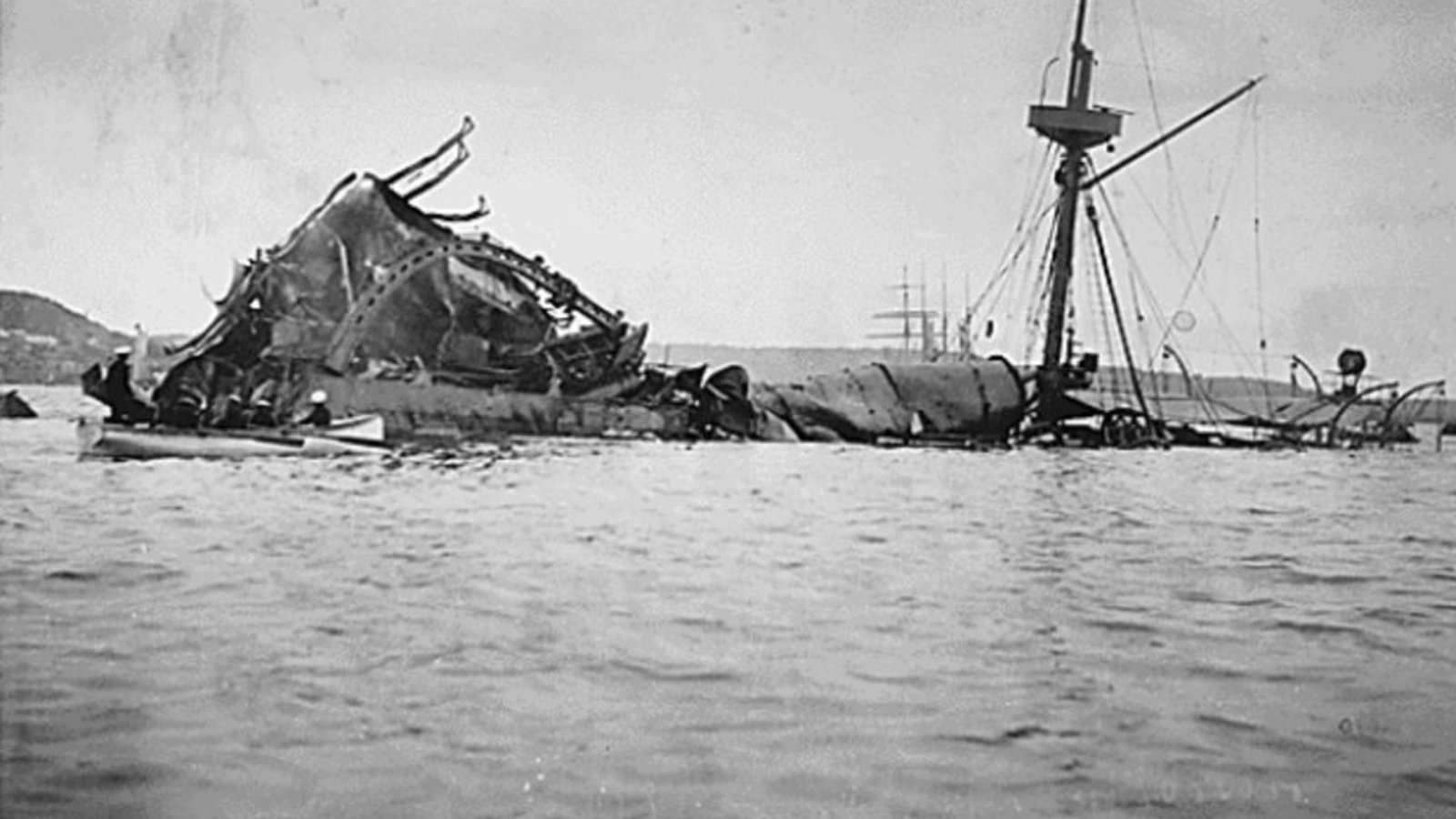
At approximately 9:40 PM, a massive explosion rocked the ship, shattering the forward hull and sending the vessel to the shallow floor of the harbor. The speed of the destruction was absolute. Most of the crew were asleep or stationed below deck, leaving them little chance to escape the immediate collapse of the ship’s architecture. For those who survived, the scene was one of chaos and confusion, as the pride of the United States Navy transformed into a mangled tomb within minutes.
The Theory of External Sabotage
In the immediate aftermath of the tragedy, public sentiment in America was fueled by yellow journalism. Newspapers across the New York landscape and throughout the nation demanded retribution, famously rallying under the slogan “Remember the Maine!” The prevailing theory—and the one that served the political ambitions of the era—was that a Spanish mine had been detonated under the ship’s keel.
The 1898 Sampson Court of Inquiry
Following the explosion, the United States government launched the Sampson Court of Inquiry to investigate the cause. The board, composed of naval officers, concluded that the explosion was caused by a submarine mine. While they could not identify who planted the device, the implication was clear: Spain was responsible. This finding provided the necessary justification for the United States to declare war, marking the nation’s emergence as a global power.
The Political Catalyst
The geopolitical consequences were immediate. By framing the sinking as an act of war, the United States was able to intervene directly in the affairs of Cuba, Puerto Rico, and the Philippines. To the American public, the battleship was not just a piece of metal; it was a symbol of national honor. The demand for justice eclipsed the need for a rigorous, unbiased scientific investigation, leading to a war that would reshape the map of the Caribbean and the Pacific.
The Theory of Internal Failure
As the decades passed and passions cooled, historians began to look at the USS Maine with a more clinical eye. By the 1970s and 1990s, modern forensic analysis—including computer simulations and deeper archival research—began to challenge the narrative of a Spanish mine. Many naval architects now point to a more mundane, albeit catastrophic, cause: an internal coal bunker fire.
Coal Bunker Combustion
In the late 19th century, battleships were powered by coal. These ships were prone to “spontaneous combustion” if coal dust and gases accumulated in poorly ventilated bunkers adjacent to ammunition magazines. Researchers argue that a fire smoldered in a coal bunker for days, eventually igniting the temperature-sensitive gunpowder stored nearby. This internal explosion would have been sufficient to blow a hole in the ship’s hull, causing it to sink instantly.
The Second Inquiry
In 1976, an investigation led by Admiral Hyman G. Rickover utilized modern scientific techniques to analyze the evidence collected from the wreck. The final report concluded that it was highly unlikely that a mine—external to the ship—could have caused the specific pattern of damage observed. Instead, the evidence pointed toward an internal accident. This finding remains the most widely accepted scientific explanation today, suggesting that the Spanish-American War may have been fought based on a tragic misunderstanding of naval engineering.
Legacy and Remembrance
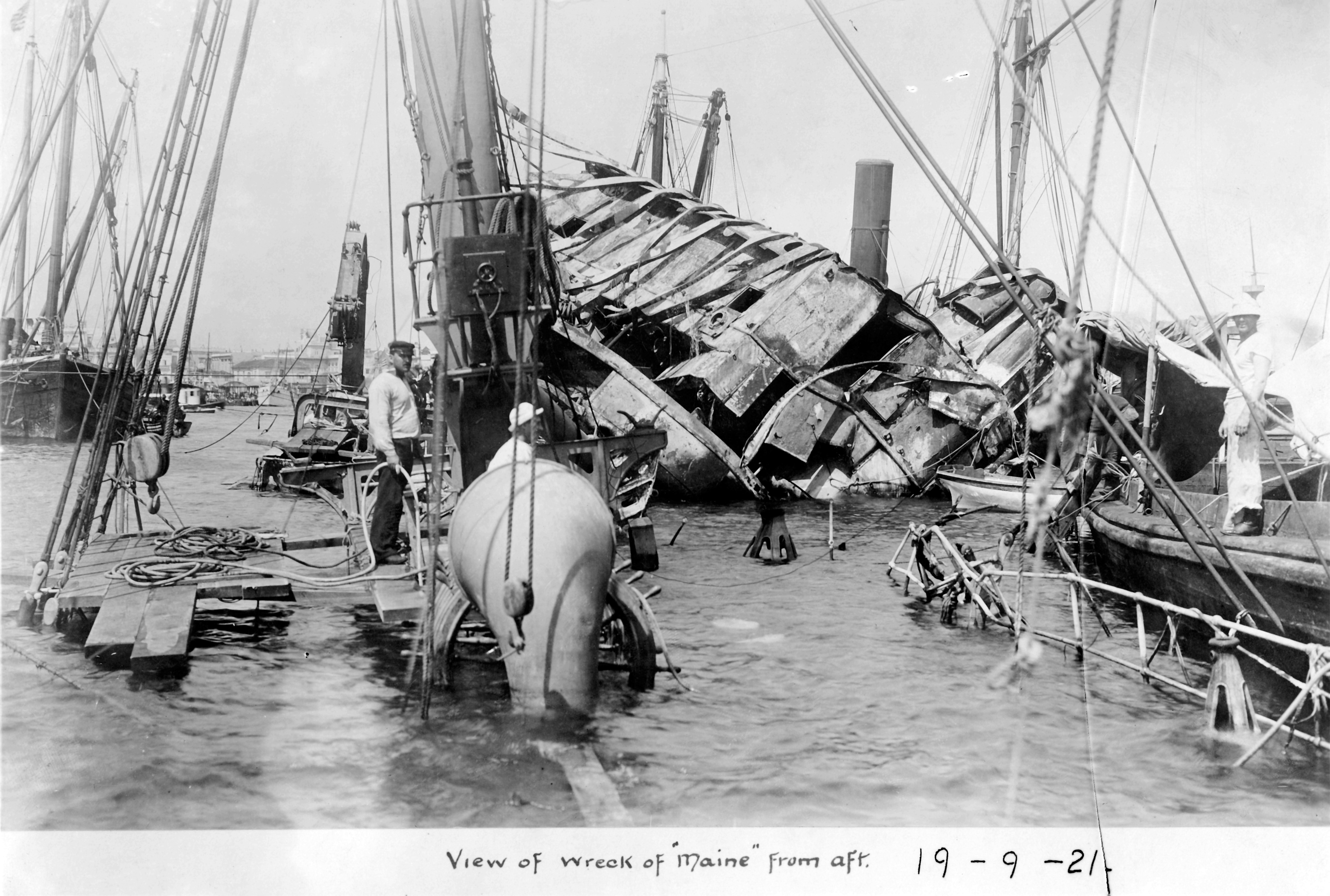
The wreckage of the USS Maine remained in Havana Harbor for years, a haunting monument to the cost of imperial ambition. In 1911, the United States government eventually raised the ship to recover the remains of the fallen and to clear the harbor. The vessel was then ceremoniously towed out to sea and scuttled in deeper waters, finally coming to rest far from the site of its destruction.
The USS Maine Mast Memorial
Today, relics of the ship serve as poignant reminders of the event. The main mast of the ship is currently on display at the Arlington National Cemetery, serving as a memorial to those who perished. Other artifacts are scattered across the United States, serving as reminders of a turning point in history where a single night in Havana altered the trajectory of the 20th Century.

Lessons from the Deep
The mystery of the USS Maine is a classic study in how historical events are often shaped more by perception than by truth. Whether one believes in the theory of a Spanish mine or the reality of an internal coal fire, the event serves as a warning about the dangers of impulsive political responses. The “Maine” became a rallying cry, a piece of propaganda, and a historical landmark.
Ultimately, the USS Maine stands as a testament to the importance of objective investigation. While we may never have a final, universally accepted verdict on who—or what—sunk the ship, the story continues to captivate those who visit historical sites associated with the United States Navy. It remains an essential chapter for anyone interested in the history of North America and its complex relationship with the Western Hemisphere. Through preserved archives and memorials, we continue to look back at the harbor in Havana, questioning the forces that turned a routine mission into a catalyst for global change.
LifeOutOfTheBox is a participant in the Amazon Services LLC Associates Program, an affiliate advertising program designed to provide a means for sites to earn advertising fees by advertising and linking to Amazon.com. Amazon, the Amazon logo, AmazonSupply, and the AmazonSupply logo are trademarks of Amazon.com, Inc. or its affiliates. As an Amazon Associate we earn affiliate commissions from qualifying purchases.