
To ask “who wrote Hawaii?” is to engage with a narrative that spans millions of years, penned not in ink, but in basalt, coral, and the enduring legacies of those who shaped the Pacific Ocean’s most isolated archipelago. While the famous author James Michener may have popularized the epic history of the islands in his seminal novel, the true “authors” of Hawaii are the geological forces of the earth, the indigenous Polynesian navigators, and the monarchs who built a kingdom in the middle of the sea. Each landmark across the islands serves as a chapter, documenting a transition from primordial fire to a complex, modern society.
The Fiery Prose of the Earth: Geological Landmarks
The first authors of the Hawaiian Islands were the volcanic hotspots that pierced the crust of the earth, birthing land where there was once only water. This geological writing process continues today, most visibly at Hawaii Volcanoes National Park on the Big Island. Here, the story is written in the cooling flows of Kilauea and Mauna Loa.
The Living Landscape of the Big Island
In Hawaii Volcanoes National Park, the landscape is a literal rough draft of the planet. Visitors can witness the Halemaumau Crater, a place of immense spiritual significance where the goddess Pele is said to reside. The Thurston Lava Tube, or Nahuku, provides a physical passage through the “veins” of the island, showing how molten rock carved the very foundation of the land. This is the rawest form of Hawaii’s history, where the “writing” is still wet, and new land is being added to the United States every time an eruption reaches the sea.
The Dormant Chronicles of Maui and Oahu
Moving northwest along the island chain, the writing becomes more weathered and refined. On Maui, Haleakala National Park stands as a monument to the island’s explosive youth. The Haleakala Crater is a silent, Martian-like landscape that tells a story of dormancy and erosion. Further still, on the island of Oahu, the iconic silhouette of Diamond Head, known locally as Leahi, represents a finished chapter. This tuff cone landmark, formed during a brief but violent eruptive period, now serves as a sentinel over Honolulu and Waikiki Beach, its jagged ridges evidence of the relentless sea breeze and rain that have spent millennia “editing” the volcanic rock.
The Royal Script: Architecture of the Hawaiian Kingdom
While nature laid the foundation, the Hawaiian Kingdom wrote the political and social identity of the islands through its unique architecture and sacred sites. The transition from ancient chiefdoms to a recognized sovereign nation is etched into the stone and timber of Oahu and the Big Island.
Iolani Palace: A Sovereign Statement
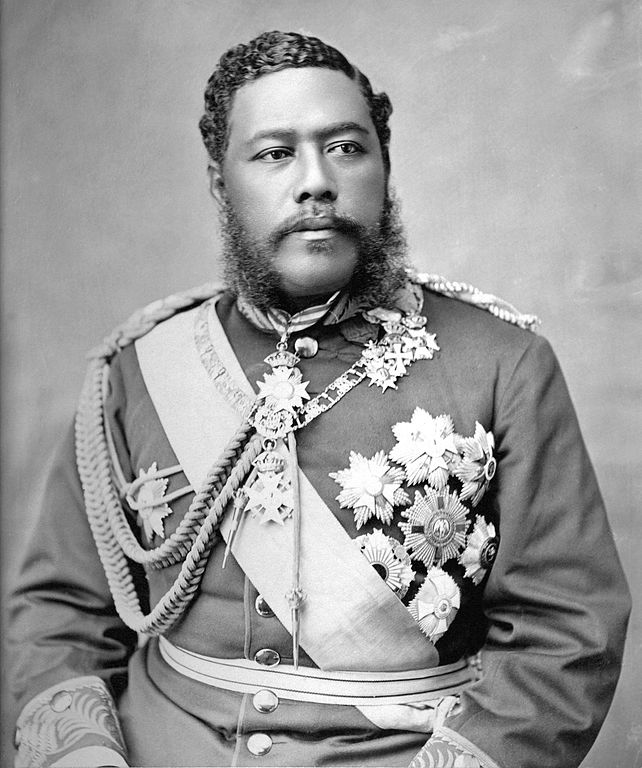
In the heart of Honolulu stands Iolani Palace, perhaps the most poignant landmark in the Hawaiian Islands. Completed in 1882 by King Kalakaua, it is the only royal palace on United States soil. The palace was a bold statement of Hawaiian sovereignty and modernity, featuring electricity and telephone lines before the White House. Its “American Florentine” style was a deliberate choice to show the world that Hawaii was a sophisticated, independent nation. Walking through its halls, one feels the weight of the kingdom’s overthrow, a chapter of the story that remains deeply resonant today.
Across the street, Aliiolani Hale serves as another structural chapter. Originally designed as a palace but repurposed as the seat of government, it now houses the Hawaii State Supreme Court. Standing before it is the gold-leafed King Kamehameha I Statue, a landmark that honors the great unifier who first “wrote” the unified Kingdom of Hawaii by bringing the warring islands under a single rule in 1810.
Sacred Sanctuaries and Ancient Laws
Long before the influence of Western architecture, the story of Hawaii was written in the heiau (temples). Puuhonua o Honaunau National Historical Park on the Kona coast of the Big Island is a preserved site of refuge. This landmark represents the ancient kapu system of laws. If a person broke a law—a capital offense—they could find absolution if they reached this sacred ground. The Great Wall, built around 1550, still stands as a testament to the masonry skills of the early Hawaiians. This site “wrote” the social order of ancient life, providing a glimpse into a world governed by spiritual mana and strict ancestral codes.
The Cultural Palimpsest: Landmarks of Faith and Immigration
As the 19th and 20th centuries progressed, new authors arrived on Hawaii’s shores, adding layers to the cultural landscape. The resulting landmarks reflect a fusion of Japanese, Chinese, Filipino, and European influences, creating a multicultural script.

The Byodo-In Temple and the Valley of the Temples
Nestled against the fluted green cliffs of the Koolau Range on Oahu is the Byodo-In Temple. Located within the Valley of the Temples Memorial Park, this landmark is a smaller-scale replica of a 900-year-old Buddhist temple in Uji, Japan. Established in 1968 to commemorate the 100th anniversary of the first Japanese immigrants to Hawaii, it symbolizes the profound impact of the plantation era. The plantation workers—who came from all over Asia to work the sugar cane and pineapple fields—rewrote the demographics, food, and language of the islands, contributing to the “Pidgin” English that serves as a linguistic landmark of the state.
The Stained Glass of History
In Honolulu, landmarks like Kawaiahao Church, built from coral blocks hauled from the reef, speak to the arrival of Christian missionaries in 1820. This “Westminster Abbey of the Pacific” was the site of royal weddings and christenings, representing a pivotal shift in the islands’ spiritual narrative. The synthesis of New England architectural styles with local materials like coral and koa wood illustrates the blending of cultures that defines modern Hawaii.
Landmarks of Conflict and Global Convergence
The modern history of Hawaii was fundamentally altered by the events of the mid-20th century, which placed the islands at the center of world history. These landmarks “wrote” Hawaii’s transition into the 50th state of the United States.
Pearl Harbor and the World Stage
No landmark captures the global impact of Hawaii more than the Pearl Harbor National Memorial. The USS Arizona Memorial, straddling the sunken hull of the battleship, is a somber chapter in the history of the Pacific War. This site transformed Oahu from a remote island paradise into a strategic military hub. Nearby, the Battleship Missouri Memorial provides the bookend to that conflict, where the surrender of Japan was signed. These landmarks wrote a new identity for Hawaii as a bridge between the East and the West, a role it continues to play in modern geopolitics.
The National Memorial Cemetery of the Pacific
High above Honolulu in the Punchbowl Crater lies the National Memorial Cemetery of the Pacific. Known in Hawaiian as Puowaina, or “Hill of Sacrifice,” this volcanic landmark was once a site of ancient secret burials and human sacrifice. Today, it serves as a final resting place for thousands of soldiers from World War II, the Korean War, and the Vietnam War. The landmark beautifully illustrates the layers of Hawaii’s history: a volcanic crater repurposed by ancient kings and later transformed into a site of national mourning and honor.
The Enduring Nature of the Garden Isle
To find the earliest chapters of Hawaii’s “manuscript,” one must travel to the oldest major island, Kauai. Here, the landmarks are largely sculpted by time and water rather than recent fire.
Waimea Canyon: The Grand Canyon of the Pacific
Waimea Canyon State Park is a monumental landmark that Mark Twain famously dubbed the “Grand Canyon of the Pacific.” The deep reds, oranges, and greens of the canyon walls were “written” by the catastrophic collapse of the volcano that formed Kauai, followed by millions of years of rainfall from Mount Waialeale, one of the wettest spots on earth. This landmark showcases the sheer scale of Hawaii’s natural history, providing a sense of perspective on the islands’ longevity.

The Cathedral Cliffs of Napali
The Napali Coast State Wilderness Park on the north shore of Kauai is perhaps the most visually stunning chapter of the Hawaiian story. These fluted “cathedral” cliffs rise 4,000 feet from the Pacific Ocean. Historically, these valleys were home to vibrant communities that lived off the land and sea, accessible only by boat or treacherous footpaths. Today, the Napali Coast remains a landmark of wild, untamed beauty, reminding all who see it that despite the palaces, temples, and memorials, the ultimate author of Hawaii remains the magnificent and unforgiving natural world.
From the steaming vents of the Big Island to the weathered spires of Kauai, the story of Hawaii is a living document. It is a narrative of resilience, adaptation, and beauty. While many have tried to write its history in books, the truest record remains the landmarks themselves—the stone, the soil, and the sea that continue to tell the epic tale of these extraordinary islands.
LifeOutOfTheBox is a participant in the Amazon Services LLC Associates Program, an affiliate advertising program designed to provide a means for sites to earn advertising fees by advertising and linking to Amazon.com. Amazon, the Amazon logo, AmazonSupply, and the AmazonSupply logo are trademarks of Amazon.com, Inc. or its affiliates. As an Amazon Associate we earn affiliate commissions from qualifying purchases.