
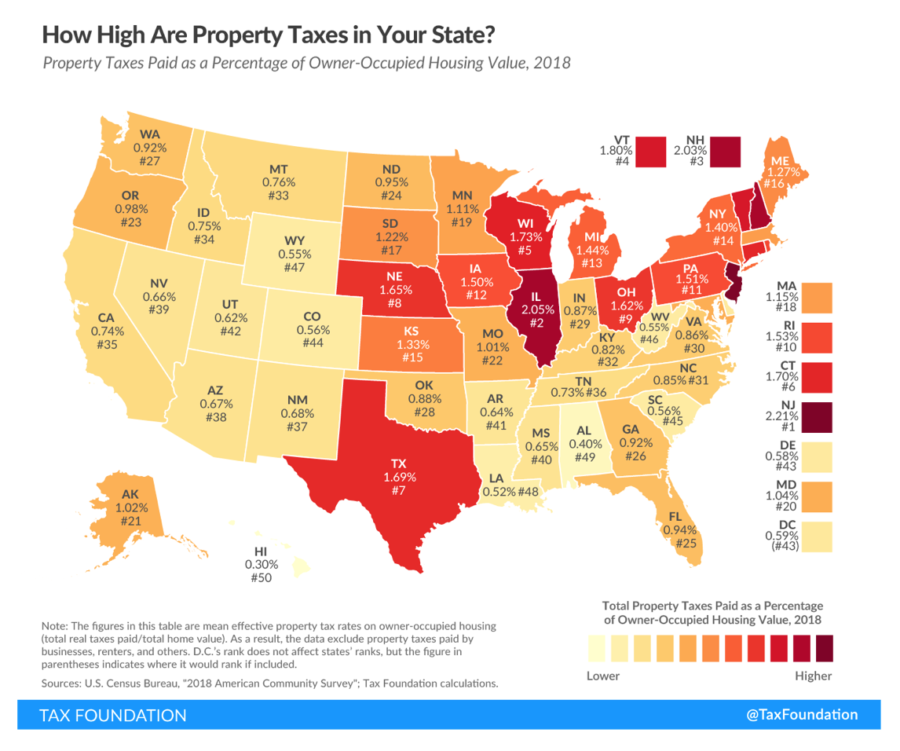
Texas, a state renowned for its vast landscapes, thriving economy, and independent spirit, also holds a less celebrated distinction: famously high property taxes. For homeowners and potential buyers alike, this aspect of Texan living can be a significant point of consideration, often leading to the question, “Why are property taxes so high in Texas?” The answer isn’t a simple one; it’s a complex interplay of state policy, local funding needs, and economic realities that shape the financial landscape of homeownership in the Lone Star State. Unlike many other states that rely heavily on income or sales taxes, Texas has historically opted for a system that places a greater burden on property owners to fund essential public services.
The Texas Tax Structure: A Foundation of Property Taxes
Texas is one of only a handful of states in the U.S. that does not levy a state income tax. This is a cornerstone of its economic appeal, attracting businesses and individuals with the promise of keeping more of their earned income. However, this lack of a state income tax creates a significant funding gap for public services, which must be filled by other means. The primary revenue source to bridge this gap is, overwhelmingly, property taxes.
No State Income Tax: A Double-Edged Sword
The absence of a state income tax is a major selling point for Texas. It allows residents to retain a larger portion of their salaries and wages, a benefit that has fueled significant population and economic growth. This has led to the expansion of major cities like Houston, Dallas, Austin, and San Antonio. Businesses, too, are drawn to the state by the prospect of lower overall tax burdens, contributing to a robust job market.
However, this fiscal choice necessitates a reliance on other tax sources. Without the steady, predictable revenue stream from an income tax, the state and its local subdivisions must look elsewhere. Property taxes become the logical, albeit often controversial, solution. This means that while Texans might pay less on their paychecks, they often pay more in annual property tax bills compared to residents of states with income taxes.
Reliance on Local Funding for Public Services
A defining characteristic of the Texas property tax system is its decentralized nature. While the state government sets some guidelines, the vast majority of property tax revenue is collected and spent at the local level. This includes funding for school districts, cities, counties, and special districts like those for water or emergency services.
School Districts: The Largest Beneficiary
The lion’s share of property tax revenue in Texas goes towards funding public education. Texas has over 1,000 independent school districts, and they are primarily financed through local property taxes. This creates a direct link between the value of property in a district and the quality of its schools. Areas with higher property values can generate more tax revenue, potentially leading to better-funded schools with more resources and higher teacher salaries. Conversely, districts with lower property values may struggle to provide the same level of educational opportunities.
Cities and Counties: Essential Services
Beyond education, cities and counties levy property taxes to fund a wide array of essential public services. These include police and fire departments, road maintenance, parks and recreation, public health initiatives, and judicial systems. The scope and quality of these services are directly influenced by the property tax base of the respective municipality or county. As populations grow and urban areas expand, so does the demand for these services, often leading to increased pressure on property tax rates to keep pace.
Factors Driving High Property Tax Rates
Several key factors contribute to the elevated property tax rates in Texas, making it a persistent concern for residents. These elements are interconnected and create a cycle that can be difficult to break.
Market Values and Appraisal Increases
Property taxes are calculated based on the appraised value of a property multiplied by the tax rate set by local taxing entities. In recent years, Texas has experienced a significant boom in real estate values, particularly in its major metropolitan areas. As property values soar, the assessed value of homes also increases, leading to higher tax bills even if the tax rate remains the same. The appraisal process itself can be a point of contention, with homeowners sometimes disputing the valuations determined by local appraisal districts.
The Role of Appraisal Districts
Each county in Texas has an independent appraisal district responsible for determining the market value of all taxable property within its jurisdiction. These districts conduct mass appraisals, often using statistical methods and sales data to estimate property values. Homeowners have the right to protest their property’s appraised value, but the process can be complex and may require professional assistance to achieve a reduction.
Impact of Rapid Growth
The rapid population and economic growth in Texas, especially in cities like Austin and Dallas-Fort Worth, has placed immense pressure on property values. Increased demand for housing, coupled with limited supply in desirable areas, drives up prices. As these market values climb, so do the appraised values for tax purposes, directly impacting the annual tax burden for homeowners.
The Property Tax “Circuit Breaker” and Its Limitations
While Texas offers some limited relief from escalating property taxes, the mechanisms in place are often insufficient to fully offset the rapid increases driven by market forces. One of the most significant provisions is the homestead exemption, which reduces the taxable value of a primary residence.
Homestead Exemptions
Texas law allows for a mandatory homestead exemption for all homeowners, reducing the appraised value of a home by a certain amount. Additional homestead exemptions can be granted by cities, counties, and school districts. For example, school districts must offer a $40,000 homestead exemption. While beneficial, these exemptions often do not keep pace with the dramatic increases in property values, meaning homeowners still see their taxable value rise significantly year after year.
The 10% Cap on Appraisal Increases
For homesteaded properties, Texas law limits the annual increase in appraised value to 10% (or the increase in the Consumer Price Index, if lower). This “circuit breaker” is designed to provide some predictability and prevent shock increases in tax bills. However, this cap only applies to the appraised value, not the market value. If a home’s market value increases by 30% in a year, but the cap limits the appraised value to a 10% increase, the homeowner still benefits, but the underlying market value is much higher. The following year, the appraisal can “catch up” to the market value, leading to a larger jump.
Seeking Relief and Understanding the Future
The high property tax burden in Texas is a persistent challenge, and many residents actively seek ways to manage or reduce their obligations. State and local governments are also grappling with the issue, though finding a universally accepted solution remains elusive.
Strategies for Homeowners
Homeowners in Texas have several avenues to explore for potential property tax relief. Understanding the appraisal process and actively participating in it is crucial.
Protesting Property Appraisals
As mentioned, protesting your property’s appraised value is a fundamental right. This typically involves gathering evidence of comparable property sales in your area that indicate a lower value, or documenting any physical deficiencies in your home that might reduce its marketability. Many homeowners hire professional property tax consultants to represent them in this process, as they have expertise in appraisal methods and negotiation strategies.
Understanding Local Tax Rates
While property values are a major driver, the tax rates set by local taxing entities also play a significant role. Homeowners should be aware of the combined tax rate for their specific location, which is a sum of the rates set by the school district, city, county, and any other special districts. Sometimes, a reduction in the tax rate by a local government can provide more relief than a successful appraisal protest, but this is less common.
The Debate Over Tax Reform
The high property tax rates have fueled ongoing discussions about tax reform in Texas. Various proposals have been put forth, ranging from modest adjustments to more fundamental shifts in the state’s revenue structure.
Shifting the Tax Burden
One persistent idea is to shift some of the property tax burden to other revenue sources. This could involve increasing reliance on sales taxes, or even exploring new forms of taxation. However, any significant change to the state’s tax structure faces considerable political hurdles and public debate. Proponents of the current system argue that it keeps the state competitive and attracts business. Opponents point to the undue burden placed on homeowners, particularly those on fixed incomes.

Voter Approval Requirements for Rate Increases
In recent years, legislative efforts have aimed to provide some constraint on rising property tax rates. Laws have been passed requiring voter approval for significant increases in tax rates by local governments. This provides a measure of accountability and gives taxpayers a direct say in rate hikes. However, these measures do not directly address the underlying issue of rapidly appreciating property values, which continue to inflate tax bills.
The question of why property taxes are so high in Texas is deeply rooted in the state’s fiscal philosophy and its commitment to local control and services. While the absence of an income tax offers individual financial benefits, it necessitates a robust property tax system to fund education, infrastructure, and public safety. As Texas continues its trajectory of growth, the conversation around property tax reform will undoubtedly remain a critical issue for its residents and policymakers. Finding a balance that supports essential public services without placing an unsustainable burden on homeowners will be key to the state’s continued prosperity and livability.
LifeOutOfTheBox is a participant in the Amazon Services LLC Associates Program, an affiliate advertising program designed to provide a means for sites to earn advertising fees by advertising and linking to Amazon.com. Amazon, the Amazon logo, AmazonSupply, and the AmazonSupply logo are trademarks of Amazon.com, Inc. or its affiliates. As an Amazon Associate we earn affiliate commissions from qualifying purchases.