
The iconic name of the San Francisco 49ers, one of the most storied franchises in American professional football, carries with it a deep historical resonance that harks back to a pivotal moment in California‘s and indeed, the United States’ history. Far from being an arbitrary designation, the “49ers” moniker is a direct homage to the intrepid pioneers who flocked to California in 1849 during the infamous California Gold Rush. To understand the team’s name is to delve into the very bedrock of what shaped San Francisco from a sleepy hamlet into a bustling, diverse metropolis, a story deeply etched into the region’s identity and celebrated through this enduring namesake. This exploration into the past reveals how a historical event became a cultural landmark, defining a city’s spirit for generations.

The Echoes of a Golden Age: San Francisco’s Foundational History
The mid-19th century witnessed an extraordinary event that would forever alter the demographic, economic, and cultural landscape of California and have ripple effects across the globe. This was the California Gold Rush, an era of unprecedented migration and fervent ambition that laid the groundwork for modern San Francisco.
The Spark of Discovery: The California Gold Rush
The genesis of this transformative period can be precisely dated to January 24, 1848, when James W. Marshall, a carpenter working for pioneer John Sutter, discovered flecks of gold in the American River near Coloma at Sutter’s Mill. Initially, efforts were made to keep the discovery quiet, but news, like wildfire, spread rapidly. By the spring of 1848, local residents were already abandoning their farms and businesses to try their luck in the goldfields. The trickle of prospectors soon became a torrent.
The discovery itself was not just a mere geological finding; it was a catalyst that ignited an unprecedented migratory phenomenon. Prior to 1848, California was a sparsely populated frontier, recently acquired by the United States following the Mexican-American War. Its remote location and lack of established infrastructure meant that the promise of gold had to be truly immense to draw people from such vast distances. The initial reports, seemingly too good to be true, were confirmed by official dispatches, most notably President James K. Polk’s address to Congress in December 1848, which effectively declared the veracity and magnitude of the gold strikes. This official endorsement sparked a mass exodus towards the West, turning a regional phenomenon into a global obsession.
The Influx of the ’49ers’: A Nation Responds
The year 1849 marked the peak of this initial migration, drawing an astounding number of fortune-seekers from all corners of the world. These individuals, known colloquially as “forty-niners,” epitomized a spirit of daring, resilience, and unyielding optimism. They came by land, enduring grueling cross-continental journeys fraught with danger and deprivation, traversing vast deserts and formidable mountain ranges. Others came by sea, embarking on perilous voyages around Cape Horn at the southern tip of South America, or taking shorter, yet still dangerous, routes across the Isthmus of Panama.
The diversity of these forty-niners was remarkable. They hailed not only from every state in the United States but also from Mexico, China, Europe, Australia, and beyond, each group bringing their own cultures, languages, and hopes to the burgeoning goldfields. This rapid influx transformed California into a melting pot of cultures, laying the foundation for its multicultural identity. Their quest was not merely for wealth but often for a new beginning, a chance to carve out a better life in a land brimming with opportunity. This collective ambition and the sheer scale of their endeavor are what made the “forty-niners” a legendary figure in American folklore and history.
A City Forged in Gold: The Rapid Transformation of San Francisco
Before the Gold Rush, San Francisco was little more than a small port town, known as Yerba Buena under Mexican rule. The discovery of gold, however, catapulted it into unimaginable prominence, forever linking its destiny with the prospectors who flocked to the region.
From Hamlet to Metropolis: Urban Growth
San Francisco’s strategic location on a natural harbor at the mouth of the San Francisco Bay made it the primary entry point and supply center for the goldfields. As thousands of prospectors disembarked from ships or arrived via overland routes, they converged on San Francisco to acquire supplies, exchange news, and make their way to the mines. The city exploded virtually overnight. What was a quiet village of a few hundred people in 1848 swelled to a population of tens of thousands within a few short years.
This rapid growth led to a chaotic but vibrant boomtown atmosphere. Waterfronts were extended with ships abandoned by crews who had deserted for the goldfields, eventually being incorporated into the city’s landmass. Makeshift structures quickly gave way to more permanent buildings, and the city became a hub of commerce, speculation, and diverse human activity. Everything from lodging to shovels, food, and entertainment commanded exorbitant prices, creating instant millionaires among savvy merchants and landowners. The urban landscape was a testament to the raw energy and relentless ambition that defined the Gold Rush era, making San Francisco a genuine historical landmark of rapid development.
Enduring Cultural Imprint: The Legacy of the Gold Rush
The Gold Rush left an indelible mark on San Francisco, shaping its character and defining its place in the world. The spirit of enterprise, innovation, and risk-taking that characterized the forty-niners became deeply embedded in the city’s psyche. San Francisco became known as a city where anything was possible, a place for dreamers and doers. The diverse population that arrived during this period created a multicultural tapestry that continues to define the city today, with vibrant neighborhoods and traditions reflecting its global origins.
Furthermore, the Gold Rush spurred massive infrastructural development, including roads, telegraph lines, and eventually railroads, connecting California to the rest of the United States. It also led to California’s rapid admission to the Union as the 31st state in 1850. The wealth generated from the goldfields fueled subsequent economic booms in agriculture, manufacturing, and later, technology, cementing San Francisco’s role as an economic powerhouse. The legacy of the Gold Rush is not just a historical footnote; it is a foundational narrative that explains much of San Francisco’s unique identity and enduring appeal.
Sporting Legends and Historical Homage: The Birth of the San Francisco 49ers
It is against this rich historical backdrop that the San Francisco 49ers professional football team came into being, consciously adopting a name that celebrates its city’s extraordinary origins.
A Name with Deep Roots: Honoring the Pioneers
The San Francisco 49ers franchise was founded in 1946, as a charter member of the All-America Football Conference (AAFC). When it came time to choose a name for the new team, the founders sought a designation that would instantly evoke the essence and history of San Francisco and California. The “forty-niners” of the Gold Rush provided the perfect inspiration.
The name was a direct and deliberate tribute to those audacious pioneers of 1849—the miners, merchants, and adventurers who journeyed westward in pursuit of fortune and a new life. It linked the burgeoning professional sports team to the very foundational narrative of its home city, embedding it within a legend of ambition, perseverance, and discovery. This choice was more than just a name; it was a declaration of identity, tying the team’s future endeavors to the heroic efforts of the past. By honoring the ’49ers’ of old, the team embraced a legacy of striving for greatness against formidable odds, a spirit that resonates deeply in competitive sports.
Embodying the Pioneer Spirit: Modern-Day 49ers
The connection between the historical forty-niners and the modern San Francisco 49ers extends beyond mere nomenclature; it permeates the team’s ethos. The qualities required to survive and thrive during the Gold Rush—daring, resilience, teamwork (in building communities and mines), and a relentless pursuit of a challenging goal—are precisely the attributes celebrated in athletic competition.
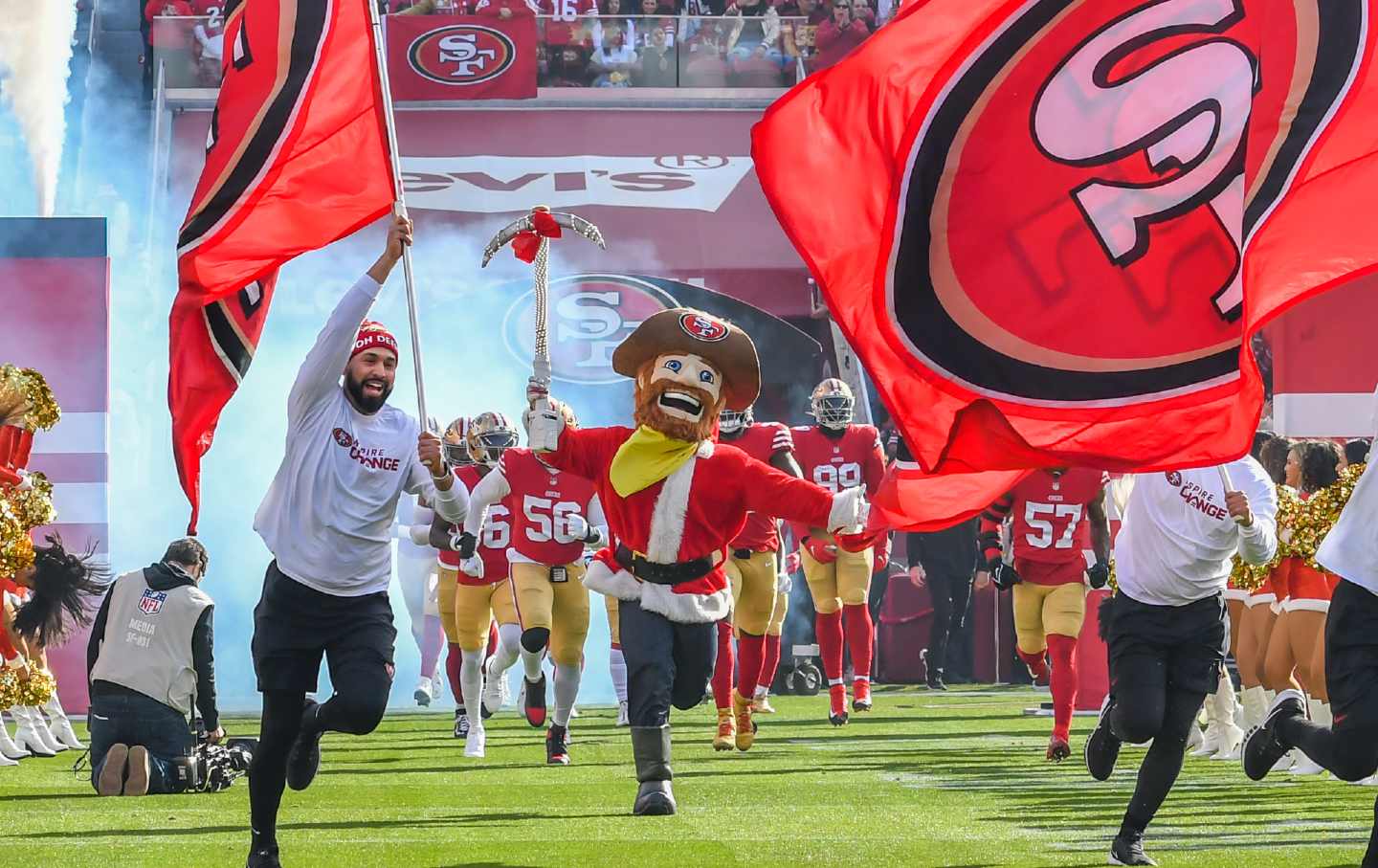
The football team, throughout its illustrious history, has often been characterized by a pioneering spirit: innovating plays, building formidable dynasties, and overcoming challenges with grit and determination. Each time the 49ers take the field, they are not just representing San Francisco but also metaphorically carrying the torch of those original gold-seekers. The team’s colors, gold and red, further reinforce this connection, with gold obviously symbolizing the precious metal and red often associated with the passion and fire of the pioneers. It’s a testament to how profoundly a historical event can shape a city’s cultural expressions, manifesting in its beloved sports teams and their enduring legacies.
San Francisco Beyond the Gridiron: A City Steeped in History
The story of the forty-niners is not just confined to history books or football stadiums. The legacy of the Gold Rush is an intrinsic part of San Francisco’s identity, evident in its vibrant character and numerous landmarks.
Experiencing the Gold Rush Legacy Today
For those keen to explore the historical roots of the San Francisco 49ers’ name and the incredible era it represents, California offers numerous opportunities. While San Francisco itself has few remaining physical structures from the immediate Gold Rush era due to fires and rapid development, its streets and districts tell stories of that time. The Financial District, for instance, sits atop areas once filled with abandoned ships, and the very layout of some older neighborhoods reflects the hasty planning of the boomtown years.
Venturing beyond the city, visitors can journey to the heart of the gold country in the Sierra Nevada foothills. Towns like Coloma, Placerville, and Columbia State Historic Park preserve the architecture and atmosphere of the 1840s and 1850s, allowing for a tangible connection to the lives of the original forty-niners. Museums such as the California State Mining and Mineral Museum or the Oakland Museum of California house extensive collections and exhibits detailing the Gold Rush era, its impact, and the people who shaped it. These historical sites serve as living landmarks, allowing contemporary audiences to walk in the footsteps of the pioneers and gain a deeper appreciation for the historical forces that named a legendary football team.
In conclusion, the reason San Francisco is called the 49ers is a compelling testament to the power of history to shape modern identity. It is a direct and proud link to the California Gold Rush of 1849, an epochal event that not only built San Francisco but also imbued it with a spirit of adventure, resilience, and boundless possibility. The name stands as an enduring cultural landmark, perpetually reminding us of the intrepid individuals who dared to chase their dreams, leaving an indelible golden legacy that continues to inspire.
LifeOutOfTheBox is a participant in the Amazon Services LLC Associates Program, an affiliate advertising program designed to provide a means for sites to earn advertising fees by advertising and linking to Amazon.com. Amazon, the Amazon logo, AmazonSupply, and the AmazonSupply logo are trademarks of Amazon.com, Inc. or its affiliates. As an Amazon Associate we earn affiliate commissions from qualifying purchases.