
The allure of instant wealth, the promise of a new beginning, and the magnetic pull of undiscovered riches are themes that have echoed through human history. Few events, however, capture this potent combination as vividly as the California Gold Rush. What began as a singular discovery in a humble sawmill soon ignited a global phenomenon, transforming a sparsely populated territory into a bustling epicenter of ambition and hardship. Understanding the genesis of this monumental event requires delving into the socio-economic landscape of the mid-19th century, exploring the specific circumstances that converged to create a perfect storm for gold fever.

The Spark: Discovery at Sutter’s Mill
The pivotal moment that set the California Gold Rush in motion occurred on a crisp January morning in 1848. James W. Marshall, an employee of John Sutter, was supervising the construction of a sawmill on the American River near Coloma. While inspecting the tailrace, he spotted a glint of yellow in the fast-flowing water. Recognizing its potential significance, he collected a sample, later famously tested by Sutter himself. The conclusion was unequivocal: it was gold.
The Secrecy and the Spread
Initially, Sutter and Marshall attempted to keep their discovery a secret. Sutter, a Swiss immigrant who had established a vast agricultural empire in the Sacramento Valley, envisioned using the gold to fund his ambitions and expand his considerable landholdings. However, secrets of such magnitude are rarely contained. Word of the discovery began to leak, first through whispers among Sutter’s employees and then through more widespread channels.
The official confirmation of gold’s presence in California came through a series of public announcements and newspaper articles. One of the most influential was an article published in The Californian, a San Francisco newspaper, on March 15, 1848, which boldly declared, “Gold Here!” Soon after, Sam Brannan, a prominent merchant and publisher in San Francisco, began enthusiastically promoting the discovery, reportedly running through the streets of the city brandishing a vial of gold dust and shouting, “Gold! Gold! Gold from the American River!” His motives were partly self-serving, as he owned general stores that would profit immensely from supplying the influx of miners, but his actions undeniably fanned the flames of the developing gold craze.
The Pre-Existing Conditions: A Fertile Ground for Frenzy
While Marshall’s discovery was the catalyst, several underlying factors created an environment ripe for such a dramatic response. California in 1848 was a land undergoing immense transformation.
The Aftermath of the Mexican-American War
The Mexican-American War, which concluded with the signing of the Treaty of Guadalupe Hidalgo in February 1848, just weeks before the gold discovery, had profound implications. The treaty ceded vast territories, including California, from Mexico to the United States. At the time of the transfer, California was sparsely populated, with a predominantly Californio (Mexican residents) and Native American population. The U.S. government was still in the process of establishing its authority and infrastructure in the region. This political vacuum meant that the news of gold had a relatively unhindered path to reach the wider world and that the initial discovery was made in a territory not yet fully integrated into the American narrative.
The Eastern Economic Climate
The United States in the late 1840s was experiencing a period of economic growth, but also significant pockets of hardship. Many individuals, particularly those in the eastern United States, faced limited economic opportunities. Land ownership was becoming increasingly difficult to attain, and industrialization, while offering new jobs, was often characterized by low wages and poor working conditions. The romanticized ideal of striking it rich and escaping the drudgery of conventional labor held significant appeal. The idea of an unclaimed, virtually untamed land where fortune could be seized by sheer grit and luck resonated deeply with this segment of the population.
Communication and Transportation Advancements
Crucially, advancements in communication and transportation were beginning to shrink the vast distances of the continent. The development of steamships and the nascent transcontinental telegraph system, while not yet fully realized, were laying the groundwork for rapid dissemination of information. News of the California Gold Rush could travel much faster than previous discoveries of precious metals in other parts of the world. Moreover, the prospect of a sea voyage around the treacherous tip of South America or a land journey across the American West, however arduous, became a feasible, albeit challenging, option for those determined to seek their fortune.

The Rush: A Global Migration
Once the news truly broke and the scale of the discovery became apparent, the trickle of prospectors quickly turned into a deluge. The term “Forty-Niners” became synonymous with those who flocked to California in 1849, though the migration began in earnest in 1848 and continued for years.
The Argonauts
These early prospectors, often referred to as “Argonauts” in reference to the mythical Greek quest for the Golden Fleece, came from all walks of life and from across the globe. While a significant portion were Americans from the eastern states, others arrived from as far afield as China, Europe, Australia, and Latin America. The promise of gold transcended national borders and social strata.
The Journey
The journeys undertaken were often perilous. Many sailed around the southern tip of South America, a months-long voyage fraught with storms and disease. Others braved the overland trails, such as the California Trail, which stretched thousands of miles across plains, mountains, and deserts. These land routes were fraught with dangers, including Native American resistance, disease, accidents, and starvation. The overland journey alone was a testament to the desperation and ambition driving these individuals.
The Boomtowns
Upon arrival in California, the prospectors found a landscape transformed. Once quiet Spanish missions and scattered settlements exploded into boisterous, chaotic boomtowns. Cities like San Francisco, which had been a modest port town, quickly became a gateway to the goldfields, swelling with tens of thousands of fortune seekers. Towns like Sacramento and the various mining camps that sprang up along the rivers developed a unique, if often lawless, character. These settlements were characterized by transient populations, a mix of ambitious entrepreneurs and desperate laborers, and a constant undercurrent of excitement and uncertainty.
The Impact: More Than Just Gold
The California Gold Rush was far more than just a feverish hunt for precious metal; it was a transformative event that reshaped California and the United States.
Statehood and Expansion
The massive influx of population directly led to California being granted statehood in 1850, just two years after gold was discovered. This rapid integration into the Union was unprecedented and significantly accelerated the westward expansion of the United States. The gold generated immense wealth, which helped to finance the development of infrastructure, agriculture, and industry across the American West.
Social and Economic Upheaval
The gold rush brought about profound social and economic changes. It created new industries, from mining and supply to transportation and services. However, it also led to the displacement and devastation of many Native American communities, whose lands were overrun and resources exploited. The influx of diverse populations also brought challenges related to social integration, discrimination, and the establishment of law and order. The concept of quick wealth, while intoxicating, often led to speculative bubbles, economic instability, and the exploitation of labor.
The Legacy of the Frontier Spirit
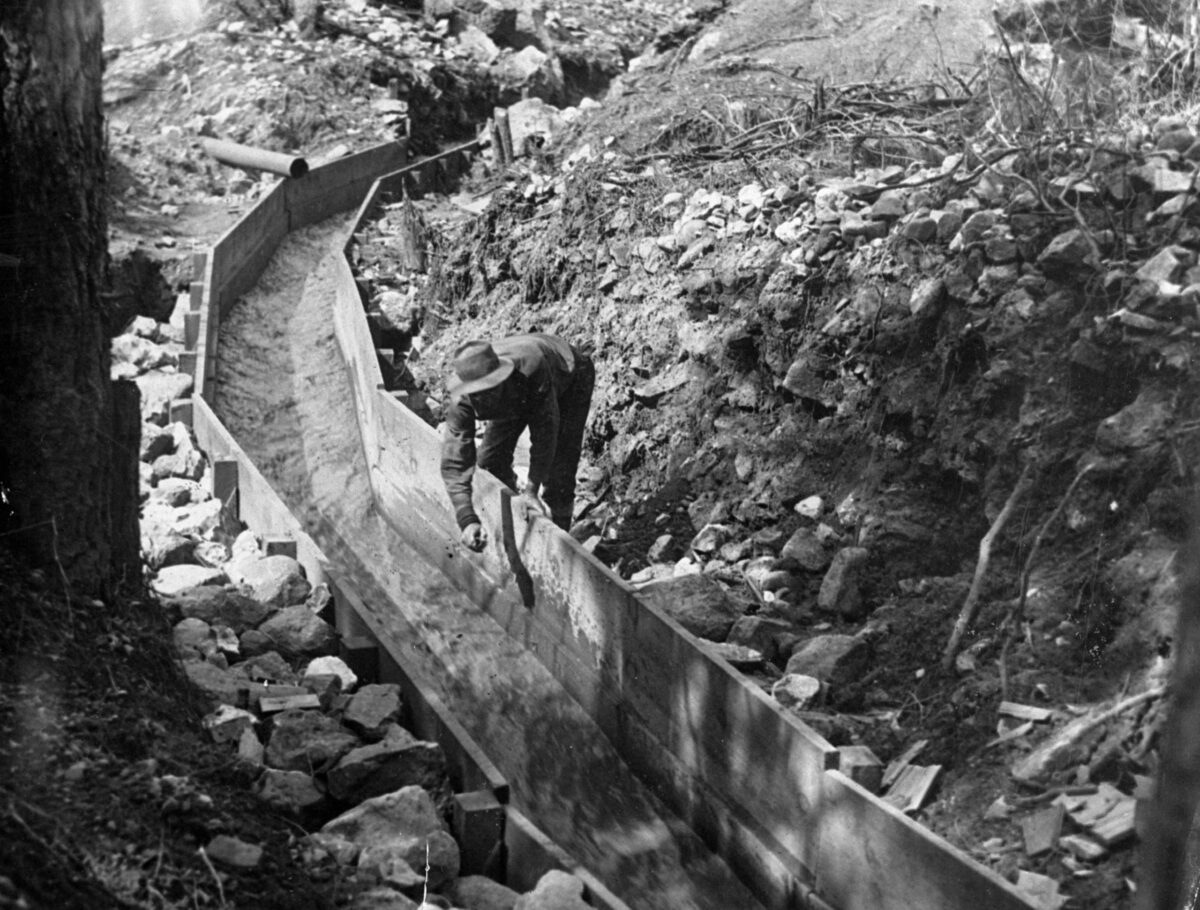
The legacy of the California Gold Rush endures in the popular imagination. It is a story of daring, risk-taking, and the enduring human desire for a better life. The image of the lone prospector panning for gold in a pristine river has become an iconic representation of the American frontier spirit and the romantic ideal of fortune found through hard work and a bit of luck. While the reality for most was one of back-breaking labor, meager returns, and immense hardship, the dream, ignited by a glint of yellow in a California river, continues to inspire.
LifeOutOfTheBox is a participant in the Amazon Services LLC Associates Program, an affiliate advertising program designed to provide a means for sites to earn advertising fees by advertising and linking to Amazon.com. Amazon, the Amazon logo, AmazonSupply, and the AmazonSupply logo are trademarks of Amazon.com, Inc. or its affiliates. As an Amazon Associate we earn affiliate commissions from qualifying purchases.