
The name California evokes images of sun-drenched beaches, towering redwoods, and a vibrant cultural landscape. It’s a land of dreams and innovation, a landmark state known globally for its unique charm and diverse offerings. But beneath the modern allure lies a fascinating historical question: how did this iconic place acquire its name? Unlike many other states named after individuals or indigenous tribes, the origin of California’s name is rooted in a fantastical work of early 16th-century Spanish fiction, a testament to the power of literature to shape reality.
A Literary Genesis: The Island of California
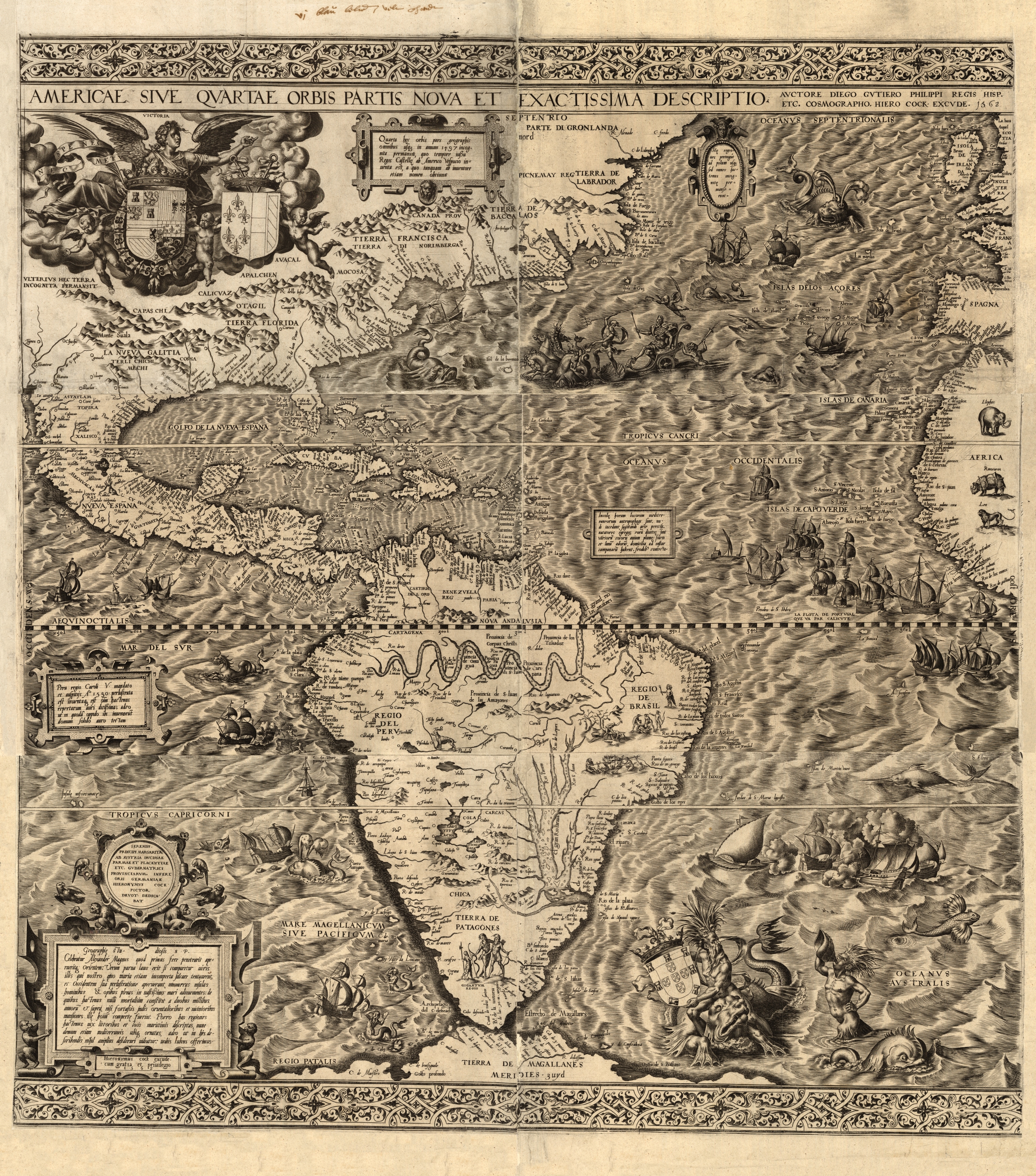
The journey to understanding California’s name begins not on a map or in an explorer’s logbook, but within the pages of a popular chivalric romance novel published in 1510. This work, titled “Las sergas de Esplandián” (The Adventures of Esplandián), was written by Garci Rodríguez de Montalvo and served as a sequel to the even more famous “Amadís de Gaula”. During an era when tales of knights, dragons, and distant lands captivated the European imagination, Montalvo’s book offered a particularly vivid description of an extraordinary place.
The Legend of Queen Calafia
Within “Las sergas de Esplandián,” Montalvo describes a mythical island located “at the right hand of the Indies, very close to the terrestrial paradise.” This island was entirely populated by Black women, fearless warriors who lived without men, embracing a life of strength and independence. Their queen was the formidable and beautiful Queen Calafia, a powerful pagan ruler who commanded an army of griffins and possessed immense wealth, particularly gold, which was the island’s only metal. The book portrays Queen Calafia and her army sailing to join Muslim forces in a battle against Christians, showcasing her exotic power and ultimate conversion to Christianity. The name of this mythical island? California. The exoticism, wealth, and unique demographic of this fictional land made a strong impression on its readers, including many of the era’s explorers.
Spanish Exploration and a Misunderstood Island
By the early 16th century, Spanish exploration in the Americas was in full swing, driven by the quest for new trade routes, resources, and especially gold. The conquest of Mexico by Hernán Cortés in 1521 opened up vast new territories to Spain. Soon after, rumors of rich lands further north and west began to circulate, fueled by indigenous tales and the perpetual European longing for new sources of wealth. These rumors, combined with the vivid descriptions from Montalvo’s popular novel, converged in the minds of the conquistadors.
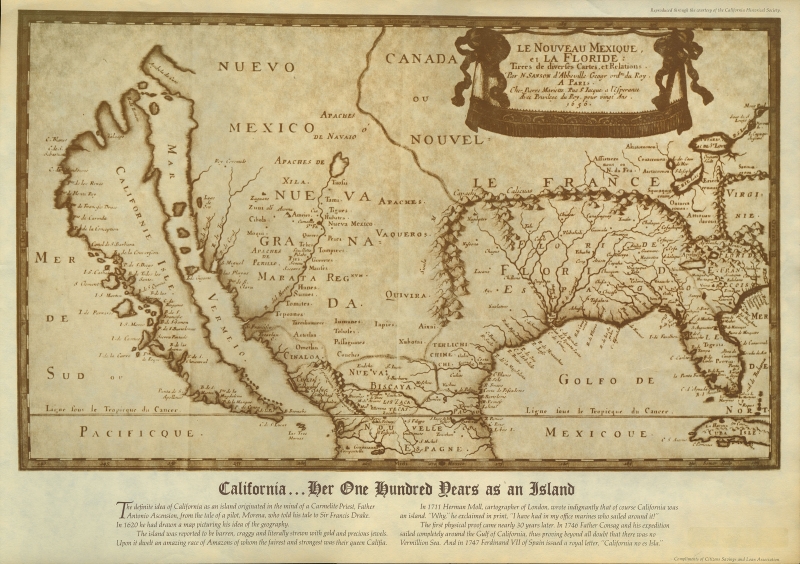
In 1533, an expedition dispatched by Hernán Cortés discovered a large peninsula, which they initially believed to be an island, separated from the mainland by a narrow gulf. This was, in fact, what we now know as Baja California. The stark, arid landscape of Baja California, combined with the initial misconception of it being an island and the presence of some local gold, bore a striking, if superficial, resemblance to the mythical island of California described in Montalvo’s book. The arid environment and the challenges encountered by the early explorers might have also inadvertently reinforced the idea of a remote, almost otherworldly place, fitting the literary description.
The Name Takes Root
The naming of this newly discovered land wasn’t an official decree at first, but rather an informal adoption by the explorers themselves, who were well-acquainted with Montalvo’s popular romance. The allure of finding a real-world counterpart to the legendary island was too strong to ignore.
Baja California’s Naming
The first recorded use of the name “California” to refer to this actual geographic location appeared in a 1542 report by Juan Rodríguez Cabrillo, who explored the Pacific coast north of the peninsula. However, evidence suggests the name was in use by Cortés’s circle much earlier, perhaps as early as 1535. Maps from the mid-16th century onwards began to label the peninsula as “Isla de California” or simply “California.”
The initial belief that it was an island persisted for decades, even centuries, despite various expeditions charting the region. The inhospitable desert terrain of Baja California made comprehensive exploration difficult, and the myth of an island seemed more romantic and palatable to the European imagination already primed by Montalvo’s tale. Over time, as more accurate surveys were conducted, it became clear that “California” was a peninsula. Nevertheless, the name had stuck.
Alta California’s Inheritance
As Spanish exploration continued northward, the regions that constitute the modern state of California came to be known as “Alta California” (Upper California), distinguishing it from the “Baja California” (Lower California) peninsula. The entire western coastal territory under Spanish claim, stretching from the tip of the peninsula to what is now Oregon, became broadly known as “Las Californias“.
The motivations for colonizing Alta California were multifaceted: to establish missions and settlements, to protect against potential Russian or British encroachment, and to find suitable ports for the lucrative Manila galleon trade route. By the time Mexico gained independence from Spain in 1821, the name California was firmly entrenched, referring to the combined territories. When the United States acquired Alta California after the Mexican-American War and admitted it as a state in 1850, the name was simply carried forward, embodying centuries of literary fantasy and exploration.
Linguistic Theories and Debates
While the literary origin is widely accepted by historians, other theories about the name’s etymology have occasionally surfaced, though they generally lack the compelling evidence found in the Montalvo narrative.
The “Caliente Fornalla” Theory
One less favored theory suggests the name might derive from Spanish words like “caliente fornalla” (hot furnace) or “cal y fornos” (lime and kilns), referring to the arid, hot climate and potential geological features or indigenous practices observed by early explorers. While descriptive, there’s no textual evidence linking these phrases directly to the naming process, nor do they explain the specific form “California” as elegantly as the literary source. The phonetic similarity is purely coincidental, and the prevailing historical consensus firmly points to Montalvo’s novel.
Indigenous Influences
Another area of speculative inquiry has explored possible indigenous roots for the name. While many places in California and across the Americas bear names of native origin, linguistic experts have found no convincing evidence to link “California” to any known indigenous language or tribal designation in the region. Given that the name was applied to the region by Spanish explorers who had a clear literary reference in mind, the indigenous origin theory remains unsubstantiated. The historical record overwhelmingly supports the literary origin, making it one of the most unique naming stories of any major landmark.
California’s Enduring Legacy
The story of California’s name is a remarkable testament to how literature and imagination can profoundly influence real-world geography and history. From a fictional island of Amazonian warriors ruled by Queen Calafia, filled with gold and exotic creatures, the name migrated to a rugged, unexplored peninsula in the New World. This transfer speaks volumes about the mindset of the Spanish conquistadors, who were often driven as much by the myths and legends of their homeland as by empirical discovery.
From Myth to Golden State
The echoes of Montalvo’s fantastical island still resonate. The idea of California as a land of opportunity, wealth (especially during the Gold Rush), and unique allure, seems almost predestined by its literary namesake. While the modern state is far from an island of warrior women, it has certainly maintained an image of being distinct, vibrant, and a place where dreams, however mythical, can take root and flourish. Understanding this literary origin adds a rich layer of appreciation to one of the world’s most famous and visited landmarks, reminding us that even the most grounded geographical names can have extraordinary, imaginative beginnings.

Understanding the Past for Future Exploration
For anyone exploring the diverse landmarks of California – from the historic missions of San Diego to the majestic redwoods of Northern California – knowing the origin of its name provides a deeper connection to its enduring legacy. It highlights how the human desire for discovery, combined with the powerful narratives of storytelling, has shaped the very fabric of our world. California is not just a geographical location; it is a name steeped in centuries of adventure, legend, and the pursuit of the unknown, making its identity as a global landmark even more profound.
LifeOutOfTheBox is a participant in the Amazon Services LLC Associates Program, an affiliate advertising program designed to provide a means for sites to earn advertising fees by advertising and linking to Amazon.com. Amazon, the Amazon logo, AmazonSupply, and the AmazonSupply logo are trademarks of Amazon.com, Inc. or its affiliates. As an Amazon Associate we earn affiliate commissions from qualifying purchases.