
The Hawaiian archipelago, a chain of volcanic islands isolated by thousands of miles of deep blue ocean, stands as one of the most biologically distinct regions on the planet. From the towering peaks of Mauna Kea to the lush, verdant valleys of Kauai, Hawaii is a living laboratory of evolution. However, this beauty masks a profound vulnerability. The ecosystem that evolved in near-total isolation for millions of years is now facing unprecedented challenges, making it one of the most fragile environments in the world.
The Evolutionary Paradox of Isolation
The primary reason for the fragility of the Hawaiian ecosystem lies in its geography. Located further from a continental landmass than any other place on Earth, the islands were colonized by only a handful of life forms that managed to cross the vast Pacific Ocean.

Specialized Evolution
Because resources were scarce and competitors were few, the species that did arrive underwent rapid adaptive radiation. A single ancestor finch-like bird evolved into dozens of species of honeycreepers, each uniquely adapted to specific flowers or insects found in the Haleakala National Park. This extreme specialization is a marvel of nature, but it creates a narrow threshold for survival. When a native species depends entirely on a specific type of nectar or a single nesting site, any disruption to that niche can lead to immediate local extinction.
The Loss of Defensive Mechanisms
Over millions of years, many native species lost their natural defenses. Without large mammalian predators to contend with, many plants in the Volcanoes National Park lost the need to produce thorns, toxins, or strong wood. Similarly, birds like the Nene (Hawaiian Goose) evolved to be flightier or ground-nesting, making them incredibly vulnerable once invasive predators—such as rats, cats, and mongooses—were introduced by humans.
The Impact of Invasive Species
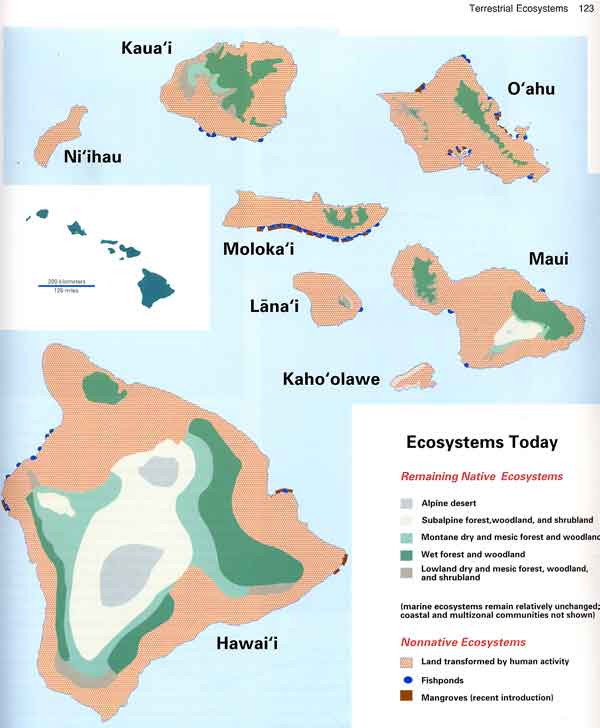
Perhaps the most significant threat to the environmental stability of Oahu and the other islands is the influx of non-native species. Since the arrival of Polynesian voyagers and, later, European explorers, the islands have been flooded with alien flora and fauna that have wreaked havoc on native biodiversity.
Floral Competition and Habitat Destruction
Aggressive invasive plants, such as strawberry guava and fountain grass, have spread rapidly across the slopes of Maui. These plants often outcompete native forests for sunlight and nutrients, fundamentally changing the soil chemistry and water retention capacities of the landscape. When native forests are replaced by monocultures of invasive plants, the essential watershed functions that feed the island’s freshwater aquifers are compromised.
The Predator-Prey Imbalance
Native birds, such as the I’iwi and the Akepa, evolved in a world without mammalian predators. The introduction of feral pigs, cats, and mongooses has decimated native bird populations. Because these native species evolved without the “instinctual” fear of terrestrial predators, they were, and remain, sitting ducks for these invaders. Furthermore, the introduction of mosquitoes brought avian malaria and pox, diseases to which native forest birds have little to no immunity, pushing many species to the very brink of extinction.

Human Impact and Environmental Stewardship
As a premier travel destination, Hawaii faces a constant tug-of-war between the demands of tourism and the necessity of conservation. The scale of human movement—millions of visitors and residents annually—accelerates the potential for accidental species introduction and habitat degradation.
The Pressure of Infrastructure
Urban expansion in cities like Honolulu and the development of resort corridors along the Kona Coast have displaced native habitats. While the tourism industry provides essential economic support for the state, the construction of roads, hotels, and infrastructure often fragments critical habitats, creating “edge effects” where invasive species can more easily encroach on pristine wild areas.
Pollution and Marine Fragility
The fragility of the Hawaiian ecosystem extends beyond the shorelines into the surrounding coral reefs. Runoff from agriculture and urban developments, combined with the presence of chemical sunscreen and plastic waste, places extreme pressure on the Great Barrier Reef-style ecosystems surrounding islands like Molokai. Coral reefs act as the primary defense for the islands against wave energy and are essential for marine life cycles; when these reefs are stressed by warming ocean temperatures and land-based pollution, the entire island ecosystem feels the repercussion.
Conservation as a Path Forward
Recognizing the delicacy of their natural heritage, local environmental organizations and the state government have implemented rigorous conservation programs. Protecting the islands requires a multifaceted approach that addresses both the micro-scale—such as native plant restoration—and the macro-scale, involving climate change mitigation.
Targeted Habitat Restoration
Efforts to fence off high-elevation rainforests on Big Island have successfully created protected zones where native birds can flourish without the interference of feral pigs and goats. By removing these animals, native understory plants have begun to recover, helping to preserve the water-capturing capacity of the forest floor.
Public Awareness and Responsible Travel
For those visiting islands like Lanai, understanding the fragility of the landscape is a crucial part of the travel experience. Simple actions, such as cleaning hiking gear to avoid transporting invasive seeds, sticking to marked trails, and choosing reef-safe sunscreens, are vital. Travelers are increasingly being encouraged to participate in volunteer programs that focus on restoring native ecosystems, turning the act of tourism into an act of stewardship.
The Role of Climate Change
Finally, the warming of the atmosphere threatens to further isolate or eliminate high-elevation ecosystems. As temperatures rise, the “mosquito line” shifts higher up the mountain slopes, allowing avian malaria to move into the last remaining refuges of the endangered honeycreepers. The survival of these unique species is now inextricably linked to our global response to climate change.
The beauty of the Hawaiian Islands is a testament to the resilience of nature, but the current state of its environment is a reminder of how easily that resilience can be overwhelmed. By valuing and protecting the unique biological heritage of Pacific islands, humanity can ensure that these spectacular landscapes remain vibrant for generations to come. The fragility of this ecosystem is not merely a scientific concern; it is a profound moral responsibility to honor the extraordinary evolutionary legacy of this isolated, enchanted, and deeply precious archipelago.
LifeOutOfTheBox is a participant in the Amazon Services LLC Associates Program, an affiliate advertising program designed to provide a means for sites to earn advertising fees by advertising and linking to Amazon.com. Amazon, the Amazon logo, AmazonSupply, and the AmazonSupply logo are trademarks of Amazon.com, Inc. or its affiliates. As an Amazon Associate we earn affiliate commissions from qualifying purchases.