
The vibrant tapestry of collegiate sports in the United States is rich with unique traditions, iconic figures, and mascots that often tell stories far deeper than their initial appearance suggests. Among the most recognizable and, for many, most perplexing, is the mascot of the University of Alabama: an elephant. For a state synonymous with Southern charm, humid climates, and fiercely competitive football, the choice of a pachyderm as its symbol might seem an odd fit, especially given that these magnificent creatures are not native to Alabama. Yet, the elephant has become an inseparable part of the Crimson Tide identity, symbolizing power, resilience, and an unwavering spirit. This intriguing origin story is not only a fascinating piece of sports history but also an integral part of the local culture and a draw for tourism in Tuscaloosa and beyond. Understanding why an elephant stands at the heart of Alabama’s athletic fervor offers a unique window into the state’s passion for its beloved team and its rich traditions.

The Unlikely Origins: How an Elephant Stomped into Alabama Lore
The tale of Alabama’s elephant mascot begins not with a planned adoption, but with a vivid description from a sportswriter decades ago. It’s a story rooted in the grit and glory of early 20th-century football, a testament to the sheer physical presence of a legendary team. This historical anecdote has since become a cherished piece of folklore, passed down through generations of fans and forming the bedrock of one of college football’s most distinctive identities.
The 1930 Rose Bowl and the Sporting Press
The genesis of the elephant nickname dates back to 1930, a pivotal year for the University of Alabama football program. Under the leadership of coach Wallace Wade, the Crimson Tide team traveled to Pasadena, California, to face the undefeated Stanford University in the Rose Bowl game. This was a monumental clash, pitting Southern football prowess against the formidable strength of the West Coast. The game itself was a hard-fought battle, ending in a 24-0 victory for Alabama, cementing their status as a national powerhouse.
However, it was the observations of a sportswriter, Everett Strupper of the Atlanta Journal, that truly gave birth to the legend. Strupper, watching the Crimson Tide squad storm onto the field for a practice session, penned a memorable description that would resonate for decades to come. He wrote, “At the end of the quarter, the earth started to tremble, there was a distant rumble that grew with every second, and suddenly, out of the mist—or was it out of the stadium?—appeared a gigantic elephant.” He continued, referring to the players as “red elephants,” describing them as massive, thundering beasts that overwhelmed their opponents. The sheer size and power of the Alabama offensive line, in particular, left a strong impression. This wasn’t merely a compliment; it was an evocative image that captured the essence of Wade’s team. The nickname, “Red Elephants,” quickly gained traction among fans and the media, becoming an unofficial moniker for the dominant team.
Coach Wallace Wade and the Mighty Offensive Line
Coach Wallace Wade’s 1930 team was indeed a force to be reckoned with. Known for their physical play and formidable offensive line, these athletes were often described as larger-than-life figures. In an era where football was even more physically demanding and less specialized than today, having a line that could consistently overpower opponents was a monumental advantage. Strupper’s “Red Elephants” epithet wasn’t an exaggeration but a poetic reflection of the team’s on-field presence. They were relentless, powerful, and seemingly unstoppable, just like a stampeding herd. The nickname stuck precisely because it so accurately encapsulated the impression the team made on anyone who witnessed their play. While the official team name remained the Crimson Tide, the elephant — initially just a descriptive term — began its slow but steady march towards becoming a beloved symbol of the University of Alabama. This blend of athletic prowess and journalistic flair ultimately gave birth to one of college football’s most enduring and unique mascots.
From Sidelines to Symbol: The Evolution of Big Al
Decades passed after the “Red Elephants” made their indelible mark in the 1930 Rose Bowl. While the nickname continued to be used informally, particularly by older fans and sportswriters, it wasn’t until much later that the elephant truly took on a physical form as the official mascot. This evolution brought a beloved figure to life, cementing the elephant’s place not just in history books, but on the sidelines of Bryant-Denny Stadium and in the hearts of the Crimson Tide faithful.
The Birth of Big Al: From Idea to Icon
The idea of a physical elephant mascot for the University of Alabama really began to solidify in the early 1960s. For years, various live animals had been brought to games, including actual elephants, as a nod to the “Red Elephants” nickname. However, these were often one-off appearances and not a consistent, recognizable mascot character. The push for a dedicated mascot costume gained momentum, and in 1960, a student named Merton Pound drew a cartoon elephant that began appearing in student publications. This cartoon, a friendly yet formidable pachyderm, started to capture the imagination of the student body.
The actual physical mascot costume, the beloved Big Al, made its official debut in 1959. However, the first costumed version of Big Al as we know him today came about in 1960 at the Orange Bowl in Miami. The name “Big Al” itself became universally adopted, distinguishing the friendly, larger-than-life character from the historical “Red Elephants.” Over the decades, Big Al’s appearance has evolved slightly, but his core identity as a symbol of strength, fun, and Crimson Tide spirit has remained constant. He represents not just the power of the team, but the enthusiasm and camaraderie of the entire fan base, embodying the spirit that makes Alabama game days so special.
A Tradition Embodied: Big Al’s Role in Alabama Athletics
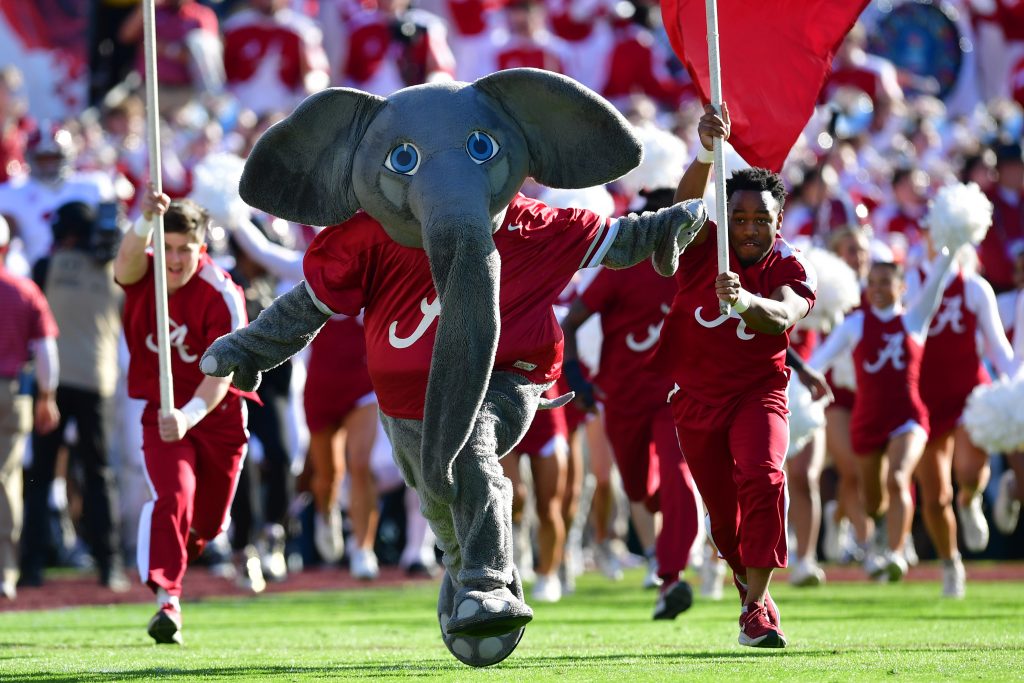
Today, Big Al is much more than just a costumed character; he is an ambassador for the University of Alabama and a beloved figure throughout the state. His presence is ubiquitous at athletic events, particularly football games at Bryant-Denny Stadium in Tuscaloosa. Leading the team onto the field, interacting with cheerleaders and fans, and engaging in playful antics, Big Al plays a crucial role in enhancing the game day experience. He pumps up the crowd, entertains children, and serves as a rallying point for the Crimson Tide faithful.
Beyond football, Big Al makes appearances at basketball games in Coleman Coliseum, gymnastics meets, and numerous other university and community events. He travels with the teams, representing Alabama at various sporting competitions and promotional functions across the country. His enduring popularity is a testament to how deeply ingrained the elephant has become in the university’s identity. From the roar of the crowd chanting “Roll Tide” to the sea of crimson and white apparel adorned with Big Al’s image, the elephant embodies the enduring legacy of Alabama athletics and the fierce pride of its supporters.

Beyond the Field: The Elephant’s Impact on Alabama Culture and Tourism
The elephant mascot, while born on the football field, has transcended its origins to become a powerful cultural symbol in Alabama. Its presence is felt far beyond game days, influencing local lifestyle, driving tourism, and shaping the identity of communities, particularly in Tuscaloosa. For many, the Crimson Tide and its elephantine emblem are not just sports teams; they are a way of life, a point of collective pride, and a significant economic engine.
Alabama Football: A Way of Life
In Alabama, football isn’t merely a sport; it’s a religion. The Crimson Tide commands a devotion that is difficult to describe to outsiders. The elephant, through Big Al, has become the visual representation of this intense passion. From late summer through the heart of winter, the rhythm of life in Alabama often revolves around football schedules. Businesses decorate in crimson and white, discussions frequently turn to game predictions, and families plan their weekends around kickoff times. The influence of the team and its mascot can be seen in everything from baby clothes to garden flags, proving that the elephant symbol is deeply woven into the fabric of daily life.
This passion creates a unique atmosphere, especially on game days. Tuscaloosa transforms into a vibrant hub of activity. Tailgating is an art form, with elaborate setups and Southern hospitality on full display. Fans travel from all corners of the state and the country, creating a significant boost for local businesses, from restaurants and bars to souvenir shops. The collective experience of cheering on the Crimson Tide at Bryant-Denny Stadium, surrounded by fellow “Red Elephants” enthusiasts, is a powerful cultural phenomenon that draws countless visitors each year. The mascot, therefore, plays a pivotal role in maintaining this vibrant culture and encouraging continuous engagement.
Exploring Tuscaloosa: A City Steeped in Crimson and White
For travelers interested in experiencing the unique blend of Southern charm and collegiate sports fervor, Tuscaloosa is a destination that delivers. As the home of the University of Alabama and its iconic elephant mascot, the city offers a host of attractions that cater to both ardent fans and curious visitors.
A must-visit is the Paul W. Bryant Museum on campus, dedicated to the legendary coach Paul “Bear” Bryant, who elevated the Crimson Tide to national prominence. The museum showcases the history of Alabama football, including trophies, memorabilia, and interactive exhibits that trace the journey from the “Red Elephants” of 1930 to the modern dynasty. Another key landmark is Bryant-Denny Stadium itself, an imposing structure that hums with anticipation even on non-game days. Visitors can take tours to explore the locker rooms, press box, and the hallowed field where so much history has been made.
Beyond the university campus, Tuscaloosa, often referred to as the “Druid City” for its numerous water oak trees, offers a charming downtown area with diverse dining options, boutique shops, and a vibrant arts scene. The Riverwalk provides scenic views of the Black Warrior River and is perfect for a leisurely stroll. For those interested in local history and nature, the nearby Moundville Archaeological Park, a National Historic Landmark, offers a glimpse into ancient Native American cultures. Even places like the Children’s Hands-On Museum of Tuscaloosa and the Kentuck Art Center reflect the community’s pride, often incorporating crimson and white into their local events and displays. The elephant isn’t just a mascot here; it’s a silent guardian watching over a city deeply devoted to its football heritage.
Experiencing the Crimson Tide Legacy: Travel Tips for Fans and Visitors
For those planning a trip to experience the magic of Alabama and its storied elephant mascot, a bit of foresight can greatly enhance the journey. Whether you’re coming for a specific game, exploring the rich history, or simply soaking in the vibrant atmosphere, Tuscaloosa offers a unique and memorable travel experience.
Planning Your Visit to Tuscaloosa
Given the immense popularity of Crimson Tide football, planning your travel and accommodation in advance is crucial, especially during football season (typically September through November).
- Accommodation: Hotels in Tuscaloosa can book up months in advance for major games, and prices can surge. Consider options ranging from upscale establishments like the Hotel Indigo Tuscaloosa Downtown or The Alamite, a Tribute Portfolio Hotel, which offer modern amenities and downtown access, to family-friendly choices like Embassy Suites by Hilton Tuscaloosa Downtown. For budget-conscious travelers or those seeking extended stays, Hampton Inn Tuscaloosa-University and Homewood Suites by Hilton Tuscaloosa provide comfortable options. Vacation rentals, particularly through platforms like Airbnb or VRBO, can also be a great alternative for larger groups or longer visits, offering a more local lifestyle experience.
- Transportation: Tuscaloosa is accessible by car, with major interstates connecting it to cities like Birmingham (about an hour away), Atlanta, and New Orleans. The nearest major airport is Birmingham-Shuttlesworth International Airport (BHM). Once in Tuscaloosa, a car is useful for exploring, though ride-sharing services and some local public transport options are available, especially around the university campus on game days.
- Beyond Football: If your visit isn’t centered around a game, explore other facets of Tuscaloosa. Enjoy the serene beauty of Lake Tuscaloosa, visit the Mercedes-Benz U.S. International Visitor Center for a unique industrial tourism experience, or simply savor the local cuisine which features classic Southern comfort food and innovative culinary delights.
Immersing Yourself in Game Day Festivities
For the ultimate Crimson Tide experience, nothing beats being in Tuscaloosa on a game day. The energy is palpable, the traditions run deep, and the elephant mascot, Big Al, is at the center of it all.
- Tailgating: Arrive early to witness the spectacle of Crimson Tide tailgating. The campus lawns and surrounding areas transform into a sea of tents, grills, and exuberant fans. It’s an experience in itself, offering a glimpse into true Southern hospitality and community spirit. Many fans are happy to share food and conversation, making it a welcoming environment even for first-timers.
- The Elephant Stomp and Walk of Champions: Don’t miss the “Elephant Stomp” at the Coleman Coliseum steps a few hours before kickoff, where the pep band, cheerleaders, and Big Al rally the crowd. Even more iconic is the “Walk of Champions,” where the team bus pulls up to Bryant-Denny Stadium, and players and coaches, led by Big Al, walk through a corridor of cheering fans into the stadium. These events offer incredible photo opportunities and a chance to feel the raw energy of Alabama football.
- Inside Bryant-Denny Stadium: Once inside, the atmosphere is electric. Join in the iconic “Rammer Jammer” chant, witness Big Al’s antics on the field, and feel the ground tremble as the crowd roars for the Crimson Tide. It’s an unforgettable sensory experience that embodies the heart and soul of Alabama sports.
The elephant mascot, Big Al, is more than just an emblem for the University of Alabama. He is a living, breathing symbol of a history forged in grit, a passion that unites millions, and a cultural cornerstone that defines the spirit of an entire state. From its accidental birth in a sportswriter’s prose to its animated presence on game days, the elephant embodies the power, tradition, and unwavering devotion of the Crimson Tide faithful. Whether you are a die-hard fan or a curious traveler, a visit to Tuscaloosa to witness this unique phenomenon offers a profound insight into a truly American lifestyle and an unforgettable travel experience.
LifeOutOfTheBox is a participant in the Amazon Services LLC Associates Program, an affiliate advertising program designed to provide a means for sites to earn advertising fees by advertising and linking to Amazon.com. Amazon, the Amazon logo, AmazonSupply, and the AmazonSupply logo are trademarks of Amazon.com, Inc. or its affiliates. As an Amazon Associate we earn affiliate commissions from qualifying purchases.