
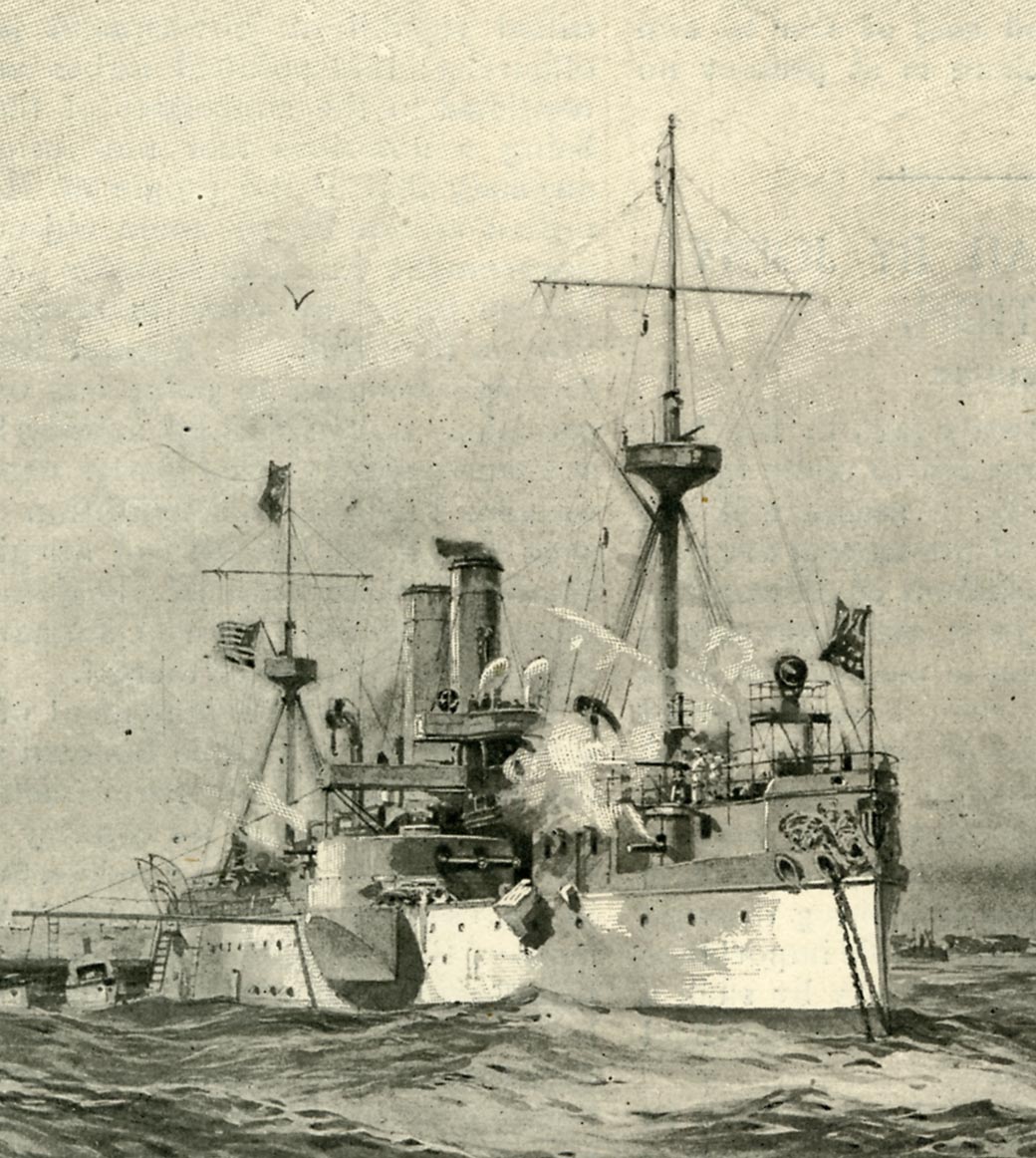
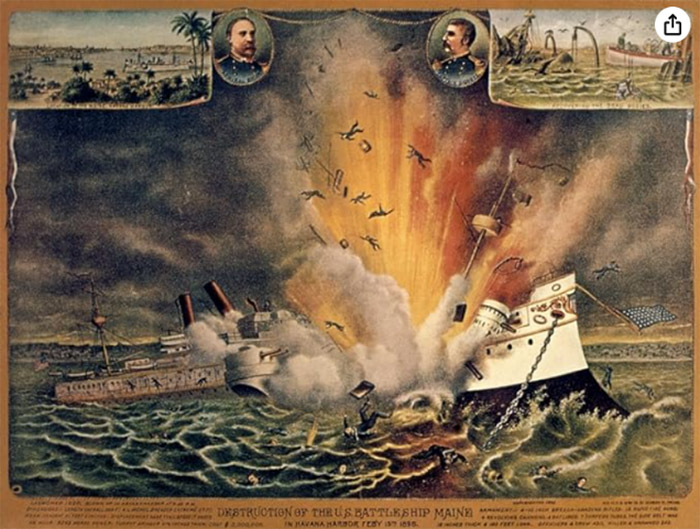
The deployment of the [USS Maine] to the harbor of [Havana], [Cuba], in early 1898 remains a pivotal and intensely debated moment in American history. The vessel’s dramatic sinking on February 15th of that year, with the loss of 266 American lives, served as a potent catalyst, igniting public outrage and ultimately propelling the [United States] into the [Spanish-American War]. Understanding the reasons behind its presence in Cuban waters requires examining the complex geopolitical landscape of the late 19th century, the escalating conflict between [Spain] and Cuban revolutionaries, and the evolving role of the American navy.
The Turbulent Climate of Cuba
By the late 1890s, [Cuba] had been embroiled in a protracted struggle for independence from [Spain] for decades. The latest rebellion, which began in 1895 under the leadership of figures like [José Martí], was particularly brutal. [Spanish] Governor-General [Valeriano Weyler], notorious for his “reconcentrado” policy, had herded hundreds of thousands of Cuban civilians into concentration camps, leading to widespread starvation and disease. These grim conditions were extensively reported by American newspapers, particularly those of [William Randolph Hearst] and [Joseph Pulitzer], whose sensationalist “yellow journalism” fueled American sympathy for the Cuban cause and a growing animosity towards [Spanish] rule.
The American public, exposed to vivid (and often exaggerated) accounts of [Spanish] atrocities, began to demand intervention. President [William McKinley], however, was initially hesitant to commit the [United States] to war. He sought a diplomatic resolution and urged [Spain] to grant concessions to the Cubans, including reforms and an end to the reconcentration camps. The situation remained volatile, with ongoing skirmishes and the constant threat of further escalation.
American Interests in Cuba
Beyond humanitarian concerns, the [United States] had significant economic and strategic interests in [Cuba]. American businesses had invested heavily in Cuban sugar and tobacco plantations, and the prolonged conflict disrupted trade and threatened these investments. Furthermore, [Cuba]’s strategic location in the [Caribbean Sea] made it a crucial point for American maritime trade and naval power. The potential for a foreign power, particularly a rival European nation, to gain influence in [Cuba] was a growing concern for American policymakers.
The American government was also acutely aware of the unrest among its own citizens regarding the Cuban situation. The growing calls for action, coupled with the persistent advocacy of pro-interventionist politicians and newspaper magnates, created immense pressure on the McKinley administration to take a more assertive stance.
The Diplomatic Maneuvers and Naval Presence
In this tense atmosphere, the U.S. Navy played a critical role in projecting American influence and signaling its concern. The decision to send the [USS Maine] to [Havana] was ostensibly a gesture of goodwill and a show of American naval strength. Officially, the ship was dispatched to protect American interests and citizens in [Cuba] should the situation deteriorate further. It was also intended as a naval visit to demonstrate [Spain]’s ability to maintain order in its colony, a subtle nudge towards peaceful resolution.
The visit was not entirely unprecedented. American warships had visited [Havana] before, and diplomatic visits were a common practice among naval powers. However, the context of the escalating Cuban crisis lent a heightened significance to the [USS Maine]’s presence. It was a visible manifestation of American concern, a clear signal to both [Spain] and the Cuban revolutionaries that the [United States] was paying close attention and was prepared to act if necessary.

The Strategic Context of Naval Diplomacy
The late 19th century was an era of burgeoning American naval power, a period often referred to as the “New Imperialism” or the “American Century” in its nascent stages. Naval theorists like [Alfred Thayer Mahan] argued for the importance of sea power in achieving national greatness. The deployment of modern battleships like the [USS Maine] was part of a broader strategy to modernize and expand the American fleet, making it a significant force on the world stage.
Sending the [USS Maine] to [Havana] was, therefore, a multifaceted diplomatic and strategic move. It served to reassure American citizens and businesses in [Cuba], it communicated American concern to [Spain], and it demonstrated the growing reach and capability of the [United States] Navy. It was a calculated risk, intended to de-escalate tensions while simultaneously asserting American influence in a region of critical importance.
The Immediate Precursors to the Sinking
The atmosphere in [Havana] upon the [USS Maine]’s arrival on January 25, 1898, was tense. While the ship was ostensibly there for a friendly visit, local [Spanish] authorities and citizens were suspicious of its true intentions, particularly given the inflammatory rhetoric in the American press. American residents and Cuban sympathizers, conversely, viewed the ship as a potential protector. The presence of a powerful American warship in the harbor was a constant reminder of the growing American interest in the island’s fate.
The crew of the [USS Maine], under the command of Captain [Charles Sigsbee], maintained a professional demeanor, engaging in diplomatic courtesies while remaining vigilant. However, the underlying political currents were unmistakable. The ship was a symbol of American power and a potential harbinger of American intervention, a fact that was not lost on anyone involved in the Cuban struggle for independence or the [Spanish] colonial administration.
The Spanish Government’s Response
[Spain], already struggling to maintain control over its fading empire, viewed the presence of the [USS Maine] with unease. While they had reluctantly agreed to some reforms in [Cuba], their efforts were seen as too little, too late by the revolutionaries and increasingly by the American public and government. The American warship in [Havana] was perceived as a direct challenge to [Spanish] sovereignty and a blatant show of support for the rebels. This perception only intensified the already strained diplomatic relations between the two nations.The [Spanish] government was in a precarious position, caught between appeasing the powerful [United States] and maintaining the loyalty of its own population and military in [Cuba]. The American naval presence, intended by some in Washington to be a stabilizing force, inadvertently added another layer of friction to an already explosive situation.
The Aftermath and the Call to Arms
The catastrophic explosion that ripped through the [USS Maine] on the night of February 15, 1898, killing most of its crew, instantly transformed the political landscape. While initial investigations were inconclusive, the American press, particularly the Hearst newspapers, immediately blamed [Spain], declaring “Remember the Maine! To Hell with Spain!” This rallying cry resonated deeply with the American public, igniting a wave of patriotic fervor and a near-universal demand for war.
Despite [Spain]’s denials and pleas for a thorough, impartial investigation, the U.S. government, under immense public pressure, declared war on [Spain] on April 21, 1898. The sinking of the [USS Maine] became the casus belli, the pretext for a conflict that would mark a significant turning point in American foreign policy, ushering in an era of American expansion and influence in the [Caribbean] and the [Pacific]. The ship’s tragic end, regardless of its exact cause, served as the decisive spark that ignited the [Spanish-American War], fundamentally altering the course of history for both the [United States] and [Cuba].
LifeOutOfTheBox is a participant in the Amazon Services LLC Associates Program, an affiliate advertising program designed to provide a means for sites to earn advertising fees by advertising and linking to Amazon.com. Amazon, the Amazon logo, AmazonSupply, and the AmazonSupply logo are trademarks of Amazon.com, Inc. or its affiliates. As an Amazon Associate we earn affiliate commissions from qualifying purchases.