
California, a land of diverse landscapes ranging from the sun-drenched beaches of Southern California to the majestic forests of the Sierra Nevada, attracts millions of visitors annually. Travelers flock to its iconic landmarks like the Golden Gate Bridge in San Francisco, the sprawling entertainment complexes of Los Angeles, and the natural wonders of Yosemite National Park. Whether planning a luxurious escape, an adventurous road trip, or a family vacation, visitors often focus on destinations, accommodations, and local experiences. However, for those who legally own firearms and are accustomed to carrying them, understanding California’s strict gun laws, particularly regarding concealed carry, is a critical piece of preparation that can significantly impact their travel plans and overall lifestyle during their stay.

The simple answer to whether you can carry a concealed weapon in California is complex and often hinges on one’s residency and the specifics of their permit. Generally, California has some of the most stringent gun control laws in the United States. These laws are designed to prioritize public safety, which has profound implications for both residents and out-of-state visitors. For anyone considering travel to the Golden State with a firearm, a thorough understanding of these regulations is not just advisable, but absolutely essential to avoid severe legal repercussions. This guide aims to demystify these laws, especially as they pertain to concealed carry, helping you navigate your California adventures responsibly and legally.
Navigating California’s Strict Gun Laws: A Traveler’s Guide
California’s approach to firearm ownership and carry is unique compared to many other states. It operates under a “may-issue” system for concealed carry permits, meaning that local law enforcement agencies, typically the county sheriff or city police chief, have significant discretion in deciding whether to grant a Concealed Carry Weapon (CCW) permit. This discretionary power means that obtaining a CCW permit can vary significantly in difficulty depending on where one resides within the state. For travelers, this “may-issue” framework presents unique challenges, as the state primarily issues permits to its own residents under very specific conditions.
Understanding California’s Approach to Concealed Carry Permits (CCW)
For California residents, applying for a CCW permit involves a rigorous process. Applicants must demonstrate “good cause,” “good moral character,” and complete a firearms safety course. The interpretation of “good cause” is a major hurdle and has historically been a point of contention and legal challenge. While recent legal developments have somewhat loosened the “good cause” requirement, it still leaves considerable discretion to local issuing authorities. In urban areas like Los Angeles County or San Francisco County, demonstrating good cause can be more challenging than in some rural counties. This variability underscores the highly localized nature of CCW issuance within the state. Even for residents, obtaining a permit is a lengthy process involving background checks, interviews, and training.
For visitors, this system means that the pathway to legally carrying a concealed weapon in California is virtually non-existent, unless they establish residency and go through the full application process, which is impractical for most tourists. When planning a trip, be it a stay at a luxury resort in Palm Springs or an exploration of San Diego’s vibrant tourism scene, the expectation should be that an out-of-state CCW permit will not be recognized.
CCW Reciprocity: What Out-of-State Visitors Need to Know
Perhaps the most crucial aspect for out-of-state visitors to grasp is California’s strict stance on CCW reciprocity. Unlike many other states that recognize concealed carry permits issued by other jurisdictions (often referred to as “reciprocity” agreements), California does not. This means that if you possess a valid concealed carry permit from Arizona, Nevada, Texas, or any other state, it will not be recognized as valid in California. Carrying a concealed firearm in California without a California-issued CCW permit is a serious offense, potentially leading to felony charges, significant fines, and even imprisonment.
This lack of reciprocity is a primary concern for travelers who are accustomed to carrying firearms in their home states. It means that when you cross the border into California, your CCW permit essentially becomes invalid. For those planning an extensive California road trip through diverse destinations like Death Valley National Park, Big Sur, or up to Lake Tahoe, understanding this limitation is paramount. The general rule for out-of-state visitors is that concealed carry is prohibited.
However, transporting firearms through California is generally permissible under specific conditions, which mainly involve the firearm being unloaded and stored in a locked container, separate from ammunition, and not readily accessible. This applies to vehicles and often to accommodation as well. This distinction between carrying and transporting is vital for anyone traveling to or through the state with a firearm.
Where Concealed Weapons Are Strictly Prohibited, Even with a Permit
Even for the few individuals who possess a California-issued CCW permit, there are numerous locations where carrying a concealed weapon is expressly forbidden. These “gun-free zones” are designed to enhance public safety in sensitive areas and are strictly enforced. Travelers should be acutely aware of these restrictions, as inadvertently entering such a zone with a firearm, even if legally transported or possessed in another context, can lead to severe legal consequences. This understanding is crucial for planning your tourism itinerary and ensuring a smooth, compliant visit.
Restricted Locations for Public Safety and Tourism
California law designates a wide array of locations where firearms are prohibited. These typically include:
- Government Buildings and Public Facilities: This encompasses places like the California State Capitol in Sacramento, courthouses (federal, state, and local), polling places, and various administrative offices. Visitors exploring historical landmarks or conducting official business must be aware.
- Schools and Universities: All K-12 schools, colleges, and universities, including campuses of the University of California and California State University systems, are generally gun-free zones. This includes school grounds, parking lots, and facilities, except under very specific, limited circumstances (e.g., law enforcement).
- Airports and Public Transit: Beyond security checkpoints in airports (like Los Angeles International Airport or San Francisco International Airport), firearms are universally prohibited. Within the public areas of airports, specific rules apply to unloaded, cased firearms. Public transportation systems, such as Bay Area Rapid Transit (BART) in San Francisco, the San Francisco Municipal Railway (Muni), and Los Angeles Metro systems, also generally prohibit firearms.
- Designated Public Areas: Certain public events, demonstrations, or areas designated as “gun-free zones” by local authorities may also restrict firearms.
- Private Businesses and Attractions: Many private businesses, especially major tourist attractions and entertainment venues, implement their own “no weapons” policies. This includes places like Disneyland Park, Universal Studios Hollywood, Six Flags Magic Mountain, and many hotels, resorts, and restaurants. Even if a location doesn’t explicitly post a sign, firearms are generally not welcomed, and violating these policies could lead to removal and potentially trespassing charges. Always check with your specific accommodation, from a boutique hotel in Napa Valley to a suite in Beverly Hills, regarding their individual policies.
- National and State Parks: While federal law allows for carrying firearms in national parks like Joshua Tree National Park or Sequoia National Park (provided it’s legal under state law), California’s stringent state laws often supersede or add further restrictions. Specifically, carrying a loaded firearm in state parks, state beaches, and state recreation areas is generally prohibited. This is a critical distinction for outdoors enthusiasts traveling to California’s stunning natural landmarks and wilderness areas.
The overarching principle is that even with a California-issued CCW permit, caution and due diligence are always required. For out-of-state visitors without a California permit, these locations represent absolute no-go zones for any concealed firearm.

Practical Considerations for Travelers and Visitors
Understanding California’s gun laws, particularly regarding concealed carry, is more than just a legal exercise; it’s a practical consideration that affects how one plans their travel, what they pack, and how they navigate their stay. For those accustomed to carrying firearms, the shift to California’s regulatory environment requires careful thought about firearm storage, transportation, and the potential legal consequences of non-compliance. Integrating these considerations into your trip planning is as important as booking your flight or choosing your hotel.
Storing Firearms Safely During Your California Stay
If you are legally transporting a firearm into or through California (e.g., for target shooting, hunting in designated areas, or moving residency), safe and legal storage is paramount. When in a vehicle, firearms must be unloaded and stored in a locked container, separate from ammunition, and not readily accessible to any occupant. This often means placing it in the trunk or a locked glove compartment.
Upon arrival at your accommodation, whether it’s a budget hotel, a luxurious villa, or a vacation apartment, you must consider secure storage. Many hotels and resorts have strict “no firearms” policies, even for legally transported weapons. It is advisable to contact your specific hotel or resort in advance to understand their policies regarding firearms on their property. Some may offer secure storage options, while others may prohibit them entirely. If allowed, keeping firearms unloaded and secured in a locked case within your room is generally the safest and most compliant approach. Never leave firearms unsecured in your room, especially if you plan to venture out to tourist attractions like the Hollywood Walk of Fame or Santa Monica Pier. Understanding and adhering to these storage rules helps ensure a smooth, worry-free trip, aligning with both the law and safe lifestyle practices.
Understanding the Legal Ramifications and Penalties
Non-compliance with California’s gun laws, particularly regarding concealed carry without a valid permit, carries severe legal consequences. Illegally carrying a concealed firearm can result in felony charges, which may include substantial fines, imprisonment in state prison, and a permanent criminal record. Such a record can significantly impact future travel, employment, and even the ability to own firearms in the future.
Furthermore, violating “gun-free zones” can lead to separate charges, even if you possess a valid CCW permit. For instance, carrying a firearm onto school grounds or into a courthouse is a serious offense. The state takes these laws very seriously, and ignorance of the law is not a valid defense. Therefore, for any visitor or resident contemplating carrying a firearm in California, it is imperative to seek legal counsel from a qualified California attorney to fully understand the current legal landscape and how it applies to their specific situation. This due diligence is a critical step in responsible gun ownership and ensures that your trip to California remains focused on enjoying its beauty and experiences, rather than navigating legal challenges.
Beyond Concealed Carry: Other Relevant Gun Laws in California
While concealed carry is a significant concern for many, California’s intricate gun laws extend far beyond just permits. Other regulations regarding open carry, firearm transportation, and specific weapon types are equally important for anyone bringing a firearm into the state, whether for hunting in Mendocino County, sport shooting in Riverside County, or simply moving to a new accommodation in Orange County. A comprehensive understanding ensures compliance across all aspects of firearm interaction within the state.
Open Carry and Firearm Transport Rules
Unlike some states where open carry is permissible, California has largely prohibited the open carry of loaded and unloaded firearms in most public places. Specifically:
- Open Carry of Loaded Firearms: Generally illegal in cities, unincorporated areas, and many other public spaces.
- Open Carry of Unloaded Handguns: Generally illegal in cities and unincorporated areas.
- Open Carry of Unloaded Long Guns: Prohibited in cities and unincorporated areas, with limited exceptions.
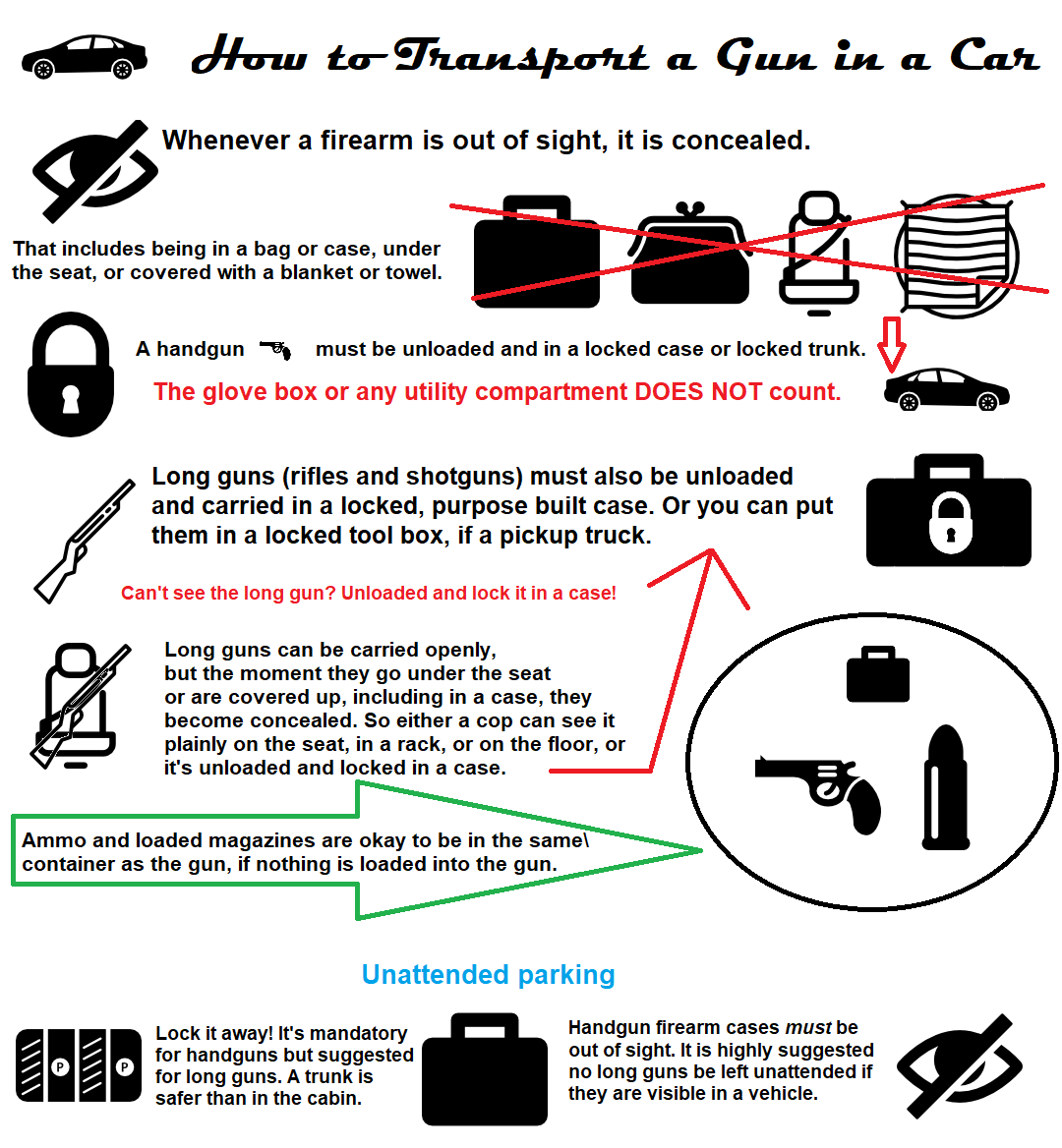
The primary legal method for non-permit holders to transport firearms in California remains the “locked container” rule. This means:
- Unloaded: The firearm must not have any ammunition in its chamber or an attached magazine.
- Locked Container: The firearm must be contained in a fully enclosed, locked container (e.g., a gun case with a padlock, a locked trunk). A glove compartment or console is only considered a locked container if it is truly locked and inaccessible without a key or combination.
- Separate from Ammunition (for handguns): While not explicitly required for all firearms, it is generally best practice to store ammunition separately, especially for handguns, to avoid any ambiguity regarding a “loaded” firearm.
This transport rule is crucial for those traveling cross-country or moving to California with personal firearms. It allows individuals to move their weapons from one location to another (e.g., from home to a firing range, or across state lines) without violating California’s strict carry laws. However, any deviation from these rules can quickly lead to legal issues.
Beyond carry and transport, California also has strict regulations on specific types of firearms, often referred to as “assault weapons,” and limits on magazine capacity. Many firearms that are legal in other states may be classified as illegal “assault weapons” in California, or their magazines may exceed the state’s capacity limits. These laws are complex and frequently updated. Therefore, if you possess such items, it is absolutely essential to verify their legality in California before bringing them into the state. This diligence protects not only your legal standing but also ensures your travel and lifestyle within the state remain compliant and enjoyable.
In conclusion, navigating the question of carrying a concealed weapon in California is a journey fraught with legal complexities. For the vast majority of visitors, especially those without a California-issued CCW permit, the answer is a resounding no. California’s lack of reciprocity, “may-issue” system, and extensive list of prohibited locations create a challenging environment for firearm owners. When planning your trip to California, whether it’s for the pristine beaches, the bustling city life of San Jose, the serene vineyards of Sonoma County, or the majestic wilderness of Kings Canyon National Park, prioritize understanding these laws. Responsible tourism includes respecting local laws and regulations.
The safest and most recommended approach for travelers is to leave firearms at home. If bringing a firearm is unavoidable, ensure it is transported legally—unloaded, in a locked container, and separate from ammunition. Always verify the specific policies of any accommodation or attraction you plan to visit. The ultimate goal is to enjoy the unparalleled beauty and diverse experiences California has to offer, without the added stress or risk of legal entanglement due to firearm laws. When in doubt, always consult with a legal professional specializing in California gun laws, as laws can change, and individual circumstances vary.
LifeOutOfTheBox is a participant in the Amazon Services LLC Associates Program, an affiliate advertising program designed to provide a means for sites to earn advertising fees by advertising and linking to Amazon.com. Amazon, the Amazon logo, AmazonSupply, and the AmazonSupply logo are trademarks of Amazon.com, Inc. or its affiliates. As an Amazon Associate we earn affiliate commissions from qualifying purchases.