
Planning a road trip through the picturesque landscapes or vibrant cities of California often involves budgeting for various expenses: accommodations, dining, attractions, and, inevitably, fuel. Many travelers arriving in the Golden State are surprised, if not shocked, by the significantly higher gasoline prices compared to other parts of the United States. Understanding why this premium exists is crucial for any budget-conscious adventurer looking to explore everything from the bustling streets of Los Angeles to the serene beauty of Yosemite National Park. This phenomenon is not arbitrary but rather the result of a confluence of environmental regulations, unique market dynamics, and a complex tax structure, all of which ultimately impact a traveler’s wallet.

Decoding California’s Unique Fuel Landscape for Travelers
The journey to understanding California’s high fuel costs begins with recognizing that the state operates under a distinct set of rules and conditions. Unlike many other states, California is an energy island, largely producing and refining its own gasoline, primarily due to its stringent environmental standards. This isolation means that supply shocks or production issues within the state’s borders have a more pronounced effect on prices than in regions with more integrated fuel networks. For travelers, this translates into a unique set of challenges and considerations. A cross-country road trip that starts with affordable gas in Arizona or Nevada will see a noticeable jump the moment you cross the California border. This necessitates careful planning, not just for routes and attractions, but for managing fuel stops and expenses. It’s not just a matter of a few cents; the difference can often be over a dollar or more per gallon, significantly adding up over hundreds of miles.
Key Factors Driving Up Costs: A Traveler’s Perspective
Several interconnected factors contribute to the elevated price of gasoline in California. For travelers, these aren’t merely economic abstractions but tangible components that directly influence their travel budget and decisions.
Environmental Regulations and Specialty Blends
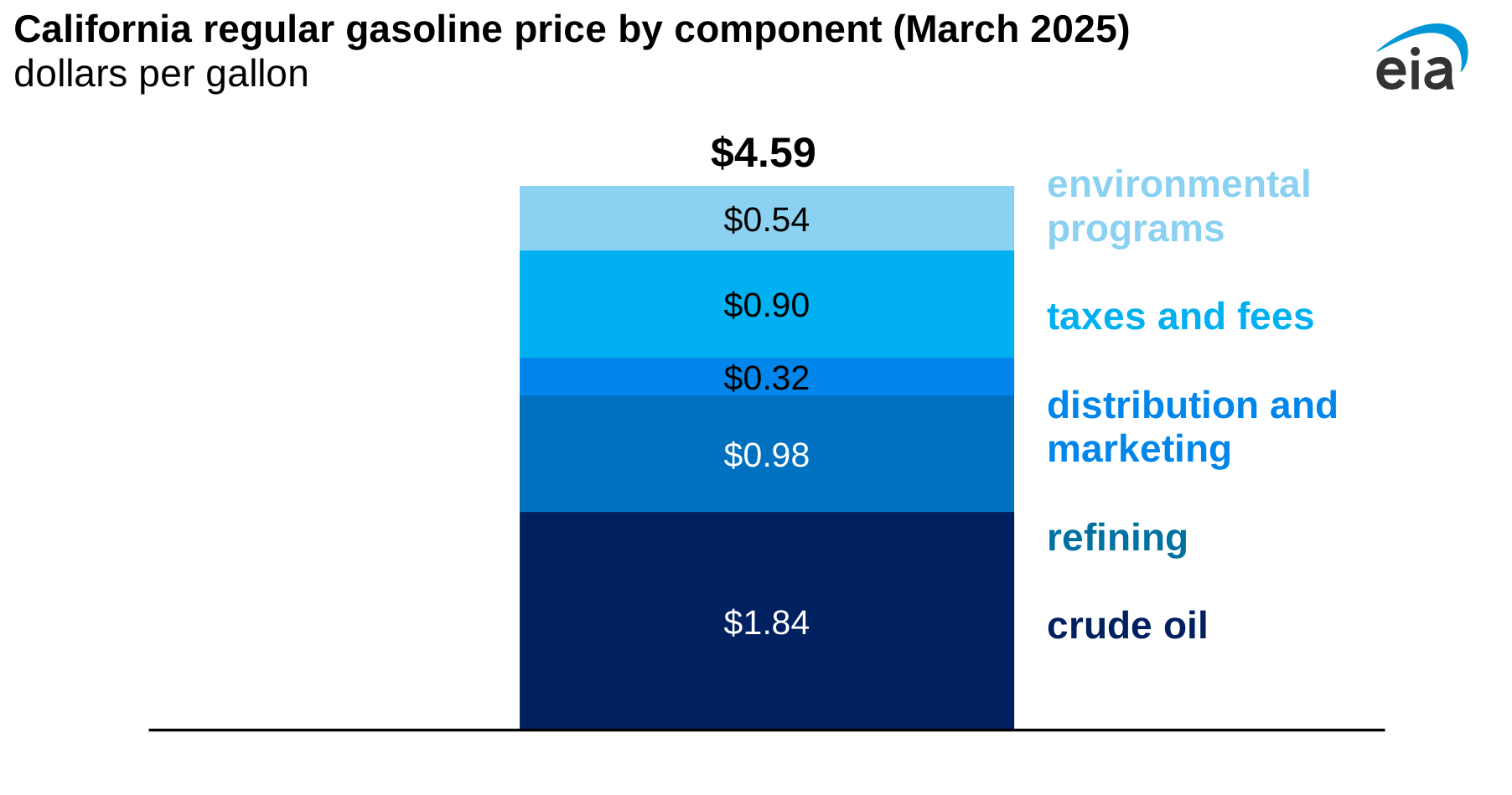
Perhaps the most significant differentiator for California gasoline is its unique formulation. The state has some of the strictest air quality standards in the world, particularly in metropolitan areas like Los Angeles, San Francisco, and San Diego. To combat smog and reduce harmful emissions, the California Air Resources Board (CARB) mandates a special blend of gasoline, often referred to as “CARB-compliant” fuel. This blend is specifically designed to burn cleaner and evaporate less quickly than conventional gasoline. Producing this specialty blend is more complex and expensive for refineries. It requires specific additives and a more intensive refining process, which directly translates into higher production costs. Because very few refineries outside California are equipped to produce this specific blend, the state cannot easily import cheaper conventional gasoline from elsewhere when local supply dwindles. This creates a supply-demand dynamic that consistently keeps prices higher. For travelers, this means there’s no escaping the premium, as all fuel sold within the state must meet these standards.
Taxes and Fees
Beyond the cost of production, California levies a substantial array of taxes and fees on gasoline, which are among the highest in the United States. These include:
- State Excise Tax: A fixed per-gallon tax that funds road maintenance and infrastructure projects. California’s excise tax rate is significantly higher than the national average.
- Sales Tax: Unlike many states that exempt gasoline from sales tax, California applies a sales tax to the total purchase price of fuel, including the excise tax. This “tax on a tax” further inflates the final price.
- Cap-and-Trade Program: As part of its efforts to reduce greenhouse gas emissions, California operates a cap-and-trade program. Fuel distributors must purchase allowances for the carbon emissions associated with the gasoline they sell. These costs are then passed directly to consumers at the pump.
- Low Carbon Fuel Standard (LCFS): This program aims to reduce the carbon intensity of transportation fuels. It creates a market for credits that fuel producers must acquire, adding another layer of cost to gasoline.
- Underground Storage Tank Fee: A small fee per gallon dedicated to cleaning up leaking underground storage tanks, another environmental protection measure.
Cumulatively, these taxes and fees can add well over a dollar per gallon to the price of gasoline, making it a significant component of the overall cost for any traveler.
Limited Refinery Capacity and Geographic Isolation
California’s unique gasoline requirements and geographical position contribute to its energy isolation. The state has a limited number of refineries, concentrated mainly in the Bay Area and Southern California. When one of these refineries experiences an outage due to maintenance or unforeseen issues, the impact on supply—and thus price—can be immediate and severe. Because importing the specialized CARB-compliant fuel from outside the state is difficult and costly, any disruption to local production can send prices skyrocketing. This vulnerability means that travelers are often subject to market fluctuations that are less common in other regions with more flexible supply chains.
Strategies for Budget-Conscious Travelers in California
While the higher fuel costs in California are undeniable, they don’t have to derail your travel plans. Smart planning and a few strategic choices can help mitigate the impact on your budget.
Plan Your Routes Wisely and Monitor Prices
Before embarking on a scenic drive along Highway 1 or a cross-state journey on Interstate 5, take time to map out your route and identify gas stations. Prices can vary significantly even within a few miles, often being higher closer to popular tourist attractions, airports, or on isolated stretches of highway (e.g., in the Central Valley between major cities). Apps like GasBuddy are invaluable tools for finding the cheapest gas prices in your vicinity. Aim to fill up in less congested areas or smaller towns slightly off major routes. For instance, filling up before entering a national park like Yosemite National Park or a resort destination like Lake Tahoe can save you a considerable amount.
Embrace Fuel-Efficient Vehicles or EVs
If renting a car, opt for the most fuel-efficient model available, such as a hybrid or a smaller compact car. Even better, consider renting an electric vehicle (EV). California boasts an extensive and growing network of EV charging stations, particularly in urban centers like San Jose and along major highways. While charging costs aren’t negligible, they are often significantly lower than fueling a traditional gasoline-powered vehicle, especially for longer distances. Many hotels and attractions also offer charging options, adding convenience for EV travelers.
Utilize Public Transportation and Ride-Sharing for Urban Exploration
For exploring cities like San Francisco, Los Angeles, or San Diego, consider leaving your car parked and utilizing public transportation. San Francisco’s BART system, Los Angeles’ Metro, and comprehensive bus networks offer cost-effective ways to navigate urban environments without burning expensive fuel or paying for parking. Ride-sharing services are also widely available and can be a good option for shorter distances or when public transport isn’t convenient. This strategy allows you to save your fuel budget for the open road to destinations like Napa Valley or the coast of Santa Monica.
Budget for Fuel as a Major Expense
When calculating your overall travel budget for California, allocate a more generous portion for gasoline than you might for other states. For extensive road trips, fuel can easily become one of your top three expenses, alongside accommodation and food. Overestimating slightly is better than underestimating, allowing for unexpected detours or price spikes. Factoring in this cost upfront prevents surprises and allows for a more relaxed travel experience.

The Broader Impact on California Travel Experiences
High gasoline prices in California subtly influence the way travelers experience the state. They might encourage visitors to spend more time in fewer locations rather than undertaking extensive multi-city road trips. This could mean a deeper dive into the culture and attractions of San Francisco, or a dedicated week exploring the theme parks like Disneyland and Universal Studios Hollywood in Southern California, rather than trying to cover the entire coastline in one go.
Conversely, it also pushes travelers towards more sustainable and environmentally conscious choices, aligning with California’s own ethos. The state’s robust infrastructure for electric vehicles and public transit, though imperfect, provides viable alternatives. Despite the added cost at the pump, California’s unparalleled diversity—from stunning natural parks and world-class cities to iconic beaches and vibrant cultural scenes—continues to make it a premier travel destination. By understanding the reasons behind the higher fuel costs and implementing smart travel strategies, visitors can still enjoy all that the Golden State has to offer without breaking the bank. The experiences, memories, and unique beauty of California often prove well worth the premium.
LifeOutOfTheBox is a participant in the Amazon Services LLC Associates Program, an affiliate advertising program designed to provide a means for sites to earn advertising fees by advertising and linking to Amazon.com. Amazon, the Amazon logo, AmazonSupply, and the AmazonSupply logo are trademarks of Amazon.com, Inc. or its affiliates. As an Amazon Associate we earn affiliate commissions from qualifying purchases.