
Embarking on a journey from the vibrant entertainment capital of Las Vegas, Nevada, to the majestic landscapes of Colorado presents travelers with a quintessential American road trip or a swift aerial transit. Understanding the distance, available routes, and travel nuances is key to planning an unforgettable experience between these two distinct western states. While Las Vegas beckons with its dazzling shows, world-class dining, and resort experiences, Colorado offers an entirely different allure, characterized by its towering Rocky Mountains, pristine national parks, and vibrant urban centers like Denver.
Understanding the Geographical Divide
The physical distance separating Las Vegas and Colorado varies significantly depending on the specific destination within Colorado you aim for. The state of Colorado is vast, spanning diverse terrains from the eastern plains to the high peaks. The most common starting point for discussions about traveling to Colorado is often its capital city, Denver.

The Straight-Line Distance
As the crow flies, the air distance from Las Vegas to Denver is approximately 620 miles (998 kilometers). This direct measurement provides a baseline but doesn’t account for the practicalities of roads or flight paths. It underscores that while not adjacent, these two popular destinations are within a reasonable travel sphere for both air and ground transport.
Major Routes and Interstates
Geographically, to travel by land from Nevada to Colorado, one must traverse through parts of Utah and potentially Arizona, depending on the chosen route. The primary land routes involve major interstate highways designed for long-distance travel, offering relatively smooth journeys through varied American landscapes.
Driving: The Quintessential Road Trip Experience
For many, the journey between Las Vegas and Colorado is best savored as a road trip. It offers flexibility, the chance to discover hidden gems, and the freedom to explore at one’s own pace. The scenery along the way transforms dramatically, from the arid desert vistas surrounding Las Vegas to the red rock canyons of Utah and the eventually the majestic Rocky Mountains of Colorado.
Primary Driving Routes
The most common driving route from Las Vegas to Denver generally involves two major interstate highways:
- Via I-15 North to I-70 East: This is the most direct and popular route. You would take Interstate 15 North from Las Vegas into Utah, passing near Salt Lake City. From there, you connect to Interstate 70 East, which takes you directly across Utah and then through the heart of Colorado’s Front Range into Denver. This route is approximately 750-800 miles (1200-1290 kilometers).
An alternative, though less direct but potentially more scenic, especially if heading to southern Colorado, involves traveling through Arizona and southern Utah before heading north into Colorado. However, for Denver, the I-15 to I-70 combination remains the most efficient.
Estimated Driving Time and Factors Affecting It
The driving time from Las Vegas to Denver along the I-15/I-70 route typically ranges from 11 to 13 hours of pure driving time. However, this estimate does not account for stops for gas, food, restroom breaks, or potential traffic delays.
Factors that can significantly impact your total travel time include:
- Traffic: Heavy traffic can be encountered around urban centers like Las Vegas, Salt Lake City, and particularly approaching Denver on I-70, especially during peak tourist seasons or weekends.
- Weather Conditions: Mountain passes in Colorado can experience sudden weather changes, including snowstorms in winter, which can cause significant delays or even road closures. Summer thunderstorms can also affect visibility.
- Construction: Road maintenance and construction are common, especially on busy interstates, and can lead to lane closures and slower speeds.
- Personal Pace: Some travelers prefer frequent stops, turning the journey into a multi-day adventure.
For most, this drive is comfortably done over two days, allowing for an overnight stop in a city like Grand Junction, Colorado, or a town along I-70 in eastern Utah.
Scenic Stops and Detours Along the Way
The route from Las Vegas to Colorado is rich with natural wonders, making detours an enticing prospect for those with extra time.
- Zion National Park & Bryce Canyon National Park, Utah: These iconic national parks are relatively close to I-15 and offer breathtaking landscapes of canyons and unique rock formations.
- Arches National Park & Canyonlands National Park, Utah: Near the town of Moab, these parks are accessible from I-70 and are renowned for their natural sandstone arches and dramatic desert vistas.
- Grand Canyon National Park, Arizona: While a significant detour south from Las Vegas, a visit to the Grand Canyon can be incorporated into a longer, multi-state road trip.
Vehicle Considerations and Preparation
Before embarking on a long drive, ensure your vehicle is in top condition. Check tires, fluids, brakes, and lights. Pack an emergency kit, including water, snacks, blankets, a first-aid kit, and jumper cables. Cellular service can be spotty in remote stretches of Utah and western Colorado, so consider downloading offline maps.
Flying: The Fastest Option
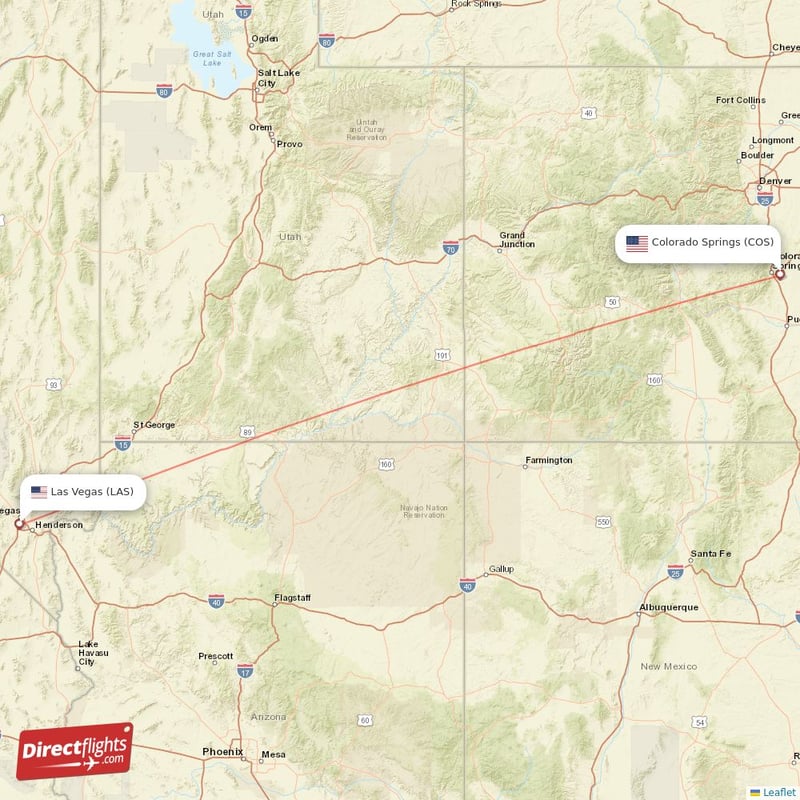
For travelers prioritizing speed and convenience, flying is undoubtedly the most efficient way to bridge the distance between Las Vegas and Colorado.
Major Airports Serving Both Destinations
- Harry Reid International Airport (LAS) in Las Vegas: A major hub, offering numerous daily flights to destinations across the U.S.
- Denver International Airport (DIA) in Denver: The largest airport in Colorado and a significant gateway to the Rocky Mountains and the surrounding region.
Flight Duration and Connections
Direct flights from Las Vegas to Denver are plentiful and typically take around 1 hour and 45 minutes to 2 hours. This duration is for the flight itself and does not include time spent on ground transportation to/from airports, security checks, or boarding. Several airlines operate direct routes, including Southwest Airlines, United Airlines, Spirit Airlines, Frontier Airlines, American Airlines, and Delta Airlines.
Cost Analysis and Booking Tips
Flight prices can vary widely based on the airline, time of year, how far in advance you book, and demand. Generally, expect prices to range from $50 to $200 for a one-way economy ticket.
- Book in Advance: Especially for peak travel seasons (e.g., ski season in winter, summer holidays), booking several weeks or months ahead can secure better rates.
- Be Flexible with Dates: Flying on weekdays or during off-peak hours often yields cheaper fares.
- Consider Budget Airlines: Spirit Airlines and Frontier Airlines frequently offer competitive prices, though be mindful of additional fees for baggage, seat selection, and other services.
- Check Multiple Platforms: Utilize flight comparison websites in addition to airline-specific sites to find the best deals.
Other Modes of Transport
While driving and flying are the dominant modes, other options exist, though they generally involve longer travel times or multiple transfers.
Bus Services
Intercity bus services, such as Greyhound, offer routes from Las Vegas to Denver. These journeys are significantly longer than driving, often taking 15-20 hours or more, depending on connections and stops. While more budget-friendly, they sacrifice speed and comfort.
Train Travel
Direct train travel between Las Vegas and Denver is not a straightforward option. Amtrak does not have a direct route connecting these two cities. Travelers would typically need to take a train from Las Vegas (via bus connection to a train station, usually in California) to a major hub like Salt Lake City or Chicago, and then transfer to another line like the California Zephyr to reach Denver. This method is incredibly time-consuming and often more expensive than flying, making it more of a scenic experience for rail enthusiasts rather than a practical transport choice for this specific route.
Planning Your Journey: Essential Travel Tips
Regardless of your chosen mode of transport, a well-planned trip enhances the experience.
Best Time to Travel
- Spring and Fall: Offer pleasant temperatures for driving, fewer crowds, and stunning scenery (wildflowers in spring, fall foliage).
- Summer: Popular for outdoor activities in Colorado but can mean higher prices and more traffic, especially on I-70 through the mountains. Las Vegas summers are extremely hot.
- Winter: Ideal for skiing in Colorado, but driving conditions can be challenging with snow and ice, particularly in mountain passes. Flights are usually reliable, but ground transport from Denver International Airport to ski resorts may require specific vehicles (4WD/AWD).
Packing Essentials
Consider the diverse climates you’ll encounter. Pack layers, sturdy walking shoes for potential detours, sunscreen, and a refillable water bottle. For winter travel, ensure you have appropriate cold-weather gear and understand chain laws for driving in Colorado’s mountains.
Accommodation Planning
If driving over two days, research and book an overnight stay in advance, especially during peak seasons. Cities like St. George, Utah, or Grand Junction, Colorado, offer convenient lodging options. For flying, plan your accommodation in Las Vegas or Denver well ahead of time.

Budgeting for the Trip
Factor in costs for fuel, potential overnight stays, food, park entrance fees for detours, and flight tickets if applicable. Setting a realistic budget will help you enjoy the journey without financial stress.
Whether you opt for the open road’s allure or the efficiency of air travel, the distance between Las Vegas and Colorado is a bridge to two vastly different, yet equally captivating, American experiences. Each mode of transport offers its own unique advantages, promising a memorable journey tailored to your travel style and preferences.
LifeOutOfTheBox is a participant in the Amazon Services LLC Associates Program, an affiliate advertising program designed to provide a means for sites to earn advertising fees by advertising and linking to Amazon.com. Amazon, the Amazon logo, AmazonSupply, and the AmazonSupply logo are trademarks of Amazon.com, Inc. or its affiliates. As an Amazon Associate we earn affiliate commissions from qualifying purchases.