
Navigating the local laws of any new destination is a crucial aspect of responsible tourism, ensuring that your trip remains enjoyable and free of unexpected complications. For those planning a visit to Arizona, understanding the state’s regulations regarding specific items, such as knives, is an essential tip for a smooth experience. While Arizona is widely known for its breathtaking landscapes, vibrant culture, and diverse outdoor activities, its legal framework concerning weapons, including various types of knives, can differ significantly from other states or countries. This insight aims to clarify the legality of butterfly knives within Arizona, providing valuable guidance for tourists.

Understanding Arizona’s General Knife Laws
Arizona has a reputation for being a relatively permissive state when it comes to firearms and other weapons. However, “permissive” does not equate to “unregulated.” The state’s knife laws are generally quite broad, allowing for the open carry of most knives and even the concealed carry of many types, provided certain conditions are met. Unlike some other jurisdictions, Arizona does not have a statewide preemption law for knives, meaning that local municipalities can, and often do, enact their own ordinances that are stricter than state law. This patchwork of regulations is vital for tourists to understand, as what might be permissible in one city, such as Phoenix, might be restricted in another, like Tucson.
The foundation of Arizona knife law, Arizona Revised Statutes (A.R.S.) § 13-3101, defines “deadly weapon” broadly and includes certain knives within this definition. However, unlike some states that specifically prohibit knives based on blade length or opening mechanism, Arizona focuses more on the intent and manner of carry. Generally, any knife can be openly carried by individuals 18 years or older who are not prohibited possessors (e.g., convicted felons). Concealed carry is also largely permitted for most knives, with exceptions for certain “prohibited weapons.” This is where the specifics of butterfly knives come into play, as their classification has been a point of legal discussion.
Specifics on Butterfly Knives (Balisongs)
Butterfly knives, also known as balisongs, are characterized by their two handles which counter-rotate around the tang, enclosing the blade when closed. Their unique opening mechanism, often used in “flipping” or “trick” maneuvers, sometimes leads to them being associated with switchblades or gravity knives, which are often heavily regulated or outright prohibited in other states.
In Arizona, the legal status of butterfly knives is generally favorable compared to many other parts of the United States. State law does not explicitly classify butterfly knives as “prohibited weapons” under A.R.S. § 13-3101, unlike certain other specific items such as switchblades (automatic knives) or gravity knives that meet particular definitions. This means that, at the state level, butterfly knives are generally considered legal to possess and carry, both openly and concealed, for individuals who are not otherwise prohibited from possessing weapons.
However, the key caveat for tourists lies in local ordinances. While the state takes a liberal stance, cities like Phoenix, Tucson, or Mesa might have specific rules. It is always prudent for travelers to research the specific municipal codes of the cities they plan to visit or pass through. An example of this is how some cities might restrict the carry of certain knives in specific public spaces, regardless of state law. For instance, possession within a secure airport area, federal buildings, or courthouses is universally prohibited.
The Nuances of Open vs. Concealed Carry in Arizona
While Arizona offers considerable freedom regarding knife carry, the distinction between open and concealed carry, and where these apply, is paramount for tourists to avoid legal missteps.
Public Spaces and Establishments
As a general rule, openly carrying a butterfly knife (or most other types of knives) is legal for adults in Arizona. This means the knife is carried in a manner that is visible to an ordinary observer, such as clipped to a pocket with the handle showing, or worn in a sheath on the belt. The philosophy here is often that if a weapon is openly displayed, its presence is known, and it is less likely to be used surreptitiously.
Concealed carry, where the knife is hidden from ordinary observation, is also largely permitted for most knives, including butterfly knives, without the need for a specific permit. This applies to individuals who are at least 18 years old and not prohibited possessors. However, certain locations remain off-limits for concealed weapons, regardless of the type. These typically include:
- Polling places on election days.
- Areas within 1,000 feet of a school (with exceptions for those legally allowed to possess weapons on school grounds).
- Federal buildings and courthouses.
- Nuclear generating stations.
- Areas where alcohol is served or consumed if you are impaired.
For tourists, particular attention should be paid to private establishments. Businesses, such as restaurants, bars, shops, or attractions like the Grand Canyon, reserve the right to prohibit weapons on their premises, whether openly carried or concealed. Signs indicating “No Weapons” or similar prohibitions should be respected to avoid trespassing charges.
Transportation Considerations

When traveling within Arizona, especially by vehicle, the carry of butterfly knives is generally consistent with the state’s open and concealed carry laws. A knife can be carried openly in a vehicle (e.g., on the dashboard, in a visible sheath) or concealed (e.g., in the glove compartment, under a seat) without issue, provided the individual is legally allowed to possess the weapon.
However, travel via public transportation (buses, light rail, etc.) may be subject to specific rules enforced by the transit authority, which could include restrictions on knives. Similarly, for air travel, Transportation Security Administration (TSA) regulations strictly prohibit knives, including butterfly knives, from being carried onto airplanes in carry-on luggage. They must be placed in checked baggage, properly sheathed or securely wrapped, and declared according to airline policy. Failure to adhere to TSA rules can result in significant federal penalties and disrupt your travel plans.
Penalties and Precautions for Visitors
Ignorance of the law is rarely an excuse. For tourists, understanding potential penalties and taking proactive precautions is essential for a worry-free visit to Arizona.
What to Do if Detained
If you find yourself in a situation where law enforcement questions you about a butterfly knife or any other weapon, it is crucial to remain calm and cooperative. Clearly state that you are a tourist and are attempting to comply with all local laws. Avoid making sudden movements or reaching for the knife. Provide identification if requested and answer questions truthfully, but remember you have the right to remain silent and to request legal counsel. Comply with all lawful orders from law enforcement officials.
Violations of knife laws, particularly those concerning prohibited weapons or carry in restricted areas, can range from misdemeanors to felonies, depending on the specific statute violated and any aggravating circumstances (e.g., intent to use in a crime). Penalties can include fines, confiscation of the weapon, and even jail time, which would severely impact any travel plans.
Best Practices for Travelers
To ensure your visit to Arizona is as smooth as possible regarding knife laws, consider these tips:
- Research Local Ordinances: Before visiting a specific city or town, check their municipal code for any local knife restrictions. Websites for city governments often provide this information.
- Consider Your Activities: If your travel involves activities where a knife is genuinely useful (e.g., camping, hiking in the Sonoran Desert), carry an appropriate tool for that purpose and understand the laws surrounding it. For general urban exploration, assess if carrying a butterfly knife is truly necessary.
- Discretion is Key: Even if legal, openly carrying a butterfly knife, especially if you are practicing “flipping” in public, might draw unwanted attention from law enforcement or concerned citizens. Discretion can prevent unnecessary encounters.
- Secure Storage: When not carrying, ensure your knife is stored securely, especially in a vehicle or hotel room, out of sight and reach, particularly if traveling with children.
- Avoid Prohibited Places: Be mindful of signage at businesses and avoid carrying knives into places like federal buildings, airports (beyond checked luggage), or schools.
- When in Doubt, Leave it Out: If you are unsure about the legality of carrying a butterfly knife in a particular situation or location, it is always safer to leave it securely stored.
Beyond Butterfly Knives: Other Restricted Items
While the focus here has been on butterfly knives, it is worth noting that Arizona law does prohibit certain other weapons which tourists should be aware of.
Switchblades and Other Prohibited Weapons
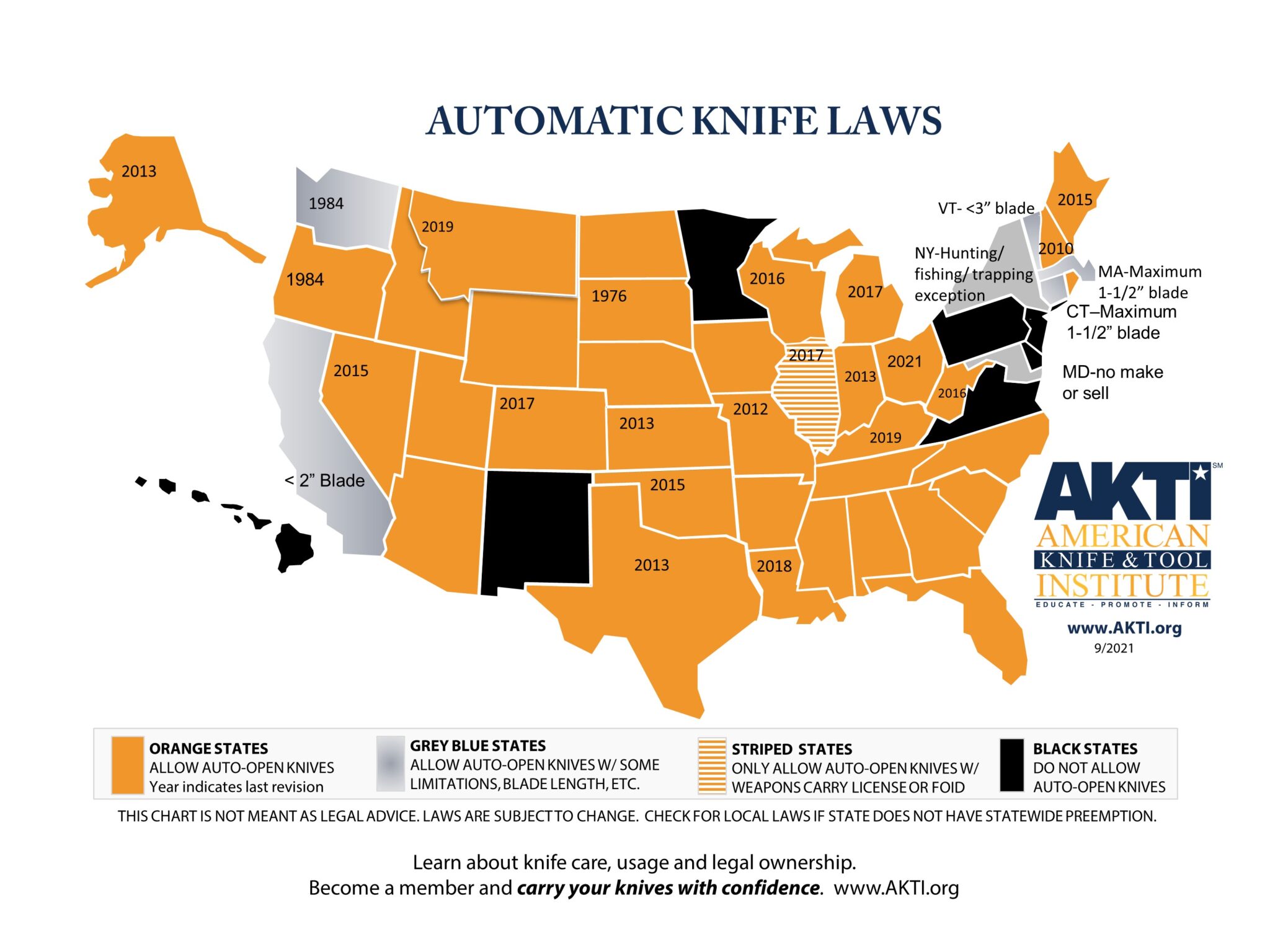
Arizona law generally permits the possession of automatic knives, often referred to as switchblades, for individuals 18 years or older who are not prohibited possessors. However, the definition of a “prohibited weapon” under A.R.S. § 13-3101 does include “a gravity knife” and “a knife having a blade that opens by a mechanism actuated by a thumb roll or a spring, and includes knives known as butterfly knives.” This specific wording can sometimes cause confusion. It is crucial to note that court interpretations and legislative updates sometimes clarify these definitions. While some sources might suggest that the state law broadly bans switchblades and gravity knives, the current common understanding among legal experts and practitioners is that the state law’s prohibition on “automatic knives” is very narrow, typically only applying if they are combined with a specific characteristic that makes them especially dangerous (e.g., certain types of spring-loaded devices that eject a blade). Many modern “switchblades” that are simply push-button automatic knives are not considered prohibited weapons under Arizona state law. The inclusion of “butterfly knives” in some older or misinterpreted definitions should be clarified with current legal advice, as the general consensus is that plain butterfly knives are not per se prohibited under state law, unless combined with another prohibited feature. This underscores the need for careful legal interpretation.
Federal vs. State Laws
It is also important to remember that federal laws apply on federal lands and properties within Arizona, which can be stricter than state law. This includes national parks like the Grand Canyon National Park or national forests. Always check the specific regulations for federal lands before carrying any type of knife.
Enjoying Arizona Responsibly
Arizona offers an incredibly rich array of experiences, from exploring the vibrant streets of Scottsdale to hiking the majestic trails of Sedona. For tourists, understanding the nuances of local laws, especially regarding items like butterfly knives, is an integral part of responsible and respectful travel. While state law is generally quite accommodating for butterfly knives, vigilance regarding local ordinances, private property rules, and common sense will ensure your trip is memorable for all the right reasons, allowing you to focus on the adventure and beauty Arizona has to offer. Prioritizing safety and legality over convenience or display ensures a smooth, enriching experience in the Grand Canyon State.
LifeOutOfTheBox is a participant in the Amazon Services LLC Associates Program, an affiliate advertising program designed to provide a means for sites to earn advertising fees by advertising and linking to Amazon.com. Amazon, the Amazon logo, AmazonSupply, and the AmazonSupply logo are trademarks of Amazon.com, Inc. or its affiliates. As an Amazon Associate we earn affiliate commissions from qualifying purchases.