
Understanding the legal framework governing law enforcement tools is a crucial aspect of navigating daily life and travel within any state, particularly for residents and visitors alike who prioritize informed citizenship and personal safety. In California, a state renowned for its diverse landscapes and dynamic communities, the use and legality of police batons by authorized peace officers are subject to specific regulations, policies, and ongoing public discourse. Far from being a simple yes or no question, the legality of police batons involves a nuanced interplay of state law, departmental policy, constitutional principles, and established case law that guides their deployment in the field. This exploration aims to shed light on these complexities, offering an insightful look into how this particular aspect of law enforcement impacts the lifestyle of Californians and those visiting the Golden State.
The Legal Landscape of Law Enforcement Tools in California
The legality of police batons in California is rooted in the broader authority granted to law enforcement agencies and their officers to maintain public order and enforce laws. Unlike private citizens, who face strict prohibitions on carrying certain types of weapons, peace officers are endowed with specific powers to possess and use equipment deemed necessary for their duties. This distinction is critical and is codified within the California Penal Code, which outlines the definitions of various weapons and exemptions for law enforcement personnel.
Statutory Authority and Exemptions
Under California law, a “baton” or “club” can be classified as a dangerous weapon if carried by a private citizen without proper authorization. However, California Penal Code sections explicitly exempt regularly employed and paid peace officers from these prohibitions when carrying such instruments in the course of their official duties. This exemption is not blanket; it is contingent upon the officer being properly trained and authorized by their employing agency. The law recognizes that officers often encounter situations requiring non-lethal force options to control uncooperative individuals, defend themselves, or protect others. The baton serves as one such tool in the force continuum available to officers.
Constitutional Principles Guiding Force Use
Beyond state statutes, the use of force by law enforcement, including batons, is ultimately governed by the Fourth Amendment of the United States Constitution, which protects individuals from unreasonable searches and seizures. The U.S. Supreme Court‘s landmark decision in Graham v. Connor established the “objective reasonableness” standard for evaluating an officer’s use of force. This standard requires judging the force from the perspective of a reasonable officer on the scene, rather than with the 20/20 vision of hindsight, and considers factors such as the severity of the crime at issue, whether the suspect poses an immediate threat to the safety of the officers or others, and whether they are actively resisting arrest or attempting to evade arrest by flight. These constitutional mandates heavily influence the policies and training around baton use within every law enforcement agency in California.
Understanding the Baton: Classification and Authorized Use
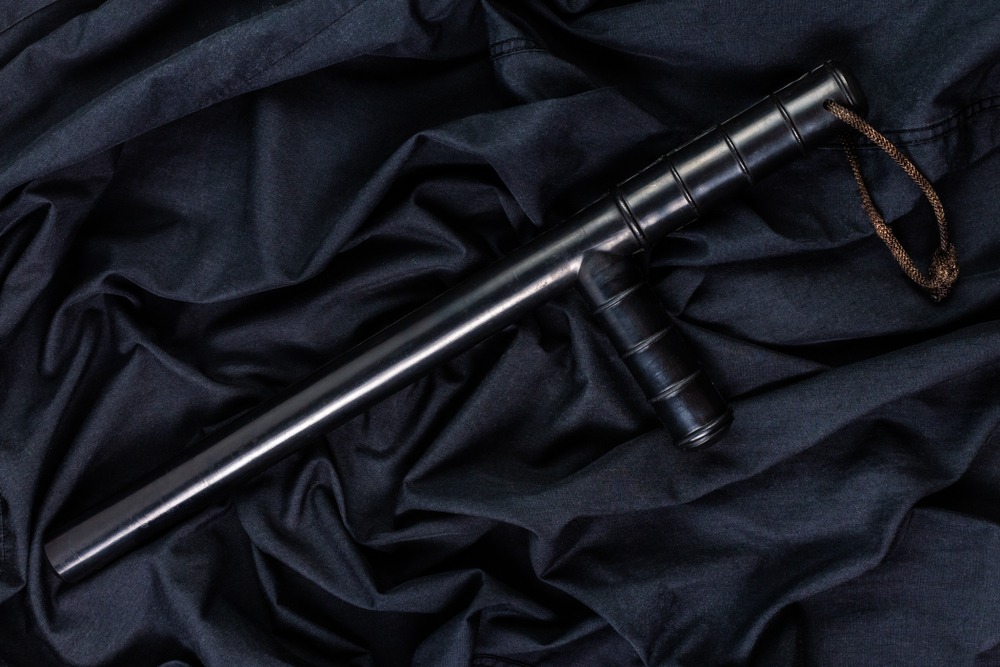
The term “baton” itself can encompass a variety of instruments. Historically, police carried wooden nightsticks. Today, modern law enforcement agencies in California typically issue expandable batons, made of steel or other durable materials, which can be collapsed for easy carrying and quickly extended when needed. These tools are distinct from firearms and other less-lethal options like tasers or pepper spray, each having its own specific protocols for deployment.
Types of Batons and Their Purpose
Modern police batons are primarily defensive and control tools. They are designed to:
- Create Distance: Allow an officer to keep a safe distance from a combative subject.
- Gain Compliance: Through pain compliance techniques, encouraging an individual to cease resistance.
- Self-Defense: Protect an officer from an assault.
- Breaking Barriers: In certain situations, they can be used to break windows or open doors during emergencies.
The expandable baton’s design allows for versatility and a reduced profile when not in use, making it a preferred choice over older, fixed-length batons for many departments. Regardless of the type, the underlying principle of its use remains consistent: it is a tool of force, intended to be used judiciously and proportionally to the threat encountered.
Departmental Policies and the Force Continuum
Every law enforcement agency in California, from the Los Angeles Police Department (LAPD) to the smallest municipal police force, develops its own use-of-force policy, which must align with state and federal laws. These policies typically outline a “force continuum,” a guideline that describes the escalating levels of force an officer may use in response to a subject’s resistance. The baton typically falls within the “hard empty hand techniques” or “less-lethal weapons” category, meaning it is considered a significant step above verbal commands or physical presence but below potentially lethal force. Officers are trained to apply baton strikes to specific muscle groups to minimize the risk of serious injury, avoiding sensitive areas like the head, neck, and groin unless lethal force is justified. This strategic application underscores the baton’s role as a tool for control rather than severe harm.
Training, Policy, and Accountability in Baton Deployment
The mere legality of possessing a baton does not equate to unrestricted use. A cornerstone of responsible law enforcement in California is rigorous training, clear policy guidelines, and robust accountability mechanisms that govern the use of all force options, including batons. These elements are critical in ensuring that batons are employed only when necessary and in a manner consistent with public safety and constitutional rights.
Mandatory Training and Certification
Before a peace officer in California is authorized to carry and use a baton, they must undergo comprehensive training. This training typically covers:
- Legal Standards: Detailed instruction on the Fourth Amendment and Graham v. Connor reasonableness standard.
- Departmental Policy: In-depth review of the agency’s specific use-of-force policies.
- Tactical Application: Hands-on training in various baton strikes, blocks, and control techniques, emphasizing de-escalation and target areas designed to minimize injury while maximizing effectiveness.
- Scenario-Based Learning: Practical exercises simulating real-world encounters to develop decision-making skills under stress.
- De-escalation Techniques: Training often integrates de-escalation strategies, emphasizing that the baton, like any force option, is a last resort after verbal commands and other less intrusive methods have failed or are deemed inappropriate for the threat level.
Ongoing training and re-certification are often required to ensure officers maintain proficiency and stay updated on evolving legal standards and best practices.
Reporting and Review of Force Incidents
Accountability is paramount. When a peace officer uses a baton to apply force, it is typically considered a reportable use-of-force incident. Most California law enforcement agencies require officers to document such incidents thoroughly. These reports are then subject to multiple layers of review, usually by supervisors and internal affairs divisions, to determine if the force used was consistent with policy, training, and legal standards. Incidents involving serious injury or public complaints may trigger more extensive investigations, potentially involving civilian oversight boards or external agencies. This review process in cities like Sacramento or Los Angeles is a vital safeguard against misuse and reinforces the principle of proportionate force.
Public Interaction and Knowing Your Rights
For residents and visitors alike, understanding the legal framework surrounding police batons is not merely an academic exercise; it impacts personal safety and interactions with law enforcement. A fundamental aspect of navigating public life in California involves knowing your rights and understanding what to expect during encounters with peace officers.
What to Expect During an Encounter
While an officer having a baton on their person is normal, its use should be rare and justifiable. If you are stopped or approached by law enforcement, remember the following:
- Remain Calm and Respectful: Even if you disagree with the officer, maintaining a calm demeanor can de-escalate potential tensions.
- Comply with Lawful Orders: Officers have the authority to issue commands. Non-compliance, especially if it involves resistance, can escalate a situation and potentially justify the use of force, including a baton.
- Do Not Resist: Physically resisting an officer’s lawful actions can lead to injury and additional charges.
- State Your Intentions Clearly: If you need to reach for identification or adjust your clothing, inform the officer verbally before doing so.
- Document if Possible: If you witness or are involved in an incident where you believe excessive force was used, note details, seek medical attention if injured, and consider filing a formal complaint.
Understanding that officers are authorized to use tools like batons, but only under specific circumstances and according to strict guidelines, helps individuals make informed decisions during potentially stressful interactions.

The Role of Transparency and Oversight
The continuous public discussion around police use of force, including batons, highlights the importance of transparency and robust civilian oversight. Many agencies in California are actively engaged in initiatives to build community trust, which often includes publishing use-of-force policies and data. Advocacy groups, civil rights organizations, and concerned citizens play a vital role in holding law enforcement accountable and pushing for reforms that ensure effective policing practices also uphold individual liberties. Being informed about these dynamics is an essential part of responsible citizenship and ensures a safer, more transparent civic lifestyle for everyone in California.
In conclusion, police batons are indeed legal for authorized peace officers to carry and use in California, provided such use adheres to stringent legal standards, departmental policies, and extensive training. This complex framework underscores a commitment to balancing public safety with individual rights, a balance crucial for the lifestyle and well-being of all who live in or visit the diverse communities across the state.
LifeOutOfTheBox is a participant in the Amazon Services LLC Associates Program, an affiliate advertising program designed to provide a means for sites to earn advertising fees by advertising and linking to Amazon.com. Amazon, the Amazon logo, AmazonSupply, and the AmazonSupply logo are trademarks of Amazon.com, Inc. or its affiliates. As an Amazon Associate we earn affiliate commissions from qualifying purchases.