
California beckons millions of travelers each year with its stunning coastlines, vibrant cities, and diverse landscapes. From the sun-drenched beaches of Southern California to the majestic redwoods of the north, the Golden State offers an unparalleled array of experiences. However, for firearm owners considering a trip to or through California, understanding the state’s intricate and often stringent gun laws is not just a recommendation—it’s an absolute necessity. Unlike many other states, California maintains some of the nation’s most restrictive regulations regarding firearm ownership and, particularly, concealed carry. This guide aims to demystify the complexities surrounding concealed carry in California for both residents and visitors, ensuring you are well-informed before you embark on your California adventure.

Navigating California’s Strict Firearm Landscape
California’s approach to firearm regulation is characterized by a “may issue” philosophy for concealed carry permits, coupled with a wide range of state-specific restrictions that go far beyond federal mandates. This legal framework significantly impacts who can carry a concealed weapon and under what circumstances, making it critical for anyone traveling to or residing in the state to be intimately familiar with these rules.
The “May Issue” Doctrine Explained
At the heart of California’s concealed carry policy is the “may issue” doctrine. This means that local law enforcement agencies—typically the county sheriff for unincorporated areas and cities without their own police departments, or the city police chief for incorporated cities—have broad discretion in deciding whether to grant a Concealed Carry Weapon (CCW) permit. This stands in stark contrast to “shall issue” states, where permits are granted as long as an applicant meets objective legal criteria, with little to no discretion from issuing authorities.
Historically, California’s “may issue” policy included a “good cause” requirement, mandating that applicants demonstrate a specific, compelling reason beyond general self-defense for needing a concealed firearm. This often led to permits being issued only in exceptional circumstances. While the landmark 2022 Supreme Court decision in New York State Rifle & Pistol Association Inc. v. Bruen (commonly referred to as Bruen) significantly altered the landscape for “may issue” states by striking down “good cause” requirements, California has responded by implementing new legislative measures. Post-Bruen, California has redefined its permit requirements, shifting emphasis to factors like “good moral character” and expanding “sensitive places” where even permit holders cannot carry. The discretionary nature, while modified, largely persists through these new avenues.
Requirements for a California Concealed Carry Weapon (CCW) Permit
Obtaining a CCW permit in California is a multi-step process, primarily designed for residents. Non-residents generally face insurmountable hurdles, as residency is almost universally a prerequisite. For those who are eligible residents, the general requirements include:
- Residency: Applicants must be residents of the county in which they are applying. This immediately precludes the vast majority of out-of-state travelers from obtaining a California CCW permit.
- Age: Must be at least 21 years old.
- Good Moral Character: This is a subjective and often controversial requirement. While “good cause” was struck down by Bruen, “good moral character” has become a central focus for issuing authorities, allowing for considerable discretion. It involves background checks, interviews, and a review of an applicant’s history, often seeking to determine if the applicant is a “suitable” person to carry a firearm.
- Training: Applicants must complete a specified firearm safety and proficiency course. The duration and content of these courses can vary by county but typically involve classroom instruction on firearm laws, safe handling, and live-fire qualification.
- Absence of Disqualifying Factors: This includes a clean criminal record, no history of domestic violence, no outstanding warrants, and no prohibitions under federal or state law (e.g., certain mental health determinations).
- Application Process: The process involves submitting an application to the local issuing authority (sheriff or police chief), undergoing a comprehensive background investigation, fingerprinting, multiple interviews, and potentially psychological evaluations. The entire process can take many months, if not over a year.
Given these extensive requirements and the “may issue” discretion, obtaining a CCW permit in California is notoriously difficult, particularly in more populated liberal-leaning counties.
Non-Residents and Out-of-State Permits: A Complex Reality
For travelers from other states, the ability to conceal and carry in California becomes even more challenging. The state’s strict stance on firearms extends to how it treats permits issued by other jurisdictions.
California’s Lack of Reciprocity
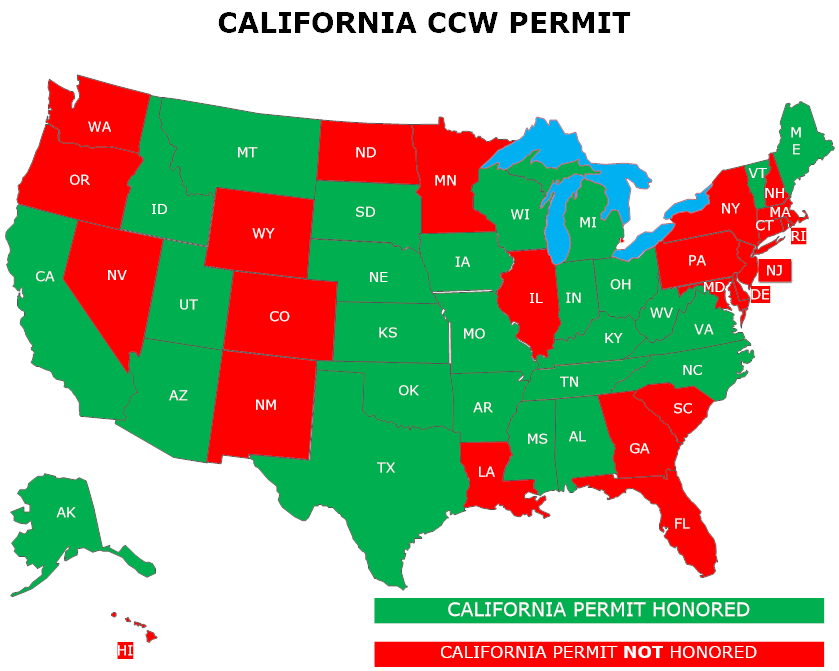
One of the most critical pieces of information for any out-of-state firearm owner is that California does not recognize concealed carry permits from any other state. This means that if you hold a valid CCW permit from your home state, it becomes invalid the moment you cross the California state line. Attempting to conceal and carry in California with an out-of-state permit is treated as carrying a concealed weapon without a permit, which carries severe legal consequences.
This lack of reciprocity is a significant departure from the policies of many other states, which often honor permits from a wide range of jurisdictions. Therefore, travelers must proceed with the assumption that their out-of-state permit offers no legal protection for concealed carry within California.
Traveling Through California with a Firearm
While concealed carry for non-residents is effectively prohibited, federal law does provide some protections for individuals transporting firearms through states where they are not licensed to carry. The Firearm Owners’ Protection Act (FOPA), specifically 18 U.S.C. § 926A, allows for the interstate transportation of firearms. However, this protection comes with strict conditions that must be rigorously adhered to:
- Unloaded: The firearm must be unloaded.
- Locked Container: The firearm must be placed in a locked container, inaccessible from the passenger compartment. This means a trunk or a locked toolbox in the bed of a truck, or a locked case or container within the passenger compartment that cannot be readily accessed by the vehicle’s occupants.
- Separate Ammunition: Ammunition must also be stored in a separate container or otherwise inaccessible, or at least separate from the firearm itself.
- Direct Passage: The travel must be for the purpose of passing through the state, with no intent to remain in California beyond what is reasonably necessary for the journey (e.g., gas, food, lodging overnight). Any deviation from a direct route could potentially invalidate FOPA protection.
It is crucial to understand that FOPA only covers transportation. Once you reach your destination within California, state and local laws concerning firearm possession will apply. This means that even if legally transported, possession of certain types of firearms (e.g., “assault weapons” as defined by California law) or high-capacity magazines may be illegal. For travelers whose ultimate destination is California, it is generally advisable to leave firearms at home or consult a California attorney before traveling with them.
Consequences of Non-Compliance: What Travelers Need to Know
Ignorance of the law is never a valid defense, especially when dealing with firearm regulations in a state as strict as California. The penalties for unlawful concealed carry or other firearm violations can be severe, significantly impacting your travel plans, personal freedom, and future legal standing.
Penalties for Unlawful Concealed Carry
Carrying a concealed firearm without a valid California CCW permit can lead to serious charges. Depending on the specific circumstances, location, and the individual’s criminal history, this offense can range from a misdemeanor to a felony.
- Misdemeanor: Punishable by up to one year in county jail and/or substantial fines.
- Felony: In certain situations, such as carrying a loaded firearm in public, carrying a firearm in a prohibited area (like a school zone or government building), or having a prior criminal record, the charge can be elevated to a felony. Felony convictions carry much harsher penalties, including state prison sentences (ranging from 16 months to several years), significant fines, and a lifetime prohibition on owning firearms under both state and federal law.
Beyond immediate legal repercussions, a conviction can have long-lasting effects, including difficulty with employment, housing, and even future travel. For out-of-state residents, a felony conviction in California could impact their ability to own firearms even in their home state.
The Importance of Due Diligence
Given the complexities and severe penalties, due diligence is paramount. Before embarking on any trip to California with a firearm, or even if you are a California resident considering carrying, it is essential to:
- Research Current Laws: Firearm laws are dynamic and can change frequently, especially in California. Always consult the most up-to-date statutes and local ordinances.
- Avoid Prohibited Places: Even with a California CCW permit, there are numerous “sensitive places” where carrying a firearm is prohibited, including schools, government buildings, airports, courthouses, polling places, and many private establishments that post “no firearms” signs.
- Consult Legal Counsel: If you have any doubts or specific circumstances, seeking advice from a California attorney specializing in firearm law is the safest course of action. They can provide personalized guidance based on your situation.
Alternatives and Best Practices for Firearm Owners Visiting California
Recognizing the challenges of concealed carry in California, many firearm owners choose alternative strategies when traveling to the state. The primary goal should always be to comply fully with California law to avoid any legal entanglements.
Storing Firearms Safely and Legally
For those who wish to visit California but cannot legally carry, the most straightforward approach is often to leave firearms at home. If bringing a firearm is deemed absolutely necessary (e.g., for competitive shooting, hunting in a designated area, or if moving to the state), understanding legal storage is crucial.
- Securing Firearms at Home: Before departing for California, ensure your firearms are securely stored in your home state, ideally in a locked safe or with trigger locks, preventing unauthorized access.
- Shipping Through an FFL: For longer stays or moves, it is legally possible to ship firearms to a Federal Firearm License (FFL) holder in California, who can then legally transfer them to you once you comply with all California background check and waiting period requirements (if applicable). This is a complex process and generally not practical for short tourist visits. Moreover, specific types of firearms banned in California cannot be imported.
- Secure Vehicle Storage: As mentioned under FOPA, if transporting a firearm through California, it must be unloaded and locked in a container, ideally in the trunk or a place not readily accessible from the passenger compartment. For any stop, always ensure the firearm remains secured.

Focus on Personal Safety Without a Firearm
For many travelers, particularly those who normally carry for self-defense, visiting California necessitates a shift in personal safety strategy.
- Situational Awareness: Always be aware of your surroundings, especially in unfamiliar areas or crowded tourist spots.
- Avoidance: Whenever possible, avoid situations or areas that feel unsafe. Trust your instincts.
- Non-Lethal Self-Defense: Consider carrying legal, non-lethal self-defense tools such as pepper spray (with restrictions on size and content in California), or taking self-defense classes focused on unarmed techniques.
- Travel in Groups: When exploring cities or remote areas, traveling with companions can enhance safety.
- Emergency Preparedness: Have emergency contacts readily available, know how to contact local authorities, and inform someone of your itinerary.
In conclusion, while California offers an incredible array of travel experiences, it presents a uniquely challenging environment for firearm owners, particularly concerning concealed carry. The state’s “may issue” policy, lack of reciprocity for out-of-state permits, and strict transportation requirements mean that for most visitors, concealed carry is not a viable or legal option. Understanding these laws, exercising extreme caution, and prioritizing legal compliance are paramount to ensuring a safe, enjoyable, and lawful trip to the Golden State. Always confirm the most current laws before your journey, and when in doubt, consult with a qualified California attorney.
LifeOutOfTheBox is a participant in the Amazon Services LLC Associates Program, an affiliate advertising program designed to provide a means for sites to earn advertising fees by advertising and linking to Amazon.com. Amazon, the Amazon logo, AmazonSupply, and the AmazonSupply logo are trademarks of Amazon.com, Inc. or its affiliates. As an Amazon Associate we earn affiliate commissions from qualifying purchases.