
The history of California is a rich tapestry woven from diverse cultures, colonial ambitions, and transformative events. To answer the question directly, yes, a significant portion of what is now the U.S. state of California was indeed once part of Mexico. This historical truth is not merely a footnote; it is a foundational element that has profoundly shaped the region’s famous places, architectural styles, cultural heritage, and geographical identity, making it a living landmark of converging histories. Understanding this past is essential for appreciating the unique character of California today.
The Spanish Colonial Legacy: Before Mexican Independence
Long before California became part of Mexico, it was claimed by Spain. From the late 18th century, Spain began its earnest colonization efforts in Alta California, the northernmost province of New Spain. This era laid the groundwork for many of the most enduring physical and cultural landmarks seen in California today.
Early Exploration and Missions
Spanish exploration of the California coast began as early as the 16th century, but permanent settlements were not established until the late 1760s. The primary drivers of this colonization were the Franciscan missions, military presidios, and civil pueblos. Father Junípero Serra, a central figure in this era, established the first of 21 missions in San Diego in 1769. These missions, stretching from San Diego to Sonoma, served as centers for religious conversion, agricultural production, and the imposition of Spanish culture on indigenous populations.
Architecturally, the missions are iconic landmarks. Built with adobe, tile roofs, and grand courtyards, they represent a distinct Spanish Colonial style. Many have been meticulously preserved or restored, such as Mission San Juan Capistrano, Mission Santa Barbara, and Mission San Gabriel Archangel, drawing visitors to explore their historical significance and serene beauty. These structures are not just buildings; they are tangible links to California’s earliest colonial period, embodying both religious zeal and imperial ambition. Alongside the missions, the Spanish also established presidios (military forts) in strategic locations like San Diego, Monterey, San Francisco, and Santa Barbara, protecting the nascent settlements and asserting Spanish control over the territory.
Establishing Ranchos and Pueblos
In addition to the missions and presidios, the Spanish introduced the system of land grants, or ranchos, to encourage settlement. While initially fewer in number compared to the later Mexican era, these early grants marked the beginnings of private land ownership in California. Civilian settlements, or pueblos, also began to take root, most notably Pueblo de Los Ángeles (now Los Angeles) founded in 1781. These pueblos were designed as agricultural communities to support the presidios and were laid out with central plazas, a hallmark of Spanish urban planning that can still be observed in the historic cores of many California cities today. The architectural legacy of this period, characterized by thick adobe walls, red-tiled roofs, and enclosed courtyards, set a distinct style that would profoundly influence future California architecture.
Mexican California: A Brief but Formative Era
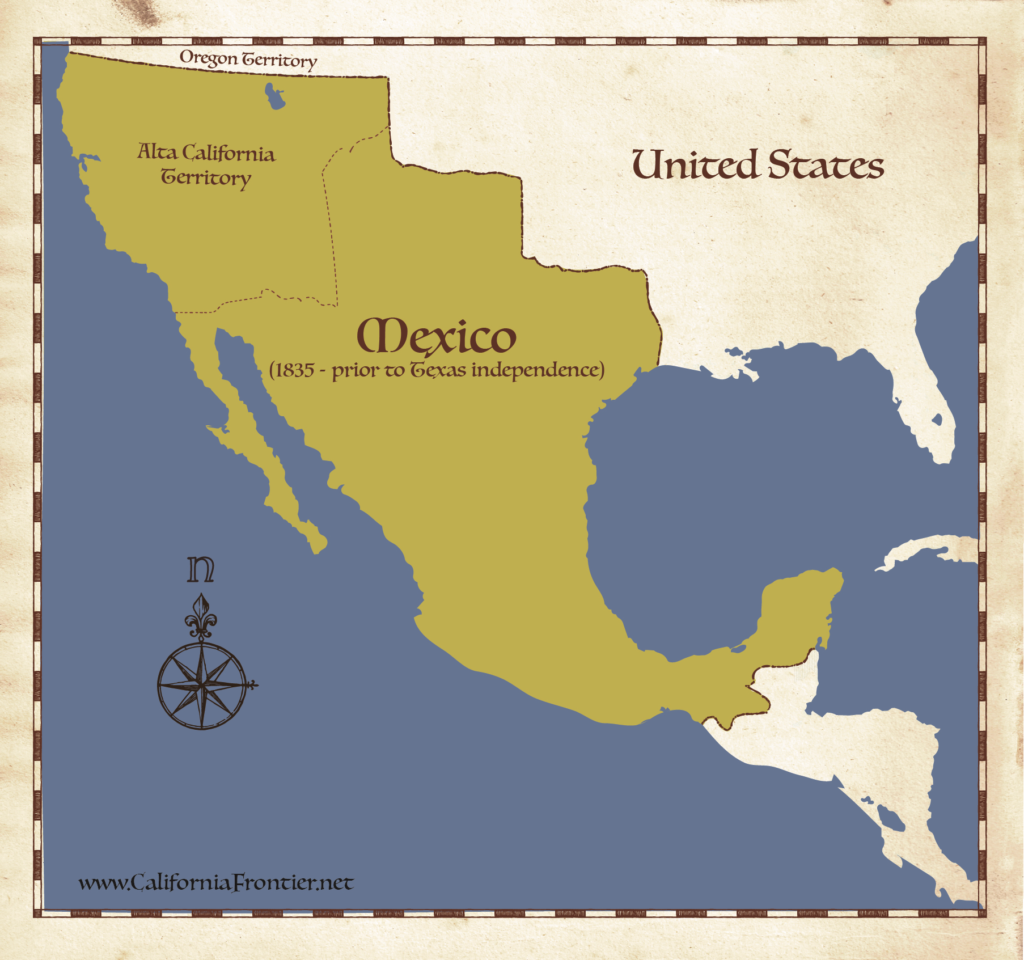
In 1821, after a decade-long struggle, Mexico achieved independence from Spain. This pivotal event transformed Alta California from a remote Spanish colony into a frontier province of the new Mexican Republic. Although Mexican rule lasted only 25 years, it was a period of significant change and indelible impact on the social, economic, and political landscape of California.
Securing Independence and Governance
With independence, Alta California officially became a Mexican territory. The new Mexican government struggled to assert strong control over the distant province, often leading to internal strife among local Californios (residents of Mexican California) and newly appointed Mexican governors. Despite this, the Mexican era witnessed the establishment of a more defined provincial administration and a greater sense of distinct Californio identity, separate from both Spain and the central Mexican government.
Secularization and the Rancho Era’s Zenith
Perhaps the most impactful policy of the Mexican period was the secularization of the missions in the 1830s. The vast lands held by the missions, which had grown to encompass much of the most fertile territory, were reallocated. While some lands were intended for indigenous peoples, the majority were distributed as massive land grants to influential Californios. This led to the golden age of the rancho system.
Under Mexican rule, thousands of square miles of land were parceled out, creating immense cattle ranches. These ranchos became the dominant economic and social units of Mexican California. Figures like Mariano Guadalupe Vallejo and Pío Pico became powerful rancheros, presiding over vast estates that served as self-sufficient communities. The enduring legacy of this era is seen in numerous place names throughout California (e.g., Rancho Bernardo, Rancho Cucamonga) and in the few remaining original adobe ranch homes that serve as historical landmarks. For instance, Olvera Street in Los Angeles, though later romanticized, traces its roots to this period, embodying the Mexican pueblo heritage. The rancho era cemented a pastoral, hacienda-style culture that, while fleeting, left a deep impression on the landscape and social structure.
The Mexican-American War and the Treaty of Guadalupe Hidalgo
The mid-19th century brought an abrupt and definitive end to Mexican rule in California. The westward expansion of the United States and simmering territorial disputes led to the Mexican-American War (1846-1848).
Conflict and Cession
During the war, American forces quickly moved to seize California. The Bear Flag Revolt in Sonoma in June 1846, where American settlers declared the short-lived California Republic, signaled the beginning of the end for Mexican sovereignty. American military forces, led by figures like John C. Frémont and Robert F. Stockton, soon took control of key areas.
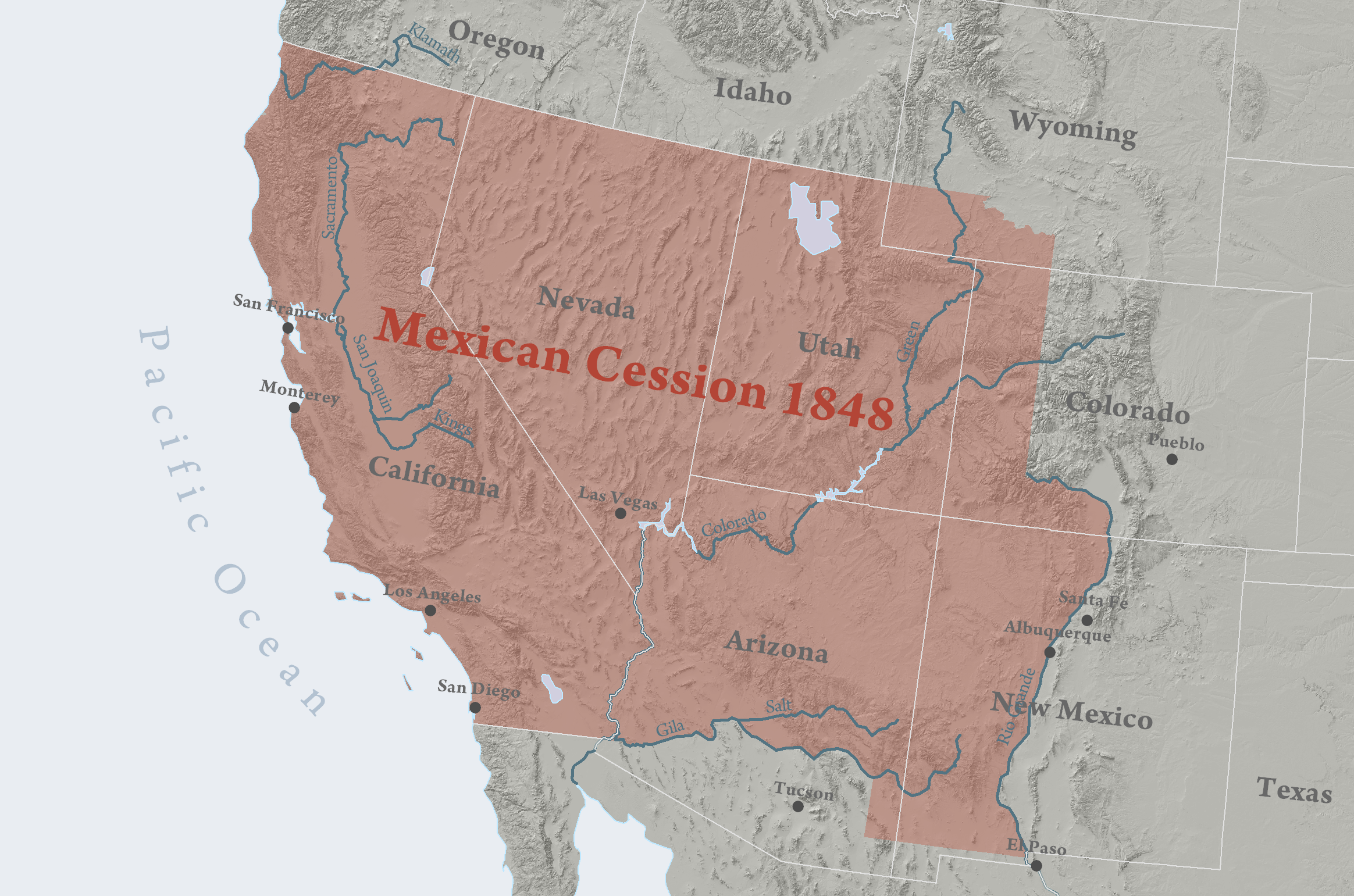
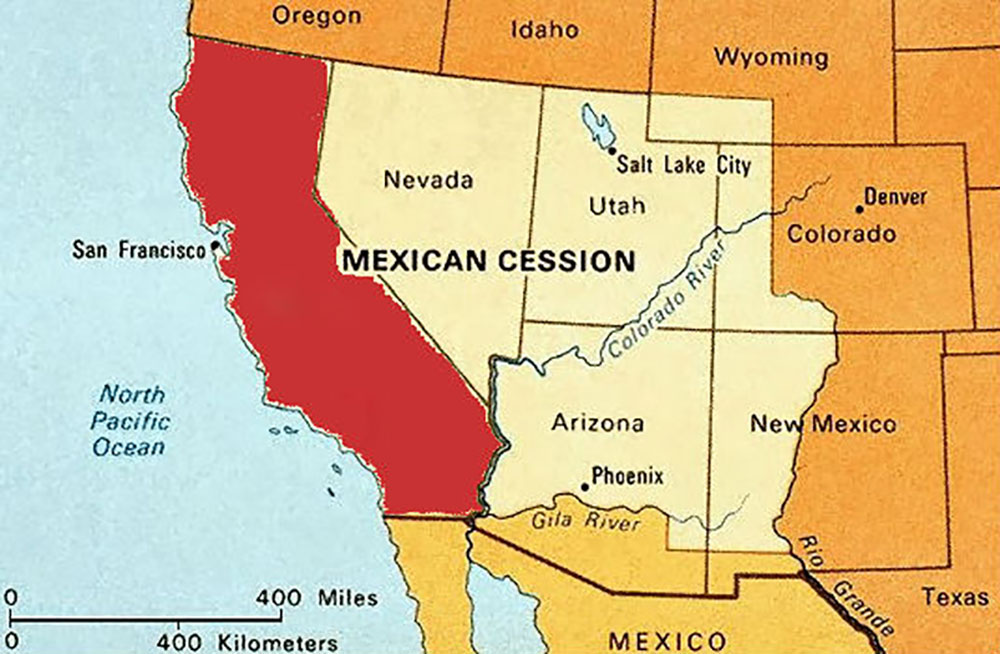
The war concluded with the signing of the Treaty of Guadalupe Hidalgo in February 1848. Under the terms of this treaty, Mexico ceded vast territories, including Alta California and much of what is now the American Southwest, to the United States for $15 million. This treaty fundamentally redrew the map of North America, making the former Mexican province of Alta California a U.S. territory.
The Gold Rush and Americanization
Barely a week before the Treaty of Guadalupe Hidalgo was signed, gold was discovered at Sutter’s Mill near Coloma. This discovery ignited the California Gold Rush, an event that dramatically accelerated the Americanization of California. The influx of hundreds of thousands of migrants from around the world rapidly transformed the region from a sparsely populated frontier into a bustling, dynamic territory. Within two years, in 1850, California was admitted to the Union as the 31st state.
The rapid demographic and economic shifts largely overshadowed the existing Mexican and Californio culture. Many Californios struggled to retain their land grants and cultural identity amidst the flood of new settlers and the imposition of a new legal system. Despite this, the foundations laid during the Spanish and Mexican periods proved resilient.
Enduring Cultural Landmarks and Architectural Footprints
Today, the historical ties between California and Mexico are visible everywhere, from street names to architectural styles, making the entire state a landmark of its complex past.
Mission Revival and Spanish Colonial Architecture
The legacy of Spanish Colonial and Mexican architecture is one of California’s most defining landmark features. The iconic red tile roofs, stucco walls, archways, and bell towers characteristic of the Spanish missions inspired the Mission Revival architectural style in the late 19th and early 20th centuries. This style, along with Spanish Colonial Revival, became synonymous with California identity, influencing everything from private homes to public buildings like the Mission Santa Barbara Courthouse and the California Tower in San Diego’s Balboa Park. These architectural styles are not merely aesthetic choices; they are direct acknowledgments and reinterpretations of the state’s foundational heritage.
Place Names and Cultural Traditions
Hundreds of California cities, towns, rivers, and mountains bear Spanish or Mexican names, serving as linguistic landmarks of the past. Los Angeles, San Francisco, San Diego, Sacramento, Santa Barbara, and Monterey are just a few examples. These names tell stories of saints, natural features, and early settlements. Beyond names, cultural traditions, especially in music, cuisine, and celebrations, show a strong Mexican influence. Festivals like Cinco de Mayo and Día de los Muertos are celebrated widely, reflecting the deep and ongoing connection to Mexican heritage.
Preserving Historical Sites
Numerous sites across California are dedicated to preserving and interpreting this multifaceted history. Old Town San Diego State Historic Park, El Pueblo de Los Ángeles Historical Monument, and the Presidio of San Francisco offer immersive experiences into the Spanish and Mexican eras. These parks and museums act as living landmarks, allowing visitors to walk through adobe buildings, explore historic plazas, and understand the daily lives of Californios before American statehood. They illuminate the transition from indigenous lands to a Spanish colony, then a Mexican province, and finally an American state.
In conclusion, California’s past as part of Mexico is an undeniable chapter that continues to resonate in its present. From the architecture of its missions and historic pueblos to the very names of its cities and the cultural flavors it embraces, the golden state stands as a testament to a complex history of successive claims, transitions, and the lasting legacy of its Spanish and Mexican foundations. These historical layers are what make California a unique collection of landmarks, each telling a piece of its rich, evolving story.
LifeOutOfTheBox is a participant in the Amazon Services LLC Associates Program, an affiliate advertising program designed to provide a means for sites to earn advertising fees by advertising and linking to Amazon.com. Amazon, the Amazon logo, AmazonSupply, and the AmazonSupply logo are trademarks of Amazon.com, Inc. or its affiliates. As an Amazon Associate we earn affiliate commissions from qualifying purchases.