
The question of whether California retains the death sentence is not merely a legal technicality; it delves deep into the complex, often contradictory, fabric of the Golden State‘s lifestyle. Known globally for its progressive politics, technological innovation, and vibrant culture, California also navigates a challenging relationship with capital punishment, a debate that profoundly reflects its diverse values, evolving societal norms, and the very essence of its approach to justice. Understanding this nuanced position is key to grasping a significant facet of the California lifestyle – one that grapples with ethical dilemmas, economic realities, and the persistent pursuit of a more equitable society.

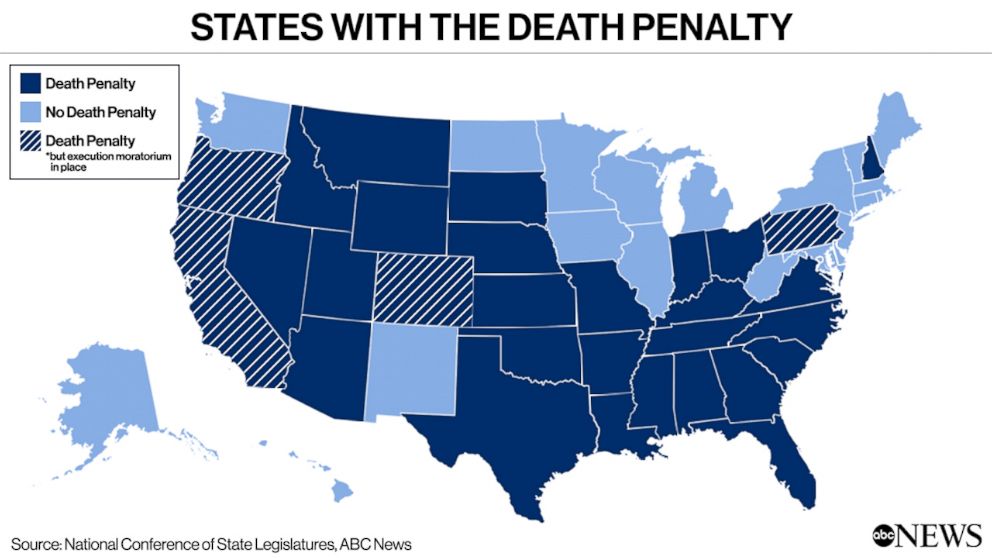
While the death penalty remains on the books in California’s statutes, its practical application has been halted by an executive moratorium, creating a unique and often misunderstood situation. This article will explore this intricate landscape, offering insight into the historical context, the current moratorium, public sentiment, and the broader implications for the California lifestyle.
California’s Complex Legal Tapestry: A Defining Aspect of its Lifestyle
The legal landscape of California is as dynamic and varied as its geography. From the bustling urban centers of Los Angeles and San Francisco to the sprawling farmlands and serene coastlines, the state’s laws reflect a constant negotiation between tradition and innovation, individual liberties and public safety. The death penalty, in particular, highlights this tension, serving as a focal point for debates about morality, efficacy, and the role of the state in administering ultimate justice. For residents and those considering a life in California, understanding these legal undercurrents is integral to appreciating the state’s unique societal lifestyle.
The Golden State’s Distinctive Legal Identity
California often sets trends for the rest of the United States in areas ranging from environmental protection to social justice. This progressive image, however, coexists with a robust criminal justice system, which, for decades, included a fully operational death penalty. The state’s legal identity is shaped by a commitment to human rights balanced against a strong public demand for accountability in severe crimes. This duality is a cornerstone of the California lifestyle, fostering a public discourse that is often passionate and deeply divided. The journey of capital punishment in California reflects this ongoing dialogue, evolving through legislative actions, judicial rulings, and direct voter initiatives, each shaping the collective understanding of justice.
The Death Penalty: A Historical Overview in California’s Lifestyle
Capital punishment has a long and tumultuous history in California, mirroring national trends while also charting its own distinctive course. Initially, executions were carried out by hanging, primarily for crimes such as murder and treason. Over time, methods evolved to lethal gas and, later, lethal injection, reflecting changing societal views on humane treatment. The death penalty was declared unconstitutional by the California Supreme Court in 1972 (People v. Anderson), citing its violation of the state’s prohibition against cruel or unusual punishment. This decision led to the commutation of all death sentences at the time, offering a glimpse into the state’s capacity for fundamental legal shifts.
However, public outcry and a strong “tough on crime” sentiment led to the reinstatement of capital punishment through a constitutional amendment in 1978, which voters overwhelmingly approved. This rollercoaster journey underscores how public opinion and political will have consistently shaped this aspect of the California lifestyle. For decades following its reinstatement, California maintained the largest death row population in the United States, housed predominantly at San Quentin State Prison, yet actual executions became increasingly rare due to extensive appeals processes and legal challenges regarding execution protocols. This created a paradoxical situation where the death penalty existed in law but was largely stalled in practice, a complex reality that has become part of California’s unique socio-legal landscape.
The Moratorium and its Implications for California’s Societal Fabric
The current status of the death penalty in California is defined by a significant executive action that has fundamentally altered its practical application, even without changing the underlying law. This decision, driven by ethical considerations and an assessment of the system’s fairness and cost, has profound implications for the state’s societal fabric and reflects a particular stance within the broader California lifestyle. It speaks to a willingness to critically re-evaluate long-standing practices and pursue what many see as a more just and humane approach, even amidst considerable opposition.
Governor Newsom’s Executive Order
In March 2019, Governor Gavin Newsom signed an executive order placing a moratorium on executions in California. This landmark decision immediately commuted the death sentences of all 737 inmates on death row at the time, although it did not change their convictions or the legal sentences themselves. Instead, it halted all future executions for the duration of his governorship. The order also mandated the closure of the execution chamber at San Quentin State Prison. Governor Newsom cited several reasons for his decision, including the inherent unfairness of the system, the disproportionate application of the death penalty based on race and socioeconomic status, the potential for executing innocent individuals, and the immense financial cost to taxpayers.
This executive action represented a significant policy shift, aligning California with a growing number of states that have abolished or paused capital punishment. It also underscored a particular aspect of the California lifestyle – a progressive tendency to lead on issues of human rights and justice, even when it means challenging established norms and facing political pushback. The moratorium effectively brought a halt to a system that had been largely inoperative for years, transforming the debate from abstract legality to tangible policy.
The Reality on Death Row
Following the moratorium, the inmates on death row in California remain incarcerated under their original sentences but are no longer subject to execution as long as the moratorium is in effect. Many have been transferred from the specialized death row housing to general population maximum-security units, a move aimed at reducing the psychological toll of isolation and aligning their living conditions more closely with other long-term inmates. This shift also has practical implications for the state, as the maintenance of a separate death row system is incredibly expensive.
The closure of the execution chamber and the reassignment of inmates mark a symbolic, as well as practical, change. It signifies a state grappling with the moral weight of capital punishment and seeking to redefine its approach to extreme criminal justice. For the individuals on death row, it means a reprieve from the threat of execution, though they continue to serve life sentences without the possibility of parole. For the state of California, it represents an ongoing commitment to a re-evaluation of justice within its distinctive lifestyle, one that emphasizes rehabilitation and human dignity even in the face of heinous crimes.
Public Sentiment and the Shifting Sands of Justice in the California Lifestyle
The death penalty in California is not merely a legal or political issue; it’s a deeply resonant topic that reflects the diverse moral, ethical, and practical considerations held by the state’s residents. Public sentiment has played a crucial role in shaping the death penalty’s trajectory, leading to both its reinstatement and subsequent challenges to its application. This ebb and flow of public opinion is a vibrant and defining characteristic of the California lifestyle, where direct democracy and passionate advocacy often drive policy debates.
A State Divided: Reflecting California’s Diverse Values
California’s population is incredibly diverse, encompassing a wide range of political ideologies, religious beliefs, and cultural backgrounds. This diversity is clearly reflected in the state’s divided public opinion on capital punishment. Polling data over the years has shown fluctuating support for the death penalty, often hovering around the 50% mark, with significant portions of the population favoring life imprisonment without parole as an alternative. Supporters of capital punishment often emphasize justice for victims, deterrence of crime, and the notion of “an eye for an eye.” They have historically rallied around initiatives to speed up executions and uphold the existing law.
Conversely, opponents highlight concerns about wrongful convictions, racial bias, the high costs associated with maintaining death row, and the moral implications of state-sanctioned killing. They advocate for abolition, arguing that it does not serve as an effective deterrent and that the justice system is inherently fallible. This ongoing debate, marked by strong arguments from both sides, is a testament to the robust democratic process and the deeply held values that contribute to the rich tapestry of the California lifestyle. The ability for citizens to directly influence law through ballot initiatives, as seen with capital punishment, is a powerful and unique aspect of the state’s governance.
Legal Challenges and the Future Landscape
The history of the death penalty in California is replete with legal challenges and ballot initiatives that underscore the constant tension between legislative action, judicial review, and direct democracy. In 2012, Proposition 34 sought to repeal the death penalty and replace it with life imprisonment without parole; it was narrowly defeated. Just four years later, in 2016, voters considered two competing propositions: Proposition 62, which again aimed to abolish the death penalty, and Proposition 66, which sought to accelerate the appeals process for death row inmates. Voters rejected Proposition 62 but approved Proposition 66, indicating a public desire to retain capital punishment while also making it more efficient.
Despite the passage of Proposition 66, numerous legal hurdles and challenges to its implementation have prevented it from significantly expediting executions. Governor Newsom’s moratorium, an executive action, further complicated the picture, effectively overriding the will of the voters as expressed in Proposition 66 for the duration of his term. This dynamic interplay between executive power, legislative intent, and judicial interpretation creates an intricate and ever-evolving legal landscape. The future of the death penalty in California remains uncertain, subject to future executive decisions, potential new ballot initiatives, and ongoing judicial review. This state of constant flux is emblematic of a California lifestyle that is unafraid to continuously question and redefine its own path to justice.
Understanding California’s Judicial Path: More Than Just Laws
Beyond the specific statutes and rulings, California’s approach to the death penalty is deeply intertwined with its broader judicial philosophy and its ongoing efforts in criminal justice reform. This comprehensive perspective is essential for understanding the state’s unique lifestyle, which increasingly prioritizes rehabilitation, equity, and the re-evaluation of punitive measures. The debate over capital punishment is not an isolated issue but a central component of California’s continuous journey toward a more just and sustainable society.
The Cost of Capital Punishment: An Economic Lifestyle Consideration
One of the most compelling arguments against the death penalty, particularly in California, is its exorbitant cost. While proponents often argue that it is cheaper to execute than to imprison for life, numerous studies have consistently demonstrated the opposite. The extensive appeals process, specialized legal representation, enhanced security on death row, and complex legal challenges make capital punishment cases significantly more expensive than life imprisonment without parole. Estimates have suggested that California has spent billions of dollars on capital punishment since its reinstatement, without a corresponding increase in public safety or a reduction in crime.
For a state that frequently grapples with budget deficits and seeks to allocate resources effectively to public services, the financial burden of the death penalty is a critical lifestyle consideration. These funds, critics argue, could be better utilized for crime prevention programs, victim services, education, or other community-building initiatives that contribute more positively to the overall California lifestyle. The economic argument against capital punishment resonates strongly with many taxpayers and policymakers who view it as an inefficient use of public funds, particularly when the system is largely non-operational due to legal and practical impediments.
Broader Criminal Justice Reform in California’s Lifestyle Narrative
The discussion around the death penalty in California cannot be separated from the state’s broader narrative of criminal justice reform. Over the past decade, California has enacted significant reforms aimed at reducing recidivism, addressing systemic inequalities, and promoting restorative justice. This includes initiatives to reduce mandatory minimum sentences, reform bail practices, and increase rehabilitation programs for incarcerated individuals. The moratorium on the death penalty fits squarely within this larger trend, reflecting a shift in the state’s philosophical approach from purely punitive measures to a more holistic understanding of justice.
This reformist zeal is a defining characteristic of the contemporary California lifestyle, demonstrating a commitment to addressing root causes of crime and ensuring that the justice system operates equitably for all its residents. The ongoing conversation about capital punishment, therefore, contributes to a larger public dialogue about what kind of society [California](https://lifeoutofthebox.com/california] aspires to be. It’s a reflection of a dynamic state constantly striving to align its legal frameworks with its progressive social values, even when faced with complex and contentious issues.
The Death Penalty and California’s Global Image
The decision to impose a moratorium on executions in California, while retaining the death penalty on its books, crafts a unique global image for the state. As a major economic and cultural powerhouse, California’s policies often garner international attention, influencing perceptions and setting precedents. This stance on capital punishment, therefore, is not just an internal matter but a significant component of [California](https://lifeoutofthebox.com/california]’s identity on the world stage, reflecting its distinct approach to justice and human rights, which is central to its global lifestyle brand.
How Policy Shapes Perception
For many international observers, California is a beacon of innovation, environmental consciousness, and progressive social policy within the United States. Its complex relationship with the death penalty both challenges and reinforces this image. On one hand, the continued existence of capital punishment in law can be seen as a contradiction to its progressive reputation. On the other, the executive moratorium is often interpreted as a significant step towards aligning the state’s actions with international human rights standards and the practices of many allied nations that have abolished the death penalty.
This dual reality positions California as a state actively grappling with profound ethical questions, rather than simply adhering to outdated punitive measures. It showcases a capacity for self-reflection and a willingness to challenge the status quo, which are defining traits of its forward-thinking lifestyle. The dialogue surrounding this policy, whether in Sacramento or in international forums, shapes how California is perceived globally, influencing its diplomatic relations, cultural exchanges, and even its appeal as a destination for international talent and investment.

A Contested Part of the California Story
Ultimately, the question of whether California “has” the death sentence is best answered with a nuanced understanding: legally, yes, it remains on the books; practically, no, executions are halted by executive order. This ongoing tension is a contested but integral part of the California story. It is a reflection of a vibrant, diverse, and often divided state that continually wrestles with profound questions of justice, morality, and the role of government.
The debate over the death penalty highlights the dynamic nature of the California lifestyle – a continuous process of evolution and re-evaluation. It’s a state that prides itself on looking forward, innovating, and confronting difficult issues head-on. While the ultimate fate of capital punishment in California remains to be definitively determined, its current status offers a unique window into the values, challenges, and aspirations of one of the United States’ most influential states. For anyone seeking to truly understand the multifaceted lifestyle of California, engaging with this complex issue is indispensable.
LifeOutOfTheBox is a participant in the Amazon Services LLC Associates Program, an affiliate advertising program designed to provide a means for sites to earn advertising fees by advertising and linking to Amazon.com. Amazon, the Amazon logo, AmazonSupply, and the AmazonSupply logo are trademarks of Amazon.com, Inc. or its affiliates. As an Amazon Associate we earn affiliate commissions from qualifying purchases.