
When embarking on a journey, whether it’s a luxurious escape to a renowned resort or a rugged adventure through breathtaking natural landscapes, immersing oneself in the local flora is often an integral part of the experience. Travelers seeking authentic local culture and unique experiences might find themselves drawn to the vibrant and distinctive plants that dot the terrain. Among these, the Oregon grape (Mahonia aquifolium) stands out, its deep green, holly-like leaves and clusters of bright blue-black berries making it a visually striking presence. But for those who appreciate the bounty of nature, a crucial question arises: Is Oregon grape edible?

The allure of foraging is undeniable, especially when exploring regions rich in biodiversity like the Pacific Northwest. Imagine discovering edible treasures while hiking through the Oregon Coast Range or wandering near a historic landmark in Portland. The prospect of tasting wild, locally sourced food adds an exciting dimension to any travel itinerary. However, with foraging comes the paramount responsibility of knowledge. Mistaking a plant for another can lead to unpleasant, or worse, dangerous consequences. Therefore, understanding the edibility of plants like the Oregon grape is not just a matter of culinary curiosity but one of safety.
Unveiling the Oregon Grape: Identification and Habitat
The Oregon grape is a staple of the Pacific Northwest‘s natural tapestry. Its scientific name, Mahonia aquifolium, hints at its characteristic spiky, holly-like leaves, which are a key identifying feature. This evergreen shrub thrives in a variety of environments, often found carpeting the forest floor in shaded, damp areas, but also adapting to more exposed, sunny locations. Its distribution spans from coastal regions to inland forests, making it a common sight for anyone exploring the natural beauty of Oregon, Washington, and even into British Columbia.
Distinctive Features for Identification
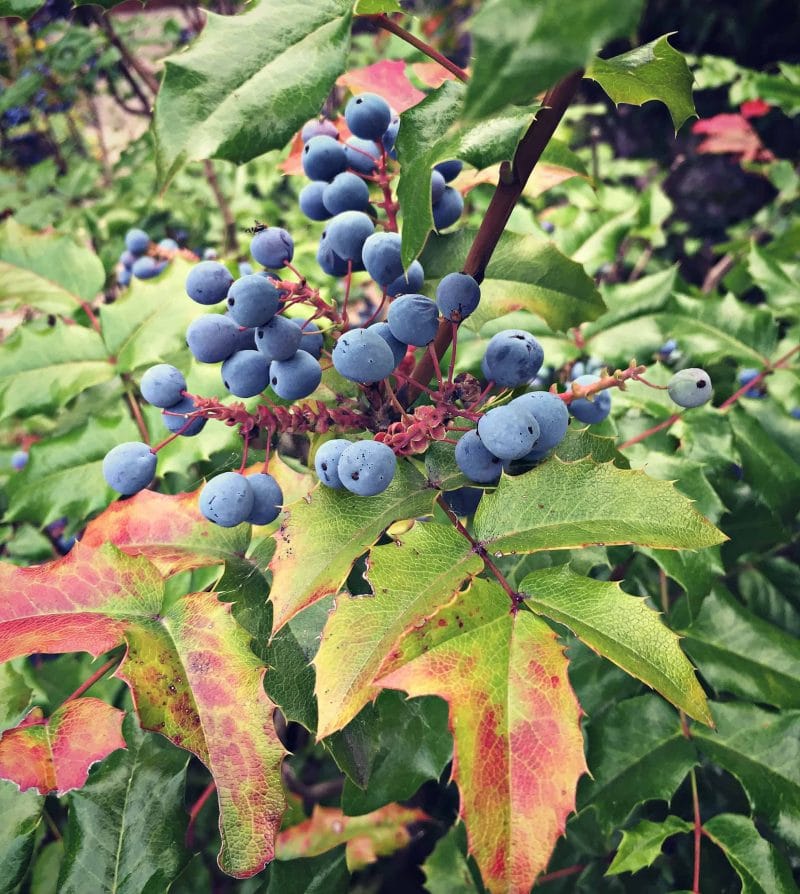
Before considering edibility, accurate identification is paramount. Oregon grape plants are typically low-growing shrubs, rarely exceeding six feet in height. The leaves are its most defining characteristic: they are compound, meaning they are made up of several leaflets, each with sharply toothed edges, resembling those of a holly plant. The color of the leaves is a deep, glossy green, often turning a purplish or bronze hue in the colder months, a characteristic that has earned it the name “Oregon grape.”
During the spring, Oregon grape bushes are adorned with clusters of fragrant, bright yellow flowers. These blossoms are not only beautiful but also a vital food source for early pollinators. Following the bloom, the plant produces its namesake berries – small, round fruits that ripen from green to a deep, bluish-black by late summer and fall. These berries are borne in dense clusters, similar to grapes, hence the common name. Each berry contains one to several small seeds. It is crucial to distinguish these berries from other dark-colored berries found in the wild. For instance, it’s important not to confuse them with the toxic nightshade berries, which are often found in similar habitats.
Where to Find Oregon Grape
Oregon grape is a resilient plant, found in a wide range of landscapes. In Oregon, it is so prevalent that it has been designated the state flower. You can encounter it in diverse settings, from the lush, temperate rainforests of the Oregon Coast to the drier foothills of the Cascade Mountains. It often grows in the understory of conifer forests, mixed woodlands, and even on rocky slopes. Hikers exploring trails near cities like Eugene or towns like Ashland are likely to come across it. Its adaptability means it can be found in urban parks and wilder natural areas alike, making it accessible for observation and, with proper caution, potential foraging.
The Edibility of Oregon Grape Berries
The question of whether Oregon grape is edible primarily refers to its berries, as the rest of the plant is generally not consumed. The berries, while visually appealing and abundant, present a unique flavor profile that is not universally enjoyed.
Taste and Culinary Uses
The most striking characteristic of Oregon grape berries is their intensely sour, tart taste. This extreme tartness is due to a high concentration of citric acid. Some describe the flavor as astringent or even slightly bitter. While not typically eaten raw in large quantities due to this intense sourness, the berries can be processed to make them more palatable. They are commonly used in jellies, jams, syrups, and wines. The acidity makes them an excellent candidate for preserving and can add a unique tang to cooked dishes. When cooked, especially with added sweeteners, the tartness can be balanced, revealing subtle fruity notes.

Historically, indigenous peoples of the Pacific Northwest, such as the Chippewa, Nez Perce, and Salish tribes, utilized the berries. However, their consumption was often focused on medicinal applications rather than as a primary food source. They used the plant for its supposed medicinal properties, particularly its root, which is rich in berberine, a bitter alkaloid known for its antiseptic qualities. The berries, though sometimes eaten, were often processed or used in conjunction with other foods.
Considerations for Consumption
When considering consuming Oregon grape berries, a few critical points must be kept in mind:
- Preparation is Key: Raw berries are an acquired taste and can be overwhelmingly sour for most people. Cooking and adding sweeteners are highly recommended to make them enjoyable.
- Moderation: Even when prepared, it’s advisable to consume them in moderation. While generally considered safe in prepared forms, excessive consumption of any wild food without prior experience can lead to digestive upset.
- Pesticide and Contaminant Free: Ensure that the berries you intend to harvest are from areas free of pesticides, herbicides, and other environmental contaminants. Avoid foraging near busy roads, agricultural areas, or industrial sites.
- Proper Identification: As mentioned earlier, absolute certainty in identification is non-negotiable. If there is any doubt whatsoever, do not consume the plant.
The roots and bark of the Oregon grape are also considered to have medicinal properties due to their high berberine content. However, these parts of the plant are intensely bitter and not typically consumed as food. Their use is almost exclusively confined to traditional medicine and herbal remedies.
Beyond the Berries: Medicinal and Other Uses
While the culinary exploration of Oregon grape berries is limited by their tartness, the plant holds significant value in other areas, particularly in traditional medicine and as an ornamental.
Traditional Medicinal Applications
The most well-documented use of Mahonia aquifolium lies in its medicinal properties, primarily attributed to the compound berberine found in its roots and bark. Indigenous peoples of the Pacific Northwest have a long history of using Oregon grape for a variety of ailments. The bitter root was often brewed into a tea or tincture and used to treat digestive issues, liver problems, skin conditions like eczema and psoriasis, and even as an antiseptic wash for wounds.
Modern herbalists and researchers have explored these traditional uses. Berberine is known for its potent antimicrobial, anti-inflammatory, and antioxidant properties. It has been studied for its potential benefits in managing blood sugar levels, supporting heart health, and treating certain infections. However, it is crucial to emphasize that while the plant has a history of medicinal use, it should not be considered a substitute for professional medical advice or treatment. Anyone considering using Oregon grape for medicinal purposes should consult with a qualified healthcare provider or an experienced herbalist.
Ornamental and Ecological Value
Beyond its edible and medicinal aspects, Oregon grape is highly valued as an ornamental plant. Its attractive, holly-like foliage and bright yellow spring flowers make it a popular choice for landscaping, particularly in gardens that aim to mimic the natural aesthetics of the Pacific Northwest. It is relatively low-maintenance, drought-tolerant once established, and provides year-round visual interest. It is often used as ground cover, in shrub borders, or as a specimen plant.
Ecologically, Oregon grape plays a vital role in its native habitat. The flowers provide an early nectar source for bees and other pollinators, and the berries offer food for various bird species and small mammals. Its dense growth can provide shelter for wildlife. As a native plant, it supports the local ecosystem and contributes to biodiversity. Many visitors to national parks and state parks in the Pacific Northwest will encounter Oregon grape as part of the natural landscape, a testament to its widespread presence and ecological importance.
For travelers interested in botany, the Oregon grape is a fascinating plant to observe. Whether you’re exploring the lush forests near Seattle, the rugged beauty of Olympic National Park, or the charming towns along the Oregon Trail, you’re likely to encounter this distinctive shrub. While the berries offer a potential, albeit tart, culinary adventure, the plant’s broader value lies in its historical medicinal uses and its significant contribution to the natural beauty and ecological health of the Pacific Northwest. As with all foraged items, safety, proper identification, and respect for the environment are paramount.
LifeOutOfTheBox is a participant in the Amazon Services LLC Associates Program, an affiliate advertising program designed to provide a means for sites to earn advertising fees by advertising and linking to Amazon.com. Amazon, the Amazon logo, AmazonSupply, and the AmazonSupply logo are trademarks of Amazon.com, Inc. or its affiliates. As an Amazon Associate we earn affiliate commissions from qualifying purchases.